

Micro Stepper Motor for Fingerprint Door Locks
Contents
- What Is a Micro Stepper Motor?
- How a Micro Stepper Motor Drives a Fingerprint Lock
- Micro Stepper vs. Other Smart-Lock Motors
- Engineering Data: Step Angle, Torque, Current & Temperature
- Best Applications for Micro Stepper Motors
- How to Select a Micro Stepper Motor for a Fingerprint Lock
- Common Engineering Mistakes
- Troubleshooting
- FAQ
- Why Choose Greensky Power?
What Is a Micro Stepper Motor?
A micro stepper motor is a small brushless DC motor that divides one shaft revolution into a large number of equal angular increments (“steps”). Each electrical pulse from the driver advances the rotor by a fixed angle — typically 7.5°, 15° or 18° for the permanent-magnet (PM) types used in locks, and 1.8° or 0.9° for hybrid types. Because position is set by counting pulses rather than reading a sensor, the motor is open-loop position controllable: the controller always knows where the shaft is, provided it never misses a step.
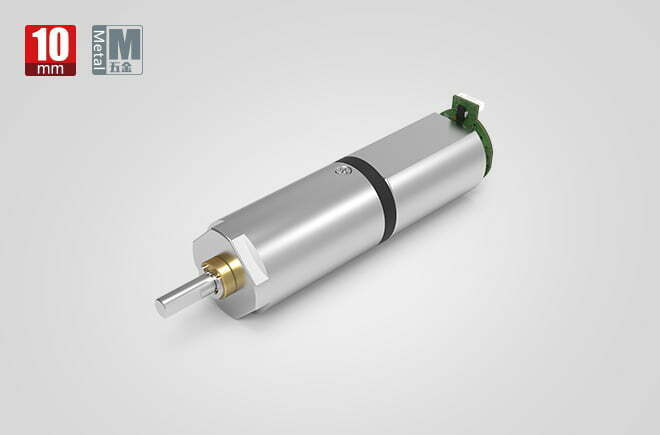
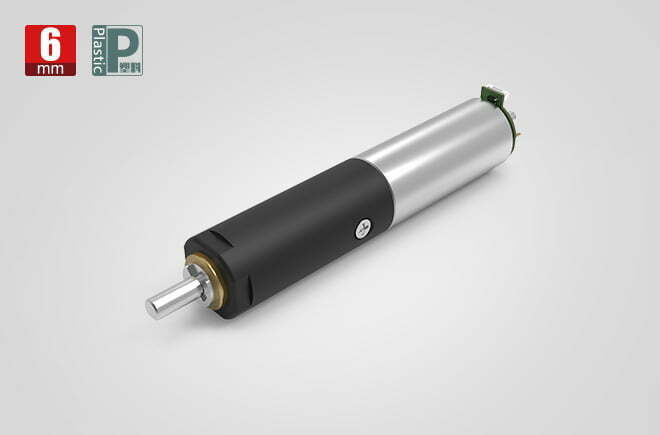
“Micro” refers to physical size. In access-control hardware the relevant frames are measured by diameter rather than the NEMA code used on larger machines: 6 mm, 8 mm, 10 mm, 15 mm, 20 mm and 25 mm bodies, with lengths from 8 mm to 25 mm. A micro gearbox is often bolted behind the stepper to raise torque and lower speed for the bolt mechanism.
Construction types
| Type | Typical step angle | Cost | Low-speed torque | Common lock use |
|---|---|---|---|---|
| PM (permanent magnet) | 7.5° / 15° / 18° | Low | High | Standard residential & hotel locks |
| VR (variable reluctance) | 7.5° | Low–mid | Low | Rare; high-speed indexing |
| Hybrid | 1.8° / 0.9° | High | High | Premium biometric locks |
PM steppers dominate fingerprint locks because they are cheap, hold position strongly when energized, and deliver the high torque-at-low-speed profile a slow bolt throw needs. Hybrid motors appear only where finer resolution or faster microstepping is worth the cost.
Microstepping
A driver can subdivide each full step into 1/4, 1/8, 1/16, 1/32 or 1/256 increments. Microstepping smooths motion, cuts audible buzz, and improves resolution — at the cost of slightly lower torque per microstep. Most lock designs run 1/8 or 1/16 microstepping for quiet, clean bolt travel.
How a Micro Stepper Motor Drives a Fingerprint Door Lock
The lock is a closed control loop between a person and a mechanical latch. The motor is the muscle; everything else is signaling.
- Authenticate. A fingerprint module, RFID reader or app confirms identity and sends an unlock command to the lock’s MCU.
- Generate pulses. The MCU outputs a step-pulse train to a driver (an A4988 / DRV8825-class chip, or a custom lock ASIC).
- Energize coils. The driver switches the two phases in sequence (bipolar 2-phase excitation), advancing the rotor by one step per pulse.
- Reduce and convert. The shaft drives a planetary or worm reduction, then a lead screw or pinion-rack converts rotation into linear bolt travel.
- Count position. The controller counts steps. When the accumulated travel equals the bolt stroke, it stops. No limit switch is required — the step count is the position.
- Hold. After the move, the driver drops to a low holding current (or powers down) while the mechanical latch and the motor’s holding torque keep the bolt seated.
This open-loop certainty is the reason steppers beat brushed DC motors for the bolt itself: a brushed motor needs an encoder or limit switch to confirm the bolt is fully seated, adding parts and failure points. For the gearing half of the same mechanism, see our speed-reducer selection guide.

Micro Stepper vs. Other Smart-Lock Motors
Fingerprint locks can use several prime movers. The table shows where each fits; the stepper wins on position certainty for the bolt.
| Criterion | Micro stepper | Brushed DC | BLDC | Servo |
|---|---|---|---|---|
| Position certainty (no sensor) | Yes — counts steps | No — needs encoder/limit | No — needs encoder | Yes — closed-loop |
| Holds bolt at rest | Yes (holding torque) | No | No | Yes (brake) |
| Audible noise | Low with microstep | Medium | Low | Low |
| Driver complexity | Simple (no feedback) | Simple | Moderate (FOC) | High (drive + encoder) |
| Relative cost | Low–mid | Low | Mid | High |
| Best lock role | Deadbolt / latch throw | Cheap latches, swing bolts | Quiet premium locks | High-security / fail-safe |
For a deeper split between the two closed-loop contenders, our BLDC vs. servo comparison covers when each is worth the cost. In most fingerprint locks the stepper is the default; the 24 V BLDC and servo options appear only in premium or fail-safe designs.
Engineering Data: Step Angle, Torque, Current & Temperature
The numbers below are representative of production micro steppers in the 6–25 mm range. They anchor the selection method in the next section.
Step angle and resolution
| Motor type | Full-step angle | Steps / rev (full) | Steps / rev @ 1/16 microstep |
|---|---|---|---|
| PM 18° | 18° | 20 | 320 |
| PM 7.5° | 7.5° | 48 | 768 |
| Hybrid 1.8° | 1.8° | 200 | 3,200 |
Torque, current and temperature limits
| Parameter | Typical micro stepper value | Notes |
|---|---|---|
| Holding torque | 1–150 gf·cm (bare) up to several hundred gf·cm geared | PM 6 mm ~1 gf·cm; 20 mm ~90–120 gf·cm; 25 mm linear ~150 gf·cm |
| Rated current / phase | 0.1–0.4 A | Lock systems run 3–6 V; current set by driver |
| Pull-in / pull-out torque | Measured at rated PPS | Pull-out > pull-in; both fall with speed |
| Coil insulation class | Class E (120 °C) or B (130 °C) | Per IEC 60034-1 temperature classes |
| Operating temperature | −30 to +70 °C (motor); −20 to +85 °C (geared assy) | Gearbox grease sets the assembly limit |
Formulas used in selection
- Steps per revolution (full step):
N = 360 / θstep(with θ in degrees). - Microstepped resolution:
Nmicro = N × m, wheremis the microstep factor (4, 8, 16…). - Torque at the lead screw:
Tscrew = F × p / (2π × ηscrew), withF= bolt force (N),p= screw pitch (m),ηscrew≈ 0.35–0.45 for small screws. - Output torque from the gearbox:
Tout = Tmotor × i × ηgear, withi= ratio,ηgear≈ 0.55–0.65. - Battery current during the move:
I = P / V, whereP = (Tmotor × ω) / ηmotorandω = 2πn / 60. - Coil power loss (heat):
Ploss = I2Rper phase — the source of any temperature rise.
Efficiency in continuous rotation is not a lock’s concern, but the motor must still stay under its insulation class. Bearing life — see SKF’s bearing-failure guide — also degrades above ~80 °C, so keep the grease within its rated band.
Best Applications for Micro Stepper Motors
- Fingerprint / biometric deadbolts — the core use; precise bolt throw with open-loop certainty.
- Smart home and hotel card locks — where quiet, repeatable operation matters; tied to DC geared-motor architectures.
- Cabinet, drawer and safe locks — lower force, ideal for compact 15–20 mm steppers.
- Glass-door and access strikes — where a short, precise linear actuation is needed.
- Battery-powered latch retries — any mechanism that must self-correct after a failed first attempt.
For higher continuous-duty or heavier doors, a BLDC flat gear motor or a different reducer type may be the better prime mover; the stepper stays the choice where position must be known without a sensor.
How to Select a Micro Stepper Motor for a Fingerprint Lock
Follow this order so the force, speed and battery budgets all close.
- Define the bolt load. Measure or estimate the force
Fneeded to overcome the latch spring and friction, and the required linear travelL. - Pick the screw pitch
p. Coarser pitch (3–3.5 mm/rev) needs fewer motor revolutions for the same throw — faster, but lower force per step. - Compute screw torque. Use
Tscrew = F × p / (2π × ηscrew). - Choose motor + ratio. Select a stepper and gear ratio so
Tmotor × i × ηgear ≥ 1.3 × Tscrew— the 30 % margin prevents missed steps as lubricant ages (the rule of thumb documented in FAULHABER’s stepper-motor selection tutorial). - Verify timing. Total steps =
(L / p) × i × Nmicro. Divide by your step rate; stay under the motor’s pull-in PPS. - Check the battery. Estimate
I = P / Vover the move and confirm daily energy is a fraction of pack capacity. - Confirm temperature. Keep coil temperature below the Class E/B limit and grease below its rated band.
Worked example — residential fingerprint deadbolt
Assumptions: 4 × AA cells (6 V nominal); bolt throw L = 14 mm; required push force F = 6 N; a 25 mm integrated linear stepper with 7.5° step (48 steps/rev), 150 gf·cm holding torque, lead-screw pitch p = 3.5 mm/rev, screw efficiency ηscrew = 0.40.
Step 1 — torque at the screw.
Tscrew = 6 × 0.0035 / (2π × 0.40) = 0.00836 N·m ≈ 85 gf·cm.
The motor’s 150 gf·cm holding torque covers this with a 76 % margin — well above the 30 % cushion that prevents missed steps as lubricant thickens with age.
Step 2 — motion and timing.
Screw revolutions = L / p = 14 / 3.5 = 4 rev. Full steps = 4 × 48 = 192; at 1/8 microstepping = 1,536 steps. At a 600 PPS step rate the throw completes in 1,536 / 600 ≈ 2.6 s — within typical deadbolt expectations.
Step 3 — battery draw.
Motor current ≈ 140 mA/phase × 2 phases ≈ 0.28 A at 6 V during the move. Energy per unlock ≈ 6 × 0.28 × 2.6 ≈ 4.4 W·s. At six operations/day that is ≈ 26 W·s/day against a 4 × AA pack of roughly 216,000 W·s — under 0.02 % of daily capacity. The radio and MCU standby, not the motor, set battery life.
Common Engineering Mistakes
- Under-sizing torque. The #1 field failure. Without the 30 % margin, a cold start or worn gear lets the motor miss steps and the bolt stops short — the lock “thinks” it is secure. Always margin the holding torque.
- Ignoring gearbox backlash. Lash accumulates over thousands of cycles and the bolt position drifts. Use a low-backlash planetary stage or add a power-up self-test.
- Using a brushed DC motor without feedback. It is cheaper but cannot confirm locked state; you then need a hall sensor or limit switch anyway.
- Wrong voltage. Driving a 3 V coil from a 6 V pack without current limiting overheats and cooks the windings. Match the driver to the coil.
- No current-limited driver. A raw H-bridge pushes full current continuously; the coil burns. Use a chopping/current-regulating driver.
- Skipping the cold-case. Grease stiffens at low temperature, raising starting torque. Validate the worst-case (e.g., 0 °C) load, not the lab-temperature load.
Troubleshooting
| Problem | Likely cause | Solution |
|---|---|---|
| Bolt does not fully extend / retract | Missed steps from under-torque or high friction | Re-size with ≥30 % torque margin; check worst-case load |
| Motor runs hot | No current limiting; wrong supply voltage | Use a chopping driver; match coil rating (see IEC 60034-1 insulation limits) |
| Stepper buzzes but will not turn | Wrong phase sequence; supply below pull-in | Check driver wiring; raise step rate gradually (ramp) |
| Position drifts over time | Gearbox backlash accumulation | Low-backlash gear; periodic homing or encoder |
| Battery drains fast | Driver left energized at full holding current | Drop to low holding current or power down after the move |
| Loud clicking | Full-step mode | Switch to 1/8 or 1/16 microstepping |
FAQ
What motor is used in a fingerprint door lock?
Most use a micro stepper motor (permanent-magnet type, 6–25 mm) geared to a lead screw or rack to throw the bolt. Brushed DC and BLDC appear in cheaper or quieter designs, and servo only in high-security or fail-safe locks.
Can a stepper motor keep the door locked without power?
The stepper’s holding torque holds the bolt only while energized. Real security comes from the mechanical latch; the motor positions it. After the throw, power can drop to a tiny holding current or zero — the latch, not the motor, stays locked.
How much torque does a smart-lock stepper motor need?
It depends on the bolt force and screw pitch: T = F × p / (2π × η). For a 6 N residential latch at 3.5 mm pitch that is about 85 gf·cm at the screw, so size the motor-plus-gearbox to roughly 110–150 gf·cm with margin.
Micro stepper vs. servo motor for a smart lock — which is better?
The stepper is better for most locks: open-loop position certainty, no encoder, lower cost, and enough torque at low speed. A servo adds closed-loop precision and a brake but at much higher cost and complexity — worth it only for fail-safe or very high-cycle commercial doors.
What voltage do fingerprint-lock stepper motors run on?
Typically 3–12 V from the lock’s battery pack — 4×AA (6 V) or a single Li-ion cell (3.7 V) are common, with 12 V rails used where a boost converter is already present. Current per phase is usually 0.1–0.4 A.
How long does a micro stepper motor last in a door lock?
Quality PM steppers and gearboxes are rated for tens of thousands of unlock cycles. At a few operations per day that translates to many years; lifetime is usually limited by the battery and the mechanical latch, not the motor itself.
Why Choose Greensky Power?
Greensky Power develops custom electric motors and OEM actuator assemblies for access-control and smart-home brands. For fingerprint-lock programs we supply:
- Integrated micro stepper + gearbox — 6 mm, 10 mm, 15 mm, 20 mm and 25 mm bodies with planetary or worm reduction and backlash down to ≤ 3°.
- Low-noise microstepping drivers matched to 3–12 V battery systems, with current limiting and thermal cutoff as standard.
- Lead-screw and pinion output options for direct bolt actuation, plus IP-rated variants for outdoor strikes.
- Custom ranges — our fingerprint-lock drive motors are specified across 3.4–38 mm diameter, 0.01–40 W, 3–24 V, 5–2000 rpm and reduction ratios 5–1500.
Explore the DC motors category or contact our engineering team for a lock-specific sizing review.
Related Resources
- Micro gearboxes explained
- Brushless DC motor (BLDC) basics
- 24 V brushless DC motor parameters
- Servo motor fundamentals
- Brushed DC motor overview
- BLDC vs. servo motor comparison
- What is the use of a DC geared motor?
- Precision planetary gearbox deep dive
- Different types of speed reducers
- Speed-reducer motor selection guide
- How to calculate motor torque
- Motor controller guide
- Gearbox overview (pillar page)
- Harmonic drive vs. planetary gear
- BLDC flat gear motor
- Direct-drive vs. gear-motor
- Selecting a motor for industrial use
- Motor efficiency classes
- Motor flange dimensions
- Electric motor basics
- Custom electric motors
- OEM motor program
References
- IEC 60034-1:2022 — Rotating electrical machines, general requirements (insulation & temperature classes). webstore.iec.ch/en/publication/65446
- IEC 60034-30-1 — Efficiency classes of line-operated AC motors. webstore.iec.ch/publication/91195
- ANSI/NEMA MG 1 — Motors and Generators standard. webstore.ansi.org/standards/nema/ansinemamg2021
- NEMA — Motor and Generator product resources. nema.org/products/pages/motor-and-generator.aspx
- U.S. DOE — Motor energy efficiency and system optimization. energy.gov — motor systems
- IEA — Electric motors and drives (energy system). iea.org — electric motors
- SKF — Bearing failures and their causes. skf.com — bearing failures
- Siemens — SIMOTICS electric motors. siemens.com — electric motors
- IEEE Xplore — Peer-reviewed micro-motor / actuator design paper. ieeexplore.ieee.org/document/6342334
- Yaskawa — Motion and motor technical downloads. yaskawa.com/downloads
- Maxon — EC (external-rotor brushless) motor technology. maxongroup.com — ec-technology
- FAULHABER — Brushless DC and micro motor product line. faulhaber.com — brushless DC motors
- FAULHABER — Stepper motor selection tutorial (documents the 30 % torque safety factor). faulhaber.com — stepper selection tutorial
- NMB / MinebeaMitsumi — Miniature stepping motors for shrinking e-lock designs (application note). nmbtc.com — e-lock stepper note
