
How to Calculate Torque of Motor: Complete Engineering & OEM Selection Guide
Quick Answer:
Motor torque can be calculated using the formula T = P / ω, where torque (T) equals power (P) divided by angular velocity (ω). In practical industrial applications, torque is often calculated using T (Nm) = 9550 × Power (kW) / Speed (RPM). This calculation helps engineers determine whether a motor can handle load requirements in applications such as conveyors, pumps, electric vehicles, and biomass systems. Accurate torque calculation is critical for ensuring system performance, efficiency, and long-term reliability.
- What Is Motor Torque?
- How to Calculate Torque of Motor (Core Formula)
- Why Torque Calculation Is Critical in Motor Selection
- Torque vs Power vs Speed: Key Differences
- Torque Requirements for Different Applications
- Efficiency and Torque Relationship
- Thermal Performance and Torque Stability
- Motor Control Systems and Torque Management
- BLDC vs AC vs Servo Motors (Torque Comparison)
- How to Choose Motor Based on Torque Requirements
- Applications of Torque Calculation in Industry
- Future Trends in Motor Torque Optimization
- FAQ: How to Calculate Torque of Motor
- Conclusion: Why Torque Calculation Is Essential
- References
What Is Motor Torque?
Motor torque is the rotational force generated by a motor to drive mechanical loads. It determines whether the motor can start, accelerate, and maintain operation under load conditions.
Key Concepts
- Torque (Nm): rotational force
- Speed (RPM): rotational speed
- Power (kW): energy output
In industrial systems, torque is often more critical than power because it directly affects load handling capability.
How to Calculate Torque of Motor (Core Formula)
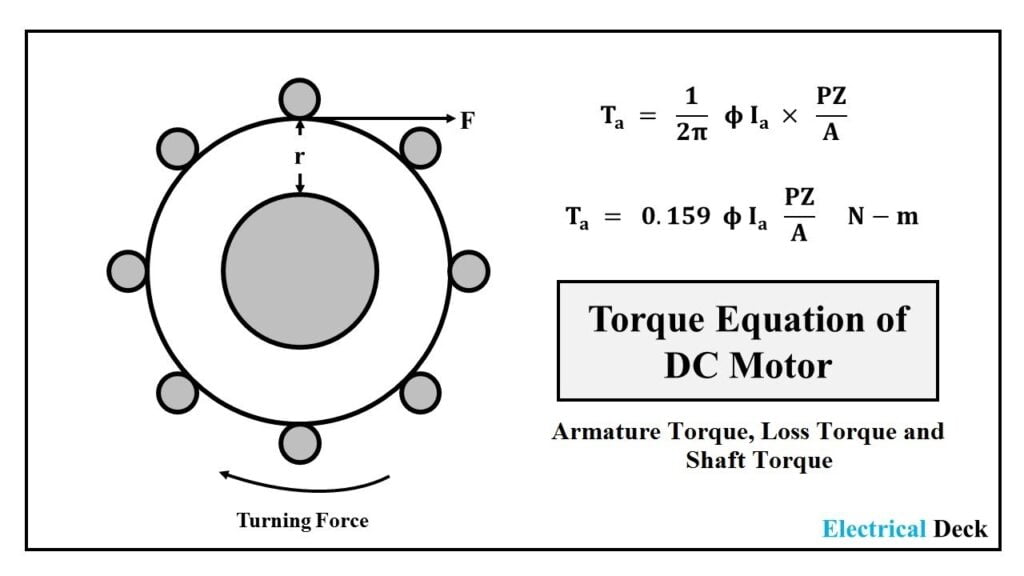
The most widely used formula for calculating motor torque in engineering applications is:
T = 9550 × P / N
Where:
- T = Torque (Nm)
- P = Power (kW)
- N = Speed (RPM)
Example Calculation
If a motor has 5 kW power and runs at 1500 RPM:
Torque = (9550 × 5) / 1500 = 31.83 Nm
This calculation is essential when selecting motors for conveyors, pumps, or EV systems.
Why Torque Calculation Is Critical in Motor Selection
Understanding how to calculate torque of motor is essential for avoiding underpowered or oversized systems.
Engineering Impact
- Ensures sufficient starting torque
- Prevents overload and overheating
- Optimizes energy consumption
Real-World Problem
Incorrect torque estimation often leads to system failure, especially in high-load applications like biomass boilers or industrial conveyors.
Explore industrial motor solutions: BLDC Motors for gates
Torque vs Power vs Speed: Key Differences
Torque, power, and speed are interdependent variables in motor design.
| Parameter | Torque | Power | Speed |
|---|---|---|---|
| Definition | Rotational force | Energy output | Rotation rate |
| Unit | Nm | kW | RPM |
| Impact | Load capacity | System performance | Operational speed |
Engineering Insight
High torque at low speed is critical for heavy loads, while high-speed applications require optimized power balance.
Torque Requirements for Different Applications
Industrial Applications
- Conveyors: high starting torque
- Mixers: constant torque
Electric Vehicles
- High startup torque for acceleration
- Stable torque at varying speeds
HVAC and Pumps
- Variable torque depending on load
For EV-specific motors: EV Motor Solutions
Efficiency and Torque Relationship
Efficiency affects how much input power is converted into usable torque.
Efficiency Factors
- Electrical losses
- Mechanical friction
- Heat generation
Engineering Insight
BLDC motors typically offer higher efficiency, resulting in more usable torque output compared to traditional motors.
Thermal Performance and Torque Stability
Thermal conditions directly impact torque output and motor lifespan.
Thermal Challenges
- Overheating reduces torque
- Insulation degradation
Solutions
- Proper cooling systems
- High-quality materials
Motor Control Systems and Torque Management
Modern control systems allow precise torque control.
Technologies
- FOC (Field-Oriented Control)
- VFD (Variable Frequency Drive)
Benefits
- Improved efficiency
- Smooth operation
- Extended lifespan
Custom integration: OEM Motor Solutions
BLDC vs AC vs Servo Motors (Torque Comparison)
| Parameter | BLDC Motor | AC Motor | Servo Motor |
|---|---|---|---|
| Torque Density | High | Moderate | Very High |
| Efficiency | High | Moderate | High |
| Control | Advanced | Moderate | Precise |
| Cost | Moderate | Low | High |
| Application | EV, pumps | General use | Precision systems |
Engineering Interpretation
BLDC motors provide the best balance between torque, efficiency, and cost for most industrial applications.
How to Choose Motor Based on Torque Requirements
Motor selection should always start with torque calculation.
Voltage Range
- 24V–72V: small systems
- 220V–380V: industrial systems
Power Range
- 0.5kW–10kW: light industrial
- >10kW: heavy-duty applications
Speed / Torque Matching
Select motor based on required torque at operating speed.
Cooling Method
- Air cooling
- Liquid cooling
Controller Compatibility
Ensure compatibility with VFD or BLDC controllers.
Application Considerations
- Load type
- Duty cycle
- Environmental conditions
CTA: Request datasheet or contact our engineers for a custom motor solution.
Applications of Torque Calculation in Industry
Industrial Machinery
- Conveyors
- Compressors
Electric Vehicles
- Hub motors (48V / 72V)
- Drive systems
Biomass Systems
- Feeding systems
- Fan motors
Future Trends in Motor Torque Optimization
Motor design is evolving to improve torque performance.
Key Trends
- High torque density BLDC motors
- Smart control algorithms
- Integrated motor-drive systems
Conclusion: Why Torque Calculation Is Essential for Motor Selection
Accurate torque calculation is fundamental to motor selection and system design. It ensures optimal performance, efficiency, and reliability across industrial applications.
For OEM customers, understanding torque requirements reduces risk and improves system efficiency.
Next Step: Contact our engineering team to develop a custom motor solution or request detailed specifications.
Greensky Power Co., Ltd. is a professional manufacturer engaged in the research, development, production, OEM motor, sale of BLDC motor.
If you are searching BLDC motor for your project, please contact our sales team.
Top 20 brushless motor manufacturers in the World in 2024
References
- IEEE Motor Control Papers
- Industrial Engineering Handbooks
- Electric Motor Design Journals
- Energy Efficiency Reports
FAQ: How to Calculate Torque of Motor
1. What is the formula to calculate motor torque?
The most common formula is T = 9550 × Power (kW) / Speed (RPM), which provides torque in Newton-meters.
2. Why is torque calculation important?
It ensures the motor can handle load requirements and prevents system failure.
3. Can torque be increased without increasing power?
Yes, by reducing speed or using gear systems, torque can be increased.
4. What is starting torque?
Starting torque is the torque required to initiate motion from a stationary position.
5. Which motor provides the highest torque?
Servo and BLDC motors offer high torque density depending on design and control system.
