

Brushless DC Motor
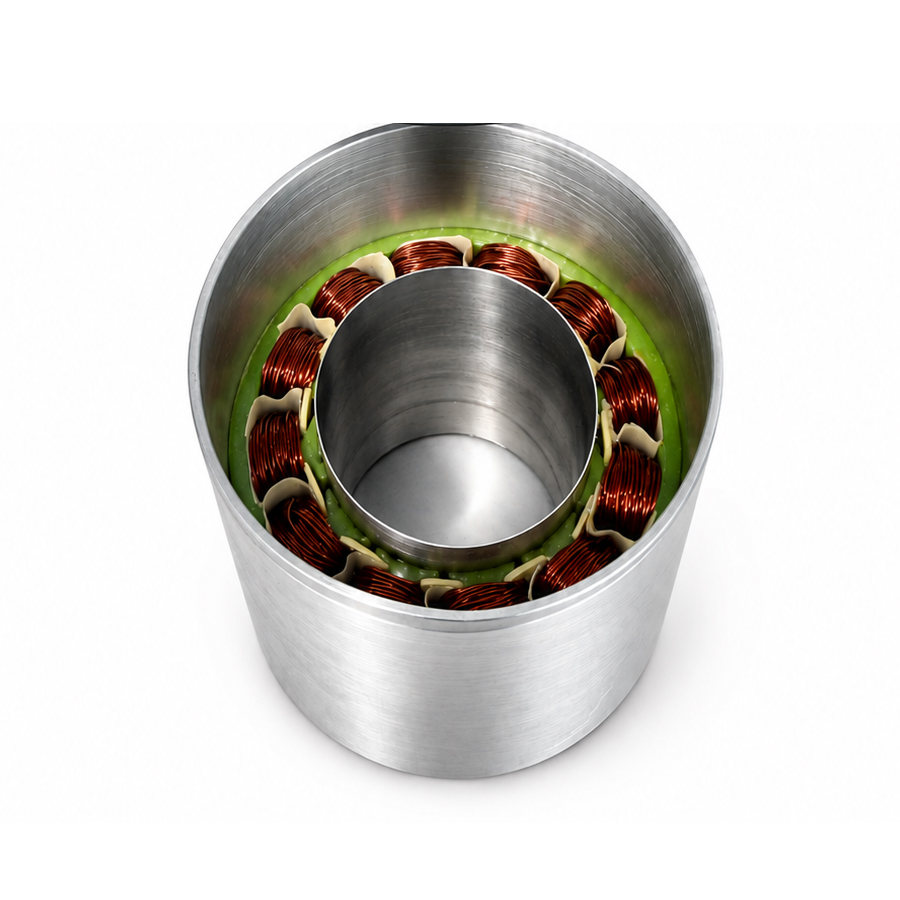
Greensky is a manufacturer of brushless DC motors in China. Brushless DC Motors tend to have better torque and speed features. Compared with brushed dc motors, they are much more efficient, highly reliable, low electrical noise and have a longer operating life span.



Find Your BLDC Motor by Voltage & Power
Select a voltage or power rating to view detailed electrical and mechanical specifications and matched controller options.
By Voltage
By Power
Need a different voltage, power rating or shaft configuration? Request a custom BLDC motor →
Gear Motor Selection Guide: Six Types at a Glance
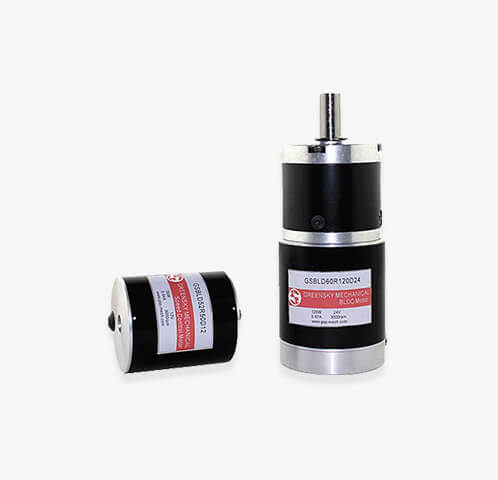
Round and Square refer to the BLDC motor housing form factor; Planetary, Spur, Right-angle and Worm are gearbox (transmission) types.
| Type | Transmission / Structure | Typical Gear Ratio | Output Torque | Backlash (Precision) | Efficiency | Power Range (Greensky) | Typical Applications |
|---|---|---|---|---|---|---|---|
| Round BLDC motor | Cylindrical housing; direct-drive or gearbox-ready | Per matched gearbox | Low–medium | Per gearbox | Per gearbox | 2–1,200 W / 3,000 rpm | Compact installations, micro pumps, small automation |
| Square BLDC motor | Square flange housing; large mounting and heat-dissipation face | Per matched gearbox | Medium–high | Per gearbox | Per gearbox | 15–3,500 W / 800–4,000 rpm | Higher-power industrial equipment, conveyors, fans |
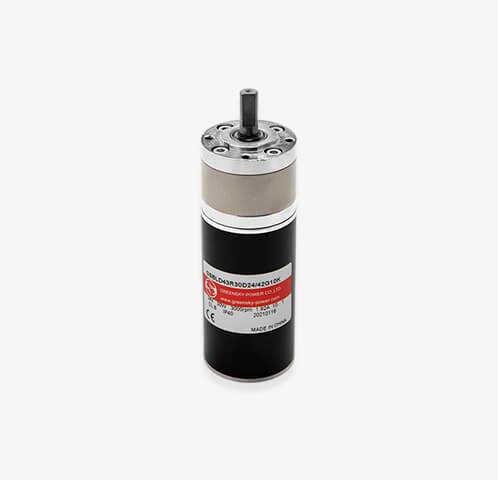
| Planetary gear motor | Sun gear + multiple planet gears + ring gear; coaxial | 3:1–512:1 (higher with more stages) | High (highest in class) | Low (standard ≤15′; precision ≤3′) | 90%–97% | 2–1,200 W | Robot joints, AGVs, precision positioning |
| Spur (inline) gear motor | Parallel-axis spur / helical gears | 3:1–200:1 | Medium | Medium (≤30′) | 90%–95% | 15–400 W | Standard conveying, appliances, general transmission |
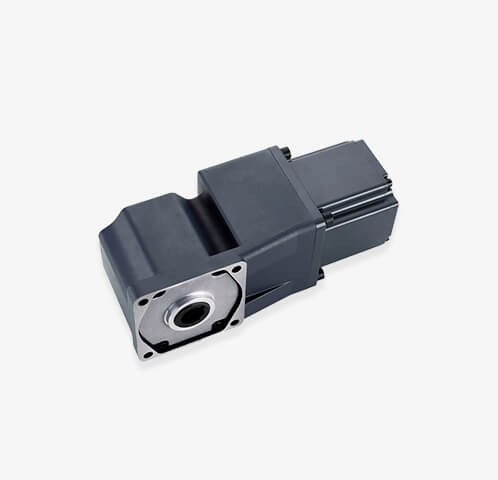
| Right-angle gear motor | Bevel gears; 90° direction change | 3:1–200:1 | Medium | Medium (≤30′) | 85%–92% | 80–400 W | Space-constrained mounting, 90° drive routing |
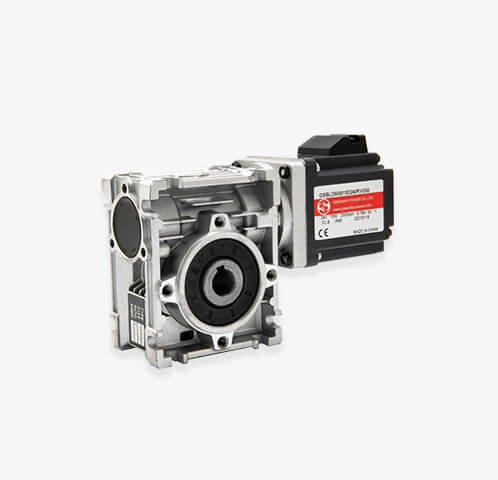
| Worm gear motor | Worm + worm wheel; crossed axes | 5:1–100:1 (higher available) | High (amplified by high ratio) | Medium | 40%–80% (self-locking capable) | 15–2,000 W | High-ratio / self-locking, low-speed high-torque (barrier gates, lifts, hoists) |
Gear ratio, torque, backlash and efficiency are typical industry ranges for guidance; final values are confirmed against Greensky approved drawings and the actual duty cycle.
Brushed DC Motor vs Brushless DC Motor (BLDC)
| Comparison Dimension | Brushed DC Motor | Brushless DC Motor (BLDC) |
|---|---|---|
| Commutation | Mechanical — carbon brushes + commutator | Electronic — Hall / sensorless feedback + driver |
| Efficiency | Typically 70%–85% | Typically 85%–95% |
| Service life | Brush-limited, typically ~1,000–5,000 h | No brush wear, typically ~10,000–30,000 h |
| Maintenance | Periodic brush replacement and commutator cleaning | Essentially maintenance-free; bearing lubrication only |
| Initial cost | Low (simple motor, no driver needed) | Higher (requires an electronic driver / controller) |
| Total cost of ownership | Higher (energy + maintenance + downtime) | Lower (high efficiency, long life, low maintenance) |
| Torque characteristics | High starting torque; low-speed torque limited by commutation | High torque density; strong constant torque over a wide speed range |
| Speed control | Voltage / resistance or PWM; simple but limited precision | Driver PWM closed-loop; wide speed range, high precision, feedback-ready |
| Speed range | Moderate; high speed limited by brush arcing | High, up to tens of thousands of RPM |
| Noise & EMI | Brush arcing produces EMI and audible noise | Low electrical noise, smooth and low-vibration operation |
| Heat generation | High (friction + commutation losses) | Low (higher efficiency, lower losses) |
| Power density | Lower | Higher (smaller and lighter for the same power) |
| Typical applications | Low-cost appliances, toys, simple tools | Industrial automation, AGV / robotics, EVs, precision instruments |
Efficiency, life and cost figures are typical industry ranges for guidance; actual values depend on the selected model and duty cycle.
Brushless DC Motor Applications
Brushless DC motors have a wide range of applications due to their high efficiency, long-life expectancy, and precise control capabilities. Here are some specific application scenarios:
Industrial automation & robotics
Robot joints and automated conveyors.
Automotive & EV
Traction drives, EPS and vehicle subsystems.
Aerospace & UAV
Cabin fans, pumps and drone propulsion.
Consumer electronics
HDD spindles, camera autofocus and zoom.
Home appliances
Compressor, fan and variable-speed drives.
Industrial Automation and Robotics
- In industrial robots, brushless DC motors are used to drive the joints. They provide accurate and smooth motion control, which is essential for precise operations such as welding, painting, and assembly tasks. Their high torque-to-inertia ratio allows for quick acceleration and deceleration, enabling robots to complete complex tasks with high-speed and high-precision movements.
- For automated conveyor systems, brushless DC motors can precisely control the speed and position of the conveyor belts. This is crucial in industries like manufacturing and logistics, where the accurate transportation of goods along the production line or in warehouses is required.
Automotive Applications
- Electric vehicles (EVs) and hybrid electric vehicles (HEVs) widely use brushless DC motors as the main drive motors. These motors offer high-efficiency power conversion, which directly contributes to the vehicles’ longer driving range and better energy-saving performance. They also provide excellent torque characteristics, enabling quick acceleration and smooth driving experiences.
- In addition to the main drive, brushless DC motors are used in automotive subsystems such as electric power steering (EPS). They provide the necessary assistive torque to make steering easier for drivers, and their precise control helps improve vehicle handling and safety.
Aerospace and Aviation
- In aircraft, brushless DC motors are used in various systems such as environmental control systems (ECS). They are used to drive fans and pumps that regulate air temperature, humidity, and pressure inside the cabin. Their reliability and high-efficiency operation are crucial in ensuring the comfort and safety of passengers and the proper functioning of on-board equipment.
- Unmanned aerial vehicles (UAVs), or drones, rely heavily on brushless DC motors to power the propellers. The motors’ lightweight, high-power-density characteristics are ideal for UAV applications, allowing for efficient flight and precise control of altitude, speed, and direction.
Consumer Electronics
- Computer hard disk drives (HDDs) use brushless DC motors to spin the disks at high speeds. The motors’ precise speed control and low-vibration operation are essential for accurate data reading and writing. They ensure the stability and reliability of the HDDs during operation.
- In high-end consumer electronics such as digital cameras, brushless DC motors are used to drive the autofocus and zoom mechanisms. Their quick response and accurate positioning capabilities enable the cameras to focus on objects rapidly and adjust the zoom level precisely, enhancing the user’s photography experience.
Home Appliances
- In high-efficiency air-conditioning systems, brushless DC motors are used to drive the compressor and fans. They help improve the energy-efficiency rating of the appliances, reducing energy consumption and operating costs. The motors’ quiet operation also enhances the user’s comfort.
- Many modern-style ceiling fans use brushless DC motors. These motors offer variable-speed control, allowing users to adjust the fan speed according to their needs. They are more energy-efficient and quieter than traditional motors, providing a better user experience in terms of comfort and energy savings.
AGV & mobile robots
- Automated guided vehicles (AGVs) and autonomous mobile robots (AMRs) use brushless DC motors for traction, steering and lift axes. Their high torque density, quiet operation and precise speed feedback support accurate navigation, smooth starts and stops, and long duty cycles in logistics, warehousing and flexible manufacturing.
- Paired with a planetary gearbox, BLDC motors deliver the low-speed, high-torque output an AGV drive wheel needs, while compact sizing and regenerative braking help extend runtime and fit tight chassis envelopes.
OEM / ODM Customization for Your Application
Greensky supplies customized brushless DC motors for OEM projects. Motor dimensions, electrical specifications, shaft configuration, feedback components and gearbox integration can be adapted to your application requirements.
- Motor Diameter & Length
- Winding Design
- Voltage & Speed
- Shaft Design
- Mounting Flange
- Hall Sensor
- Encoder Integration
- Gearbox Integration
- Controller / Driver Matching
- IP Protection & Cabling
Online Message
If you have any questions, please leave us a message.The Greensky staff will contact you immediately.
FAQ For Brushless DC Motor
What BLDC motor types does Greensky offer?
Greensky offers round, square, planetary-gear, spur-gear, right-angle-gear, worm-gear, L-type-gear, and magnetic-pump BLDC motors. Power ranges span 2 W to 3500 W with rated speeds from 800 to 5270 RPM, covering compact and high-torque configurations for diverse industrial and consumer applications.
How do brushless DC motors compare with brushed DC motors?
Brushless DC motors deliver higher efficiency, greater reliability, lower electrical noise, and a longer operating lifespan than brushed DC motors. They also provide better torque and speed control, making them preferable for precision automation, electric vehicles, and continuous-duty appliance applications.
What are the main applications of Greensky BLDC motors?
Greensky BLDC motors are used in industrial robots and conveyors, electric and hybrid vehicles, power steering, aerospace systems, UAVs, computer storage, cameras, air conditioners, and ceiling fans. Their efficiency and precise control suit both heavy automation and sensitive consumer-electronics products.
Can Greensky customize BLDC motor specifications?
Yes. Greensky provides full OEM and ODM customization including voltage, power, speed, shaft, flange, and gearbox integration. Its engineering team confirms detailed drawings before mass production to ensure technical accuracy for the customer’s specific application and target performance requirements across global markets.
What is the difference between a planetary gear motor and a spur gear motor?
Planetary gear motors use a sun gear driving several planet gears inside a ring gear, giving higher torque density, lower backlash, and a more compact footprint for robotics, AGVs, and precision positioning. Spur (inline) gear motors use parallel-axis gears; they are simpler and more economical, which suits standard conveying, appliances, and general-duty transmission.
How do I choose the right gearbox type for my application?
Base the choice on required output torque, speed, backlash, duty cycle, and mounting space. Choose planetary for high torque with high precision, spur/inline for cost-effective general transmission, right-angle for a 90-degree drive change in tight spaces, and worm gear when a very high ratio or self-locking is required. Greensky confirms the final ratio, torque, and backlash against approved drawings before production.
What is the KV rating of a BLDC motor?
The KV rating describes how many RPM a BLDC motor produces per volt applied under no-load conditions. For example, a 1000 KV motor spins at roughly 24,000 RPM on a 24 V supply without load. A higher KV rating gives higher speed but generally lower torque, while a lower KV rating delivers greater torque at lower speed.
Do BLDC motors require a controller?
Yes. A BLDC motor requires an electronic controller (an ESC or a dedicated BLDC driver) that converts DC input into a three-phase output and switches the phases according to rotor position. The controller voltage, current and communication interface must match the motor. Greensky supplies matched BLDC motor controllers in 24 V, 36 V, 48 V and 72 V.
What voltage is best for a BLDC motor?
The best voltage depends on the application’s power and speed requirements. Common BLDC motor voltages include 12 V, 24 V, 36 V, 48 V, 60 V and 72 V. Low-voltage motors are widely used in robotics, medical devices and automation equipment, while higher voltages suit electric vehicles, industrial machinery and high-power systems. Always match the motor voltage with the controller and power supply.
Can BLDC motors run without Hall sensors?
Yes. BLDC motors can run without Hall sensors using sensorless control based on back-EMF. This reduces cost and wiring complexity, but low-speed stability can be lower than with Hall-sensor control. Applications that need precise low-speed operation or high starting torque usually keep Hall sensors or an encoder.
How long do BLDC motors last?
BLDC motors typically last from about 10,000 to over 30,000 operating hours, depending on bearing quality, operating temperature, load and duty cycle. Because they have no brushes to wear out, service life is generally much longer than that of a brushed DC motor. Adequate cooling and avoiding overload further extend lifespan.
What causes a BLDC motor to overheat?
Common causes include overloading, excessive current, insufficient cooling or ventilation, incorrect controller settings, bearing failure, high ambient temperature, and running beyond the rated duty cycle. Correct sizing, adequate cooling and correctly configured controllers prevent overheating. Where duty cycle or ambient conditions are demanding, Greensky confirms the thermal rating against the actual operating conditions.
