
72V BLDC Motor Controller
High-power 72 V brushless DC motor controllers built for the demanding end of the battery-bus world — electric vehicles, heavy-duty industrial drives and high-power pump systems. 20–200 A continuous, up to 10 kW+ bus power, field-oriented control (FOC) or square wave, with CAN / RS485 to the pack’s BMS and regenerative braking — supplied to order for OEM customers.
A Controller Is the Drive, Not the Motor
The 72V BLDC motor controller is the power stage and the brain that turns a DC bus into the three-phase sequence a brushless motor needs. At 72 V it is the high-power end of the battery-bus world — it is part of a battery-powered system, talking to the pack’s battery-management system (BMS) and recovering energy on the way down.
As an adjustable-speed drive, this controller sits inside IEC 61800-1’s definition of a DC power drive system: a semiconductor power converter plus the control, protection, monitoring and measurement that feeds the motor. Understanding it that way — rather than as an accessory — is what keeps the current, the BMS handshake and the protection features on the same page.
72V BLDC Controller Product Range
The current rating is the axis that matters. Three current bands cover mid-power scooters up to heavy-duty EV traction, with the control method and the customisation chosen separately.
72V 20–50 A
For mid-power electric scooters and light EV systems, where the motor current is a few tens of amps and the drive sits on a 72 V pack.
72V 50–100 A
For high-performance e-bikes and industrial equipment, a flexible band for traction and positioning duty on a 72 V pack.
72V 100–200 A
For electric vehicles and heavy-duty applications, where peak torque and continuous high current are what count.
Sensor / Sensorless
Flexible control depending on application — Hall sensors for low-speed stability, sensorless for a simpler harness.
FOC Controllers
High efficiency and smooth performance, with the current loop that gives quiet, low-ripple torque at low speed.
OEM Custom Controllers
Customized firmware, connectors and housing, so the drive matches your pack and panel rather than the other way round.
What 20–200 A Buys You at 72 V
Power is voltage times current, so the 20–200 A band maps onto a 1,440–14,400 W window of bus power at 72 V. The chart reads the same relationship you would check on a motor — and it is the fastest way to see whether a controller is big enough before you buy it.
| Controller current | Bus power at 72 V | Typical duty |
|---|---|---|
| 20 A | 1,440 W | Light EV, scooters |
| 100 A | 7,200 W | E-bikes, industrial |
| 200 A | 14,400 W | EV, heavy-duty |
Current is the hard limit
An over-current trip is not a subtle warning — it is the drive protecting itself. Pick the controller by the motor’s peak current, not its rated wattage, because the peak is what trips the protection.
Power follows the bus
The 14,400 W top end needs a real 72 V supply. If the pack sags under load, the same motor draws more current for the same power — so the current rating is the safer number to design around.
The window you actually buy
1,440 W is the arithmetic floor at 20 A. The published 500 W–10 kW+ band reflects low-current and peak builds, so confirm the exact rating for your motor and pack on the drawing rather than quoting the band.
The published 20–200 A and 500 W–10 kW+ are reproduced exactly. Bus power and current are related by the 72 V bus and nothing else; because drive efficiency (≥96% published) still leaves the usable output to be confirmed, the nameplate and the drawing issued against your motor are the controlling documents; peak current, derating and the exact trip points are confirmed on that drawing.
How to Choose a 72V BLDC Motor Controller
Six decisions fix the right controller, and the first one — current matching — is where most wrong purchases happen.
Current matching
Controller current should exceed motor current by 20–30%. The margin is for start-up, load spikes and ambient derating — not for wasted headroom.
Control mode
FOC for precision and quiet low-speed torque, square wave for cost-sensitive use where torque ripple does not matter.
Thermal management
At 100–200 A the losses are real. Heatsink strategy, airflow and the housing’s thermal path decide whether the drive holds current continuously or trips on temperature.
Communication
On a 72 V pack the drive usually talks to the BMS over CAN or RS485 — SOC, enable and the regen handshake are negotiated; CAN is recommended for EV integration.
Protection features
Over-current, over-voltage and thermal protection are not optional extras — they are the difference between a drive that fails safely and one that fails destructively.
Application tuning
Different tuning for EV, industrial, pump and solar. An EV profile needs regen and a soft reverse; a fan ramps gently; a pump holds a set point; a solar drive follows the array.
The 20–30% current margin is a rule of thumb for steady-state matching, not a substitute for the drive’s own derating curves. Confirm the peak current, the trip points and the ambient derating against the motor and the 72 V pack you actually use.
Applications of 72V BLDC Controllers
Electric Vehicles (EV)
Traction drives for light EVs and conversion kits, where 72 V gives the headroom for higher power without a 96 V or 120 V bus.
Electric Scooters & Motorcycles
The 72 V pack is a common high-performance e-mobility voltage, with regen and the BMS handshake that class of vehicle expects.
Industrial Automation
Positioning and feed axes, where the drive’s current loop gives the repeatability the process needs at high current.
AGV & Robotics
Hard low-speed torque and fast reversal for drive wheels, where FOC keeps the motion smooth under load.
High Power Pump Systems
Constant-pressure and flow control on a 72 V bus, where the drive holds a set point rather than a speed.
Heavy Duty Equipment
Lift, traction and actuation on off-grid and mobile machinery that already runs on a 72 V battery.
For a pump or any fluid-handling application, the wetted seal and housing materials must be verified against the actual service environment — the controller’s job is the drive, but the machine still has to survive the fluid it moves.
Our Manufacturing Capabilities
Greensky supports OEM and ODM development for BLDC motor application manufacturers.
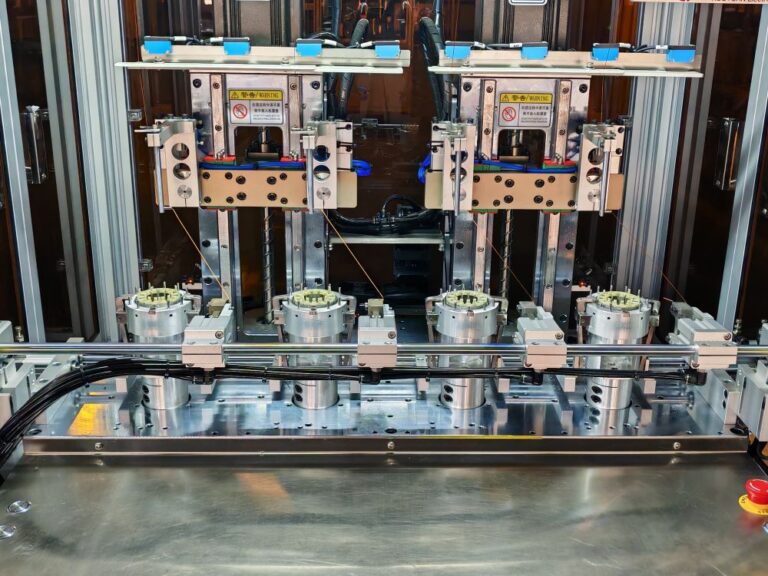
Motor Production Line
Advanced production lines ensure consistent quality and high production capacity for global BLDC motor application manufacturers.
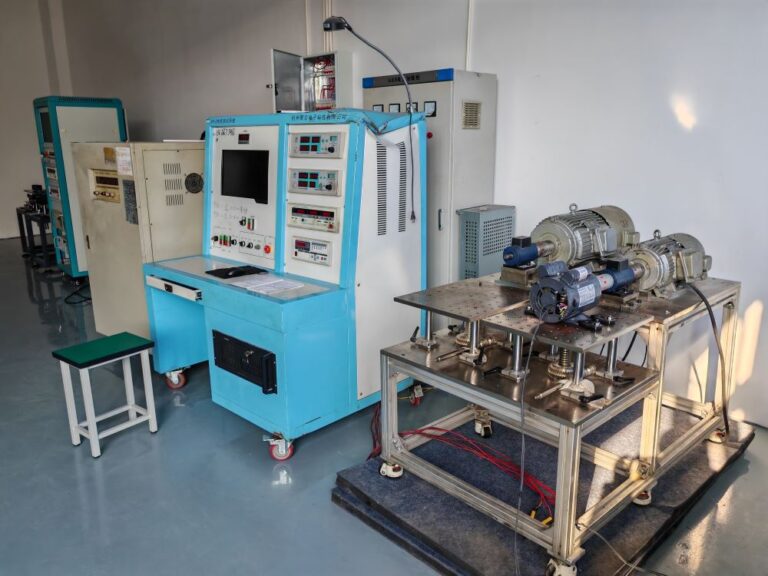
Motor Testing Laboratory
Professional testing equipment verifies torque, efficiency, durability and performance before shipment.
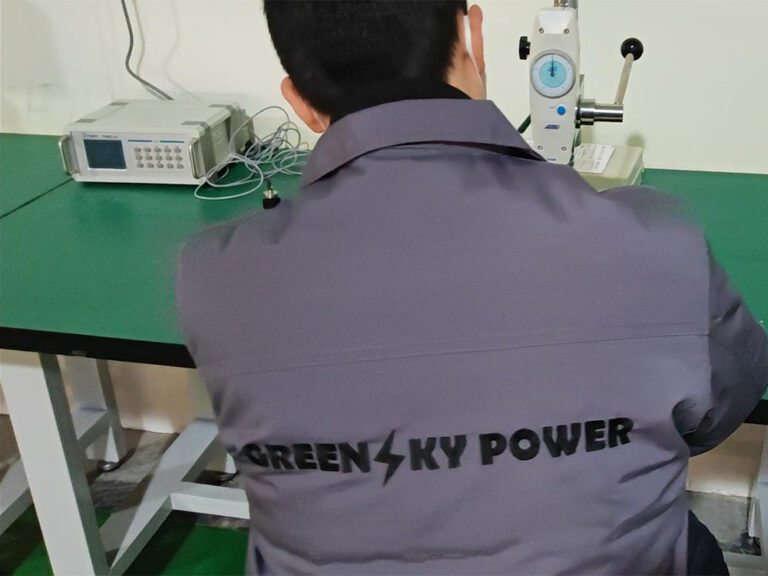
Quality Inspection
Strict inspection procedures ensure each motor meets international standards and customer specifications.
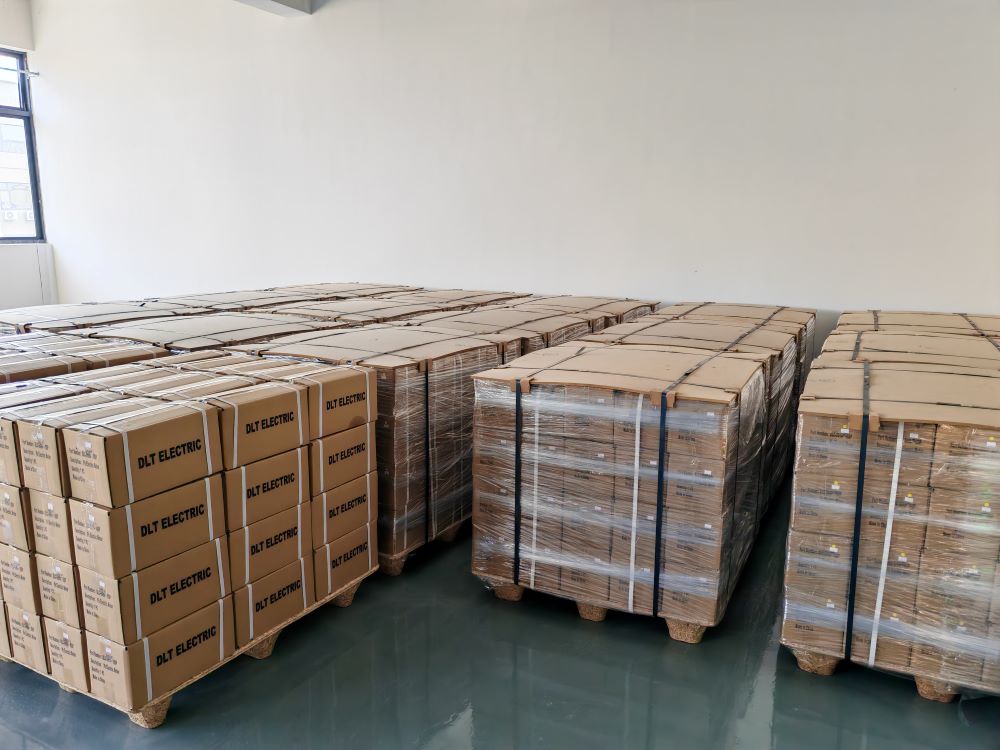
OEM Production
Flexible OEM manufacturing supports custom BLDC motor solutions for application manufacturers.
Controller Ratings and Interface
What is fixed across the 72 V range, what is set per order, and the documents available today.
| Parameter | Specification |
|---|---|
| Voltage | 72 V DC |
| Current range | 20 – 200 A |
| Bus power | 1,440 W – 14,400 W at 72 V (V × A); published 500 W – 10 kW+ to confirm |
| Control mode | FOC / Square Wave |
| Efficiency | ≥96% |
| Communication | PWM / CAN / RS485 |
| Protection | Over-current / Over-voltage / Thermal |
| Logic level and connector pinout | Not specified — confirm before design freeze |
There is no single datasheet covering every 72 V controller build, because the current band, control mode, connectors and firmware are configured per order. The documents above give the range and the wiring conventions; the drawing issued against your motor and drive is the controlling document. If a download does not start in a mobile in-app browser, open this page in the system browser and tap again.
Drive interface — confirm before design freeze
What to ask for · its current status · why it matters on a real machine| Item | Status | Why it is on this list |
|---|---|---|
| Bus voltage | 72 V DC nominal | A 20-series (20S) Li-ion pack gives about 72 V nominal (84 V fully charged); the working range and tolerance against pack sag have to be confirmed for your battery. |
| Continuous and peak current | Not specified — confirm before design freeze | The 20–200 A is the range, not a rating. The continuous and the peak current for your motor, plus the peak duration, fix the actual drive you need. |
| Bus power | 1,440 – 14,400 W at 72 V (V × A); published 500 W – 10 kW+ to confirm | The bus power at the 72 V supply. The published 500 W–10 kW+ band spans low-current and peak builds, so confirm the rating for your motor on the drawing. |
| Battery / BMS communication | PWM / CAN / RS485 per order; mapping to be defined | On a 72 V pack the drive usually negotiates SOC, enable and the regen handshake with the BMS. CAN and RS485 are buses — the message IDs, baud and register map have to be agreed. |
| Logic level and throttle | Not specified — confirm before design freeze | A 3.3 V host driving a 5 V input, or the reverse, is the most common integration failure. Get the level and the PWM frequency in writing before the control PCB is frozen. |
| Hall / sensor wiring and pinout | See the BLDC series datasheet | Phase and Hall order must match between drive and motor; reversing either will not run correctly, and the pinout has to match your harness. |
| Protection set points | Not specified — confirm before design freeze | Over-current, over-voltage and thermal trip points are configured, not universal. Set them to the motor and the application, not to a default. |
| Regenerative braking | Supported; recovery current to confirm | Regen recovers energy to the 72 V pack on EVs, scooters and AGV, but the recovery current and the termination voltage must match the BMS to charge safely. |
| Thermal path and housing | Not specified — confirm per build | At 100–200 A the losses are real. The housing, heatsink and airflow have to be agreed so the drive holds current continuously rather than tripping on temperature. |
| Firmware and customisation | Custom firmware per project | Start-up ramps, fault behaviour, regen and commutation are firmware decisions. They are supplied per project, so the specification has to be written before the code. |
| Feedback option | Encoder or Hall per model; to be specified | Closed-loop speed or position needs feedback, and the encoder resolution and Hall sequence have to match the drive you intend to use. |
24V vs 36V vs 48V vs 72V BLDC Controllers
The same drive architecture scales across four bus voltages, but the application they serve changes. 24 V is the compact, battery-friendly choice; 36 V is the e-mobility sweet spot; 48 V and 72 V are where industrial, solar and high-power duty live.
| Feature | 24 V | 36 V | 48 V | 72 V |
|---|---|---|---|---|
| Typical application | Small devices | E-bike / AGV | Industrial / Solar | High power EV |
| Power range | Low (to ~1 kW) | Medium | High | Very high |
| Relative cost | Low | Medium | Higher | Highest |
| Same 500 W current | ~24.5 A | ~16.3 A | ~12.3 A | ~8.2 A |
72 V is the high-power EV bus
A 20-series Li-ion pack and the familiar high-voltage e-mobility bus mean the controller is designed to sit with a battery and a BMS, not a lab supply.
The current falls as voltage rises
At the same 500 W, 48 V draws about 12.3 A and 72 V about 8.2 A. The higher bus moves the same power through thinner cable and lower loss — which is why 72 V owns heavy-duty and high-power duty.
Pick the bus to match the pack
If the machine already runs on a 72 V battery, stay at 72 V — the controller is one part of a system, and a second bus voltage costs more than it saves at this power level.
Current figures are arithmetic at 85% efficiency for illustration, not a rating. The same motor is built at each voltage, so the decision is about the machine’s existing bus and harness, not the drive’s capability.
Standards for a 72V BLDC Drive
Three documents answer three questions about a brushless drive: how it is rated as a drive system, how its battery is built safely, and which EU directive it meets at 72 V.
Rating as a drive system
IEC 61800-1:2021 defines an adjustable-speed DC power drive system — the power conversion, control, protection, monitoring and the motor together. It is the standard that turns “a controller” into a rated, testable drive system.
Battery safety
IEC 62133-2:2017 is the safety standard for the secondary Li-ion cells and battery packs a 72 V system uses. The pack must comply; the controller is designed to work with a compliant pack and its BMS.
EMC directive
EMC 2014/30/EU applies to the drive’s emissions and immunity. At 72 V DC the product sits below the 75 V DC threshold of the Low Voltage Directive, so the CE side is EMC, not LVD.
The CE mark, and how to read it
A 72 V DC product sits below the 75 V DC threshold of the Low Voltage Directive (LVD 2014/35/EU), so LVD does not apply — the CE side is the EMC directive rather than LVD. The CE mark on a controller is a conformity statement, not a single certificate; the certificate number and scope are supplied per project against the model you are buying. Housing protection is graded by IEC 60529 (the IP code), but it is the drawing, not the mark, that fixes the rating.
A drive is part of a system, not the whole of it
The EMC performance of a drive depends on how it is wired — the motor cable, the earthing and the filtering all change the emissions. A drive that meets the directive on the bench can still fail in your machine, so the declaration for the finished equipment is issued by the equipment manufacturer, with the drive’s documentation as part of the technical file.
Why Choose Our 72V BLDC Motor Controllers
High power capability
Up to 200 A continuous and 10 kW+ bus power, with the thermal headroom high-current duty demands.
High efficiency
≥96% conversion at the rated point keeps the heat down and the battery run-time up on continuous duty.
Robust design
Protected against over-current, over-voltage and thermal events, so the drive fails safely under load.
OEM support
Custom firmware and hardware, so the drive is built around your specification rather than the other way round.
OEM & custom 72V controllers
- Firmware customization — start-up ramps, fault behaviour, regen and commutation written to your application
- High-current PCB design — the board and the connectors that carry 200 A and match your panel and pack
- Thermal optimization — heatsink and housing sized to the space and the duty you have
- Private label branding — your name and part number on the drive and the packaging

Need a 72V BLDC Controller for Your Project?
Talk with our sales engineers
- Motor — the motor’s rated and peak current, and its voltage.
- Control — FOC or square wave, sensor or sensorless.
- Battery — the 72 V pack, its BMS and the interface (CAN / RS485 / PWM) you need.
- Application — EV, scooter, AGV, fan, pump, solar or something else.
- Regen — whether you need energy recovery back to the pack, and the recovery current.
- Order plan — sample quantity, annual volume and labelling.
Send an inquiry
Send the motor’s rated and peak current, and the control mode you need — we reply with a drive proposal within 24 hours.
72V BLDC Motor Controller FAQ
1. What applications use 72V controllers?
Mainly electric vehicles, industrial equipment and high-power systems — EV traction, electric scooters and motorcycles, AGV and robotics, high-power pump systems and heavy-duty mobile machinery that already runs on a 72 V battery.
2. Why choose 72V over 48V?
72 V allows higher power output and better efficiency for demanding applications. At the same 500 W the 72 V bus draws about 8.2 A versus 12.3 A at 48 V, so the same power moves through thinner cable and lower loss — which is why 72 V owns heavy-duty and high-power duty.
3. Do you support CAN communication?
Yes, especially for EV applications. The drive talks to the pack’s BMS over CAN or RS485 for SOC, enable and the regen handshake; PWM is also supported for simpler packs. The message IDs, baud and register map are agreed per project.
4. Can you handle high current customization?
Yes, we support up to 200 A and beyond for OEM projects. High-current PCB design, thermal optimization, custom firmware and private labelling are all part of the build, supplied against your motor and pack.
5. How much current headroom should I leave?
Size the controller 20–30% above the motor’s current. The margin covers start-up, load spikes and ambient derating — but the decisive number is the motor’s peak current, not its rated wattage, because the peak is what trips the protection.
6. Does the controller talk to the battery BMS?
On a 72 V pack it usually does. CAN or RS485 carries SOC, enable and the regen handshake to the BMS; the message IDs, baud and register map have to be agreed for the drive to integrate with your system. A plain PWM throttle is also supported for simpler packs.
Get Your 72V BLDC Controller Quote
Contact us for pricing, datasheets and technical consultation, or see the BLDC motor controller page for the wider drive range.
Professional response guaranteed within 24 hours. Factory Add.: Quanxi Industry Zone, Wuyi, Zhejiang, China · Office Add.: 1509 Binsheng Rd, Hangzhou, Zhejiang, China · E-mail: mkt@greensky-power.com · TEL: +86 571 8819 5488 · Fax: +86 571 8819 4366