
What Is the Meaning of Planetary Gearbox Efficiency?
Quick Answer
0.98³ ≈ 94% overall.- What Does “Planetary Gearbox Efficiency” Mean?
- How Efficiency Is Determined
- Efficiency by Number of Stages
- Planetary vs Worm vs Spur vs Harmonic
- Engineering Data: Efficiency, Power Loss, Heat
- Worked Example: Energy and Heat Savings
- Best Applications for High Efficiency
- How to Select for Efficiency
- Common Engineering Mistakes
- Troubleshooting
- FAQ
- Why Choose Greensky Power?
What Does “Planetary Gearbox Efficiency” Mean?
Efficiency (η) is the ratio of a gearbox’s output power to its input power:
η = Pout / Pin × 100%
If a motor feeds 4 kW into a gearbox and 3.8 kW emerges as shaft power, the gearbox is 3.8 / 4.0 = 95% efficient. The missing 0.2 kW did not disappear — it became heat through friction at the gear teeth, bearings and oil seals. So “efficiency” is really a statement about how much of the motor’s power survives the reduction, and how much is wasted as heat.
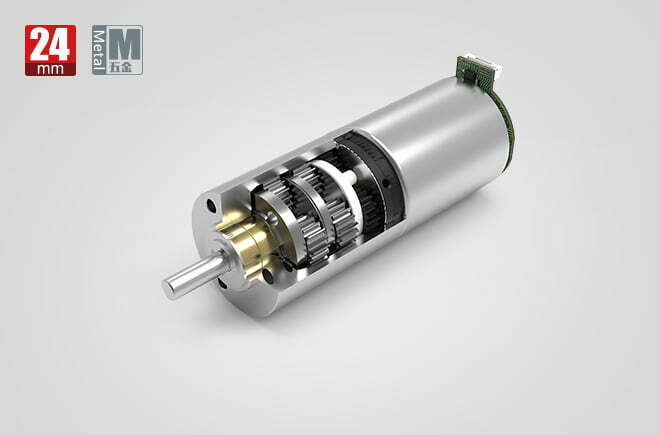
Why the Loss Happens: Rolling vs Sliding Contact
A planetary gearbox meshes its sun gear, planet gears and ring gear with mostly rolling contact, and the torque is shared across three or more planets. Rolling friction is low, so very little energy becomes heat. A worm gearbox, by contrast, works by the worm sliding continuously across the wheel face — high friction that burns a large share of input power as heat. That single difference is why planetary efficiency sits in the high 90s while worm efficiency falls to 50–90% depending on ratio.
How Efficiency Is Determined
Determining a planetary gearbox’s efficiency is a two-step exercise: first establish the single-stage baseline, then compound it across however many stages the target ratio demands. The base number is set almost entirely by the rolling-contact gear mesh, and it is both high and remarkably stable — so the total efficiency is mostly a function of how many times you stack that stage, not of some hidden loss. The subsections below walk through each piece in turn.
Single-Stage Efficiency
A single planetary reduction stage — one sun gear, one set of planets, one ring gear — is typically 97–98% efficient (helical, well-lubricated units can reach 99%). This is the base figure every supplier quotes.
Multi-Stage Compounding
When several stages are stacked to reach a higher ratio, the losses multiply. Total efficiency is the product of the individual stage efficiencies:
ηtotal = η1 × η2 × η3
Three stages at 98% each: 0.98 × 0.98 × 0.98 = 0.941 — about 94%. Each additional stage costs a few points, which is why engineers try to reach the target ratio with the fewest stages possible.
Load Distribution and Load Independence
Because multiple planets share the transmitted torque, no single tooth carries the full load, and stage efficiency stays nearly constant across the operating range (≈97–99% per stage). Worm efficiency, in contrast, is strongly ratio- and load-dependent because sliding friction dominates.
The Three Physical Loss Sources
The small gap between input and output power comes from three places, each worth knowing when you diagnose a hot or under-performing gearbox: (1) gear-mesh friction — rolling contact, minimized by good tooth profiles and surface finish; (2) bearing friction — the planet and shaft bearings; and (3) oil churning and seal drag — viscous losses that grow with speed and oil level. Because the gear mesh itself is so efficient in a planetary design, bearing and churning losses become proportionally more important — which is why high-speed planetary units are so sensitive to lubricant viscosity.
Helical vs Spur Planetary Efficiency
Planetary stages come in spur (straight-cut) and helical (angled-cut) form. Helical teeth engage more gradually and run with less vibration and noise, and a well-lubricated helical stage can edge toward the top of the efficiency range (98–99%). Spur stages are simpler and slightly less costly but generate marginally more meshing loss and acoustic noise. For most applications the efficiency difference is small; helical pays off where smoothness, quietness and top-tier efficiency justify the cost.
Efficiency by Number of Stages
| Configuration | Typical efficiency | Compounding example (98%/stage) |
|---|---|---|
| Single-stage | 97–98% | 0.98 = 98% |
| Two-stage | 95–97% | 0.98 × 0.98 = 96.0% |
| Three-stage | 94–96% | 0.98 × 0.98 × 0.98 = 94.1% |
| Four-stage (rare) | ~92% | 0.98&sup4; = 92.2% |
Planetary vs Worm vs Spur vs Harmonic
| Gearbox type | Typical efficiency | Contact type | Self-locking | Best for |
|---|---|---|---|---|
| Planetary | 94–98% | Rolling | No | Servo, robots, continuous duty |
| Spur (parallel shaft) | 90–95% | Rolling | No | General industrial |
| Harmonic (strain-wave) | 70–90% | Rolling + flex | No | High precision, compact joints |
| Worm | 50–90% | Sliding | Yes | Self-locking lifts, valves |
The efficiency gap is starkest at high ratios: a 60:1 worm drops toward 50–70% while an equivalent planetary gear motor holds the high 90s. See planetary vs worm gear motor for the full trade-off.
Engineering Data: Efficiency, Power Loss, Heat
Power-Loss Formula
Power lost as heat is the complement of efficiency:
Ploss = Pin × (1 − η)
This is the number that sets cooling requirements and energy bills, not the efficiency percentage itself.
Torque and Efficiency
Output torque also carries the efficiency penalty: Tout = Tmotor × i × η. A 10:1 planetary at 95% efficiency turns 0.5 N·m of motor torque into 0.5 × 10 × 0.95 = 4.75 N·m, not the naive 5 N·m.
How Efficiency Is Measured
Efficiency is measured on a test rig with torque sensors on both shafts: η = (Tout × nout) / (Tin × nin). The measured value depends on load, speed, oil temperature and run-in — which is why catalog figures are always nominal, and a freshly assembled field unit can read a point or two below spec until the gears have bedded in and the oil is at temperature. When two suppliers quote “98%”, make sure both are quoting the same load, speed and temperature — otherwise the numbers are not comparable.
Efficiency and Duty Cycle
Efficiency also interacts with how the gearbox is run. A gearbox that is highly efficient at full load may still overheat if it runs continuously (S1 duty) in a hot environment, because even a small percentage loss becomes a steady heat input with nowhere to go. Conversely, an intermittent drive can tolerate a slightly lower-efficiency gearbox because the heat has time to dissipate between cycles. Match the gearbox to the duty cycle, not just the efficiency number, and verify the thermal rating under your real load profile.
Efficiency vs Load
Planetary stage efficiency is nearly load-independent; worm efficiency falls at higher ratio and higher sliding velocity. When comparing datasheets, confirm the efficiency is quoted at your operating ratio and load, not the most favorable point.
Worm Efficiency by Ratio (for Comparison)
| Worm reduction ratio | Typical efficiency |
|---|---|
| 10:1 | 85–90% |
| 20:1 | 75–85% |
| 40:1 | 65–75% |
| 60:1 and above | 50–70% |
Higher worm ratios slide the wheel further per rotation, so efficiency falls. A planetary unit at the same deep ratio holds the high 90s — the gap that drives the energy math in the worked example below.
Efficiency, Heat and Thermal Limits
Efficiency and heat are two sides of the same coin. Every point of efficiency lost becomes heat that the housing and lubricant must dissipate. A compact planetary stage is inherently efficient, but because it is also small, its surface area for cooling is limited — under continuous high-load duty the oil can still climb toward 80–95 °C. This is why the IEC 60034-1 thermal framework and correct lubricant choice matter as much as the headline efficiency figure.
Worked Example: Energy and Heat Savings
A 4 kW output drive runs 6,000 hours a year at US$0.12/kWh. Compare a 95% planetary gearbox against a 75% worm gearbox.
| Quantity | Planetary (η = 0.95) | Worm (η = 0.75) |
|---|---|---|
| Input power | 4 / 0.95 = 4.21 kW | 4 / 0.75 = 5.33 kW |
| Heat loss | 0.21 kW | 1.33 kW |
| Annual energy | 25,263 kWh | 31,980 kWh |
| Annual energy cost | US$3,032 | US$3,838 |
Walk through the arithmetic once and it becomes second nature: input power is output power divided by efficiency (4 / 0.95 and 4 / 0.75), the difference is the loss, and the annual energy is that input power times the running hours. The same three-step check works for any gearbox comparison — and it is what turns a vague “which is more efficient?” into a dollar figure a purchasing manager can act on. Run it before you accept a quote, not after the machine is commissioned.
Best Applications for High Efficiency
High planetary efficiency pays off most where energy is metered, heat is constrained, or runtime is the product itself. Think battery-powered mobile equipment, continuously running pumps and fans in energy-audited plants, and precision servo axes where stray heat distorts accuracy. The gearbox is rarely the largest load in a system, but its efficiency gap compounds with the motor’s, so a few points saved at the reducer translates directly into a cooler, longer-running, lower-cost machine. The list below shows where the choice of gearbox efficiency has the biggest financial and functional impact.
- Battery-powered AGVs and robots — every efficiency point extends runtime; see precision planetary gearbox applications.
- Continuous-duty pumps, conveyors, mixers — low heat and energy cost over thousands of hours.
- Servo and CNC axes — high efficiency plus low backlash for precise motion.
- Where cooling is constrained — compact planetary stages run cooler than equivalent sliding-contact reducers.
In every one of these cases the pattern is the same: efficiency is not a spec to glance at, but a number that quietly determines runtime, heat, maintenance and energy cost over the machine’s life. A gearbox chosen on ratio and price alone, with efficiency ignored, often costs more within a year of continuous duty.
Efficiency Expectations by Application
| Application | Why efficiency matters | Typical target |
|---|---|---|
| AGV / mobile robot | Battery runtime | ≥95% |
| Continuous pump / fan drive | Energy cost, heat | ≥94% |
| Servo / CNC axis | Heat, precision, dynamics | ≥94% |
| Medical / lab instrument | Low heat, quiet | ≥90% |
| Occasional lift (self-locking) | Safety > efficiency | 50–80% acceptable |
Why Efficiency Matters Most for Battery Systems
On an AGV or mobile robot, a planetary gearbox’s 95%+ efficiency translates directly into longer battery runtime, because the lost fraction of power never reaches the wheels. Switching a battery drive from a 70% worm reducer to a 95% planetary stage can cut the drive’s own energy draw by roughly a quarter — the difference between an extra shift of runtime and an early recharge. The same logic applies to any continuous-duty or energy-audited application where every watt-hour is metered.
How to Select for Efficiency
Efficiency should be a selection constraint from the first line of the specification, not an afterthought. The sequence is simple: know your output power and ratio, minimize the number of stages, compute the true efficiency-adjusted torque, budget the heat, and then choose the gearbox type that matches the application’s efficiency priority. Follow the six steps in order and most efficiency-related failures are designed out before an order is ever placed.
- Compute required ratio and output torque first (see how to select a reduction gearbox).
- Minimize stages. Reach the ratio with the fewest stages to avoid compounding losses.
- Compare efficiency at your operating point, not the catalog maximum.
- Check the efficiency-affected torque. Use
T = Tmotor × i × η, not the raw ratio. - Size cooling for the power loss. Apply
Ploss = Pin × (1 − η)to confirm the housing can shed the heat. - Pick the right gearbox type. Planetary for efficiency; worm only when self-locking is mandatory (see types of speed reducers).
How to Read an Efficiency Datasheet
A credible efficiency claim states the complete-gearbox efficiency at a specific ratio and load, not a single-stage ideal. Ask for three numbers: the stage count, the total efficiency at your operating ratio, and the corresponding power loss or temperature rise. If a supplier quotes “98%” for a three-stage unit, that is almost certainly a single-stage figure — request the compounded total before you size the motor or the cooling.
Common Engineering Mistakes
- Quoting single-stage efficiency for a three-stage unit. Always ask for the efficiency of the complete gearbox at your ratio.
- Ignoring efficiency when sizing torque. Using
T × iwithout the η factor overstates available torque. - Choosing worm for efficiency-critical duty. Self-locking is a valid reason, energy savings is not.
- Adding stages for a slightly higher ratio. The compounding loss often outweighs the benefit.
- Under-cooling. Not budgeting for
Plossleads to hot oil, seal failure and shorter life. - Trusting “98% efficient” without load context. Confirm the efficiency is load- and ratio-specific.
- Neglecting lubricant viscosity. Oil that is too thick raises churning loss; too thin reduces the protective film. Match the viscosity to speed and temperature.
- Comparing efficiency across different ratios. A 10:1 unit and a 60:1 unit of the same brand have different efficiencies; always compare at the same ratio.
- Ignoring break-in. New gearboxes read lower efficiency until run-in; do not reject a unit on a cold, just-assembled measurement.
The common thread behind these mistakes is treating efficiency as a fixed badge rather than an operating-point-dependent quantity. Once you ask “at what ratio, load and temperature?” for every efficiency figure, most bad gearbox decisions disappear.
Troubleshooting — Problem, Cause, Solution
| Problem | Likely cause | Solution |
|---|---|---|
| Gearbox runs hot | Understated power loss / poor cooling | Recompute Ploss; add cooling or a more efficient stage |
| Lower output torque than expected | Ignored efficiency factor in torque calc | Apply T = Tmotor × i × η |
| Efficiency drops after time | Lubricant degradation / wear | Change oil on schedule; check for tooth wear (see SKF) |
| Noisy / vibrating at load | Overload beyond rated torque | Verify rated torque vs actual; reduce load or upsize |
| Heat rises with ratio | Too many stages / sliding losses | Reduce stages; switch gear type if possible |
FAQ
What does planetary gearbox efficiency mean?It is the fraction of input power delivered as useful torque at the output shaft, as a percentage (output power ÷ input power × 100). The rest is lost as heat in gear meshing, bearings and seals.
What is the typical efficiency of a planetary gearbox?Single-stage is 97–98%, two-stage 95–97%, three-stage 94–96%. Efficiency compounds multiplicatively, so each added stage reduces overall efficiency.
Why are planetary gearboxes more efficient than worm gearboxes?Planetary gears transmit by rolling contact across multiple planets, producing little friction. Worm gears rely on sliding contact, which creates far more friction and heat, dropping efficiency to about 50–90% depending on ratio.
How do you calculate the overall efficiency of a multi-stage planetary gearbox?Multiply the stage efficiencies: overall = stage1 × stage2 × stage3. Three stages at 98% each give 0.98 × 0.98 × 0.98 = 0.941, about 94%.
Does planetary gearbox efficiency change with load?Planetary stage efficiency stays nearly constant across the load range (about 97–99% per stage). Worm gearboxes are more load- and ratio-sensitive because sliding friction dominates.
How does gearbox efficiency affect operating cost?Lower efficiency means more input power becomes heat. On a 4 kW drive, a 75% worm gearbox wastes about 1 kW as heat versus 0.2 kW for a 95% planetary unit — roughly 6× more heat and a meaningful rise in energy cost and cooling needs.
Why Choose Greensky Power?
Greensky Power designs and manufactures precision planetary gearboxes and complete planetary gear motors with documented, load-specific efficiency data — so you can size the real torque and cooling budget, not a catalog maximum. For your program we supply:
- Single- to multi-stage planetary and harmonic gearboxes with verified stage and total efficiency.
- Matched planetary gear motors and custom motors for battery and continuous-duty systems.
- Engineering support for torque calculation, efficiency budgeting and motor selection.
Related Resources
- Gearbox overview (pillar page)
- Electric motor basics (pillar page)
- Precision planetary gearbox deep dive
- How a planetary gearbox works
- Planetary gear motor
- Planetary vs worm gear motor
- Spur vs planetary gear motor
- Harmonic drive vs planetary gear
- How to select a reduction gearbox for an electric motor
- DC motors category
References
- IEC 60034-1:2022 — Rotating electrical machines, general requirements. webstore.iec.ch/en/publication/65446
- IEC 60034-30-1 — Efficiency classes of line-operated AC motors. webstore.iec.ch/publication/91195
- ANSI/NEMA MG 1-2021 — Motors and Generators. webstore.ansi.org/standards/nema/ansinemamg2021
- NEMA — Motor and generator product guidance. nema.org/products/pages/motor-and-generator.aspx
- U.S. DOE — Motor systems efficiency and load guidance. energy.gov — 10097517.pdf
- IEA — Electric motors and industrial efficiency. iea.org/energy-system/industry/electric-motors
- SKF — Bearing failures and their causes. skf.com — bearing failures
- Siemens — SIMOTICS electric motors product range. siemens.com — electric motors
- IEEE Xplore — Peer-reviewed motor / actuator design paper. ieeexplore.ieee.org/document/6342334
- IEEE Transactions on Industry Applications — Zhou & Shen, “Rotor Notching for Electromagnetic Noise Reduction of Induction Motors”, DOI 10.1109/TIA.2017.2681969. doi.org/10.1109/TIA.2017.2681969
- maxon — EC technology and gearhead selection. maxongroup.com — ec-technology
- FAULHABER — Brushless DC motors and micro-drive know-how. faulhaber.com — brushless DC motors
- Yaskawa — Motion and servo system technical downloads. yaskawa.com/downloads/search-index
- Tsubaki — Gearmotor selection technical reference (service-factor method). tsubakimoto.co.jp — selection reference
Technical content reviewed by the Greensky Power engineering team. Efficiency figures are representative ranges; confirm the load- and ratio-specific efficiency for your exact configuration with the supplier.
