
Precision Planetary Gearbox Applications: A Comprehensive Guide to Industrial Uses
Quick Answer. A precision planetary gearbox is used wherever a motor must trade speed for high torque in a small, coaxial envelope — industrial robots and cobots, CNC feed and rotary axes, packaging and material-handling lines, automotive actuators (EPB, power tailgate, seats), medical and laboratory automation, aerospace actuators, solar trackers, and semiconductor handling. Its multi-tooth load sharing yields 95–99% per-stage efficiency, torque density far above spur or worm units, and backlash as low as 1–3 arc-min (under 1 arc-min in ultra-precision classes). Pick one when you need compactness, stiffness, and repeatable positioning more than self-locking.
[ez-toc]
What Is a Precision Planetary Gearbox?
A planetary (epicyclic) gearbox transmits torque through a central sun gear that drives 2–5 planet gears rolling inside a fixed outer ring gear; the planet carrier becomes the output shaft. The “precision” qualifier is not a different architecture — it is the same sun/planet/ring/ carrier set built to tighter tolerances and stiffer bearings. For the standard fixed-ring layout the ratio is i = 1 + (Zring / Zsun), and efficiency runs 95–99% per stage.
Precision vs standard planetary — what actually changes
A standard planetary reducer ships with 10–15 arc-min backlash, general-purpose bearings, and a lightly preloaded carrier. A precision unit reaches 1–3 arc-min (or <1 arc-min in ultra-precision classes) through tighter ISO 1328 tooth tolerances, preloaded high-rigidity bearings, ground gears, and a stiffer carrier that resists torsional wind-up. The penalty is cost (roughly 2–3× for ultra-low backlash) and a small thermal rise from the bearing preload — which is exactly why you should not over-specify it on a conveyor.
For the kinematics and ratio derivation, see our how a planetary gearbox works guide.
Why the Same Gearbox Fits So Many Industries
The reason a precision planetary reducer appears in robots, machine tools, and surgical instruments alike is structural, not marketing:
- Load sharing. Torque splits across 3–5 simultaneous mesh points, so each tooth carries only its fraction — enabling high torque in a small diameter.
- Coaxial input and output. Motor, gearbox, and load sit on one axis — ideal where a right-angle worm or offset spur train would not fit.
- High torsional stiffness. A short, symmetric load path gives low wind-up, so a step command produces a fast, repeatable response with minimal lost motion.
- Symmetric reactions. The ring gear balances radial forces, so the carrier bearings see less bending than in a single-mesh spur set — smoother running and longer life.
- Modular ratios. Staging 3:1–10:1 steps in series reaches 50:1–100:1+ without a bulky single mesh.
Precision Planetary vs Other Reducer Types
| Attribute | Precision planetary | Standard planetary | Worm | Harmonic |
|---|---|---|---|---|
| Backlash | 1–3 arc-min (<1 ultra) | 10–15 arc-min | 10–60 arc-min | <1 arc-min |
| Torque density | Very high | High | Low–moderate | Very high |
| Efficiency / stage | 95–99% | 94–98% | 50–90% | 65–90% |
| Single-stage ratio | 3:1 – 10:1 | 3:1 – 10:1 | 5:1 – 100:1 | 30:1 – 320:1 |
| Shaft alignment | Coaxial | Coaxial | Right-angle | Coaxial |
| Self-locking | No | No | Yes (high ratio) | No |
| Relative cost | Moderate–high | Moderate | Low–moderate | High |
For a deeper type-vs-type look, see our harmonic drive vs planetary gear and gearbox vs gear motor guides.
Engineering Data: Efficiency, Backlash, Torque, and Temperature
| Parameter | Precision planetary value | Standard / note |
|---|---|---|
| Efficiency per stage | 95–99% | Drops ~3–5% per added stage |
| Backlash (standard / precision / ultra) | 5–15 / 1–3 / <1 arc-min | ISO 1328 class drives tolerance |
| Single-stage ratio | ~3:1 – 10:1 | Zsun ≥ 12 (undercut limit) caps it |
| Torsional stiffness | 3–20 N·m / arc-min | Rises with frame size & preload |
| Radial load on output shaft | 0.5–2× rated torque reaction | Per AGMA 6034 bearing limits |
| Lubricant temperature limit | −10 °C to +90 °C | +120 °C with high-temp grease |
| Grease life vs temperature | Halves per ~10 °C over rated | SKF bearing-life methodology |
| Rating basis | AGMA 2001 / ISO 6336 | Bending & contact stress |
Core sizing formulas
Ratio from speeds: i = nin / nout = 1 + (Zring / Zsun). Output torque: Tout = Tin · i · η where η ≈ 0.95–0.99 per stage (two stages ≈ 0.94, three ≈ 0.91). Output power: Pout = Tout · ωout. Reflected inertia seen by the motor: Jref = Jload / i2 — the single most underestimated term in servo sizing. Apply a service factor SF ≥ 1.2 for shock and duty: Trated · i · η · SF ≥ Tpeak,load.
Backlash and torsional stiffness
Backlash is the lost motion at reversal; torsional stiffness is how much the output twists under load before it settles. A high-stiffness precision unit holds a step with little wind-up, which is why cobots and CNC axes prefer it over a loosely-built reducer. Note that stiffness and low backlash are bought with bearing preload, which adds a few watts of heat — another reason ultra-precision is not automatic-best everywhere.
| Backlash class | Typical value | Best-fit use | Relative cost |
|---|---|---|---|
| Standard | 10–15 arc-min | Conveyors, general automation | 1.0× (baseline) |
| Precision | 1–3 arc-min | CNC axes, cobots, automotive | ~1.5× |
| Ultra-precision | <1 arc-min | Rotary tables, semiconductor | 2–3× |
Best Applications for Precision Planetary Gearboxes
The table below maps common sectors to the engineering envelope that makes a precision planetary reducer the right call.
| Application sector | Typical ratio | Backlash needed | Torque range | Why planetary wins |
|---|---|---|---|---|
| Industrial robots / cobots | 30:1 – 100:1 | ≤3 arc-min (<1 for high-end) | 20–400 N·m | Torque density + stiffness in joint envelope |
| CNC feed & rotary axes | 10:1 – 100:1 | ≤1–3 arc-min | 30–500 N·m | High efficiency, low lost motion at reversal |
| Packaging & material handling | 5:1 – 30:1 | 5–15 arc-min | 10–200 N·m | Compact, reliable, high duty cycle |
| Automotive actuators | 15:1 – 60:1 | 3–10 arc-min | 5–80 N·m | Small, quiet, withstands vibration |
| Medical / lab automation | 20:1 – 80:1 | ≤1–3 arc-min | 1–30 N·m | Clean, precise, low noise |
| Aerospace & defense | 30:1 – 120:1 | ≤3 arc-min | 10–300 N·m | Power-to-weight, reliability |
| Renewable energy | 30:1 – 150:1 | 5–15 arc-min | 50–2000 N·m | High ratio in a small package |
| Semiconductor / 3C electronics | 20:1 – 100:1 | <1 arc-min | 0.5–20 N·m | Sub-micron repeatability |
1. Industrial robotics and collaborative robots
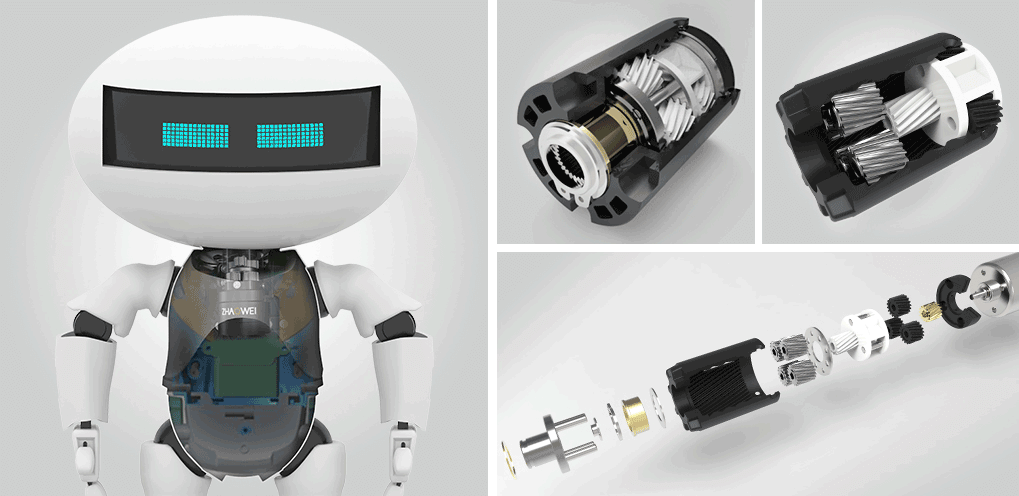
Robot joints are the textbook case: a shoulder or elbow joint must deliver 100+ N·m through a slender arm profile while holding repeatability to fractions of a millimeter. A precision planetary reducer on each axis gives the torque density to fold the actuator into the link and the stiffness to stop without overshoot. Cobots add a safety angle — low backlash keeps the commanded pose close to the actual pose so the force-limiting works. Pair with the right motor via our robot speed-reducer guide, our servo vs stepper comparison, and the broader AC vs DC motor guide when choosing the prime mover.
2. CNC machine tools and laser cutting
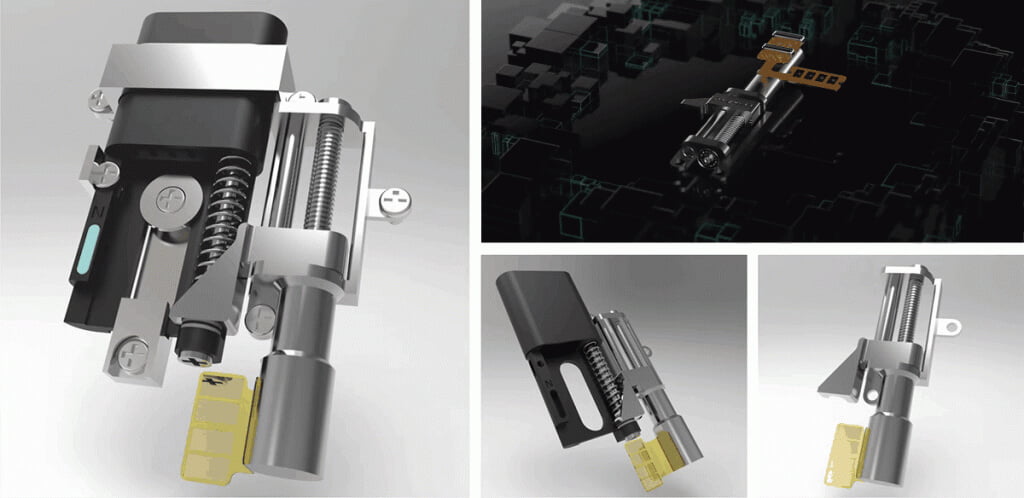
Feed axes and rotary tables need to reverse rapidly without “dead band” at the turnaround — exactly where backlash shows up as contour error. A precision planetary on the ballscrew or rotary axis removes that lost motion and, at 95–99% efficiency, keeps the servo motor cooler during long cuts than a worm would. High-precision rotary tables and indexers push to the <1 arc-min class.
3. Packaging and material handling
Conveyors, fillers, labelers, palletizers, and AGVs run long duty cycles where reliability beats micron accuracy. Here a 5–15 arc-min standard-precision planetary is usually the correct, cost-effective choice; over-specifying to ultra-low backlash only adds cost and heat. The coaxial layout also simplifies the drivetrain versus an offset gearmotor.
4. Automotive and e-mobility
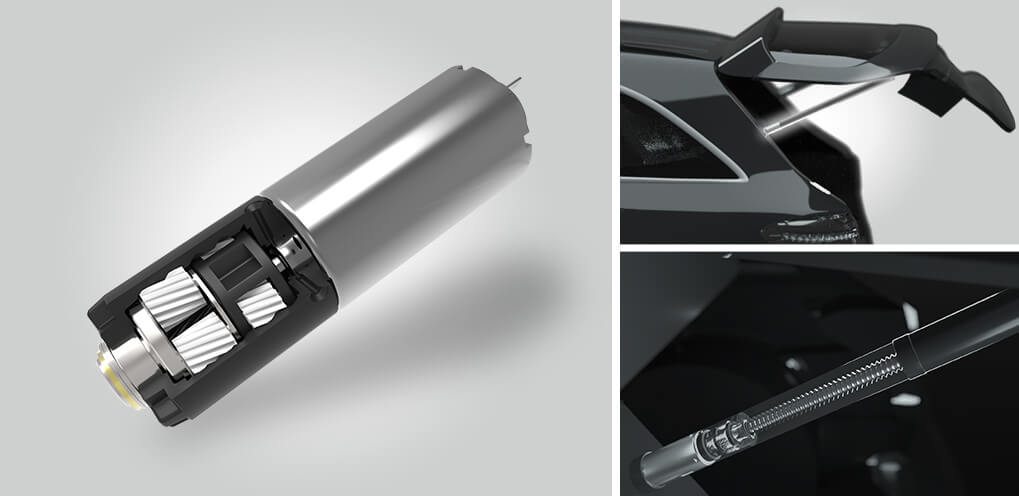
Electric parking brakes, power tailgates, seat adjusters, and active grille shutters use small precision planetary reducers because they are quiet, compact, and survive road vibration and temperature swings. These are high-volume, cost-sensitive uses, so the design margin is tight and the duty is well characterized — temperature rating matters more than backlash class. See our power-seat actuator notes for a representative automotive case.
5. Medical and laboratory automation

Surgical robots, infusion and pump drives, sample handlers, and diagnostic stages need clean, low-noise, repeatable motion. Precision planetary reducers in the 1–30 N·m range fit surgical instruments and lab automation where sub-arc-min repeatability and sterilization-compatible materials are specified.
6. Aerospace and defense
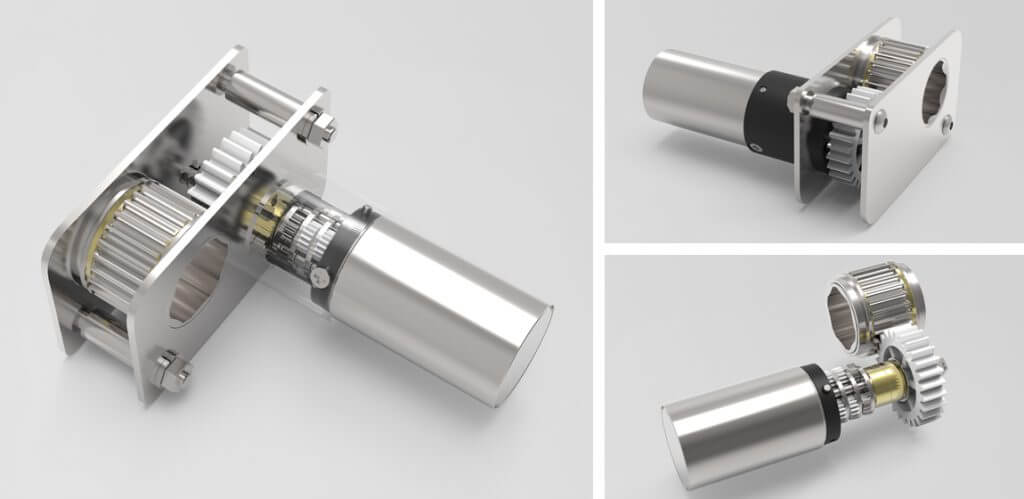
Aircraft actuators, antenna pointing, satellite deployments, and UAV gimbals prize power-to-weight and reliability under shock and wide temperature. Precision planetary reducers deliver the torque in a light coaxial package; the absence of self-locking is handled with brakes or worm stages where hold-without-power is mandatory.
7. Renewable energy
Solar trackers use precision planetary reducers to hold panels at the optimal angle against wind load with minimal drive power; small wind and micro-hydro units use them to step generator speed. Ratios of 30:1–150:1 in a compact housing beat a bulky single worm mesh.
8. Semiconductor and 3C electronics
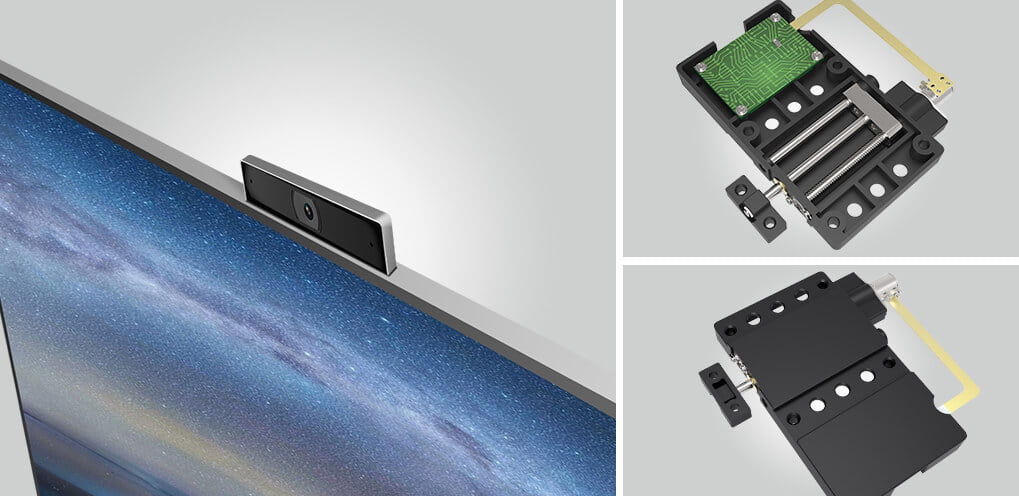
Wafer handlers, die bonders, and camera-module actuators demand the <1 arc-min ultra-precision class for sub-micron repeatability. This is where planetary competes hardest with harmonic drives — planetary wins on stiffness and cost at moderate ratio, harmonic on near-zero backlash at very high ratio.
9. Smart home and appliances
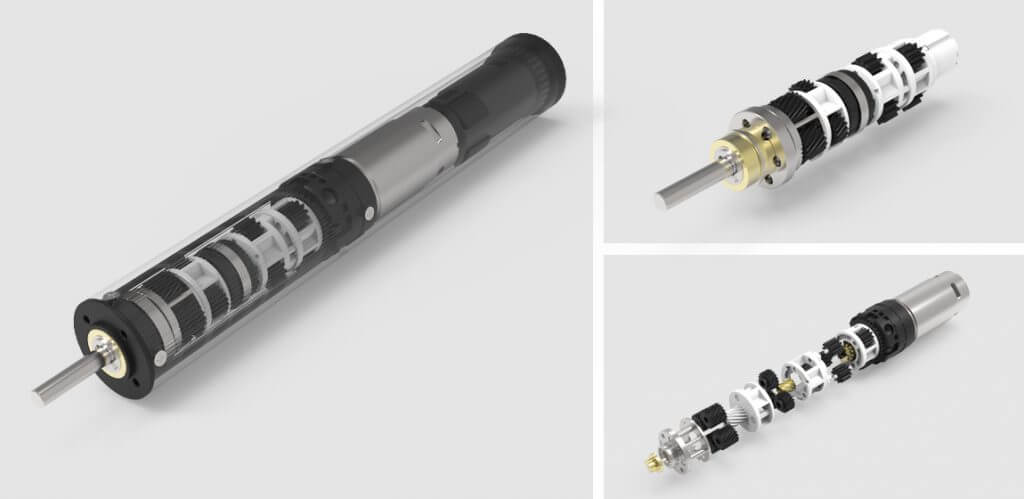
Robotic vacuums, curtain motors, smart locks, and lift mechanisms use miniature precision planetary reducers for quiet, precise motion in tiny envelopes. Here torque is small (often <1 N·m) but the same load-sharing principle applies — see our micro-motor gear reducer troubleshooting notes.
How to Select a Precision Planetary Gearbox: Step-by-Step
- Define the load. Output speed nout, continuous and peak torque, and the load inertia Jload.
- Fix the ratio. i = nmotor / nout; keep single stage ≤10:1 and stage in series for higher reductions.
- Check torque with efficiency. Tout,avail = Tmotor · i · η; confirm ≥ peak load × service factor (SF ≥ 1.2).
- Check reflected inertia. Jref = Jload / i2; the motor must accelerate it within your settle-time budget.
- Set the backlash class from the error budget (5–15 / 1–3 / <1 arc-min), not from the marketing sheet.
- Verify shaft loads. Keep radial/axial overhung loads inside the AGMA 6034 bearing limits; use a coupled or foot-mounted layout for heavy loads.
- Confirm environment. Temperature, ingress, and lubrication interval — sealed-for-life units simplify maintenance but cap temperature.
Worked Example A — 6-axis robot shoulder joint
A joint needs 60 rpm output, 120 N·m peak load, with ±0.05 mm repeatability at a 500 mm reach (angular tolerance ≈ 0.0057° = 0.34 arc-min). Motor: 3000 rpm, 3.0 N·m rated (≈0.94 kW).
- Ratio: i = 3000 / 60 = 50:1 → two stages (e.g., 5 × 10), η ≈ 0.972 = 0.941.
- Available torque: Tout = 3.0 × 50 × 0.941 = 141 N·m > 120 N·m peak (18% margin).
- Backlash: error budget demands <1 arc-min → specify the ultra-precision class, not the 3 arc-min class.
Verdict: a 50:1 two-stage ultra-precision planetary fits with margin — but only the <1 arc-min class meets the pose accuracy. A 3 arc-min unit would miss the ±0.05 mm target by ~8×.
Worked Example B — CNC rotary table
A rotary table needs 30 rpm, 80 N·m continuous, 200 N·m peak, indexing ±30 arc-sec. Motor: 3000 rpm, 2.4 N·m rated (≈0.75 kW).
- Ratio: i = 3000 / 30 = 100:1 → three stages (e.g., 4.643), η ≈ 0.973 = 0.913.
- Available torque: Tout = 2.4 × 100 × 0.913 = 219 N·m > 200 N·m peak — but only 9.5% margin.
- Backlash: ±30 arc-sec indexing → ≤1 arc-min precision class.
Verdict: it fits, but the 9.5% peak margin is thin. Step up to a 3.0 N·m motor → 273 N·m available (36% margin) — a cheaper insurance than a field failure. This is the classic mistake of sizing to rated torque and forgetting peak.
Common Engineering Mistakes
- Sizing to rated torque only. Acceleration torque (Jref · α) and peak load usually dominate; size to peak × SF.
- Ignoring reflected inertia. A massive load at a low ratio can stall the servo on the Jref = Jload / i2 term even when steady torque is fine.
- Over- or under-specifying backlash. <1 arc-min on a conveyor wastes 2–3× budget and adds heat; 15 arc-min on a rotary table ruins indexing.
- Overhung radial loads on the output shaft. A pulley or sprocket cantilevered off the shaft overloads the planet bearings — use a coupled or foot-mounted layout.
- Assuming self-locking. Planetary sets back-drive freely; a vertical or gravity-loaded axis needs a brake or a worm alternative (see worm gear reducer).
- Forgetting temperature. Grease life halves per ~10 °C over rated; a sealed unit in a hot cabinet ages fast.
Troubleshooting: Problem → Cause → Solution
| Problem | Likely cause | Solution |
|---|---|---|
| Backlash grows over time | Gear wear, bearing play, contamination | Replace unit or up-spec class; verify lube and seal; check radial load |
| Overheating in duty | Overload, too many stages, poor ventilation | De-rate, improve cooling, or choose a larger frame / higher-efficiency motor |
| Noise or vibration | Misalignment, damaged teeth, imbalance | Re-align coupling, inspect gears, balance rotating assembly |
| Output-shaft seal leak | Worn seal, lube expansion overpressure | Replace seal, correct fill volume, use vented or lip-seal design |
| Premature bearing failure | Radial overload, ingress, misalignment | Reduce overhung load, improve sealing, verify AGMA 6034 limits |
| Position drift with servo | Resonance, tuning, reflected inertia mismatch | Re-tune servo, add damping, revisit ratio to cut Jref |
Frequently Asked Questions
Q: What is a precision planetary gearbox used for?
A: Precision planetary gearboxes are used wherever a motor needs a large, compact speed reduction with low backlash and high torsional stiffness — industrial robots and cobots, CNC feed and rotary axes, packaging and material-handling lines, automotive actuators (EPB, power tailgate, seats), medical and laboratory automation, aerospace actuators, solar trackers, and semiconductor handling. The shared load path across multiple planet gears delivers high torque in a small coaxial envelope.
Q: How do I choose the right reduction ratio?
A: Start from the motor’s rated speed and the load’s required output speed: ratio i = nmotor / noutput. Then verify torque: Toutput = Tmotor × i × η (η ≈ 0.95–0.99 per stage). Also check reflected inertia Jref = Jload / i2 so the motor sees a tractable acceleration load, and confirm peak (not just rated) torque with margin. Single planetary stages reach about 10:1; 50:1–100:1 needs two or three stages, which compounds efficiency and backlash losses.
Q: What backlash do I need for CNC and robotics?
A: It depends on the error budget. Conveyors and general automation tolerate 5–15 arc-min. CNC feed axes and collaborative robots need ≤3 arc-min. High-accuracy rotary tables and semiconductor wafer handlers need <1 arc-min (ultra-precision). Remember that thinner backlash classes cost roughly 2–3× and run slightly warmer, so match the class to the job.
Q: Can a planetary gearbox back-drive or self-lock?
A: No. A planetary set has no screw wedge, so it back-drives freely and does not self-lock — an elevated load can turn the input shaft. If you must hold position without power or a brake, choose a high-ratio worm reducer or add a holding brake. This is a frequent oversight in vertical-lift and gravity-loaded axes.
Q: What is the difference between a precision planetary and a standard planetary gearbox?
A: Both share the sun/planet/ring architecture, but a precision unit uses tighter ISO 1328 tooth tolerances, preloaded high-rigidity bearings, and a stiffer carrier to reach backlash of 1–3 arc-min (or <1 arc-min ultra) versus 10–15 arc-min for standard units, plus higher torsional stiffness and lower lost motion. The trade-off is cost and a small thermal penalty from the preload.
Q: How long do precision planetary gearboxes last?
A: Service life is bearing- and lubrication-limited, typically rated by an L10 bearing life of 20,000–30,000 hours under rated load, often longer for sealed-for-life units at moderate duty. Life roughly halves for every ~10 °C above the rated lubricant temperature (per SKF bearing-life methodology), so keeping the unit within its temperature and load envelope matters more than the nameplate ratio.
Why Choose Greensky Precision Planetary Gearboxes?
Engineered to the spec, not the catalog. Greensky Power builds IEC- and NEMA-aligned precision planetary reducers and geared-motor assemblies for robotics, CNC, automotive, and medical OEMs, with ratios from 3:1 to 100:1+, backlash classes from 15 down to <1 arc-min, and ISO 9409 output flanges for drop-in servo integration. Our R&D team delivers custom gear ratios, shaft configurations, and motor integrations (BLDC, PMDC, stepper) within 4–6 weeks, supported by low MOQ and full dimensional and load documentation. Partner with a supplier that treats the error budget — not the brochure — as the design target.
Related Resources
- How a planetary gearbox works — kinematics and the Willis ratio
- Harmonic drive vs planetary gear — type-level selection
- Gearbox vs gear motor — what to specify
- Why robotic arms need speed reducers — robot joint sizing
- Motor flange guide — ISO 9409 mounting
- Servo vs stepper motor — pairing the right motor
- Worm gear reducer explained — self-locking alternative
- Everything about worm gears — efficiency & load
- Micro-motor gear reducer problems — troubleshooting
- Greensky motor features hub — the full motor range
- Our gear-motor manufacturing — OEM/ODM capabilities
- Gear-motor manufacturers in China — sourcing perspective
- Stepper motors — pairing with planetary reducers
References
- IEC 60034-1:2022 — Rotating electrical machines, Part 1: Rating and performance. webstore.iec.ch/publication/64888
- IEC 60034-30-1 — Efficiency classes for rotating electrical machines (IE1–IE5). webstore.iec.ch/publication/67563
- NEMA MG 1-2024 — Motors and Generators. nema.org/standards/view/Motors-and-Generators
- AGMA 2001 / AGMA 6034 — Gear rating and enclosed gear unit practice. agma.org/standards
- ISO 6336 — Calculation of load capacity of spur and helical gears. iso.org/standard/76425.html
- ISO 1328 — Cylindrical gear — ISO tooth tolerance system. iso.org/standard/76414.html
- IEEE 112 — Test Procedure for Polyphase Induction & DC Motors. standards.ieee.org/ieee/112/4703
- U.S. DOE — Motor & Drive Systems Efficiency. energy.gov/eere/motors
- SKF — Bearing life calculation (L10) for gear applications. skf.com/group/technical-insights/bearings
- Siemens — SIMOGEAR geared motors technical catalog. assets.new.siemens.com/…/simogear
- maxon — Gear Technology (download). maxongroup.com/…/gear-download
- FAULHABER — Drive technology know-how. faulhaber.com/en/know-how
- Yaskawa — Motor & drive technical documents. yaskawa.com/downloads
This guide was reviewed by the Greensky Power engineering team. External standards and manufacturer documents are linked for reference; verify the current edition before specifying.
