
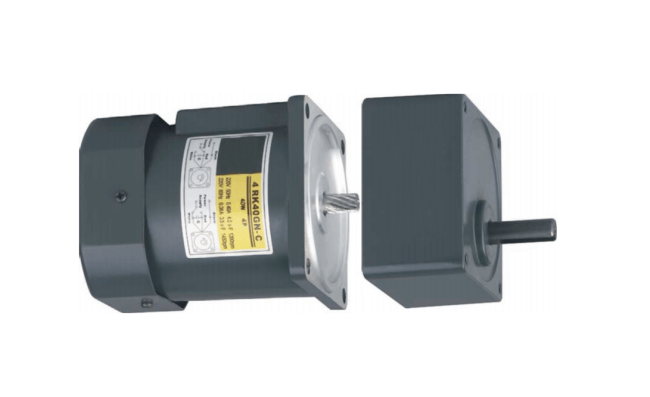
Greensky Power Motor Features
[ez-toc]
What “Motor Features” Means (and Why They Matter)
When engineers ask about motor features, they are really asking which measurable design and performance attributes make a motor fit — or unfit — for a job. The attributes that decide this are:
- Sealing & protection — oil seals, O-rings, IP rating against dust/water.
- Efficiency & IE class — how much input power becomes shaft output vs. heat.
- Thermal behaviour — insulation class, temperature rise, ambient limits.
- Speed-torque (S-T) characteristic — how torque holds as speed changes.
- Controllability — open-loop stepper, sensored BLDC, VFD-driven AC, or simple DC.
- Service life & maintenance — brush wear, bearing life, commutation wear.
- Customization — shaft, flange, voltage, feedback, brake, winding curve.
The original Greensky features page listed four of these (sealing, efficiency, S-T characteristic, customization) but stopped short of the comparison and engineering data that let a buyer actually choose. That gap is what this rewrite fills.
How Greensky Motors Are Built — Step by Step
- Lamination stamping. New silicon-steel punching dies form high-precision stator/rotor cores with low hysteresis loss — the root of the “high efficiency” feature.
- Winding & insertion. Copper is wound to a target turn count and slot fill that sets the S-T curve and starting torque.
- Rotor build. BLDC/AC use bonded or sintered magnets (or a squirrel cage); brushed DC adds a commutator and carbon brushes.
- Sealing. The output end gets an oil seal and O-ring so gearbox grease cannot wick back and age the insulation — the “high sealing” feature that protects motor life.
- Cooling & housing. A new heat-dissipation housing profile keeps temperature rise low at rated load.
- Testing. Each unit is checked for insulation resistance (≥100 MΩ at DC 500 V), dielectric strength (1500 V / 50 Hz / 1 min), noise (≤50 dB typical), and no-load/load performance before shipment.
For the underlying electromagnetic principle, see our guide to what a DC motor is and how it works.
Motor Type Feature Comparison
This is the table buyers actually search for — how the four families compare on the features that matter. Deeper dives live on the linked pages.
| Feature | BLDC | Brushed DC | AC induction | Stepper |
|---|---|---|---|---|
| Efficiency | 85% – 95% (IE3–IE5) | 75% – 85% | 80% – 94% (IE2–IE4) | 40% – 70% |
| Speed-torque characteristic | Flat, tight control | High starting torque | Stable under VFD | Holds position at zero speed |
| Controllability | Sensored/ sensorless ESC | Simple PWM / DC | VFD (50/60 Hz) | Open-loop pulses |
| Maintenance | None (no brushes) | Brush replacement | Low | Low |
| Service life | Long (2–4× brushed) | Short–medium | Long | Long |
| Sealing / IP | IP54 std, IP65/67 opt | IP54 std | IP54–IP65 | IP40–IP65 |
| Best fit | Battery, robotics, appliances | Tools, pumps, low cost | Conveyors, HVAC, fans | CNC, positioning |
See BLDC motor features, brushed DC motors, AC vs DC motors, and stepper motors for full treatments. The trade-offs of BLDC are covered separately so this page stays decision-focused.
Engineering Data: Efficiency, Temperature & Torque
Efficiency and IE classes (IEC 60034-30-1)
- IE1 standard → IE2 → IE3 (premium, often mandated) → IE4 (super-premium) → IE5 (ultra-premium, usually synchronous/BLDC).
- Each class step cuts losses roughly 15–20%. BLDC reaches IE4–IE5; good AC induction lands IE3–IE4; brushed DC sits around IE2; stepper is the least efficient by design.
Temperature limits
| Parameter | Greensky specification |
|---|---|
| Insulation class | E (120°C) / B (130°C) / F (155°C) available |
| Temperature rise at rated load | ≤ 75 K (resistance method) |
| Ambient temperature | 0°C – +40°C |
| Humidity | ≤ 85% (non-condensing) |
| Noise | ≤ 50 dB (typical), ≤ 65 dB for high-power |
Torque and power formulas
For DC and BLDC: T = kt × I (torque proportional to armature/phase current, kt the torque constant).
General shaft power: P(kW) = T(N·m) × n(rpm) / 9550.
So required torque for a target speed is fixed by power; the S-T characteristic then tells you whether torque stays adequate as speed drops under load.
Electrical integrity
- Insulation resistance ≥ 100 MΩ between winding and frame at DC 500 V, room temperature.
- Dielectric strength: 1500 V AC / 50 Hz applied between winding and frame for 1 minute, no abnormality.
Worked selection example
Task: a conveyor roller needs 2 N·m at 3000 rpm.
| Step | Calculation | Result |
|---|---|---|
| Shaft power needed | P = T × n / 9550 = 2 × 3000 / 9550 | 0.628 kW |
| Choose frame | Standardize up | 0.75 kW BLDC |
| Account for efficiency | Input P = 0.628 / 0.90 | 0.70 kW (well within 0.75 kW) |
| Check thermal | Low-loss BLDC → rise < 75 K at rated | Margin OK |
Counter-intuitive insight: the cheapest motor that meets 0.628 kW is rarely the cheapest over life. A higher-IE BLDC runs cooler, and because insulation life roughly halves per 10°C of sustained over-temperature, dropping the rise from ~70 K to ~45 K can double winding life. On continuous duty the temperature-rise feature pays back faster than the energy saving alone suggests.
Best Applications by Motor Type
| Motor family | Typical applications | Why the features fit |
|---|---|---|
| BLDC | Cordless tools, robots, e-bikes, appliances, mowers | High efficiency, long life, low heat, battery-friendly |
| Brushed DC | Pumps, actuators, budget power tools, automotive auxiliaries | High starting torque, simplest drive, lowest cost |
| AC induction | Conveyors, HVAC fans, compressors, mixers | Rugged, VFD-tunable, cheap at scale, continuous duty |
| Stepper | CNC axes, 3D printers, medical positioning, valve control | Holds position without feedback, precise increments |
| Gear-motor (any type) | Material handling, gates, hoists, packaging | High torque at low speed, right-angle options |
Pairing a motor with a reducer multiplies output torque and lets a smaller, cooler motor do the work — see gearbox vs. gear motor and our motor flange guide for mounting.
Step-by-Step Motor Selection
- Define the load. Required torque (N·m), speed (rpm), duty cycle, and whether the load holds position or back-drives.
- Pick the family. Efficiency/battery → BLDC; lowest cost → brushed DC; continuous/VFD → AC; open-loop positioning → stepper.
- Compute power. P = T × n / 9550, then divide by efficiency to size the input.
- Choose the IE class. For continuous duty, IE4/IE5 pays back via cooling and energy; for intermittent duty, IE3 is often enough.
- Set the thermal envelope. Confirm temperature rise ≤75 K and insulation class match the ambient.
- Specify sealing. IP54 standard; IP65/67 for washdown, outdoor, or mower duty.
- Confirm mounting. IEC B5/B14 or NEMA C-face; custom pilot diameters available — see the flange guide.
Common Engineering Mistakes
- Undersizing torque. Sizing P = T × n / 9550 but ignoring that the S-T curve sags at low speed — the motor stalls where it should pull.
- Chasing low price over IE class. A cheaper IE2 unit runs hotter and dies sooner on continuous duty.
- Wrong IP rating. Using IP54 in a washdown environment lets water reach the windings — specify IP65/67.
- Mismatched voltage/frequency. A 50 Hz-wound AC motor on 60 Hz runs fast and overheats; confirm the nameplate.
- No overload margin. Rating exactly at the peak load leaves no room for starting surges or jams.
- Ignoring stepper heat. Open-loop steppers overheat holding torque; size current and add cooling for dwell-heavy cycles.
- Skipping the grease path. Without the oil-seal/O-ring feature, gearbox grease wicks into the motor and ages insulation — exactly the failure the sealing feature prevents.
Troubleshooting: Problem → Cause → Solution
| Problem | Likely cause | Solution |
|---|---|---|
| Overheating / high rise | Overload, poor cooling, low IE class, blocked vents | Derate, improve airflow, move to higher IE class, verify ambient |
| Insulation failure | Over-temp, moisture ingress, voltage spikes | Megger per IEEE 43, dry/repair, add surge protection, fix sealing |
| Excessive noise / vibration | Bearing wear, imbalance, misalignment | Replace bearings, rebalance rotor, align shaft and load |
| Torque loss over time | Brush/commutator wear (brushed), magnet demag, voltage sag | Diagnose torque loss; replace brushes or move to BLDC |
| Seal leak / grease wicking | Worn oil seal or missing O-ring | Replace seal/O-ring; confirm sealed interface at assembly |
| BLDC won’t commutate | Hall sensor fault, controller mismatch | Check sensors and ESC mapping; DC motor troubleshooting |
| Stepper misses steps | Current too low, resonance, load too high | Raise drive current, add damping, downshift speed or use closed-loop |
Frequently Asked Questions
What motor features matter most when selecting a drive?
For most OEM applications the decisive features are efficiency (IE class), the speed-torque (S-T) characteristic, temperature rise and insulation class, sealing/IP rating for the environment, and whether the load needs holding torque or precise positioning. A BLDC wins on efficiency and life; a brushed DC wins on low cost and simple drive; an AC induction motor wins on ruggedness for continuous duty; a stepper wins on open-loop positioning.
How do BLDC and brushed DC motor features differ?
Brushed DC motors use a commutator and carbon brushes — simple, cheap, high starting torque, but they wear and need brush service. BLDC motors replace the brushes with electronic commutation: 85–95% efficiency, no brush wear, lower temperature rise, and 2–4× the service life, at the cost of a controller. See our brushed vs brushless comparison for the full trade-off table.
What do IE efficiency classes mean for motors?
Per IEC 60034-30-1, IE classes rate motor efficiency: IE1 (standard), IE2, IE3 (premium, often mandated), IE4 (super-premium) and IE5 (ultra-premium, usually synchronous/BLDC). Each step up roughly cuts losses 15–20%. For a 0.75–1.1 kW OEM motor, moving IE3 → IE5 can recover the price premium through energy and cooling savings over a few years of continuous duty.
What does motor temperature rise (≤75 K) mean?
Temperature rise is the winding temperature above ambient, measured by the resistance method. Greensky specifies ≤75 K at rated load. Because insulation life roughly halves per 10°C of sustained over-temperature (Arrhenius rule), keeping rise low is the single biggest factor in motor service life — more than raw power.
What sealing and IP features do Greensky motors have?
Output shafts use an oil seal plus O-ring to stop gearbox grease wicking back into the motor and ageing the insulation. Bracket and flange interfaces are sealed; IP54 is standard for general duty, with IP65/IP67 options for washdown, outdoor, or mower duty. Specify the IP rating from your environment, not the catalog default.
Can Greensky motors be customized?
Yes. With in-house R&D, Greensky accepts custom shaft length, flange (IEC B5/B14 or NEMA C-face), voltage/frequency, encoder/resolver, brake, and windings tuned to a specific speed-torque curve. Customization is the core reason many OEMs treat the motor as a co-engineered component rather than a commodity part.
Why Choose Greensky Power for Your Motors?
Greensky Power is an OEM/ODM electric-motor and gear-motor manufacturer serving customers in 50+ countries since 2011. The “features” above are not catalog claims — they are the result of in-house stamping, winding, sealing, and 100% pre-shipment testing.
- Full motor range: BLDC, brushed DC, AC induction, stepper, and integrated gear-motors from one supplier.
- Customization: shafts, flanges (IEC B5/B14, NEMA C-face), voltage/frequency, feedback, brakes, and tuned S-T curves.
- Thermal-aware design: low temperature rise and high IE class are engineered in, protecting service life on continuous duty.
- Sealing discipline: oil seal + O-ring standard; IP54–IP67 options for harsh duty.
- Quality system: ISO 9001:2015, CE/RoHS/REACH; UL/TÜV on request.
- Flexible volume: from prototype to mass production, 4–6 week lead on standard customizations.
References
- IEC 60034-1, Rotating electrical machines — Rating and performance (temperature classes, sparking). webstore.iec.ch/publication/67467
- IEC 60034-30-1, Efficiency classes for rotating electrical machines (IE1–IE5). webstore.iec.ch/publication/67784
- NEMA MG 1, Motors and Generators (safety, thermal, mounting dimensions). nema.org/standards/view/mg-1-motors-and-generators
- IEEE 112, Standard Test Procedure for Polyphase Induction & DC Motors (efficiency/loss methods). standards.ieee.org/ieee/112/4213
- IEEE 43-2013, Recommended Practice for Insulation Resistance Testing of Rotating Machinery (Megger). standards.ieee.org/ieee/43/4385
- U.S. DOE, Electric Motor Efficiency Determination & Repair Guidance. energy.gov/eere/amo/articles/determination-electric-motors
- SKF, Bearing rating life (L10), mounting & lubrication guidance. skf.com/…/bearing-calculator
- Siemens, SIMOTICS electric motors — drive technology. siemens.com/…/electric-motors
- maxon, Brushed vs brushless DC motors (iron-less core efficiency nuance). maxongroup.com/…/brushed-vs-brushless-dc-motors-17012
- maxon academy, EC/BLDC commutation & selection criteria (PDF). support.maxongroup.com/…/4415181729042
- FAULHABER, Drive technology know-how (miniature motor selection). faulhaber.com/en/know-how
- Yaskawa, Motor & drive technical documents and white papers. yaskawa.com/downloads
