

Planetary Gear Motor Suppliers in China: What to Verify Before You Order
Quick Answer
A published ranking of Chinese planetary gearmotor makers is not due diligence, and it cannot be: the same gearbox can be quoted at 25:1 in one, two or three stages, at three backlash grades, with torque ratings taken at different duty classes. Qualify the supplier instead of the list. Ask for output-referred backlash at your ratio, rated torque at your output speed, per-stage efficiency, and a bearing life calculation tied to your loads.
- What this page qualifies, and what it does not
- Why a top-N list cannot be the shortlist
- The spec words that decide the deal
- Stages, ratio and the efficiency you inherit
- Backlash: where it is measured and how it accumulates
- The torque chain and the service factor
- Flange, shaft, key and motor matching
- Lubrication, IP and the thermal envelope
- Five gates a supplier must pass
- A worked case: 25:1 indexing conveyor
- The RFQ sheet that gets a real answer
- Incoming inspection that catches the gap
- Why Greensky Power
- References
- FAQ
What this page qualifies, and what it does not
What follows is a buying instrument, not a catalogue and not a ranking. The question it answers is narrow: given a load case and a Chinese planetary gearmotor supplier’s data sheet, what must be asked, computed and measured before the first purchase order is defensible? You already know the machine you are driving. If the question is instead how an epicyclic train works, or which transmission family suits a duty, those belong to other pages on this site and are linked where they come up.
A supplier is not cleared by reading, because the gates below are about evidence and evidence has to be requested and checked. No figure means anything without the conditions attached to it, and those conditions are what a distant sourcing conversation most easily loses. A factory test report is not incoming inspection either, because the failures that hurt are introduced between the two.
A gearbox overview covers the transmission families and the planetary gear motor product page covers what a standard unit looks like; what sits between those pages and a purchase order is verification.
Why a top-N list cannot be the shortlist
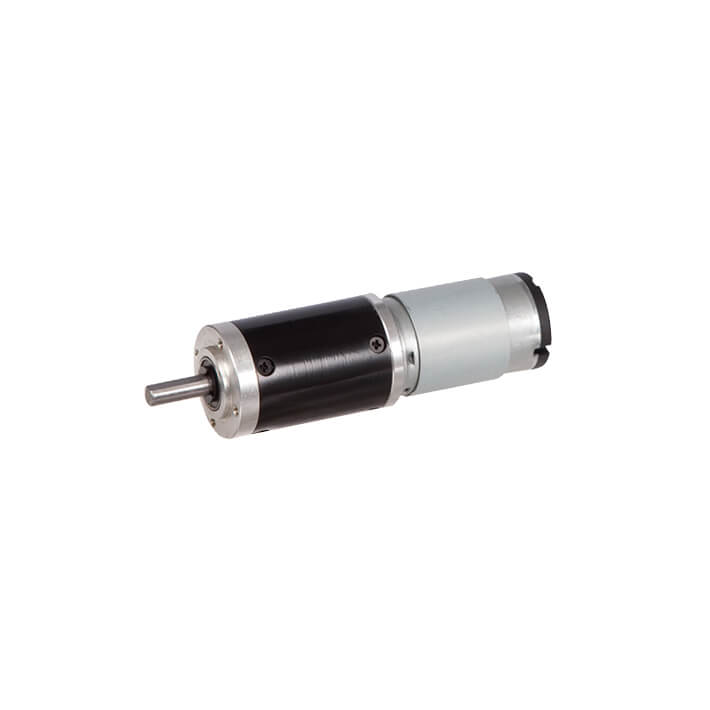
Ranking pages exist because they rank for a query, not because they rank suppliers. The failure is structural rather than dishonest: a list must be produced without visiting anyone, so the material available is what each company publishes about itself, which means floor area, patents, years trading, export countries and staff experience, repeated as if they were capability. None of it tells you whether the gears are ground or shaved, whether backlash is measured at the output or per stage, or whether the rated torque was taken at the speed you will run.
The tell is usually in the copy. A headline count often does not match the entries, because rows were added after the title was written; a planetary article contains a leftover sentence about AC motors when a template was reused; every entry ends with the same quotation request, which is the page’s real purpose. Where the publisher also appears in its own ranking, the order is an advertisement.
None of this makes a name list useless as a starting point. The sibling lists on this site are honest about that role: the gear motor supplier list covers the whole gearmotor field, the helical gear motor list another family, and the custom motor manufacturers guide bespoke builds. What none of them replaces is a qualification file per supplier.
| Claim on the list page | What it actually proves | What to demand instead |
|---|---|---|
| “Top 15” position, often self-assigned | Marketing budget and page authorship | A qualification file per supplier, scored against the five gates below |
| Factory area, staff count, years trading | Scale of the site, not the accuracy of the product | Process list: hobbing, grinding, heat treatment, assembly, and the inspection after each |
| Patent count, certificates | That documents exist, not what they cover | Certificate scope and validity date, plus the test report behind it |
| Countries exported to | Logistics experience | Reference applications at your duty class, with ratio, torque and hours in service |
| “Get free quote” on every entry | That the page is a lead form | A data sheet with the conditions attached to every figure, before any price |
| One backlash number per product | Nothing, until the measurement plane is named | Backlash at the output, at the quoted ratio, with the test load and method |
The spec words that decide the deal
Most disputes are not about quality in the abstract. They are about a figure that was true under conditions nobody wrote down. The vocabulary below is the minimum that has to be pinned before two quotations can be compared, and it is the same vocabulary used to describe planetary gearbox types, because classification and specification share their terms.
| Figure | How it usually arrives | What to ask so it becomes checkable |
|---|---|---|
| Ratio | “25:1” | Exact ratio and the stage split, e.g. 5:1 then 5:1; actual ratio to three decimals |
| Rated output torque | One catalogue number | At which output speed, which duty class, and which service factor the rating already assumes |
| Peak or emergency torque | Often called “maximum” | Permitted peaks per hour and their duration; a peak rating is a fatigue allowance, not capacity |
| Backlash | “≤10 arcmin” | Measurement plane (per stage or at the output), the ratio measured at, and the applied torque |
| Efficiency | “94%” | Per stage, at which load fraction, and whether bearings and seals are included |
| Input speed | A “maximum rpm” figure | Continuous or intermittent, and at which lubrication method |
| Radial load | One kN figure | At which speed, at what distance from the flange, with what overhung load factor |
| Bearing life | “L10 = 10,000 h” | The load and speed used, and whether it is basic L10 or a modified rating life |
Ask for every figure in the units you will verify with, and ask for the calculation rather than the conclusion. A supplier who sends a bearing life sheet with loads and speed written into it has shown more than a page of certificates.
Stages, ratio and the efficiency you inherit
Stage count is the way to reach a ratio inside a coaxial package, not a quality grade, and every added stage multiplies the ratio and the loss together. The mechanics sit in the planetary gearbox principle guide and the stage trade-off in the 3-stage planetary gearbox analysis, so the buying question is narrower: what does the stage count cost at the output shaft?
Efficiency compounds. At an assumed 97% per stage, one stage gives 0.970, two give 0.941, three 0.913 and four 0.885. The fourth stage buys ratio, not precision, and takes another 3% of input power with it, which is small per kilowatt and large over a service life; the efficiency page treats that compounding as the central fact.
| Stages | Efficiency | Ratio reach | Axial length | Backlash at output |
|---|---|---|---|---|
| 1 | 0.970 | One stage; the gear ratio is the limit, not the housing | Shortest | One stage’s own value |
| 2 | 0.941 | Product of two stage ratios | Longer | Stage 2 value plus stage 1 value times the second-stage ratio |
| 3 | 0.913 | Product of three stage ratios | Longest of the three | Each upstream value amplified by every downstream ratio |
| 4 | 0.885 | Rare outside very high-ratio duties | Dominated by stack length | Accumulation continues; the grade must improve to compensate |
Backlash: where it is measured and how it accumulates
Backlash is lost motion at the output with the input held, quoted in arcminutes where one arcminute is one sixtieth of a degree. It is the figure most often quoted without the conditions that make it meaningful: a per-stage number and an output number describe different products even when the digits are identical, and on a two-stage unit the difference is the ratio itself.
Accumulation is not addition. Every stage ahead of the output has its lost motion multiplied by the ratios behind it, so for a unit of ratio i made of i1 then i2, output-referred backlash is approximately the second stage value plus i2 times the first stage value. The same 10 arcminute gear set is a modest error in a single-stage unit and a serious one at the input of a 5:1 second stage.
| Case | Stage 1 | Stage 2 | Output-referred total | Tip error at a 300 mm arm |
|---|---|---|---|---|
| Standard grade, both stages | 10 | 12 | 12 + 5 × 10 = 62 | about 5.4 mm |
| Precision grade, both stages | 3 | 3 | 3 + 5 × 3 = 18 | about 1.6 mm |
| Tight first stage only | 1.6 | 12 | 12 + 5 × 1.6 = 20 | about 1.7 mm |
| Same ratio, single stage (not available at 25:1) | 15 | – | 15 | about 1.3 mm |
The conversion is worth keeping at hand: one arcminute at the output is 0.000291 radians, so 62 arcminutes is 0.018 rad, about 1.03 degrees, and on a 300 mm arm that is 5.4 mm of lost position. That number, not the catalogue figure, is what the index table or the robot joint experiences.
The torque chain and the service factor
Torque passes from the load to the motor through a chain where each link carries a different condition. The output carries working torque times a service factor chosen for the duty; the input delivers that divided by ratio and efficiency; the motor must deliver it continuously at rated speed; and the gearbox must survive the peaks the machine can generate, which is a separate rating. Skip a link and a unit that “meets the torque” fails in service.
The service factor is the allowance the rating already assumes for shock, starts, reversing and hours per day, not a margin the buyer adds afterwards. Suppliers apply their own, so the practical rule is to state the factor you want the rating to cover. The 1.5 used below is an assumption for reversing moderate-shock duty, not a universal value. The formulas are short: output torque is 9,550 times output kilowatts divided by output rpm, and input torque is output torque divided by ratio and efficiency. The motor torque calculation and the industrial motor selection guide carry the motor side, while the ordering of reducer checks is set out in the eight checks for gear reducers.
| Step | Figure | Where it comes from |
|---|---|---|
| Load torque at output | 420 N·m | Machine requirement at 60 rpm |
| Service factor | 1.5 | Assumption: reversing, moderate shock, 10 h/day |
| Required rated torque | 630 N·m | 420 × 1.5 |
| Ratio and stage split | 25:1, 5:1 × 5:1 | Two stages needed to reach the ratio |
| Gearbox efficiency | 0.941 | 0.97 per stage, squared |
| Input torque | 17.9 N·m | 420 / (25 x 0.941) |
| Input speed | 1,500 rpm | 60 x 25 |
| Input power | 2.81 kW | 17.9 x 1,500 / 9,550 |
| Motor, 3 kW four-pole | 19.5 N·m at 1,470 rpm | Load sits at 92% of rated torque |
Flange, shaft, key and motor matching
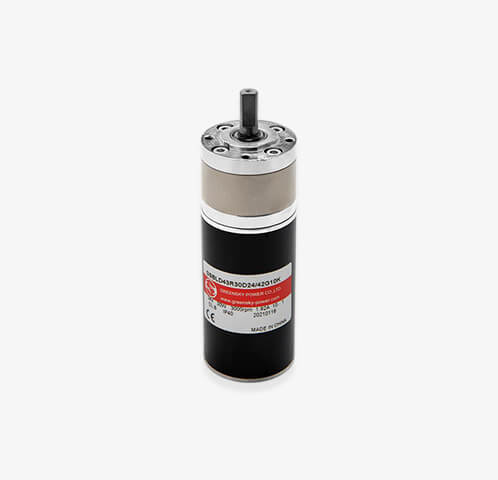
The mechanical interface is where a well-rated gearbox becomes unusable. The features that must match the motor and the driven machine are few and easy to overlook: flange pattern and spigot diameter, input clamp or coupling with its bore and keyway, output shaft with its key or spline and its permitted radial load, and the shaft alignment the housing tolerates. A quotation listing torque and ratio but no flange drawing has not yet described a product that bolts to anything.
The output side deserves more attention than it gets. A pulley or sprocket turns catalogue radial load into an overhung load that depends on distance from the flange and on belt tension, so the same unit is adequate in one installation and marginal in another at identical torque. An indexing table or robot joint loads it axially with a tilting moment instead. The gear set itself is covered in the planetary gear set page. A DC planetary gearmotor settles this at the factory, whereas a gearbox mated to another make’s BLDC planetary gearmotor makes the clamp, pilot and shaft tolerance the buyer’s problem, which is the argument for an OEM motor arrangement.
Lubrication, IP and the thermal envelope
Site conditions redefine the product before any ratio is quoted. Ambient temperature sets the lubricant and the thermal rating; mounting orientation decides whether a life-lubricated unit holds its grease at the seal; washdown or dust decides the IP grade and the breather. None appears in a ratio-and-torque quotation, and each can void a warranty that looked generous on paper.
Thermal capacity is what catalogues hide most often, because it depends on output speed: a unit rated at a torque at 300 rpm may be thermally limited below that torque at 60 rpm, where the housing has less stirring and less air movement. Ask for the thermal rating at the actual output speed, continuous duty, and compare it with the input power from the torque chain. Where grease is for life, the grease type and fill quantity become specification items, as the robot gearbox grease requirements show.
Noise is a system property, and a dB figure without distance, load and speed is not a specification; it still belongs in the RFQ as a target with conditions, because a gearbox quiet on the bench can be tonal in a resonant frame. The system side is in measures for reducing gear reducer noise, and an industrial gearbox reference helps when the duty leaves the planetary family.
Five gates a supplier must pass
Qualification is a sequence, not a score. Each gate produces a document the buyer keeps, and a supplier that cannot produce it fails regardless of how good the samples looked. Data comes first, because a supplier who cannot describe the product precisely will not describe a nonconformity precisely either.
| Gate | Evidence to request | What it proves | Failure seen later |
|---|---|---|---|
| 1. Design data | Gear data sheet, bearing life calculation at your loads, thermal rating at your output speed | The unit was calculated for this duty, not copied from a catalogue row | Passes on nominal torque, overheats or pits at part speed |
| 2. Test evidence | Backlash report with plane and ratio, no-load run record, input power at two or three points | The figures were measured, not inherited from a design sheet | Backlash measured at the output is double the quote |
| 3. Process | Routing for cutting, grinding, heat treatment, selective assembly, cleanliness, and inspection after each | Accuracy is reproducible, not the luck of one batch | First batch good, second out of grade |
| 4. Engineering response | Answer to one computable question within 48 hours, e.g. output-referred backlash at your ratio | Someone there can do the arithmetic the product depends on | Every technical question returns as a request for your application |
| 5. Traceability | Serial marking, material certificates, change notification commitment | A field failure traces to a batch and silent substitution is prevented | Spare arrives with a different gear grade, no notice |
Gate 4 is the cheapest and most informative. Send one question with a computable answer, such as the output backlash a 5:1 plus 5:1 split produces from their stated per-stage figures, and see whether the reply contains a number or a brochure. The same discipline applies when comparing candidates, so the custom motor programme, custom BLDC builds and the BLDC manufacturing base are described separately from the questions they must still answer.
A worked case: 25:1 indexing conveyor
The case is an assumption set, not a catalogue selection. A packaging line indexes a conveyor once a second: 420 N·m at the output shaft, 60 rpm, reversing, moderate shock, 10 hours a day and 2,600 hours a year. The gearbox must carry 630 N·m rated after the 1.5 factor, and the axis is positioned, so lost motion matters at the discharge end where a 300 mm arm carries the product.
Two stages reach 25:1. At 97% per stage the gearbox returns 0.941, so input torque is 420 divided by 25 and by 0.941, or 17.9 N·m at 1,500 rpm, which is 2.81 kW. A 3 kW four-pole motor rated 19.5 N·m sits at 92% of rated torque, leaving 8% for voltage variation and ambient derating. That is defensible but tight; a 3.7 kW motor buys margin at the cost of frame size and a heavier start.
Now the part the torque chain cannot see. With standard grade stages at 10 and 12 arcminutes, output-referred backlash is 12 plus five times 10, or 62 arcminutes, which is 1.03 degrees and 5.4 mm at the 300 mm arm. At that error the conveyor does not index to position. Holding 20 arcminutes means either a first stage at about 1.6 arcminutes with an unchanged second stage, or precision grade at 3 arcminutes in both, giving 18 arcminutes and 1.6 mm. Both are different products from the one the torque chain selected, at different price and lead time.
| Configuration | Efficiency | Input power | Output backlash | Verdict for a positioned axis |
|---|---|---|---|---|
| 2 stages, standard grade | 0.941 | 2.81 kW | 62 arcmin | Fails the position requirement |
| 2 stages, precision grade | 0.941 | 2.81 kW | 18 arcmin | Passes, at precision price and lead time |
| 3 stages, standard grade | 0.913 | 2.89 kW | Well above the two-stage figure | Worse on both counts for this ratio |
| 2 stages, standard, damper coupling | 0.941 | 2.81 kW | Unchanged at the output | Adds compliance, removes nothing; not a backlash fix |
The energy gap between the two-stage and three-stage routes is 0.08 kW, about 208 kWh a year at 2,600 hours: real but small, and not the reason to choose. The position requirement is, and the arithmetic shows it flipping the cheaper option into the dearer one. A damper coupling does not help either, because it adds wind-up without removing lost motion; the only levers are the grade of the first stage and the discipline of acceptance measurement.
The RFQ sheet that gets a real answer
An enquiry that states power, ratio and voltage gets a catalogue page back, and the mismatch surfaces at commissioning. This list is the minimum that lets a supplier quote against your duty rather than their stock, and it is the file the incoming unit is checked against.
- Output torque, output speed and duty: hours per day, starts per hour, reversing, shock class.
- Required rated torque with the service factor the rating must cover.
- Peak torque and how often the machine can produce it.
- Ratio, and whether a stage split is acceptable; say if the split matters.
- Backlash required at the output, at the quoted ratio, with the method you will measure by.
- Input speed and the motor that drives it, with frame, flange and shaft details.
- Radial and axial loads at the output, with distance from the flange and drive type.
- Mounting orientation, ambient range and duty cycle.
- IP grade, and whether washdown, dust or food-contact cleaning applies.
- Lubrication: sealed for life or serviceable, and the interval you can accept.
- Noise target in dB(A) with distance and operating point.
- Bearing life target with the reliability and load case it refers to.
- Documents at dispatch: test report, backlash record, material certificates, drawings.
The service factor line forces the supplier to say which duty the rating assumes, and the backlash line forces the measurement plane into the open. Those two do more work than the rest of the sheet: a supplier who answers them precisely has usually answered the rest well. Where the motor is in the package, interface items move into the same sheet, and the choice between spur and planetary gearmotors or a speed reducer with its motor decides how much interface you are buying.
Incoming inspection that catches the gap
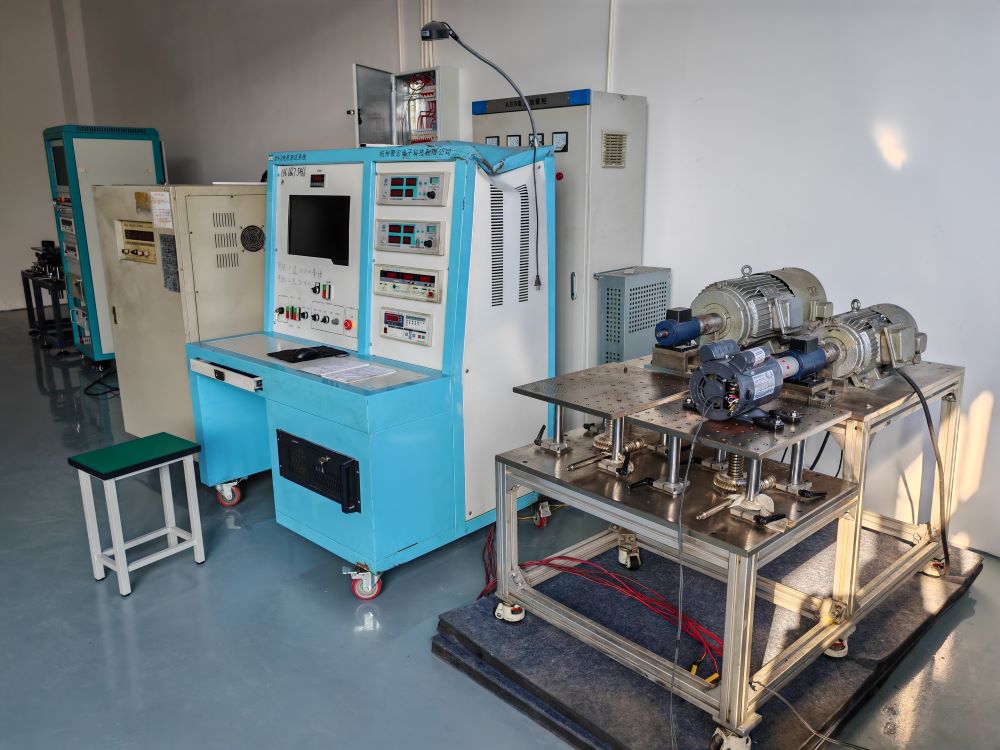
The factory report proves what left; incoming inspection proves what arrived, and the two differ by handling, storage and the chance that the report belongs to another unit. These checks need no special room and target the figures that decide whether the machine works.
| Check | Method | Criterion to write into the PO |
|---|---|---|
| Backlash at output | Lock the input, dial indicator on the output at a defined radius, small torque each way | Within the quoted figure at the quoted ratio; record kept per unit |
| No-load run | Run at two speeds both directions; record current and sound | Current and sound within the values agreed at qualification |
| Seal and lubricant | Run-in at duty speed, then inspect seal and breather | No seepage at the seal; breather clear and correctly oriented |
| Vibration | Velocity reading at defined points, at duty speed | Within the acceptance level agreed at qualification |
| Interface fit | Trial assembly with the actual motor: spigot, clamp, key or spline | Assembles without forcing; run-out within drawing tolerance |
| Traceability | Serial against dispatch documents | Serial, test report and material certificate refer to the same unit |
The backlash check most often turns a good-looking delivery into a dispute, and is most often skipped because it needs a fixture. Build the fixture once at the radius you care about and keep records: supplier figures improve sharply when the buyer measures at the output and files the number. A failure at that point is mechanical and visible, which makes the conversation about a replacement rather than a specification.
Why Greensky Power
Greensky Power builds planetary gearmotors and the motors that drive them in one house, which removes most of the interface risk above: flange, clamp and shaft are settled at the drawing stage rather than at the buyer’s bench. The range covers DC planetary gearmotors and planetary gear motors for indexing, automation and positioning, alongside smaller micro gear motors where the same questions apply at smaller scale.
What we put in front of a buyer is the same file: ratio and stage split, torque at the stated duty, output-referred backlash for the grade supplied, and the bearing calculation for the imposed loads. Where the duty sits outside the family, the honest answer is a different transmission, and the comparisons are here: planetary against worm, harmonic against planetary, and the cycloidal family for high-shock duties, with small units covered in the micro gearbox overview and right-angle duties in the bevel gearbox range.
Related on the supply side: the wider electric motor manufacturers field, the China lists for DC motors, AC motors and BLDC motors, and the application page for planetary gearboxes in automation.
References
- ISO 1328-1:2013 — Cylindrical gears — ISO system of flank tolerance classification — Part 1: Definitions and allowable values of deviations relevant to flanks of gear teeth. iso.org
- ISO 21771-1:2024 — Cylindrical involute gears and gear pairs — Part 1: Concepts and geometry. iso.org
- ISO 21771-2:2025 — Cylindrical involute gears and gear pairs — Part 2: Calculation and measurement of tooth thickness and backlash. iso.org
- ISO/TR 10064-2:1996 — Code of inspection practice — Part 2: Inspection related to radial composite deviations, runout, tooth thickness and backlash. iso.org
- ISO 6336-1:2019 — Calculation of load capacity of spur and helical gears — Part 1: Basic principles, introduction and general influence factors. iso.org
- ISO 10300-1:2023 — Calculation of load capacity of bevel gears — Part 1: Introduction and general influence factors. iso.org
- ISO 281:2007 — Rolling bearings — Dynamic load ratings and rating life. iso.org
- ISO 8579-1:2002 — Acceptance code for gear units — Part 1: Test code for airborne sound. iso.org
- ISO 20816-9:2020 — Mechanical vibration — Measurement and evaluation of machine vibration — Part 9: Gear units. iso.org
- ISO 12100:2010 — Safety of machinery — General principles for design — Risk assessment and risk reduction. iso.org
- IEC 60034-1:2026 — Rotating electrical machines — Part 1: Rating and performance (Edition 15.0). webstore.iec.ch
- IEC 60034-30-1:2025 — Rotating electrical machines — Part 30-1: Efficiency classes of line operated AC motors (IE code), Edition 2.0, which states that geared motors are covered. webstore.iec.ch
- IEC 60204-1:2016+AMD1:2021 CSV — Safety of machinery — Electrical equipment of machines — Part 1: General requirements (Edition 6.1). webstore.iec.ch
FAQ
How do I check the backlash a supplier quotes?
Ask for the measurement plane and the ratio measured at. A per-stage figure and an output figure differ by the downstream ratio, so on a 25:1 unit split 5:1 and 5:1 a 10 arcminute first stage becomes 50 arcminutes at the output before the second stage adds its own. Then verify at incoming inspection with the input locked, a dial indicator at a defined radius, and a small torque applied each way.
Is a 3-stage planetary gearbox more precise than a 2-stage?
No. Stage count buys ratio, not accuracy. Backlash accumulates, and each stage ahead of the output has its lost motion multiplied by the ratios behind it, so a third stage adds its own backlash and another multiplication step, while efficiency compounds down from about 0.941 at two stages to 0.913 at three. Precision is a grade bought per stage, and the first stage is the one worth tightening.
What service factor should I apply to a planetary gearbox?
It depends on duty, not taste: hours per day, starts per hour, reversing, shock and the consequence of a stop decide it, and 1.5 is a common choice for reversing moderate-shock work such as indexing. The important step is to state the factor the supplier’s rating must cover, because suppliers apply their own and two comparable quotations can assume different duty classes.
Why does the same ratio come in one, two or three stages?
Because a single planetary stage reaches only a limited ratio before gear sizes become impractical, so higher ratios are built by stacking. Each added stage multiplies the ratio, adds axial length, compounds losses and adds backlash. The choice is about the ratio genuinely needed and the backlash and efficiency the duty tolerates, not about which unit looks more advanced.
What must a Chinese planetary gearmotor supplier prove before a first order?
Five things, in order: design data calculated for your loads, including bearing life and thermal rating at your output speed; test evidence with the measurement plane stated; a process routing showing how accuracy is reproduced batch to batch; an engineering answer to one computable question within two days; and traceability with a change notification commitment. Certificates support those gates but cannot replace them.
How do I verify rated torque at the output speed I actually run?
Ask for the thermal rating at that output speed in continuous duty, and compare it with the input power from your torque chain. Catalogue torque is usually a mechanical rating taken at a reference speed, and at low output speed the housing sheds less heat, so a unit can be torque-capable and thermally limited at once. The check is the thermal figure at your speed, not the torque figure at theirs.