
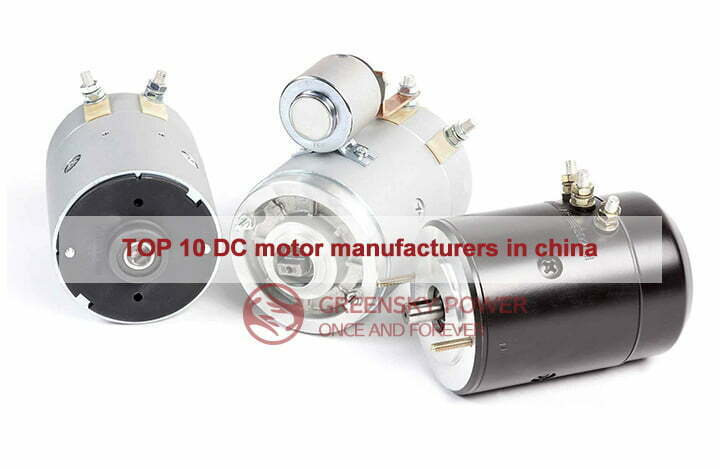
How to Vet DC Motor Manufacturers in China: A 2025 Guide Beyond the Top 10 List
Quick Answer
T = 9550 × P / n), and ingress protection (IP rating). Finally, run a paid sample test before any volume order. A bigger factory is not automatically the safer partner—match the supplier’s scale and technical fit to your volume and spec.Contents
- What “Vetting a DC Motor Manufacturer” Actually Means
- Why the Top 10 List Is Not Enough
- The 8-Point Supplier Vetting Framework
- Quantified Supplier Scorecard
- Engineering Data You Must Verify on the Spec Sheet
- Best Applications — When a China Partner Fits
- Step-by-Step Selection & Verification (Worked Example)
- Common Engineering Mistakes When Sourcing
- Troubleshooting: Supplier Claim vs. Reality
- FAQ
- Why Choose Greensky Power?
What “Vetting a DC Motor Manufacturer” Actually Means
A “Top 10” directory answers one question: who exists? Vetting answers a harder one: who can deliver your specification, on time, at the claimed quality, for the life of your product? The two are not the same. A supplier that ranks #1 on a popularity-weighted list may deprioritize a 500-unit order behind a 50,000-unit contract, or quote an IE4 efficiency it cannot substantiate with a test report. Vetting replaces directory rank with evidence.
Directory Listing vs. Verified Partnership
Listings aggregate suppliers from trade-show scans, paid placements, and scrape feeds. They are useful for building a shortlist, but they carry no signal about a factory’s process control, component sourcing, or willingness to ask engineering questions back to you. Treat any list—including our own Top 10 Chinese BLDC motor manufacturers, the Top 30 electric motor manufacturers in China, and the Chinese helical gear motor manufacturer guide—as a starting point, not a verdict. The ranking that matters is the one you build from your own scorecard.
Trading Company vs. Factory — The Telltale Signs
The single most common sourcing failure is buying from a trading company while believing you are buying from a factory. Traders add margin and dilute accountability; a factory gives you direct access to the production floor and the engineer who will actually wind your stator. Distinguish them before you invest in samples.
| Indicator | Genuine Factory | Trading Company |
|---|---|---|
| Business license scope | Lists “manufacturing” as primary activity; registered factory address | Lists “trading”, “import/export”, or “sales” |
| Facility | Owns/leases plant; CNC, winding, balancing, test bench on site | Office only; no visible production equipment |
| Staff | Engineers, production supervisors, QC technicians | Sales-focused team; limited technical staff |
| Customization | Design changes, tooling, prototyping | Catalog items; refers changes to a “factory partner” |
| Pricing | Transparent BOM and MOQ-based quote | Higher margin; little cost-breakdown detail |
A practical test: ask, “Can I speak directly with your production manager or QC lead?” Factories usually allow it; traders route everything through sales. For a broader context on how motors are built, see our electric motor basics guide.
Why the Top 10 List Is Not Enough
Most public “Top 10” rankings weight visibility—advertising spend, listing freshness, and platform activity—not capability. A supplier can buy a top slot while running an office-only trading operation. Three concrete risks follow from trusting rank alone:
- Capability mismatch. A large state-owned heavy-machinery maker may rank high but refuse sub-1,000-unit runs or custom shaft modifications you need.
- Unverified claims. Directory blurbs repeat supplier self-descriptions (“IE4”, “IP65”) with no test report behind them.
- Communication gaps. A high-ranked supplier that cannot answer a technical question in plain English will not suddenly improve after you pay a deposit.
Our own directories are published to help you build a shortlist quickly. The evaluation work in the next sections is what turns that shortlist into a qualified supplier. If you are weighing geared vs. direct-drive approaches for your application, our gearbox vs. gear motor explainer frames the trade-offs.
The 8-Point Supplier Vetting Framework
Vetting is a process, not a gut call. Apply these eight checks in order; each one either qualifies a supplier or surfaces a red flag worth a hard stop. The framework deliberately front-loads legal and physical verification before any commercial negotiation.
1. Legal & Business Registration
Request the business license and verify the Unified Social Credit Code. Confirm the registered scope includes manufacturing (not merely trading), and that the entity name on the contract matches the license exactly. A mismatch here is the cheapest red flag you will ever catch.
2. Physical Facility Audit
Require either an on-site audit or a live video walkthrough of the production line. You are looking for winding stations, CNC machining, dynamic balancing equipment, and a dynamometer test bench—not a showroom. For high-volume programs, a third-party inspection (SGS, TÜV, or a local agent) removes bias. Our brushless DC motor guide describes the core production stages a credible line should show.
3. Component Transparency
Demand disclosure of the items that determine lifespan: bearing brand (SKF/FAG vs. unknown), magnet grade (sintered NdFeB grade and Br value), insulation material, and copper fill factor in the winding. A supplier unwilling to name the bearing brand is a supplier substituting the cheap alternative you did not approve. Bearing failure modes are documented in the SKF bearing-failure reference.
4. Quality System & Certifications
Baseline: ISO 9001. For automotive or medical, require IATF 16949 and ISO 13485 respectively. Market access needs CE/RoHS for the EU and UL where applicable in North America. Critically, ask for the IE efficiency class test report (per IEC 60034-30-1), not just a self-declaration—see the data section for what physically separates IE2 from IE4.
5. Engineering & R&D Support
A qualified partner answers your spec with engineering questions, not a yes. Test this: send a drawing requiring a non-standard shaft, terminal-box position, or cooling method and see whether they return a feasible design or a vague “no problem.” Custom winding and shaft modifications are exactly what our OEM/ODM program exists to handle.
6. Export & Logistics Record
Request export documents from the last 12 months: commercial invoice, packing list, and Certificate of Origin. Ask about Incoterms, typical lead time, and on-time-delivery rate. Suppliers serving the EU and North America already manage the paperwork your compliance team will demand.
7. Sample Testing
Always pay for and test production samples at an independent lab before a volume order. Measure torque, no-load and rated RPM, efficiency, thermal endurance, noise, and insulation resistance. Sample testing converts marketing claims into pass/fail data—the heart of the worked example below.
8. References & Reorder Rate
Request 3–5 verifiable client references, ideally in your target market. A reorder rate above ~25% is a strong signal of sustained satisfaction; below 15% warrants a hard question. References and reorder behavior beat any directory badge.
Quantified Supplier Scorecard
A framework without weighting is just a checklist. Score each supplier 0–5 on the criteria below, multiply by the weight, and sum. A supplier scoring below 3.5/5 on “Component Transparency” or “Sample Testing” should not reach a volume order regardless of its total.
| Criterion | Weight | What a 5/5 Looks Like | Red Flag (0–1) |
|---|---|---|---|
| Legal & registration | 10% | Manufacturing-scope license, name matches contract | Trading-only scope; name mismatch |
| Facility & equipment | 15% | On-site winding, balancing, dynamometer | Office only; no test bench |
| Component transparency | 15% | Names bearing, magnet, insulation brands | Refuses to disclose components |
| Quality system | 15% | ISO 9001 + IE test report + CE/RoHS | Self-declared only, no report |
| Engineering support | 15% | Returns feasible custom design drawing | “No problem” with no questions |
| Export record | 10% | 12-month docs; ≥95% on-time | No export history |
| Sample test results | 10% | Independently verified, within spec | Refuses paid sample test |
| References / reorder | 10% | ≥3 references; reorder >25% | No references; reorder <15% |
Applying the Scorecard to Three Archetypes
| Archetype | Scale Fit | Typical Weakness | Best For |
|---|---|---|---|
| Large SOE / heavy industrial | High-volume, high-power | Rigid on small batches & customization | Kiln, rolling-mill, utility drives |
| Mid-size OEM specialist | Small-to-mid volume, custom | Smaller capacity ceiling | Medical, automation, appliance motors |
| Component distributor | Multi-SKU, low MOQ | Limited in-house engineering | Startups bundling motor + electronics |
The insight is that “best” is a function of your profile, not a rank. A 10,000 m² plant with 100k-unit monthly capacity may deprioritize your 300-unit run; a focused mid-size OEM may serve you better. For geared-output needs, compare the trade-offs in our speed-reducer type guide.
Engineering Data You Must Verify on the Spec Sheet
This is where directory pages stop and engineering begins. A spec sheet is only as good as the numbers you can reproduce and the standards behind them. Verify each of the following against the applicable international standard.
Efficiency Class (IE2–IE5) and What Is Physically Possible
Per IEC 60034-30-1, low-voltage motors are rated IE1 (standard) through IE5 (super-premium). For DC motors the achievable band depends on topology:
| Motor type | Typical efficiency | Achievable IE class | Note |
|---|---|---|---|
| Brushed PMDC | 65–82% | IE1–IE2 | Commutator/brush friction caps the ceiling |
| Brushed wound-field | 70–85% | IE1–IE3 (large) | Better at high power only |
| Brushless DC (BLDC) | 85–93% | IE3–IE5 | No brush loss; electronic commutation |
A supplier claiming IE4 on a brushed PMDC is physically mistaken—brush friction alone prevents it. Treat a “brushed IE4” claim as a red flag, not a feature. For the BLDC side, our BLDC basics and 24V BLDC guides cover controller and winding detail.
Temperature Rise and Insulation Class (IEC 60034-1)
IEC 60034-1 defines insulation classes by allowable hot-spot temperature: Class B = 130°C, Class F = 155°C, Class H = 180°C, referenced against a 40°C ambient. The permitted temperature rise above ambient depends on the chosen class and measurement method (resistance vs. embedded sensor). A common compliant combination is Class F insulation with a Class B (80 K) rise, leaving thermal margin. Always ask for the test method and the rise figure, not just the letter.
The Torque Formula — Verify the Claimed Numbers
Rated shaft torque must be internally consistent with power and speed. Use:
- Output torque:
T = 9550 × P / n(P in kW, n in rpm, T in N·m) - Input current:
I = P / (η × V)(P in W, η efficiency, V voltage) - DC torque constant:
T = kₗ × Iₐ(armature current)
For the motor-side math and a full derivation, see our torque calculation guide. Insulation and temperature limits follow IEC 60034-1, consistent with the derating guidance in our motor efficiency class guide.
IP Rating and Environmental Sealing
Ingress protection per IEC 60529 sets dust and water resistance. For most industrial and outdoor DC motors, IP54/IP55 (dust-protected, splash-resistant) is the floor; IP65 (dust-tight, low-pressure jet) suits washdown and outdoor duty. A claimed IP65 with no ingress test report is a claim, not a rating—verify it in the sample test.
Bearings, Magnets, and Commutation
Lifespan is set by the unglamorous parts. Specify SKF or FAG bearings (not “equivalent”), sintered NdFeB magnets with a declared grade, and—for brushed units—a commutator/brush system rated for your duty. BLDC units replace brushes with an electronic motor controller, eliminating brush wear but demanding controller quality. A geared motor adds a reduction stage whose wear modes we analyze separately.
Best Applications — When a China Partner Fits
A China-based DC motor partner is a strong fit when cost-to-performance, customization, and volume flexibility matter more than local stock. The sweet spot is mid-volume OEM production with real engineering content.
Conveyors & Material Handling
Continuous-duty belt and roller drives need sealed, efficient motors with documented thermal rise. See the planetary gear-motor application field for the high-cycle analog.
Medical & Lab Equipment
Infusion pumps, surgical tools, and analyzers demand low noise, biocompatible materials, and tight tolerance. These programs reward a partner with IATF/ISO discipline and custom winding—exactly the engineering-support criterion above.
Robotics & Automation
Grippers, joints, and actuators use BLDC and geared outputs for torque density. Our harmonic vs. planetary comparison helps pick the reduction stage.
Automotive & EV Auxiliaries
Window lifts, pumps, and thermal-management fans use 12–48 V BLDC. IATF 16949 and PPAP capability separate the qualified from the catalog-only suppliers.
HVAC, Pumps & Appliances
Fans, blowers, and compressors favor 24–48 V BLDC for efficiency. For related driven equipment, see motors for packing machines and woodworking motor applications.
Step-by-Step Selection & Verification (Worked Example)
Use this sequence for every supplier you shortlist. The goal is to convert a quote into verified, reproducible evidence before money moves.
- Define the spec sheet. Voltage, rated power, speed, torque, IP rating, duty cycle, ambient, target cost.
- Shortlist 3–5 suppliers from your directories that fit your volume and type.
- Request documentation. License, certs, IE test report, component brand list.
- Run the scorecard. Weight and sum; cut anyone below threshold on transparency or testing.
- Order paid samples and test at an independent lab against your spec.
- Place a trial order with defined KPIs (defect rate <1%, on-time delivery) before scaling.
Worked Example — Verifying a 48 V, 2.0 kW BLDC Spec Sheet
Supplier claim: 48 V BLDC, 2.0 kW, 3000 rpm, efficiency 90% (IE4), Class F insulation, IP65, 45 A rated current. Let us verify the numbers before ordering.
| Check | Calculation | Result | Verdict |
|---|---|---|---|
| Rated torque | T = 9550 × 2.0 / 3000 | 6.37 N·m | Plausible for 2 kW @ 3000 rpm |
| Input current | I = 2000 / (0.90 × 48) | 46.3 A | Above claimed 45 A — ask for test report |
| Efficiency class | BLDC at 90% | IE4 achievable | Plausible (brushed would be impossible) |
| Temperature rise | Class F, 40°C ambient | Hot-spot ≤155°C | Request rise figure & method |
| IP65 | IEC 60529 jet test | Not self-evident | Require ingress test report |
Common Engineering Mistakes When Sourcing
- Choosing by directory rank. Popularity-weighted lists hide capability and scale mismatches.
- Skipping the factory audit. An office-only trader looks like a factory until you ask for a video tour.
- Accepting self-declared efficiency. “IE4” without an IEC 60034-30-1 test report is marketing.
- Ignoring component brands. Unnamed bearings and magnets are the first thing substituted to cut cost.
- No paid sample test. Visual inspection catches none of torque, efficiency, noise, or insulation resistance.
- Vague specs. “Quiet” and “high quality” mean nothing without dB and test numbers.
- Full upfront payment. Use 30% deposit / 70% against bill-of-lading to retain leverage.
- Single-source dependency. Qualify 2–3 approved vendors to avoid line-down risk.
Troubleshooting: Supplier Claim vs. Reality
| Problem | Likely Cause | Solution |
|---|---|---|
| Claims IE4, no test report | Self-declaration or brushed topology | Require IEC 60034-30-1 report; reject brushed IE4 |
| IP65 unverified | No ingress test performed | Independent IEC 60529 jet test on sample |
| Price far below market | Substandard materials or shell entity | Request BOM; benchmark; third-party inspection |
| No factory address / tour refused | Trading company or shell | Require live video walkthrough or cancel |
| Vague bearing spec | Unknown low-cost substitute | Specify SKF/FAG by name in PO |
| Engineer unreachable | Sales-only organization | Insist on technical contact before PO |
FAQ
How do I tell a factory from a trading company in China?
Check the business license scope for “manufacturing” as the primary activity and a registered factory address, then request a live video walkthrough of the production line. Factories show winding, balancing, and test equipment; traders show offices. A direct line to the production manager is the strongest signal.
What certifications matter for DC motors exported to the US or EU?
ISO 9001 is the baseline quality-system certificate. For market access you need CE and RoHS for the EU and UL where applicable in North America. Automotive programs require IATF 16949. Most importantly, demand the IEC 60034-30-1 efficiency-class test report rather than a self-declared IE rating.
Can a brushed DC motor really be IE4 efficient?
No. Brush and commutator friction cap a brushed PMDC around 65–82% (IE1–IE2). IE4 (roughly ≥90%) is achievable only with brushless DC (BLDC) technology. Any “brushed IE4” claim should be treated as a red flag.
How much should I pay for sample testing?
Budget for paid production samples plus independent lab testing of torque, RPM, efficiency, thermal rise, noise, and insulation resistance. The cost is trivial against a defective volume order; treat refusal to provide samples as a disqualifier.
What torque formula verifies a supplier’s spec sheet?
Use T = 9550 × P / n with P in kW, n in rpm, and T in N·m, then check input current with I = P / (η × V). If the computed current exceeds the claimed rated current by more than a few percent, ask for the original test report before ordering.
Is a bigger factory always the safer choice?
Not for small or custom runs. A very large plant tuned for 100,000-unit batches may deprioritize a 300-unit order and resist tooling changes. Match the supplier’s scale and engineering flexibility to your actual volume and specification.
Why Choose Greensky Power?
Related Resources
- Top 10 Chinese BLDC motor manufacturers
- Top 30 electric motor manufacturers in China
- Chinese helical gear motor manufacturer guide
- Brushless DC motor guide
- BLDC basics and controller
- 24V brushless DC motor
- Electric motor basics
- Motor efficiency classes (IE)
- How to calculate motor torque
- How to select a motor for industrial use
- Speed-reducer motor selection guide
- Gearbox vs. gear motor
- Different types of speed reducers
- Harmonic drive vs. planetary gear
- 8 causes of helical gearbox wear
- OEM / ODM customization
- Motor controller guide
- DC motors category
References
- IEC 60034-1:2022 — Rotating electrical machines, general requirements (insulation & temperature classes). webstore.iec.ch/en/publication/65446
- IEC 60034-30-1 — Efficiency classes of line-operated AC motors (IE1–IE5). webstore.iec.ch/publication/91195
- ANSI/NEMA MG 1-2021 — Motors and Generators standard. webstore.ansi.org/standards/nema/ansinemamg2021
- NEMA — Motor and Generator product resources. nema.org/products/pages/motor-and-generator.aspx
- U.S. DOE — Motor load and efficiency reference. energy.gov/sites/prod/files/2014/04/f15/10097517.pdf
- IEA — Electric motors and energy efficiency. iea.org/energy-system/industry/electric-motors
- SKF — Bearing failures and their causes. skf.com/group/support/bearing-failures-and-their-causes
- Siemens — SIMOTICS electric motors. siemens.com/global/en/products/drives/electric-motors.html
- IEEE Xplore — Peer-reviewed electric machine design paper. ieeexplore.ieee.org/document/6342334
- maxon — EC motor and gearhead technology. maxongroup.com/maxon/view/content/ec-technology
- FAULHABER — Brushless DC motor know-how. faulhaber.com/en/know-how
- Yaskawa — Motion and motor technical downloads. yaskawa.com/downloads/search-index
- Tsubaki — Gear motor selection technical data (service factors). en.tt-net.tsubakimoto.co.jp/tecs/engd/gen/engd_gen_ggm_sry.asp
- AGMA — Gear rating and accuracy standards. agma.org
Technical content reviewed by Greensky Power applications engineering. Figures are typical industry ranges; final specification requires verification against the selected motor and duty cycle.
