
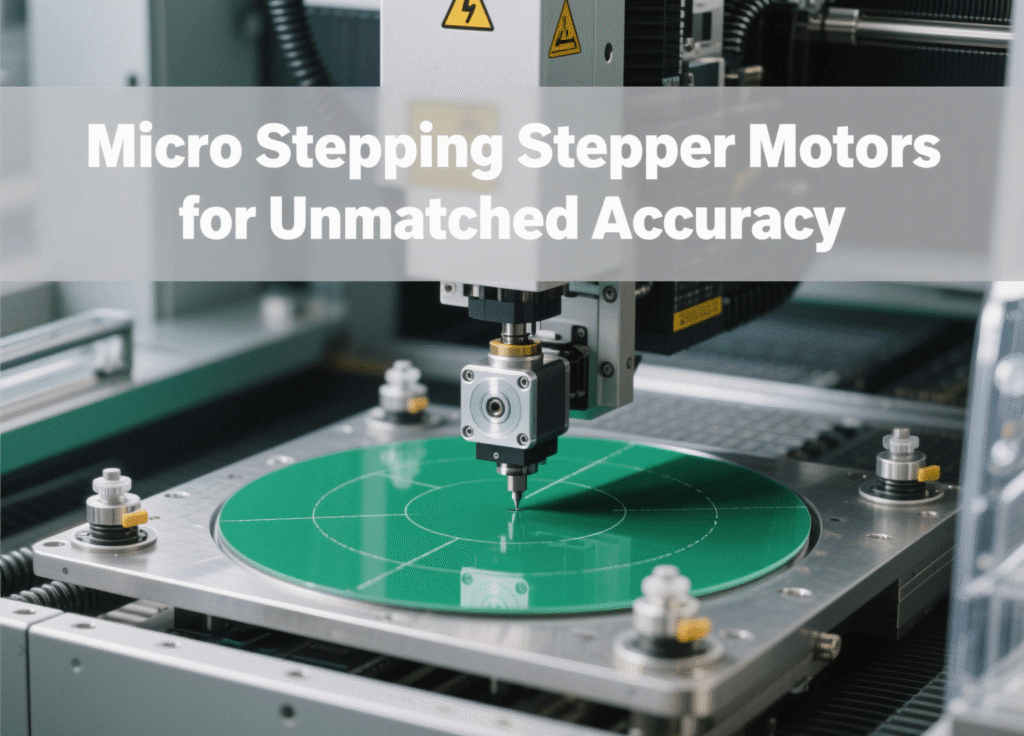
Precision Positioning: Micro Stepping Stepper Motors for Unmatched Accuracy
In the realm of precision motion control, micro stepping stepper motors have revolutionized industries demanding sub-degree accuracy—from surgical robotics to semiconductor manufacturing. By dividing each physical step into hundreds of microsteps, these motors achieve resolutions as fine as 0.007°, eliminating vibration and enabling smooth, silent operation even at ultra-low speeds. This article explores the engineering principles, real-world applications, and selection criteria for leveraging micro stepping technology to dominate high-precision markets.
I. How Micro Stepping Transforms Stepper Motor Performance
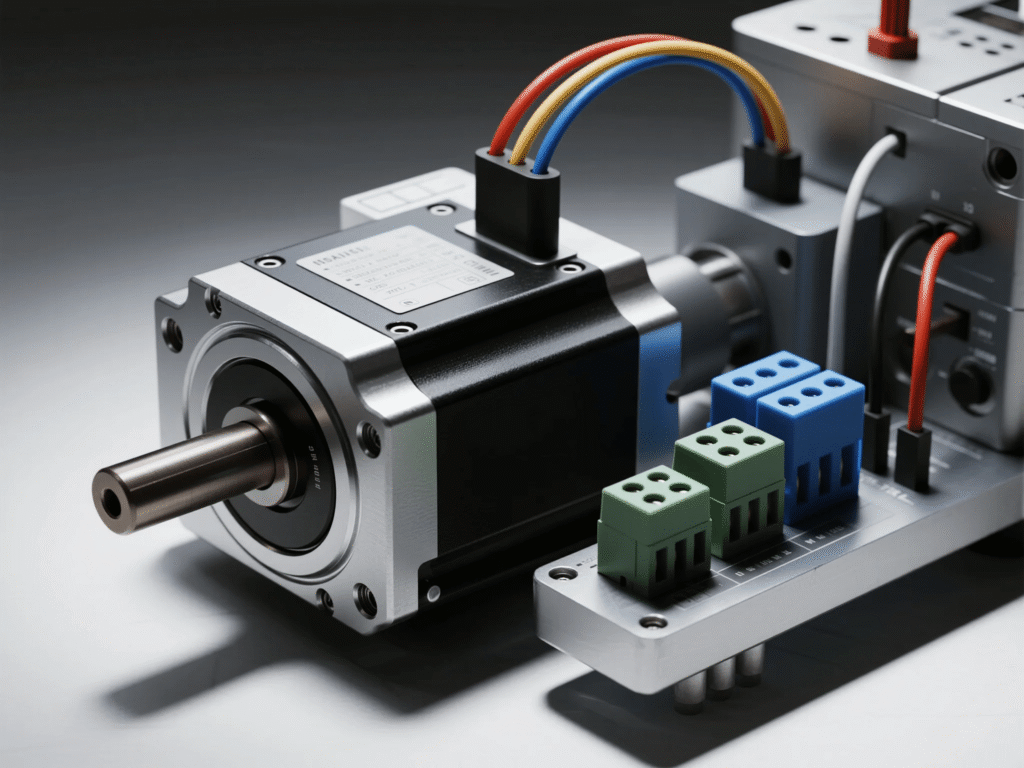
Micro stepping stepper motors operate by modulating current through stator windings with sinusoidal precision, allowing the rotor to settle at intermediate positions between full-step angles. Unlike traditional full-step modes (typically 1.8° per step), micro stepping drivers subdivide steps into increments as small as 1/256, achieving angular resolutions of 0.007°. This is accomplished through advanced PWM (Pulse Width Modulation) control, which dynamically adjusts coil currents to create overlapping magnetic fields that precisely position the rotor .
The technique fundamentally solves two critical limitations of standard steppers:
- Resonance Suppression: By smoothing transitions between steps, micro stepping eliminates mid-band resonance—a major cause of vibration, noise, and missed steps in CNC machines and optical systems .
- Low-Speed Stability: Applications like laboratory pipetting or telescope tracking require jerk-free motion at near-zero RPM. Micro stepping enables continuous rotation without the “cogging” effect inherent in full-step operation .
II. Technical Advantages Driving Industry Adoption
- Sub-Degree Positioning Accuracy
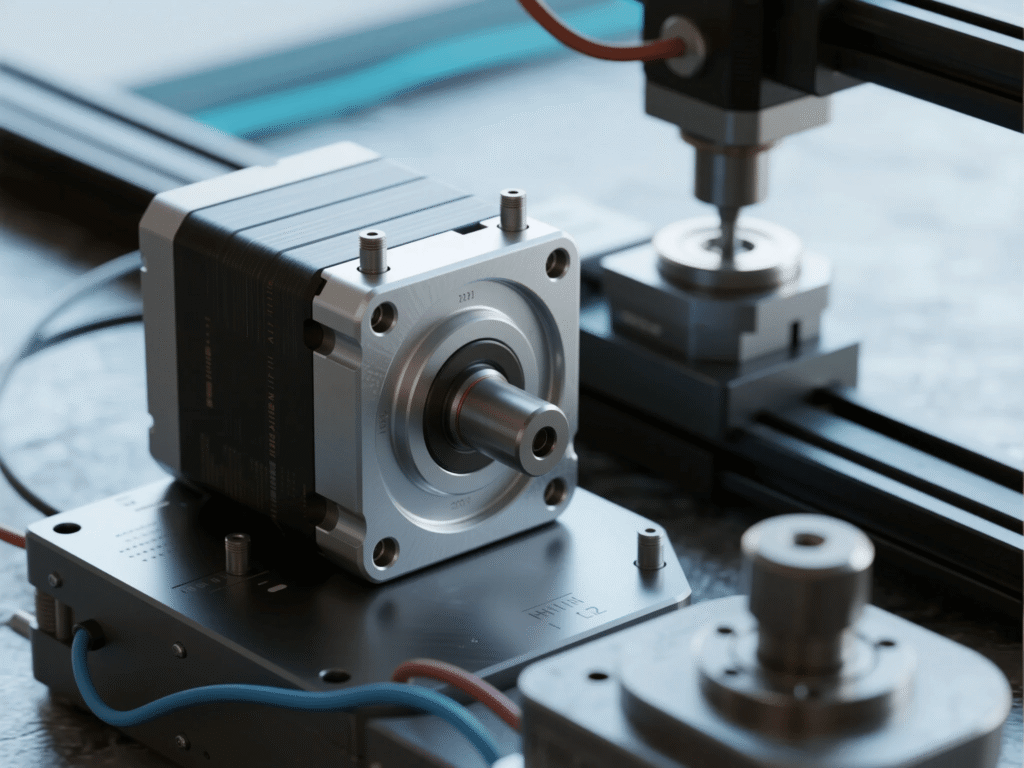
Micro stepping stepper motors achieve tolerances within ±0.05° in open-loop configurations—critical for aligning optical lenses in smartphone cameras or positioning laser cutters in PCB fabrication. Closed-loop variants with encoders reduce error to ±0.01°, rivaling servo motors at lower cost . - Energy Efficiency & Thermal Management
CoolStep™ technology (e.g., Moons’ NEMA 17 motors) reduces idle current by 75% by dynamically adjusting drive current based on load demand. This prevents overheating in sealed medical devices like insulin pumps, where temperatures must stay below 40°C . - Integrated Smart Control
Modern drivers like the TMC2209 embed IoT connectivity for remote diagnostics. For example, German automotive plants use these drivers to monitor torque ripple in EV battery assembly robots, predicting maintenance needs before failures occur .
III. High-Impact Application Case Studies
Table: Micro Stepping Stepper Motors in Precision-Critical Industries
| Industry | Application | Motor Specifications | Performance Gains |
|---|---|---|---|
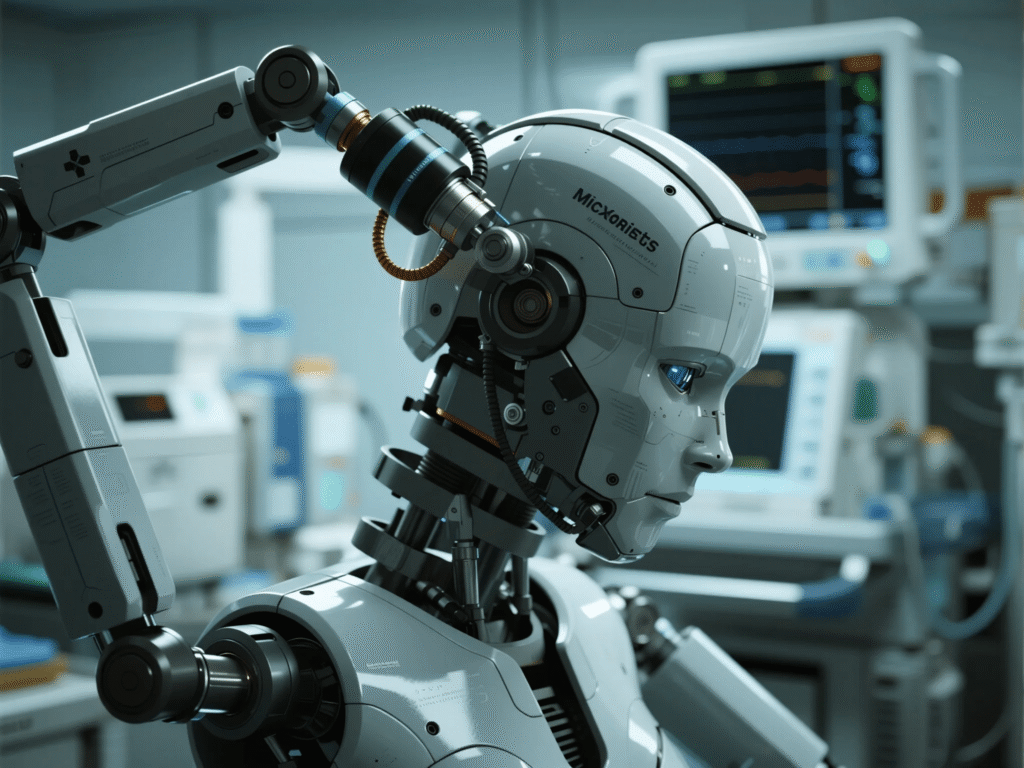
| Medical Robotics | Surgical robot joints (Da Vinci®) | NEMA 11, 0.9° step angle, 256 microsteps | ±0.05° accuracy for minimally invasive incisions |
| Industrial Automation | CNC tool changers (Siemens) | NEMA 23, 1.8° with 1/128 microstepping | 40% faster tool swaps, <75 dB noise |
| Consumer Electronics | Smartphone camera AF (iPhone) | 8mm diameter micro stepper, 0.007° resolution | Zero shutter lag, 10 ms focus lock |
| Aerospace | Satellite antenna aiming | IP67-rated, -40°C to 125°C range, 0.036° microsteps | <0.1° beam drift in geostationary orbit |
- 3D Bioprinting at Fraunhofer Institute
NEMA 17 hybrid steppers with 1/256 microstepping precisely deposit stem cell layers at 5-micron intervals. The motors’ anti-resonance algorithms prevent vibration-induced layer misalignment, enabling functional organ fabrication . - Dutch Agritech Vertical Farms
IP66-rated micro stepping motors (Rotor NL® series) adjust LED grow lights with 0.1° precision. Their sealed design withstands 95% humidity, increasing crop yield by 22% through optimized photon distribution .
IV. Selecting the Right Micro Stepping System
- Step Angle vs. Microstepping Resolution
Motors with native 0.9° step angles (e.g., NEMA 8) provide higher baseline resolution than 1.8° models. When paired with 1/256 microstepping drivers, they achieve 5,120 steps/revolution—essential for DNA sequencers or telescope mounts . - Torque Considerations
Microstepping reduces available torque per microstep by up to 30%. For vertical loads like robotic arms, select motors with 50% higher holding torque than calculated needs (e.g., Kollmorgen T2 Series for 3 Nm overhead lifting) . - Environmental Resilience
Harsh environments demand:- ATEX Certification: For explosive atmospheres (e.g., chemical plant actuators).
- F-Class Insulation: Withstands 155°C in foundry automation .
V. Emerging Innovations & Future Trends
- AI-Optimized Microstepping Drivers
Startups like Tulip Networks deploy neural networks to dynamically adjust microstep profiles based on load inertia. In prototype CNC mills, this reduced contouring errors by 63% during high-speed engraving . - Blockchain-Enabled Traceability
To comply with the EU’s 2026 Digital Product Passport (DPP) mandate, motors now embed QR codes storing microstepping calibration data and carbon footprint logs on Ethereum-based platforms . - Carbon Fiber Rotors
Replacing traditional steel rotors with CFRP cuts inertia by 45%, enabling 100 ms acceleration in pick-and-place robots—critical for electronics assembly lines targeting 500 ppm throughput .
Conclusion
Micro stepping stepper motors have evolved from simple positioners to intelligent motion systems capable of nanometer-scale accuracy. Their dominance in medical, aerospace, and Industry 4.0 applications stems from three pillars: ultra-fine resolution (down to 0.007°), resonance-free operation, and energy-adaptive control. Manufacturers who prioritize microstepping-optimized designs—notably in rotor dynamics, thermal management, and IoT integration—will lead the $42.7 billion precision motor market. At Greensky Power, our NEMA-certified micro stepping solutions deliver ±0.01° repeatability, empowering engineers to redefine what’s mechanically possible.
References
- VT Motor. (2025). What is a Stepper Motor? Choosing the Right Micro Stepper Motor. Retrieved from: https://www.vt-motor.com/what-is-a-stepper-motor-choosing-the-right-micro-stepper-motor.html
- MotorMicro. (2025). How Precise Are Small Stepper Motors? Accuracy & Control Explained. Retrieved from: https://www.motormicro.com/how-precise-are-small-stepper-motors-accuracy-control-performance
- VT Motor. (2025). Was ist ein Steppermotor? Auswahl des richtigen Mikro-Stepper-Motors. Retrieved from: https://www.vt-motor.com/de/what-is-a-stepper-motor-choosing-the-right-micro-stepper-motor.html
- Eureka Magazine. (2025). Expert Guidance on Selecting the Right Stepper Motor. Retrieved from: https://www.eurekamagazine.co.uk/content/technology-spotlights/how-to-select-your-stepper-motor
- Mechtex. (2024). Microstepping in Stepper Motor. Retrieved from: https://mechtex.com/blog/microstepping-in-stepper-motor
- MDPI. (2024). Micro-Stepping Motor for Instrument Panel Using PWM Drive Method. Retrieved from: https://www.mdpi.com/2227-9717/11/2/329
Keywords for Sourcing Professionals: micro step stepper motor, stepper motor micro stepping, china micro stepping stepper motor, stepper motor micro step, stepper motor with the most micro steps.
