

TOP BLDC Motor Manufacturers: A Sourcing Framework for OEM Buyers
Quick Answer
There is no single “best” BLDC motor manufacturer. Supply splits into three tiers, and the right one depends on your volume, certification burden and how much customisation you need. Tier 1 is the global premium specialists who serve precision, medical, aerospace and defence work; technical depth is what you buy from them. Tier 2 is the high-volume automotive and appliance houses, where scale sets the price. Tier 3 covers the customisation-focused builders, and their edge is flexibility, low tooling thresholds and OEM/ODM responsiveness. Before you award a contract, score candidates on at least 12 points: torque capability, thermal design, certification, testing, lead time, tooling and support. Then compare total cost of ownership, not unit price.
- The BLDC Manufacturer Landscape: Three Tiers
- Global Leaders and What They Specialise In
- Which Tier Fits Your Project?
- How to Evaluate a BLDC Motor Manufacturer
- Certifications That Actually Matter
- Unit Price vs Total Cost of Ownership
- Working With Chinese Manufacturers: Due Diligence
- Common Sourcing Mistakes
- Red Flags in a Manufacturer’s Reply
- Why Choose Greensky Power
- Related Resources
- References
- FAQ
The BLDC Manufacturer Landscape: Three Tiers
The brushless DC motor market is moderately fragmented. Third-party research puts the combined revenue share of the largest five or six global players at roughly 25–35%, with a long tail of specialised and regional manufacturers taking the rest. For a buyer, that structure is more useful than any single ranking: the tiers behave quite differently once you are inside a procurement process.
| Tier | Who they are | Their advantage | Their constraint |
|---|---|---|---|
| Tier 1: Global premium specialists | Swiss, German, US and Japanese precision drive houses | Deep application engineering, premium materials, regulated-industry certifications | High unit price, long lead times, low appetite for small custom orders |
| Tier 2: High-volume platform manufacturers | Large Japanese, Chinese and European groups serving automotive and appliances | Scale economics, vertical integration, supply-chain resilience | Standardised catalogue; custom work needs very high volume to justify |
| Tier 3: Customisation-focused manufacturers | Mid-size manufacturers exporting to OEM equipment builders | OEM/ODM flexibility, low tooling thresholds, engineering responsiveness | Capability varies widely; due diligence is the buyer’s responsibility |
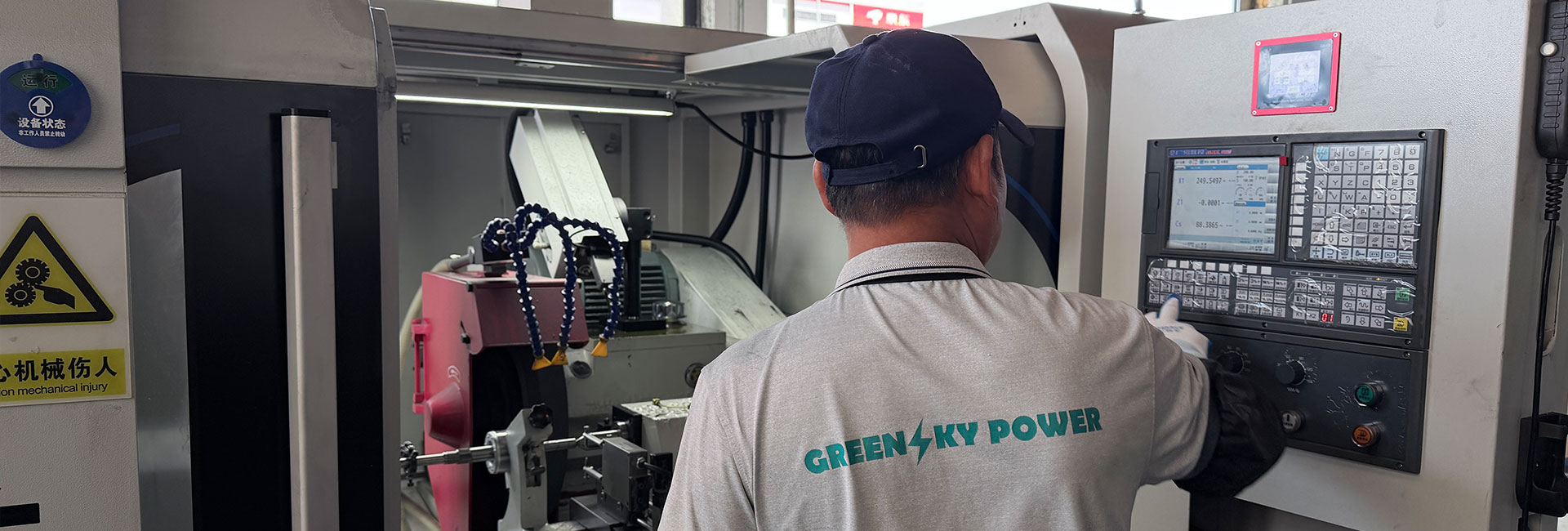
Cost is not what separates the tiers. Flexibility is. A Tier 1 supplier will not tool a custom shaft for a 500-unit annual requirement, while a Tier 3 supplier will, and will often co-develop the winding to match the load. The real procurement question is which constraint you can live with. Two places to widen the view: the index of electric motor manufacturers and the regional survey of motor manufacturers from China.
Global Leaders and What They Specialise In
The table below lists the manufacturers most frequently encountered in BLDC procurement, with the segment each is best known for. Headquarters locations and segment descriptions are drawn from the companies’ own published materials. Treat it as a starting map for a shortlist. “Top” depends entirely on the application, and no table can settle that for you.
| Manufacturer | Headquarters | Best-known focus | Typical fit |
|---|---|---|---|
| Nidec | Japan | High-volume brushless motors for automotive, appliance and industrial use, with a global manufacturing footprint | Programmes needing scale and multi-region supply |
| Maxon | Switzerland | Precision brushless motors and drives for medical, robotics and aerospace | High-spec, low-volume, certification-heavy projects |
| FAULHABER | Germany | Miniature motors, including ironless-rotor designs, for optics, medical and aerospace | Space-constrained precision mechanisms |
| Portescap | Switzerland / United States | Miniature and autoclavable motors for surgical tools and portable medical devices | Medical handpieces and battery devices |
| Allied Motion (Allient) | United States | Frameless and custom brushless motors for aerospace, defence and medical | Engineered-to-order motion assemblies |
| Moog | United States | Rugged actuators for defence, space and industrial motion control | Harsh-environment, high-reliability duty |
| AMETEK | United States | Precision motion control for pumps, fans and aerospace subsystems | Regulated sub-assembly programmes |
| Oriental Motor | Japan | Packaged brushless motors with matched drivers for automation and semiconductor equipment | Machine builders wanting a certified motor-driver set |
| Johnson Electric | Hong Kong, China | High-volume brushless motors for automotive, power tools and appliances | Automotive-grade volume programmes |
| MinebeaMitsumi | Japan | Micro brushless motors for storage, automotive and consumer electronics | Miniature high-volume devices |
If you want the wider supply picture, the guides on brushless motor manufacturers worldwide and Chinese BLDC motor manufacturers cover the same field from different angles. The BLDC motor distributor guide explains the channel layer sitting between factory and machine builder, and the world’s motor manufacturing powers puts the whole map in national terms.
Which Tier Fits Your Project?
Match the tier to the project, not to the budget. Annual volume usually decides first: below roughly 5,000 units a year, customisation cost dominates and Tier 3 tends to win on value, while above 100,000 units the platform economics of Tier 2 are hard to beat.
Then comes certification. If the end product is a medical device, an aircraft assembly or a vehicle part, the supplier has to already hold ISO 13485, AS9100 or IATF 16949 respectively, and that single filter removes most of the field before price is even discussed.
Engineering input is the third consideration. Where the load profile is well understood and a catalogue part fits, buying the catalogue part is the cheaper answer. If the motor has to be co-designed around a thermal or acoustic limit, weight application engineering heavily and accept that you are buying engineering time as much as hardware.
How to Evaluate a BLDC Motor Manufacturer
Use a written scorecard so that comparison is objective and repeatable. The twelve criteria below cover the failure modes that actually cause line stoppages and recalls.
| # | Criterion | What to verify |
|---|---|---|
| 1 | Torque-speed capability | Published curve for the offered frame, not just a holding or peak figure |
| 2 | Thermal design and derating | Continuous torque at your ambient temperature, with the cooling assumption stated |
| 3 | Efficiency at your duty point | Efficiency at the actual speed and load, not the catalogue peak |
| 4 | Insulation system | Insulation class and the temperature limit used to rate continuous torque |
| 5 | Ingress protection | IP rating verified to IEC 60529, especially for washdown or outdoor duty |
| 6 | Bearing and life data | Bearing type, axial and radial load limits, and an L10 life statement |
| 7 | Quality system | Certification to a scheme your industry recognises, with a valid certificate number |
| 8 | Test capability | Whether the supplier can supply test reports: no-load, load, insulation, vibration, endurance |
| 9 | Customisation capability | Winding, shaft, flange, cable and connector changes, and the tooling cost for each |
| 10 | Lead time and MOQ | Prototype, first-article and mass-production lead times quoted separately |
| 11 | Change control | How design and process changes are notified and approved (PCN process) |
| 12 | Engineering support | Named technical contact, response time, and willingness to review your load data |
Score each supplier out of ten on each line and keep the raw sheets; the pattern across them is usually clearer than any single total. One test is worth applying early: ask for the torque-speed curve of the exact frame being offered. A supplier that cannot produce one for its own product rarely has application data behind its claims. The second is the cooling assumption. If it goes unstated, the continuous torque figure is almost certainly a best-case number measured in open air. Ask how ratings are verified against electric motor testing standards, and settle your own specification first with the industrial motor selection framework.
Certifications That Actually Matter
Certification is the fastest filter in BLDC sourcing because it is binary: either the supplier holds a valid certificate or it does not.
- ISO 9001 is the baseline quality management system, and almost every credible manufacturer claims it, so treat it as a minimum rather than a differentiator.
- ISO 13485 governs medical devices. Where the motor drives a medical device, the end product’s regulatory pathway will require it.
- IATF 16949 is the automotive equivalent, and any part entering a vehicle programme needs it.
- AS9100 covers aerospace, including traceability and configuration control.
- IEC 60034 is not a quality scheme at all. It is the rating, performance and efficiency framework against which motor data should be declared.
- RoHS and CE marking are market-access requirements for equipment shipped into the EU. A supplier that cannot document RoHS compliance down to the bill of materials is a supply-chain risk, not just a paperwork problem.
Ask for the certificate scope, not just the logo. One that covers “assembly of small electric motors at plant A” says nothing about the plant that will build your order.
Unit Price vs Total Cost of Ownership
On continuous-duty motors the purchase price is often a small fraction of lifetime cost. The example below compares two otherwise identical 250 W brushless motors, one mid-tier at 88% efficiency and one premium at 93%, running 3,000 hours a year at $0.15 per kWh.
| Item | Mid-tier motor (88%) | Premium motor (93%) |
|---|---|---|
| Input power at 250 W output | 284.1 W | 268.8 W |
| Losses | 34.1 W | 18.8 W |
| Annual energy consumed as losses (3,000 h) | 102.3 kWh | 56.4 kWh |
| Annual energy cost | $15.35 | $8.46 |
| Annual cost difference per motor | $6.89 in favour of the premium unit | |
Now scale it. Across a 1,000-unit production run over a five-year service life, the efficiency difference is worth roughly 1,000 × $6.89 × 5 = $34,450. If the premium motor costs $2.50 more per unit, the total premium is 1,000 × $2.50 = $2,500, recovered in under five months of operation.
Working With Chinese Manufacturers: Due Diligence
China is the largest single source of brushless DC motors, and it contains the same three tiers as anywhere else. Treating “Chinese supplier” as one category is the mistake.
Start with the entity, not the catalogue. Ask for the business licence, the plant address, and a live video walkthrough if a visit is not practical. Trading companies presenting themselves as factories are the most common source of quality surprises in this category, and the check costs nothing.
Then ask for test reports rather than datasheets. A datasheet describes a design; a test report describes a unit. What you want is no-load, load and insulation-resistance data for the exact rating on the quotation. Samples come next, and they should be run as the complete motor-controller pair on your own load for at least one full duty cycle before any tooling is released.
Two further items belong in the purchase order, not in a conversation. The change-control clause should state that any change to winding, magnet, bearing or sub-supplier needs written approval before shipment. The inspection standard should name the AQL level, the sampling plan and the acceptance criteria.
Chinese manufacturers also reach advanced quality benchmarks at the top end, and several hold automotive or medical certifications. The tier a supplier occupies says more about your risk than the country printed on the shipping label. For supplier-specific context, see the guide to BLDC motor manufacturers and the gear motor manufacturers in China overview, plus the specialists in planetary gear motors and helical gear motors.
Common Sourcing Mistakes
Buying on unit price alone is the classic error, and the worked example above shows why: on continuous-duty equipment the energy cost of losses can overtake the price difference within months. Ignoring the controller is nearly as common. A motor without a matched driver is a motor you cannot commission, so confirm controller availability and firmware support at the same time you evaluate the motor. And a holding-torque figure is not a torque specification. It is measured at zero speed and says nothing about performance where the axis actually runs.
Then there is the paperwork people skip under schedule pressure. Approving a datasheet instead of a physical first article is precisely how tolerance drift gets onto a production line. Connector type, exit direction and shielding cause a disproportionate share of late-stage integration failures and almost never appear in the price comparison. Single-sourcing deserves its own line: qualifying a second supplier after a disruption costs far more than qualifying one in advance, which is the whole argument for doing it while nothing is wrong.
Warranty and after-sales terms are worth reading before signature rather than after the first failure. The warranty terms of BLDC motor suppliers and one buyer’s experience of comparing 36 V high-efficiency suppliers make the point better than a general warning can.
Red Flags in a Manufacturer’s Reply
| What you see | Why it is a risk | What to ask instead |
|---|---|---|
| A single torque figure with no speed stated | Torque is meaningless without a speed; likely a holding-torque number | Request the torque-speed curve for the offered frame |
| Efficiency quoted as a single “up to 95%” | Peak efficiency is not the operating-point efficiency | Request efficiency at your actual speed and load |
| No cooling or ambient assumption stated | Continuous torque rating may assume open air at 25 °C | Request continuous torque at your real ambient temperature |
| Certificate logo without a scope or number | The certified plant may not be the plant making your order | Request the certificate with scope and site address |
| Quotation valid “subject to final specification” | Price may move after tooling commitment | Freeze the specification before releasing tooling |
| Very short lead time quoted with no first-article step | Suggests no process validation before mass production | Require a first-article inspection report |
Why Choose Greensky Power
Greensky Power sits in Tier 3 by design: a customisation-focused manufacturer that co-develops brushless DC, PMSM and gear motors with OEM equipment builders, and targets the compact, low-power segment where large platform suppliers are least responsive. That means realistic tooling thresholds for mid-volume programmes, engineering review of your actual load data before a quotation, and the option to buy a motor, a motor-controller set or a complete geared assembly from one source.
Typical engagements start with a custom electric motor brief covering voltage, speed, continuous and peak torque, duty cycle and mounting, and scale into an OEM supply agreement with agreed change control and inspection standards. Standard products are listed under BLDC motors and gear motors.
Related Resources
- Brushless motor manufacturers in the world is the broader global list, if you want more names than the ten above.
- For a regional deep dive, see Chinese BLDC motor manufacturers.
- DC motor manufacturers in China covers the adjacent brushed supply base.
- Specify before you source: the BLDC motor selection guide walks through the parameters in order.
- The BLDC motor distributor opportunities guide explains the channel layer between factory and machine builder.
- Matching a motor to a load profile is the subject of the BLDC motor applications solution guide.
- Electric motor manufacturers in the USA maps the North American supply base.
- For the US-specific procurement route, read Sourcing BLDC motors in the USA.
- Volume programmes for 24 V DC brushless gear motors are covered separately.
- The adjacent miniature segment has its own list of top coreless motor manufacturers.
- Product aggregation is worth a look if you are consolidating a motor bill of materials.
References
- International Organization for Standardization. (2015). ISO 9001: Quality management systems – Requirements. https://www.iso.org/iso-9001-quality-management.html
- International Organization for Standardization. (2016). ISO 13485: Medical devices – Quality management systems. https://www.iso.org/standard/59752.html
- International Automotive Task Force. (2025). IATF 16949: Quality management system for automotive production. https://www.iatfglobaloversight.org/
- SAE International. (2016). AS9100D: Quality management systems – Aerospace. https://www.sae.org/standards/content/as9100d/
- International Electrotechnical Commission. (2022). IEC 60034-1: Rotating electrical machines – Part 1: Rating and performance. https://webstore.iec.ch/en/publication/65446
- American National Standards Institute / National Electrical Manufacturers Association. (2021). ANSI/NEMA MG 1: Motors and Generators. https://webstore.ansi.org/standards/nema/ansinemamg2021
- National Electrical Manufacturers Association. (2024). Motors and Generators. https://www.nema.org/products/pages/motor-and-generator.aspx
- U.S. Department of Energy. (2014). Improving Motor and Drive System Performance: A Sourcebook for Industry. https://www.energy.gov/sites/prod/files/2014/04/f15/10097517.pdf
- International Energy Agency. (2025). Electric motors – Energy System. https://www.iea.org/energy-system/industry/electric-motors
- European Commission. (2025). RoHS Directive – restriction of hazardous substances in electrical and electronic equipment. https://environment.ec.europa.eu/topics/waste-and-recycling/rohs-directive_en
- maxon group. (2025). EC technology – brushless DC motor design. https://www.maxongroup.com/maxon/view/content/ec-technology
- FAULHABER. (2025). Drive systems know-how. https://www.faulhaber.com/en/know-how/
- Siemens. (2025). Electric motors – SIMOTICS. https://www.siemens.com/global/en/products/drives/electric-motors.html
- IMARC Group. (2025). Brushless DC motors market report: size, share and forecast. https://www.imarcgroup.com/brushless-dc-motors-market
FAQ
Who are the largest BLDC motor manufacturers?
The largest brushless DC motor manufacturers by scale include Nidec, Johnson Electric, MinebeaMitsumi and AMETEK, alongside precision specialists such as Maxon, FAULHABER, Portescap, Moog, Allied Motion and Oriental Motor. Third-party research puts the combined share of the largest five or six players at roughly 25–35% of global revenue, with a long tail of specialised and regional suppliers making up the remainder.
How do I choose a BLDC motor manufacturer?
Score candidates against a written checklist covering torque-speed capability, thermal design and derating, efficiency at your duty point, insulation class, ingress protection, bearing life, quality certification, test capability, customisation options, lead time, change control and engineering support. Rank them on total cost of ownership rather than unit price, and always test a sample of the complete motor-controller pair on your real load before releasing tooling.
Is a Chinese BLDC motor manufacturer lower quality?
Not inherently. China contains the full range of suppliers, from high-volume automotive-grade manufacturers holding IATF 16949 to small workshops with minimal process control. The tier a supplier occupies tells you more than the country does. Verify the legal entity and factory, request test reports for the exact rating rather than generic datasheets, confirm the change-control process in writing, and test samples on your own load before committing.
What certifications should a BLDC motor supplier hold?
ISO 9001 is the baseline quality system expected of any credible manufacturer. Additional schemes depend on the end product: ISO 13485 for medical devices, IATF 16949 for automotive programmes, and AS9100 for aerospace. For equipment sold into the EU, RoHS compliance and CE marking documentation are market-access requirements. Always request the certificate scope and the site address, not just the logo.
Why is total cost of ownership more important than unit price?
Because for continuous-duty motors the energy cost of losses usually exceeds the purchase price. In the worked example above, a 250 W motor running 3,000 hours a year at $0.15 per kWh costs about $6.89 more per year at 88% efficiency than at 93%. Across 1,000 units over five years that is roughly $34,450, more than ten times a $2.50 per-unit price premium. For intermittent-duty equipment, by contrast, purchase price legitimately dominates.
What is the minimum order quantity for a custom BLDC motor?
It depends on how much of the motor changes. A different winding, shaft or cable on an existing frame typically has a low threshold and modest tooling. A new stator lamination or housing needs a new tool, which pushes the economic minimum into the thousands of units. Ask for the tooling cost and amortisation separately from the unit price so you can see where the break-even volume falls.