
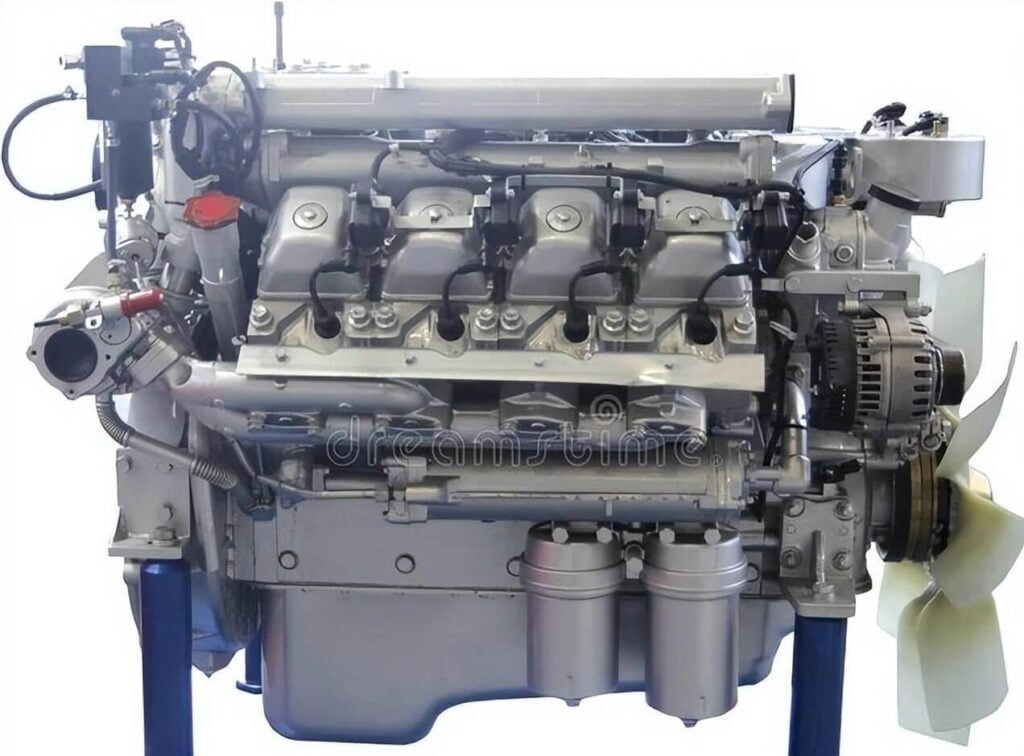
Motor Manufacturing Powers: How Seven Countries Compare
Quick Answer
This editorial ranking compares capability in engineered motors, from low-voltage industrial machines to servo and precision drives, along with brand influence among design teams. It places Germany, Japan, the United States, Sweden, Brazil, Switzerland, and Italy in the top seven. Germany is noted for range and documentation, Japan for servo and micro-motors, and the United States for NEMA-frame industrial and HVAC motors. The ranking measures brand influence rather than unit volume. China leads by volume and is discussed separately below.
- How this ranking was built
- The seven at a glance
- 1. Germany: breadth and documentation
- 2. Japan: servo and micro-motors
- 3. United States: NEMA frames and OEM volume
- 4. Sweden: one company with global reach
- 5. Brazil: WEG’s role
- 6. Switzerland: precision at small scale
- 7. Italy: the gearmotor cluster
- Where China fits in the market
- What this means when you buy
- References
- FAQ
How this ranking was built
Many “top motor manufacturers” rankings do not explain what they measure. This article states its criteria first so readers can assess how the list was assembled.
What the ranking measures
The ranking uses three criteria. Range asks whether suppliers can cover products from low-voltage general-purpose motors to high-voltage special machines. Precision looks at servo, stepper, and micro-motor capabilities that buyers may source internationally. Brand influence considers whether an OEM design team specifies a brand even when lower-cost alternatives are available.
What the ranking excludes
The ranking does not use motor-division revenue, because few companies report it separately, or market-share percentages attributed to research firms that do not disclose their underlying data.
The ranking focuses on brand influence in engineered motor segments. By unit volume, China is the largest producer of small and medium motors and is covered in a separate section. These are different ways of comparing the industry.
The seven at a glance
| # | Country | What it leads in | Names you will meet | Best fit when you need |
|---|---|---|---|---|
| 1 | Germany | Breadth from LV to HV, geared drives, documentation depth | Siemens, Lenze, SCHORCH, Flender, Dunkermotoren | A specified industrial drive with a full type-test file |
| 2 | Japan | Servo, motion control, micro and small DC motors | Nidec, Yaskawa, Mitsubishi Electric, Mabuchi, MinebeaMitsumi | A matched servo axis, or very high volume small motors |
| 3 | United States | NEMA-frame industrial, HVAC and blower, submersible pumps | Regal Rexnord, Nidec Motor Corp, ABB/Baldor, AMETEK, Franklin Electric | A NEMA drop-in with UL/CSA and local stock |
| 4 | Sweden | Drives and motors under one global brand | ABB (with Swiss roots) | A motor-plus-drive package with worldwide service |
| 5 | Brazil | Dual-standard LV and MV motors at industrial volume | WEG | IEC and NEMA in one frame family, LatAm or US delivery |
| 6 | Switzerland | Precision micro-drives and actuators | maxon, Sonceboz | A small, high-precision drive where price is secondary |
| 7 | Italy | Gearmotors and a dense SME component cluster | Bonfiglioli, Motovario, Lafert | A geared motor at competitive cost in mid volume |
The “best fit” column connects each country’s strengths to possible applications. A ranking alone cannot confirm whether a supplier can make a particular part; the purchasing section covers the checks a buyer should make.
1. Germany: breadth and documentation
Germany is the only country among the seven with suppliers at both ends of a broad size range: high-voltage special machines for utilities and heavy industry, precision small drives for medical and laboratory equipment, and a full range of industrial products in between. This breadth is unusual; many countries specialize at one end.
For some buyers, documentation is a practical advantage. A supplier may provide type-test reports, dimensioned drawings with tolerances, and declarations of conformity for a technical file. For equipment that needs certification, confirm that the documents cover the exact motor variant being purchased.
| Company | What it is known for | Product class |
|---|---|---|
| Siemens | Broad industrial drive and motor range, integrated with automation | LV to HV industrial, servo |
| Lenze | Drive and automation systems, geared motors | LV industrial, geared |
| SCHORCH | Large and high-voltage special machines for projects | HV, special application |
| Flender | Industrial gear units and geared motor systems | Geared drives |
| Dunkermotoren | Small precision drives, part of AMETEK | Small BLDC, brushed DC, integrated drives |
Price and lead time can be disadvantages. A German motor may not be the cheapest route to a given torque, and custom variants may require an engineering change process lasting several weeks. For a catalogue machine that needs a certification file, the documentation may justify the extra cost. For a product with dozens of components and a tight schedule, the added process may not fit.
2. Japan: servo and micro-motors
Japan’s position in this ranking rests on two areas. Motion control includes servo motors, encoders, and matching drives that can be specified as an axis. The other area is high-volume small motors used in appliances, automotive actuators, and office equipment.
Use the official company names when searching for products or distributors: Nidec (not Nissan, the car maker), Mabuchi Motor (sometimes mistranslated as “Marlboro Motor”), MinebeaMitsumi (also rendered “Meibei Group”), and Oriental Motor (also rendered “Dongfang Motor”). These are important motor manufacturers; searches under the mistranslated names may not find them.
| Company | What it is known for | Product class |
|---|---|---|
| Nidec | Described on most published rankings as the largest motor manufacturer by volume | Small motors, appliance, automotive, drives |
| Yaskawa | Servo and motion control; the company that put “mechatronics” into circulation | Servo, drives, robots |
| Mitsubishi Electric | Broad electrical and drives portfolio | Industrial, servo, appliance |
| Mabuchi Motor | Very high volume small DC motors for automotive and consumer products | Small brushed DC |
| MinebeaMitsumi | Small motors together with precision bearings and components | Small motors, components |
| Oriental Motor | Standardised small AC motors and steppers for automation | Small AC, stepper |
| Shinano Kenshi | Stepper motors, including very small frame sizes | Stepper |
| Tamagawa Seiki | Encoders and resolvers that servo systems depend on | Feedback devices |
For a servo axis, compare motor and drive performance as a matched system; servo motor basics explains the operating principles. Japanese suppliers also compete in high-volume small motors and may be the benchmark in supplier quotations. Designs in this segment often prioritize automated assembly and unit cost over torque density. Check that torque and speed still meet the application requirements.
3. United States: NEMA frames and OEM volume
A major feature of the U.S. market is the NEMA frame system. Standardized dimensions can make a replacement easier when the motor, shaft, and mounting match. The U.S. industry has built substantial volume around this interchangeability. UL and CSA listings, distributors stocking thousands of frame sizes, and high demand from HVAC and pump manufacturers also distinguish this market from Europe. Verify the frame, listing, and local stock for the exact model.
For industrial motor selection, the relevant U.S. segments include NEMA-frame motors, blower and HVAC motors, and submersible pump motors. Aircraft engines and jet-engine thrust records belong to a different industry and do not help buyers choose an industrial motor.
| Company | What it is known for | Product class |
|---|---|---|
| Regal Rexnord | Multi-brand portfolio including Marathon, Leeson, Genteq, Fasco and Grove Gear | NEMA industrial, HVAC, geared |
| Nidec Motor Corporation | US Motors brand and a broad NEMA range built in North America | NEMA industrial, HVAC |
| ABB (Baldor heritage) | NEMA and IEC industrial motors under a global brand | Industrial, severe duty |
| AMETEK | Advanced Motion Solutions group, owner of several small-drive brands | Precision DC, BLDC, blowers |
| Franklin Electric | Submersible motors for water wells and pumping systems | Submersible, pump motors |
| ElectroCraft | Custom AC, DC, BLDC, stepper and servo with integrated drives | Custom fractional horsepower |
For replacement on an existing U.S. machine, check the frame, listing, and local stock. General purpose motor explains how NEMA frames differ from IEC frames. In a new design, compare package size as well as torque; a NEMA frame may not be the most compact option.
4. Sweden: one company with global reach
The Swedish entry centers on ABB, formed in 1988 through the merger of Sweden’s ASEA and Switzerland’s BBC Brown Boveri. ABB is headquartered in Zurich. The “Swedish” label reflects ASEA’s role in ABB’s history; ABB is currently headquartered in Switzerland.
ABB offers motors, drives, and service through a global network. Some packages are configured around a matched motor and drive rather than pairing the components later. Buyers seeking one supplier for the drive train should verify the configuration and support terms. BLDC versus induction motor explains how motor types differ.
A brand’s country does not establish where a particular motor was manufactured. ABB produces low-voltage motors in multiple countries; check the nameplate and certificate of origin. If origin affects customs or a customer specification, state the requirement in the purchase order.
5. Brazil: WEG’s role
Brazil’s entry centers on WEG, often described as one of the world’s largest motor manufacturers by industrial volume and a major non-Asian, non-European supplier of low- and medium-voltage motors. WEG offers products to IEC and NEMA dimensions, which may make it a second source for designs serving Europe and the Americas. Confirm dimensions and standards for the exact product line.
WEG is often described as one of the largest industrial motor manufacturers and as the largest outside Asia and Europe. Such claims need a clear measure, such as revenue, output volume, or installed capacity, and a dated source.
Two specification details need checking. Some WEG W22 motors are offered with IE4 efficiency; verify the rating for the exact power, pole count, and model against IEC 60034-30-1, the class referenced in European tenders. Brazilian efficiency requirements are set nationally, and a domestic-market motor may differ from an export model. Specify the required efficiency class in the purchase order rather than relying on the destination market.
6. Switzerland: precision at small scale
Switzerland’s entry focuses on precision at small scale: drives measured in millinewton-metres and actuators for automotive subsystems, surgical instruments, and laboratory analysers. In these applications, the drive can limit the performance of the full instrument.
| Company | What it is known for | Product class |
|---|---|---|
| maxon | Precision DC and brushless drives for medical, robotics and aerospace | Micro motors, integrated drives |
| Sonceboz | Compact actuators for automotive and industrial subsystems | Actuators, small motors |
In these applications, compare the motor price with the cost of instrument failure and validation. A Swiss micro-drive may cost ten times a comparable Asian unit yet still be less expensive overall if it avoids another validation cycle. That depends on the design. Volumes are often lower, lead times longer, and design changes may require full requalification; confirm each point with the supplier.
7. Italy: the gearmotor cluster
Italy’s motor industry includes a cluster of small and medium-sized firms producing gearmotors, gearboxes, and related components, concentrated in northern industrial districts. At mid-level volumes, these suppliers may offer custom ratios or flanges without the longer engineering-change process used by a large corporation. Confirm lead times and engineering requirements with each manufacturer.
| Company | What it is known for | Product class |
|---|---|---|
| Bonfiglioli | Geared motors and drive systems across many industries | Gearmotors, planetary, worm |
| Motovario | Gear reducers and geared motors at competitive cost | Worm, helical, bevel |
| Lafert | Industrial motors, now within a larger drive group | LV industrial, servo |
For a machine designer, Italian suppliers may balance European documentation with prices that can compete with Asian alternatives. The cluster is more relevant to geared units than bare motors; buyers looking for bare motors can also consult electric motor manufacturers.
Where China fits in the market
China is discussed separately rather than ranked among the seven. It leads global production by unit volume and produces the majority of small and medium motors sold worldwide, while this ranking focuses on brand influence in engineered segments. German and Japanese brands still command a price premium over Chinese alternatives in many applications, although the premium varies by product and market.
Chinese manufacturers supply custom windings, non-standard frames, integrated gearboxes, and brushless drives for appliances, power tools, e-bikes, and robotic mowers. Some Chinese factories will tool for orders around 3,000 units that some European plants may decline. Confirm minimum order quantities, tooling ownership, and production capacity with each supplier.
Segment by segment
The suppliers listed here do not compete in every segment. Their overlap is concentrated in particular products and volumes, so buyers should compare suppliers within the relevant segment.
| Segment | Where the capability sits | Why |
|---|---|---|
| High-voltage special machines | Germany, Japan, Sweden, Brazil | Requires a project file, type testing and decades of application data |
| Servo axis with matched drive | Japan, Germany | Motor and drive are characterised together, so the pair is the product |
| NEMA-frame replacement | United States, Brazil | Frame standardisation plus regional stock and listing |
| Gearmotors at mid volume | Italy, China | Dense component clusters and fast custom ratios |
| Micro and precision drives | Switzerland, Japan, Germany | Specialist winding, balancing and feedback know-how |
| Custom BLDC at 1,000 to 50,000 units | China | Tooling willingness and iteration speed at that volume |
| Appliances, tools, e-bikes, mowers | China, Japan | Cost engineering against automated assembly |
The table highlights areas where suppliers from the seven countries and China may overlap, including mid-volume gearmotors and small drives. This is where comparing both groups may be useful. In high-voltage or certified applications, the seven countries’ suppliers may be harder to displace because of documentation and application history. At the lower end, they may rarely bid. Confirm availability and capability for the exact specification.
The practical comparison, including how to tell a factory from a trading office, is in Chinese BLDC motor manufacturers. The regional sourcing routes are set out in motor manufacturers from China, AC motor manufacturers in China and DC motor manufacturers in China.
What this means when you buy
A country ranking describes broad industry capabilities. A purchase decision depends on whether a supplier can make the required part to specification.
| If the requirement is | The ranking points you to | What to verify before quoting |
|---|---|---|
| A drop-in replacement on an existing machine | United States, Brazil | Frame dimensions, shaft end, mounting, and that the listing is current |
| A certified drive train for a machine directive file | Germany, Sweden | Type-test report and declaration of conformity for the exact variant |
| A servo axis with the drive characterised | Japan, Germany | That the drive’s current limit and the motor’s thermal limit are published together |
| A geared unit at competitive cost | Italy, China | Gearbox efficiency, backlash and the ratio actually available |
| A custom winding or frame at mid volume | China, Italy | Whether the tooling is in-house, and who owns it |
| One part number for Europe and the Americas | Brazil | That the same frame meets both IEC and NEMA dimensions |
Keep three checks in mind when sourcing a motor:
Brand and country of origin
Large manufacturers may produce motors in several countries. A European brand’s motor sold in Asia may be built in Asia. Check the nameplate and certificate of origin for the specific unit. If origin affects customs duties, a customer specification, or certification, state the requirement in the purchase order instead of relying on the brand.
Assess the factory and its quality controls
Assess whether windings and laminations are produced in-house, what the end-of-line test measures, and whether the factory keeps test records. For example, a plant that builds to a detailed drawing, performs hipot testing on every unit, and records load tests may outperform a low-cost facility working to a looser specification. See the Chinese manufacturer guide for supplier checks.
Confirm that a supplier can make the required part
Use the ranking as a starting point, then ask which supplier has built the required motor at the expected volume and can provide an auditable test record. A 40-person factory in one of the industrial clusters may be a better fit than a well-known brand if it meets the specification and quality requirements.
Motor selection criteria apply regardless of country. See understanding electric motors for the technical questions. For high-torque applications, consult the high-torque BLDC technical guide. Catalogue options are listed under industrial BLDC motor manufacturing and the BLDC motor manufacturer range. U.S. suppliers are covered in electric motor manufacturers in the USA.
References
- International Electrotechnical Commission. (2025). IEC 60034-30-1:2025: Efficiency classes of line operated AC motors (IE code). IEC. https://webstore.iec.ch/en/publication/91195
- International Electrotechnical Commission. (2022). IEC 60034-1:2022: Rotating electrical machines, Part 1: Rating and performance. IEC. https://webstore.iec.ch/en/publication/65446
- International Electrotechnical Commission. (2014). IEC 60034-2-1:2014: Standard methods for determining losses and efficiency from tests. IEC. https://webstore.iec.ch/en/publication/121
- European Parliament and Council. (2019). Commission Regulation (EU) 2019/1781 laying down ecodesign requirements for electric motors and variable speed drives. Official Journal of the EU. https://eur-lex.europa.eu/eli/reg/2019/1781/oj
- National Electrical Manufacturers Association. (2021). NEMA MG 1: Motors and Generators. NEMA. https://www.nema.org/standards
- ZVEI, German Electrical and Electronic Manufacturers’ Association. (2026). Electrical and electronic industry statistics and position papers. ZVEI. https://www.zvei.org/en/
- JEMA, Japan Electrical Manufacturers’ Association. (2026). Japanese electrical machinery industry information. JEMA. https://www.jema-net.or.jp/English/
- Orgalim, Europe’s Technology Industries. (2026). Industrial policy and statistics for the European mechanical and electrical engineering industries. Orgalim. https://orgalim.eu/
- ABIMAQ, Brazilian Machinery Builders’ Association. (2026). Brazilian machinery and equipment industry data. ABIMAQ. https://www.abimaq.org.br/
- U.S. Department of Energy. (2024). Motor systems: energy efficiency and system optimisation. Advanced Manufacturing Office. https://www.energy.gov/eere/amo/motor-systems
FAQ
Q: Which country produces the most motors by unit volume?
China is widely reported as the largest producer by unit volume, particularly for small and medium motors. This ranking instead compares brand influence in engineered segments, where German and Japanese manufacturers are prominent. The two comparisons use different measures.
Q: What is the largest motor manufacturer in the world?
Nidec is often described as the largest motor manufacturer by volume, supplying small motors for appliances, automotive equipment, office machines, and drives. WEG and ABB rank among the largest industrial motor suppliers by revenue. Comparing company size is difficult because many firms do not report motor revenue separately.
Q: Is a German motor better than a Chinese motor?
Country alone is a poor measure of motor quality. Review the factory’s test equipment, inspection process, and ability to meet a detailed specification. A supplier that tests each unit and keeps records may be a better fit than a low-cost plant with looser controls. Evaluate the factory and test records directly.
Q: Why is China discussed separately from the seven?
The seven are ranked by brand influence in engineered segments, while China leads by production volume and supplies many custom and mid-volume OEM motors. China is therefore discussed separately, with unit volume distinguished from brand influence in engineered segments.
Q: Which country should I source a custom motor from?
The right source depends on order volume and the amount of engineering support required. A catalogue motor with a global service network may suit one project; a custom winding, frame, or shaft at mid-volume may favor Chinese or Italian suppliers on cost and flexibility, while Chinese suppliers may offer faster iteration. For a servo axis with a matched drive, Japanese and German suppliers remain strong options.
Q: Does a brand name tell me where the motor was made?
No. Large brands may manufacture in several countries and source frames regionally. Check the nameplate and certificate of origin for the specific motor. If origin affects a commercial requirement, state it in the purchase order.
Send the duty point, required frame, and annual volume through our contact page to discuss whether the requirement fits a catalogue product, a tooled variant, or needs another supplier.