
Motor Application Case Studies
Each case starts from the requirement that set the specification: holding torque on a gradient, noise at the operator’s ear, row spacing in dry soil, brake response on power loss. The page then shows the motor and gearbox that met it, the validation results, and the standard the drive was checked against (IEC rotating-machine standards).
Case coverage
cases
areas
covered
Every case page carries the same structure: client type, governing requirement, delivered specification, validation results and a requirement-by-requirement comparison.
Browse case studies by application
Each card states the application, the result that governed the specification and the motor platform behind it. Open a case to see the full requirement matrix, the implementation sequence and the test conditions.
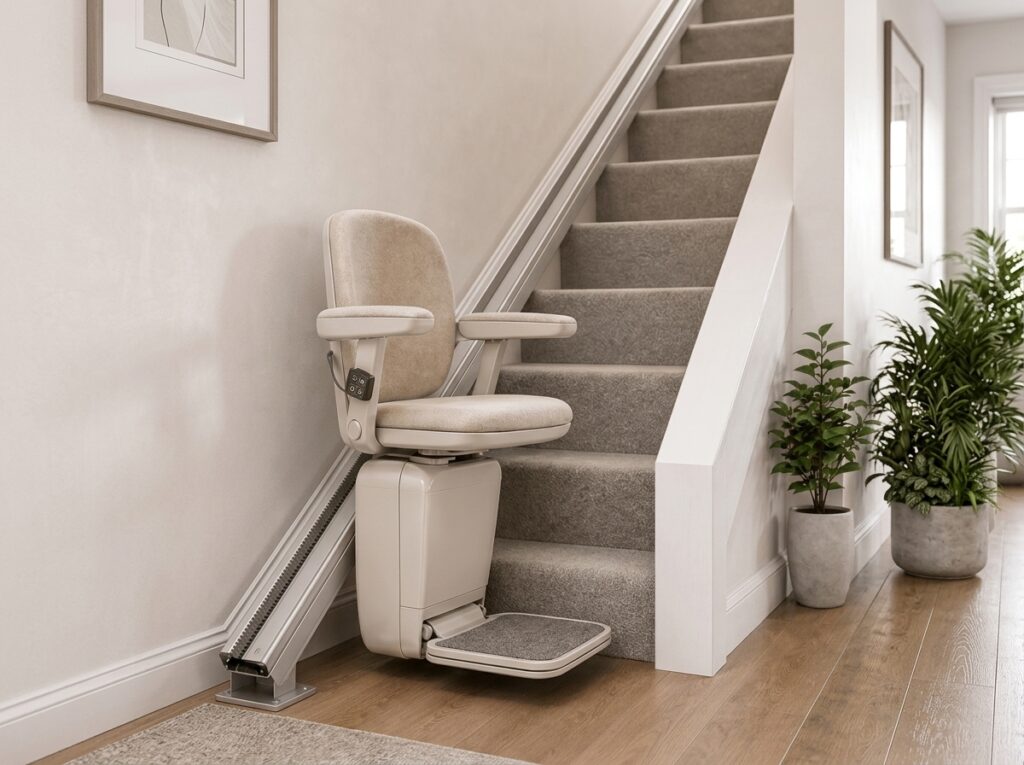
Fixed-Rail Stairlift: 70 N·m Self-Locking Brushless Drive
A descending load can back-drive a stairlift motor into generating mode. The GSBLD60R550D24 with a 1:112 self-sustaining reducer holds the load without a brake and stays under 5 N·m at the hand crank.
EN 81-40 reference matrix Read the case
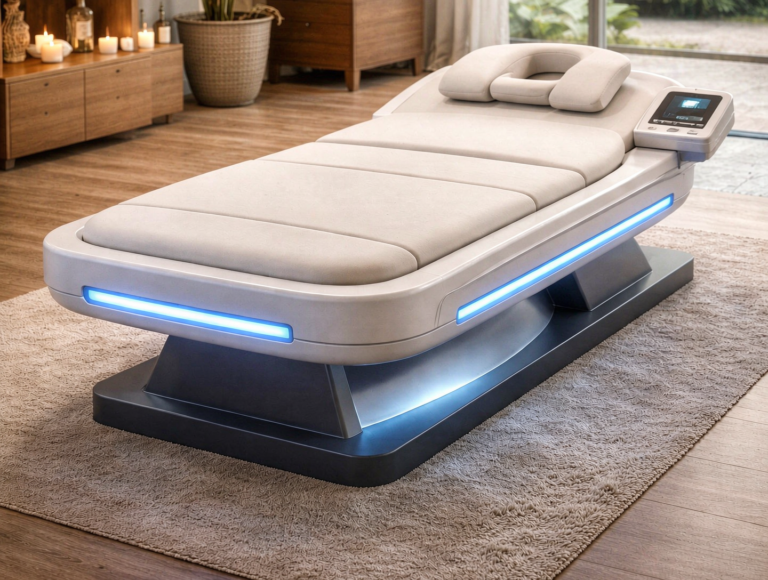
Massage Therapy Bed: 38.9 dB Low-Speed Positioning Drive
Noise at the bed surface was the blocking requirement, not torque. A 230:1 low-speed brushless drive with FOC control took maximum running noise from 42.1 dB to 38.9 dB and held axis speed deviation to 3.00%.
3 prototypes measured Read the case

Automatic Seeder: ±2 mm Row Spacing in Field Conditions
Dust, vibration and variable seed load pushed the metering drive out of tolerance. A sealed GSBLD44R10D12 with a 44P51K gearbox held row spacing to ±2 mm and removed brush maintenance from the service schedule.
Sealed field construction Read the case
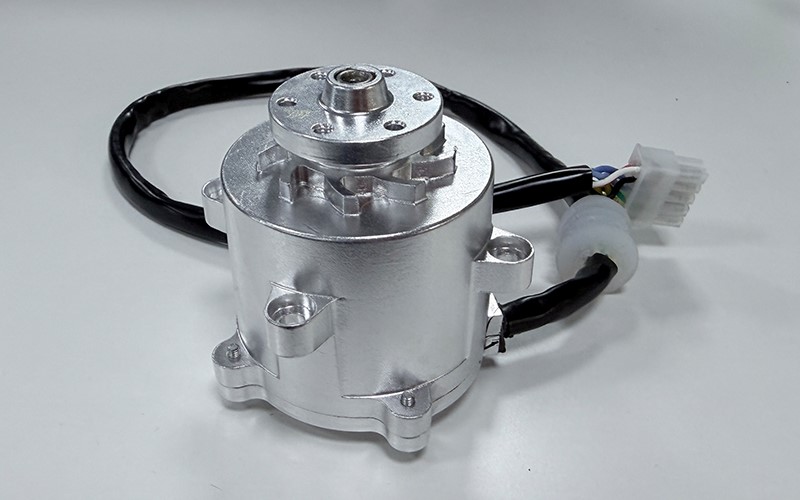
Robotic Mower Blade Motor: 41.5 dB(A) with a 12S8P Stator
The blade motor sets the noise floor of a robotic mower. Moving from a 9-slot 10-pole to a 12-slot 8-pole stator, with Hall sensing and no magnet ring, brought the blade drive to 41.5 dB(A) at 30 cm without losing shaft output.
Requirement matrix with verdicts Read the case
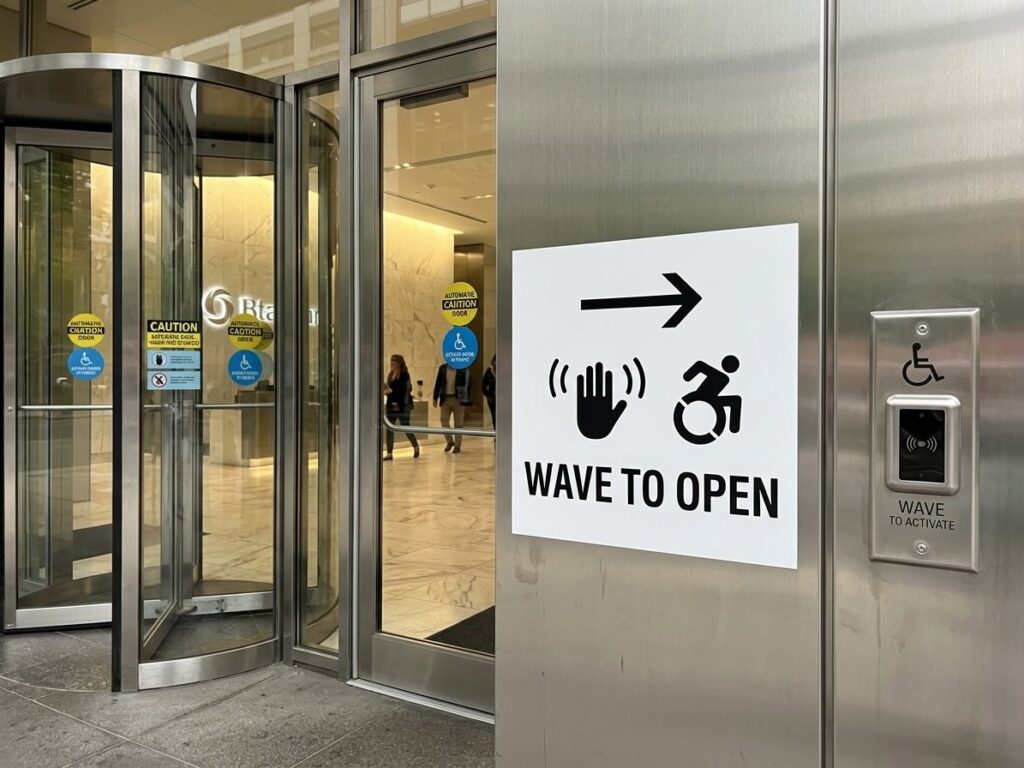
Automatic Door: −8 dB(A) and 3× Service Life
High-traffic entrances needed a quieter drive that would still start at −30 °C. A brushless door motor with a matched controller cut acoustic noise by 8 dB(A), energy use by 25% and tripled service life.
Metric modular mount kit Read the case
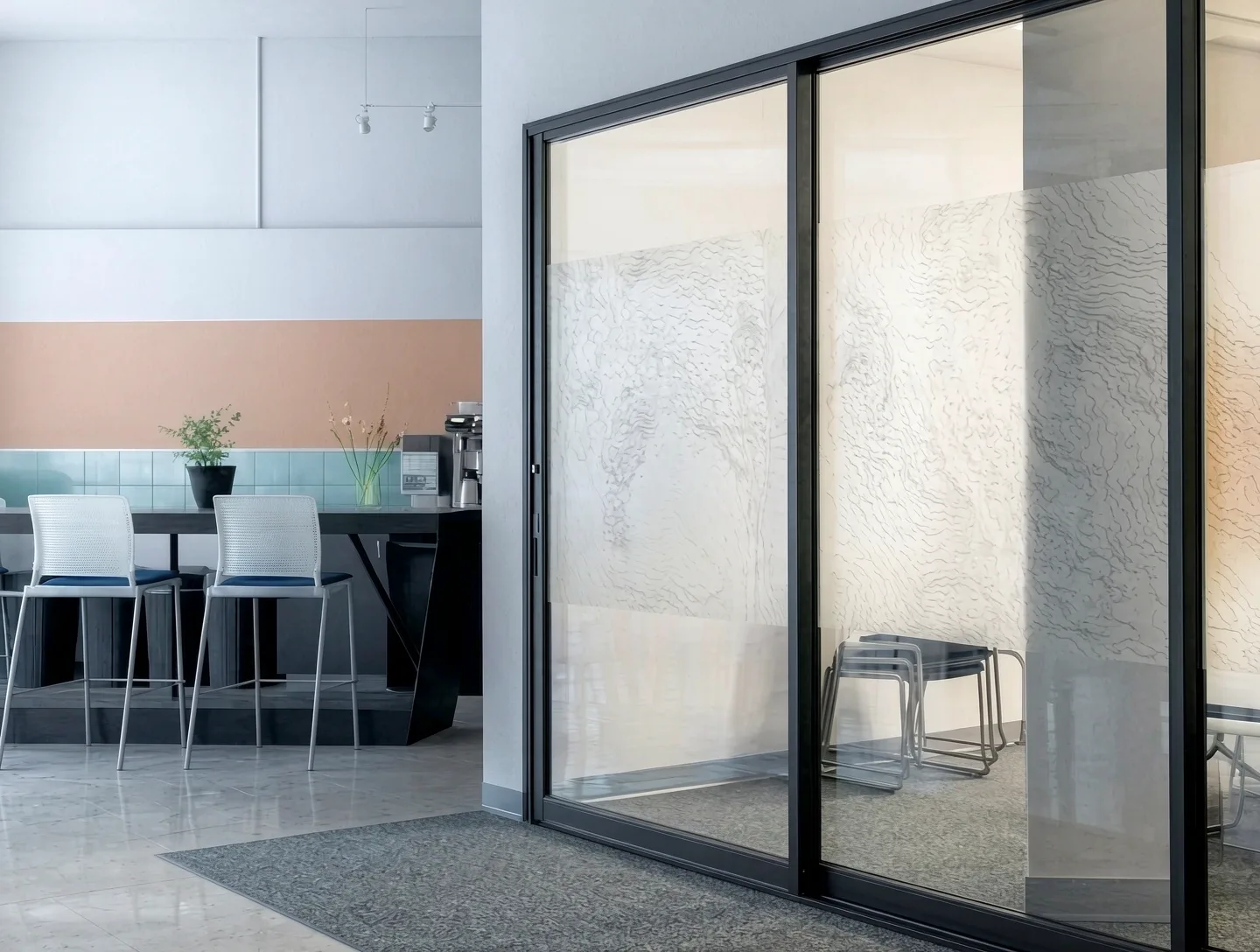
Automatic Door with Brake: Safety-Hold in Under 0.3 s
A door that drifts on power loss is a safety finding, not a comfort issue. A brushless gear motor with an electromagnetic brake holds the leaf in under 0.3 s and keeps IP54 sealing through humid, high-traffic duty.
Flexible mount kit Read the case

AGV Drive Unit: 48 V 750 W BLDC with Integrated Encoder
A German AGV builder had to fit continuous-duty traction into an existing bay. A 48 V 750 W BLDC with an integrated encoder raised efficiency by 25% and extended service life by 30% without changing the mounting envelope.
Continuous-duty traction Read the case
Where these drives run
Requirements shift with the market: EN 81-40 holding torque for European stairlifts, cold starts at −30 °C in Russia, humidity sealing in Southeast Asia, dust and row spacing on Argentine seeders. Grouping by market shows what actually changed between projects.
Europe
From requirement to validated drive
The sequence is the same whether the project is a stairlift gearmotor or a seeding motor. What changes is which step sets the constraint.
Requirement capture
Voltage, speed, torque, duty cycle, load cases, envelope, ingress and the standard the equipment must meet. On the stairlift project this step fixed the 70 N·m holding torque and the 5 N·m hand-crank limit.
Motor and gearbox matching
Reduction ratio, output torque, backlash and mechanical interface are solved together. The 230:1 stage on the therapy bed came from a 10 r/min output target, not from a catalogue default.
Prototype validation
Noise, temperature rise, speed stability under load and endurance are measured on finished assemblies. The therapy bed project was measured on three prototype units, not one.
Production release
Incoming inspection, end-of-line run-in and traceability. Sealing and lubricant choices are fixed here, because they are the first parameters to drift in volume.
The same fields, in the same order
A case study is only useful if a buyer can check it. Every page carries the same six fields, plus a requirement-by-requirement comparison wherever the customer supplied a written specification.
Client type
Manufacturer category and market. The customer is named only where written permission exists, otherwise the case stays at equipment-type level.
Governing requirement
The single constraint that set the specification, not a list of every parameter. On the therapy bed it was noise; on the seeder it was row spacing.
Products as shipped
Motor model, gearbox ratio and controller, matching what was actually supplied, not a catalogue family.
Implementation sequence
The design changes in the order they were made, and what each one was for, so the same reasoning can be reused on a different application.
Results with conditions
Measured values carry the test condition: distance, load, ambient, sample count. A noise figure without a distance is not comparable.
Reference standard
The standard or clause the requirement came from, linked to the issuing body rather than summarised second-hand.
Motor platforms behind these cases: BLDC gear motors · round BLDC motors · planetary gearboxes · right-angle gear units · BLDC motor controllers. Technical selection guides sit under motor application articles.
Looking for the case closest to your application?
Tell us the equipment, the load case and the standard it has to meet. We will point you to the relevant case and quote against your numbers.
Discuss Your Application
Share the equipment type, required torque, voltage, duty cycle and environment. Our engineers reply within 24 hours with a matched motor and gearbox proposal.
Greensky Power Co., Ltd.
Email: mkt@greensky-power.com
Tel: +86 5718819 5488
Customized Service: Yes