

What Is a Power Seat in a Car? How Do They Work?
Quick Answer
A power seat (also called an electric seat) is an automotive seating system that uses small 12V DC gear motors — typically rated at 5–35 amps — to adjust seat position, height, tilt, recline, and lumbar support at the touch of a button, replacing manual levers and tracks. A single power seat may incorporate 2 to 6 individual DC motors, each paired with a reduction gearbox and lead-screw or rack-and-pinion mechanism to convert rotational motion into the linear or angular movement needed for adjustment.
Modern luxury vehicles extend this with memory presets using Hall-effect sensors or potentiometers, storing exact seat coordinates and recalling them via key-fob or driver-profile identification. According to the International Energy Agency (IEA), electric motor-driven systems account for approximately 53% of global electricity consumption, making the efficiency of even small motors in vehicles increasingly relevant under tightening DOE 10 CFR Part 431 efficiency regulations.

What Is a Power Seat?
A power seat is defined as a vehicle seat whose position is adjusted by electric motors rather than manual levers. The system consists of a seat frame, electric motors (DC brushed or brushless), gear mechanisms (worm, spur, or planetary), drive cables or lead screws, control switches, and — in advanced configurations — an electronic control module (ECM) that communicates with the vehicle’s CAN bus.
Power seats are classified by the number of independent adjustment directions, referred to as “ways.” Each bidirectional movement (e.g., forward and backward) counts as two ways:
| Configuration | Adjustment Axes | Typical Vehicle Segment | Number of Motors |
|---|---|---|---|
| 4-way | Forward/back, recline | Entry-level / compact cars | 2 |
| 6-way | Forward/back, up/down, recline | Mid-range sedans and SUVs | 3 |
| 8-way | 6-way + front/rear height tilt | Premium sedans, upper SUVs | 4 |
| 10-way | 8-way + lumbar support (in/out) | Luxury vehicles, full-size trucks | 5 |
| 12-way+ | 10-way + lumbar height, side bolster | Ultra-luxury / executive seating | 6 |
For most drivers, an 8-way power seat with lumbar support covers the ergonomic adjustments that matter most for daily comfort and long-distance driving. The step from 6-way to 8-way — adding independent front and rear cushion height tilt — makes a meaningful difference for shorter drivers who need steeper thigh support and taller drivers who need to flatten the cushion for legroom.
How Power Seats Work: Step-by-Step Principle
The operation of a power seat system follows a straightforward five-step sequence, converting electrical energy from the vehicle’s 12V bus into precise mechanical movement:
Step 1: User Input
The driver or passenger activates a control switch — typically a miniature joystick or button array on the seat side panel or door trim. The switch sends a low-current signal to either a dedicated seat control module (modern vehicles) or directly energizes the motor through a relay circuit (older systems). Switch direction determines motor polarity: reversing polarity reverses motor rotation, enabling the same motor to move the seat in both directions.
Step 2: Signal Processing
In vehicles with memory seat functionality, the control module — typically an MCU such as the NXP S12ZVML128 — receives the input and processes it against stored position data. For memory recall, the ECM reads saved coordinates from non-volatile memory and calculates the required motor activation duration or sensor target value. Communication with the vehicle’s CAN bus allows synchronized adjustment of mirrors, steering column, and climate settings.
Step 3: Motor Activation
The control module energizes the appropriate 12V DC motor. Each motor is paired with a reduction gearbox — typically a worm gear or planetary set — that reduces the motor’s rotational speed (often 2,000–5,000 rpm at no load) to a slow, high-torque output (10–30 rpm at the actuator). This torque multiplication is essential: a typical seat with occupant weighs 75–120 kg, and the lead-screw or rack mechanism requires substantial force to move it smoothly. For example, the Power Motor PGM-WH60D seat adjustment gear motor delivers 12 N·m of torque at 13 rpm from a 12V supply — a torque level adequate for smooth seat sliding under full occupant load.
Step 4: Mechanical Actuation
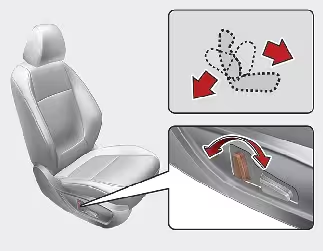
The gearbox output drives one of several mechanical mechanisms depending on the adjustment axis:
- Horizontal slide: A gear rack along the seat track converts motor rotation into fore-aft linear motion.

- Height adjustment: A lead-screw actuator translates rotation into vertical lift.
- Seatback recline: An internal gear segment pivots the backrest around its hinge axis.
- Lumbar support: A separate motor drives either a mechanical spine of connected plates or inflates/deflates an air bladder behind the lower back.


Step 5: Position Feedback and Stop
In memory seat systems, Hall-effect sensors or potentiometers on each motor axis provide real-time position feedback. When the seat reaches the stored coordinate, the control module cuts power to the motor. In non-memory systems, the user releases the switch. Overload protection circuits halt the motor if an obstruction is detected or if current draw exceeds a threshold — typically 20–35 amps depending on the axis — preventing injury or mechanical damage.
Power Seat Motor Types: Comparison Table
The motors used in power seat systems fall into three categories, each with distinct performance and cost trade-offs:
| Feature | Brushed DC Gear Motor | Brushless DC (BLDC) Motor | Stepper Motor |
|---|---|---|---|
| Typical voltage | 12V DC | 12V / 13.5V DC | 12V DC |
| Efficiency | 60–75% | 85–90% | 70–80% |
| Noise level | Moderate (brush friction) | Low (electronic commutation) | Low at low speed |
| Lifespan | 5,000–8,000 hours | 10,000+ hours | 10,000+ hours |
| Cost | Low ($3–8/unit) | Medium ($8–20/unit) | Medium ($6–15/unit) |
| Position control | Open-loop or sensor-based | Closed-loop (Hall sensors) | Inherent step counting |
| EMI | High (brush arcing) | Low | Low |
| Dominant use | Mass-market vehicles | Luxury / EV platforms | Lumbar / bolster adjust |
Most production vehicles still use brushed DC gear motors for cost reasons. However, as automakers transition to BLDC motors for their superior efficiency, longer life, and lower acoustic noise, the trade-offs of brushless technology must be weighed against the benefits. A peer-reviewed study published in the journal Sensors demonstrated that BLDC motors optimized using Design of Experiments (DoE) methodology reduced seat-movement noise by 9.5% at 3,000 rpm under a 75 kg load, with speed error held below 0.3%.
Engineering Data: Motor Specifications, Formulas, and Thermal Limits
Key Motor Specifications from Manufacturer Datasheets
The following table compiles real motor specifications used in automotive seat adjustment systems, sourced from manufacturer datasheets:
| Motor Model | Voltage (V) | Rated Torque | Stall Torque | No-Load Speed | Max Efficiency | Max Winding Temp |
|---|---|---|---|---|---|---|
| Power Motor PGM-WH60D | 12 | 12 N·m (geared) | — | 13 rpm (geared) | ~70% | — |
| Power Motor PGM-WP75 | 12 | 19 N·m (geared) | — | 11.5 rpm (geared) | ~68% | — |
| GlobalSpec 12V Seat Motor | 12 | 4.8 N·m (max eff.) | 11.5 N·m | 28 rpm (no-load) | ~72% | — |
| maxon DC-max 22 (bare motor) | 24 | 26.3 mNm | 287 mNm | 8,920 rpm | 87% | 100°C |
| Faulhaber 2237S036CXR (bare motor) | 36 | 12.4 mNm | 48.8 mNm | 7,300 rpm | 74% | 125°C |
| Faulhaber 2233T4.5S (bare motor) | 4.5 | 3.62 mNm | 21.4 mNm | 8,040 rpm | 87% | 125°C |
Note: Bare motor specifications (maxon, Faulhaber) show output at the motor shaft before gearbox reduction. When paired with a typical 100:1 worm-gear reduction, a motor rated at 12.4 mNm can deliver approximately 1.24 N·m at the output — and with multi-stage planetary gearing at ratios of 300:1 or higher, output torque exceeds 10 N·m, which is sufficient for seat adjustment applications.
Core Engineering Formulas
1. Torque after gearbox reduction:
T_output = T_motor × Gear_Ratio × Gear_Efficiency
Example: A motor producing 12.4 mNm (Faulhaber 2237S036CXR) with a 300:1 planetary gearbox at 85% efficiency yields: 0.0124 × 300 × 0.85 = 3.16 N·m
2. Seat sliding force calculation:
F = T_output / r_screw
Where r_screw is the effective radius of the lead screw (typically 4–8 mm). With T_output = 12 N·m and r_screw = 6 mm (0.006 m): F = 12 / 0.006 = 2,000 N (≈204 kgf) — more than sufficient to move a seat with a 120 kg occupant.
3. Motor efficiency:
η = P_mechanical / P_electrical = (T × ω) / (V × I)
Where T is torque (N·m), ω is angular velocity (rad/s), V is voltage, and I is current.
4. Copper loss (I²R):
P_cu = I² × R
For the IEEE-studied BLDC seat motor (R = 0.209 Ω, I_max = 4.64 A): P_cu = 4.64² × 0.209 = 4.50 W
5. Thermal model (winding temperature rise):
ΔT_winding = P_loss × (R_th1 + R_th2)
Where R_th1 is winding-to-housing thermal resistance and R_th2 is housing-to-ambient. For the Faulhaber 2237S036CXR: R_th1 = 6.2 K/W, R_th2 = 22.2 K/W. At 4.5 W total loss: ΔT = 4.5 × (6.2 + 22.2) = 127.8 K — approaching the 125°C winding limit at 22°C ambient, confirming the need for intermittent duty in seat applications.
6. SKF L10 bearing life:
L10h = (10⁶ / 60n) × (C/P)^p
Where C is dynamic load rating, P is equivalent dynamic load, n is rpm, and p = 3 for ball bearings or 10/3 for roller bearings. For a seat motor bearing at 3,000 rpm with C = 4.35 kN and P = 1 kN: L10h = (10⁶ / 180,000) × (4.35)³ = 5.56 × 82.3 = 457 hours — adequate for a seat motor operating in short intermittent duty cycles.
IEC 60034-1 Insulation Class Temperature Limits
| Insulation Class | Max Temperature (°C) | Typical Application |
|---|---|---|
| Class A | 105 | Low-cost, intermittent duty |
| Class E | 120 | Standard automotive auxiliary |
| Class B | 130 | Continuous duty, general purpose |
| Class F | 155 | Industrial / automotive (maxon EC-max 30) |
| Class H | 180 | High-temperature, harsh environment |
Most automotive seat motors use Class E or Class B insulation, with maximum winding temperatures of 120–130°C. The Faulhaber 2237S036CXR specifies a maximum winding temperature of 125°C, aligning with Class E. The maxon DC-max 22 limits winding temperature to 100°C — conservative for automotive environments where ambient temperatures under the seat can reach 85°C.
IEC 60034-30-1 Efficiency Classes (for comparison)
| IEC Class | NEMA Equivalent | Efficiency Range | Relevance to Seat Motors |
|---|---|---|---|
| IE1 | Standard Efficiency | 75–85% | Legacy brushed DC motors |
| IE2 | High Efficiency | 85–89% | Current brushed DC gear motors |
| IE3 | Premium Efficiency | 89–92% | Required by DOE for many motors |
| IE4 | Super Premium | 92–95% | BLDC seat motors (future) |
| IE5 | Ultra Premium | 95%+ | Not yet defined by NEMA |
Note: The DOE’s 10 CFR Part 431 regulations, effective June 1, 2027, will require IE4 efficiency for mid-range three-phase industrial motors (1–750 hp). While small DC motors used in automotive seat systems fall outside the current scope of these regulations, the regulatory trend toward higher efficiency is driving automakers to adopt BLDC technology in auxiliary motor systems. The IEA reports that electric motor-driven systems account for 53% of global electricity consumption, with 72% of industrial electricity and 86% of transportation-sector electricity consumed by motor systems.
Applications: Where Power Seat Motors Are Used
| Application | Motor Type | Typical Torque | Key Requirements |
|---|---|---|---|
| Passenger vehicle seats | 12V brushed DC gear motor | 4–19 N·m | Low noise, low cost, 12V compatibility |
| Luxury vehicle memory seats | 12V BLDC with Hall sensors | 4–19 N·m | Precision positioning, CAN bus integration |
| Commercial truck seats | 24V DC gear motor | 15–30 N·m | High load capacity, durability for long-haul |
| Aerospace seats | Brushless DC servo motor | 5–20 N·m | FAA certification, weight optimization |
| Medical / mobility chairs | 12V/24V BLDC gear motor | 8–25 N·m | Quiet operation, precise control, safety stops |
Automotive seat motors represent a specialized subset of the broader DC motor market. Unlike industrial motors that run continuously, seat motors operate in short-duty cycles — typically S2 (short-time duty) or S3 (intermittent periodic duty) per IEC 60034-1 classification — which allows compact motors to deliver high peak torque without overheating. For applications requiring sustained high torque at low speed, such as industrial automation, a low-speed high-torque BLDC motor would be more appropriate.
Step-by-Step Power Seat Motor Selection Guide
Selecting the correct motor for a power seat application requires a systematic approach that balances torque, speed, thermal performance, cost, and regulatory compliance:
Step 1: Define Load Requirements
Calculate the maximum seat load: seat structure weight (15–25 kg) + maximum occupant weight (per FMVSS 202, typically 120 kg test load) = 135–145 kg total. Determine the coefficient of friction for the seat track (μ = 0.1–0.3 depending on lubrication and roller design). Required sliding force: F = μ × m × g = 0.2 × 145 × 9.81 = 284 N.
Step 2: Calculate Required Torque
Using the lead-screw mechanism: T = F × r_screw / screw_efficiency. With r_screw = 6 mm and screw efficiency = 0.4 (typical for ACME thread): T = 284 × 0.006 / 0.4 = 4.26 N·m. Add a 2× safety factor for dynamic loads and acceleration: 8.5 N·m required output torque.
Step 3: Select Motor Type and Gear Ratio
For a 12V brushed DC motor with a no-load speed of 4,000 rpm and rated torque of 15 mNm, select a gear ratio that provides both the required output torque and acceptable output speed. At 200:1 worm-gear reduction with 65% efficiency: T_output = 0.015 × 200 × 0.65 = 1.95 N·m (insufficient). At 400:1: T_output = 0.015 × 400 × 0.65 = 3.9 N·m (still insufficient). Consider a higher-torque gear motor or upgrade to a motor with higher rated torque.
Step 4: Thermal Verification
Verify that the motor’s thermal capacity supports the duty cycle. For S3 intermittent duty (10% on-time, 60-second cycle), the motor can handle 3–4× its continuous rated torque. Using the thermal model formula (Formula 5 above), confirm that winding temperature stays within the insulation class limit during the worst-case adjustment cycle.
Step 5: Acoustic Performance
Automotive OEMs typically specify seat motor noise below 55 dB(A) at 0.5 m in a semi-anechoic chamber. Brushed DC motors generate noise from brush commutation; BLDC motors reduce this but introduce controller switching noise. The IEEE-published study on BLDC seat motor noise optimization demonstrated that DoE-based parameter tuning can reduce noise by 9.5% at 3,000 rpm.
Step 6: Regulatory and Safety Compliance
Ensure compliance with applicable standards:
- NEMA MG 1 — Motor construction and performance guidelines (applicable to motors sold in North America)
- IEC 60034-1 — Rating and performance for rotating electrical machines
- FMVSS 202 — Head restraints (affects seat position requirements)
- FMVSS 207 — Seating systems (strength and load requirements)
- DOE 10 CFR Part 431 — Energy efficiency for electric motors (scope-dependent)
- ISO 26262 — Functional safety for automotive electrical systems
Common Engineering Mistakes in Power Seat Motor Selection
| # | Mistake | Consequence | Correct Approach |
|---|---|---|---|
| 1 | Undersizing motor torque — selecting based on average load, not peak | Seat stalls under heavy occupant; motor burnout | Use 2× safety factor on calculated peak torque |
| 2 | Ignoring duty cycle thermal limits | Winding overheating during repeated adjustments | Verify against IEC 60034-1 duty class (S2/S3) |
| 3 | Neglecting gear efficiency losses — assuming 100% transfer | Actual output torque 30–50% below calculation | Use realistic gear efficiency (worm: 50–70%, planetary: 85–95%) |
| 4 | Overlooking back-EMF at speed | Motor cannot reach required speed under load | Check speed-torque curve at operating voltage, not no-load |
| 5 | Inadequate EMI filtering on BLDC controllers | Interference with vehicle CAN bus and infotainment | Use shielded cables and LC filters per CISPR 25 Class 4 |
| 6 | Using wrong voltage rating — 36V motor in 12V system | Insufficient torque, motor never reaches rated speed | Match motor rated voltage to vehicle bus voltage (12V passenger, 24V truck) |
Troubleshooting Guide: Power Seat Problems
| Problem | Likely Cause | Solution |
|---|---|---|
| Seat does not move in any direction | Blown fuse or open circuit breaker | Check fuse panel (typically 20–30A seat circuit); test for voltage at motor connector |
| Seat moves in one direction only | Faulty directional switch or stuck relay | Replace seat control switch; test relay coil and contacts with multimeter |
| Seat moves slowly or struggles under load | Worn motor brushes, dirty track, or corroded connector | Inspect brush length (< 3 mm = replace); clean and lubricate track; clean connector pins |
| Grinding or clicking noise during movement | Stripped gear teeth or damaged lead screw | Disassemble gear housing; inspect for tooth damage; replace gearbox assembly |
| Memory function does not recall positions | Failed Hall-effect sensor or lost calibration | Run seat calibration procedure (varies by manufacturer); replace position sensor if fault persists |
| Seat moves to wrong memory position | Sensor drift or corrupted EEPROM data | Re-teach memory positions; clear and re-store all driver profiles |
| Motor runs but seat does not move | Broken drive cable or disconnected linkage | Inspect drive cable connection at motor and track; replace broken cable |
| Intermittent operation (works sometimes) | Loose wiring harness or failing control module | Check harness routing for pinch points; perform continuity test; scan for DTC codes |
Frequently Asked Questions
What voltage do power seat motors use?
Most passenger vehicle power seat motors operate on the vehicle’s standard 12V DC electrical system. Commercial trucks and buses typically use 24V DC systems. The motors draw 5–35 amps depending on the adjustment axis and load, with height and recline axes drawing the highest current due to greater mechanical resistance.
How many motors are in a power seat?
A typical power seat contains 2 to 6 individual DC motors, one for each adjustment axis. A basic 4-way seat uses 2 motors (slide and recline), while a 12-way luxury seat may use 6 motors (slide, height, tilt, recline, lumbar, bolster). Each motor is controlled independently by the seat switch or control module.
Can I replace a power seat motor myself?
Replacing a seat motor is feasible for experienced DIY mechanics, but requires disconnecting the battery, removing the seat from the vehicle, accessing the motor mounting screws (often hidden under trim panels), and transferring the drive cable or gear to the new motor. Always consult the vehicle service manual for torque specifications and airbag deactivation procedures before working on seats.
Are BLDC motors better for power seats?
BLDC motors offer higher efficiency (85–90% vs. 60–75% for brushed), longer life (10,000+ hours vs. 5,000–8,000), and lower acoustic noise — making them increasingly preferred in luxury and electric vehicles. However, they cost 2–3× more than brushed DC motors and require an electronic controller. For a detailed analysis of BLDC trade-offs, see our article on disadvantages of brushless DC motors.
What is the lifespan of a power seat motor?
Brushed DC seat motors typically last 5,000–8,000 operating hours, translating to 10–15 years of normal use given the short intermittent duty cycles. BLDC motors last 10,000+ hours. Bearing life, calculated using the SKF L10 formula, is often the limiting factor rather than the motor windings themselves.
How much torque does a power seat motor need?
Required torque depends on the adjustment axis and occupant load. Typical seat sliding requires 4–12 N·m of output torque at the gearmotor shaft; height adjustment requires 8–19 N·m; recline mechanisms require 10–30 N·m. These values assume a 120 kg occupant and include a safety factor. For the full calculation method, see our guide on how much weight a DC motor can carry.
Why Choose Greensky Power for Automotive Seat Motors?
As a specialized DC and BLDC motor manufacturer since 2011, Greensky Power supplies custom motor solutions for automotive seat adjustment and auxiliary applications:
- Engineering-driven customization: Motors tailored to voltage (12V/24V/36V), torque (4–50 N·m output), speed, and envelope constraints. Our R&D team of 8 PhD-level engineers provides full application analysis including thermal modeling and duty-cycle verification.
- Standard-compliant manufacturing: Production compliant with IEC 60034-1 (rating and performance), ISO 9001 quality management, and CE certification. Every motor undergoes 100% individual testing on dynamometers and in thermal chambers.
- Gear motor expertise: Vertical integration across motor winding, gearbox manufacturing (worm, planetary, spur), and encoder integration — reducing lead times and ensuring consistent quality. See our range of CE-certified BLDC motors and 36V high-efficiency BLDC options.
- Automotive-grade testing: High-low temperature chambers (-40°C to +125°C), coordinate measuring machines (CMM), silent rooms for acoustic testing (target ≤55 dB(A)), and dynamometer verification of torque-speed curves.
- Global support: Regional engineering and after-sales support for North American and European customers, with prototype delivery within 15 days and MOQ from 50 units for OEM production.
- Scale and capacity: Four manufacturing subsidiaries covering DC motors, BLDC motors and controllers, micro AC motors and gearboxes, and torque sensors — providing integrated motion solutions from a single source. Learn more about our manufacturing capabilities and position among the world’s top brushless motor manufacturers.
For automotive seat motor specifications, sample requests, or custom design consultation, contact our engineering team at mkt@greensky-power.com.
References
- IEC 60034-1:2022, “Rotating electrical machines — Part 1: Rating and performance.” International Electrotechnical Commission. https://webstore.iec.ch/publication/60456
- NEMA MG 1-2016, “Motors and Generators.” National Electrical Manufacturers Association. https://www.nema.org/standards/view/motors-and-generators
- U.S. Department of Energy, “Energy Conservation Standards for Small Electric Motors,” 10 CFR Part 431. https://www.energy.gov/cmei/buildings/small-electric-motors
- IEA, “Energy-Efficiency Policy Opportunities for Electric Motor-Driven Systems.” International Energy Agency. https://www.iea.org/reports/energy-efficiency-2018
- SKF, “Bearing rating life — L10 calculation method.” SKF Group. https://www.skf.com/group/products/bearings-units-housings/principles/bearing-selection-process
- Kim, J. et al., “A Study on Optimization of Noise Reduction of Powered Vehicle Seat Movement Using Brushless Direct-Current Motor,” Sensors, 2023, 23(7), 3464. DOI: 10.3390/s23073464
- IEEE, “Analysis of Control Methods for BLDC Motors in Electric Vehicle Powertrain Systems,” 2024 IEEE PEDES Conference. DOI: 10.1109/PEDES61459.2024.10961105
- Faulhaber, “DC-Micromotors 2237S036CXR Technical Datasheet.” Faulhaber Drive Systems. https://www.faulhaber.com/en/products/series/2237cxr
- maxon, “DC-max 22 Precious Metal Commutation DC Motor Technical Data.” maxon motor ag. https://maxonjapan.com/wp-content/uploads/catalogue/DC-max.pdf
- Siemens, “SIMOTICS Low-Voltage Motors — Technical Manual for Industrial Applications.” Siemens AG. https://support.industry.siemens.com/cs/technical-overview
