
36 Volt DC Motors
High-performance 36 V DC motors for automation, AGVs, e-mobility and industrial applications, with motor diameters from 3.25 in to 6 in and NEMA, IEC or custom mounting. 36 V is the battery-voltage middle ground — it is a ten-cell lithium pack, it stays inside the safety extra-low-voltage band, and it draws less current than 24 V for the same power.
What a 36 Volt DC Motor Is
A 36 volt DC motor is an electric motor that runs on 36 volts direct current. Because it runs on DC, it reaches and holds high rotational speeds without gears or complicated control, and it is built in a wide range of sizes and shapes for everything from an AGV drive wheel to a pump to a fan.
A Greensky 36 V motor is designed to your application description. Every motor is built with speed-control compatibility for variable speeds, and can be manufactured with NEMA, IEC or custom mounting. 36 V is also the natural ten-cell lithium voltage, so it is the default where a battery powers the machine.

36 V Is the Middle of the Map
A ten-cell lithium pack is 36 V nominal, and the same motor is built at 12, 24, 36 and 48 V. For the same shaft power, the current falls as the voltage rises — and 36 V sits exactly in the middle of that trade.
| Bus voltage | Current at 500 W | Note |
|---|---|---|
| 12 V | 49.0 A | Highest current, thickest cable |
| 24 V | 24.5 A | SELV default |
| 36 V | 16.3 A | Ten-cell lithium, middle ground |
| 48 V | 12.3 A | Lowest current, highest power |
36 V is a ten-cell pack
A lithium cell is 3.6 V nominal, and ten in series is 36 V. That is why 36 V is the natural voltage for e-bikes, scooters and AGVs — the battery, the motor and the drive all share one bus.
Inside the SELV band
36 V sits below the 120 V DC safety extra-low-voltage limit of IEC 60364-4-41, so the motor stays in the low-voltage protection band without the extra isolation of a higher bus.
Less current than 24 V
At the same 500 W, 36 V draws about 16.3 A against 24 V’s 24.5 A. The thinner cable and lower loss are the reason to move up from 24 V when the pack allows it.
The current figures are arithmetic at 85% efficiency, not a rating. The published motor is built at each voltage, so the decision is about your battery and harness, not the motor’s capability.
What Kind of 36 V Motor Fits
36 V is the supply, not the motor type. The same bus drives a brushed, a brushless or a geared motor — and the choice is set by the duty, not by the voltage.
Brushed DC
Simple, low-cost and easy to drive, with speed roughly proportional to voltage. The trade is brush wear, which matters on continuous duty.
Brushless DC
No brush wear and higher efficiency, but it needs a three-phase controller. The 36 V BLDC motor is the default for e-mobility and AGV drive wheels.
Geared DC
A gearbox on the front trades speed for torque, so the useful rating moves to the output shaft. Best where you need low speed and high torque.
Custom OEM
Wound, geared and mounted to your application, with the shaft, flange and connector your machine expects.
The original page describes 36 V DC motors as more expensive than brushless, which mixes up two different axes. The price difference is between brushed and brushless, not between voltages — a 36 V brushed motor is cheaper than a 36 V brushless one, and a 36 V motor is not inherently more expensive than a 12 V one. We build all of them on the same 36 V bus.
Where 36 Volt DC Motors Are Used
E-mobility
E-bikes and scooters run on a ten-cell 36 V pack, so the motor, the drive and the battery share one voltage — the simplest possible system.
AGV & robotics
Drive wheels where the 36 V bus balances current and cable size, and the brushless motor holds up to long duty cycles.
Pumps & fans
Circulation and ventilation where the speed-control compatibility and the continuous rating are what matter.
Automation equipment
Positioning and feed axes where a 36 V supply already exists in the panel and the motor slots into it.
For a pump or any fluid-handling application, the wetted seal and housing materials must be verified against the actual service environment — send the fluid, the temperature and the pressure, not just the application name.
Motor Ratings and Interface
What is fixed across the 36 V range, what is set per order, and the documents available today.
| Parameter | Value |
|---|---|
| Rated voltage | 36 V DC |
| Motor diameter | 3.25 – 6 in |
| Motor type | Brushed / Brushless / Geared |
| Speed control | Variable speed compatible |
| Mounting | NEMA / IEC / custom |
| Power, speed and torque | Not specified — confirm per model |
| Insulation class | Not specified — confirm before design freeze |
| Protection level | Not specified — confirm per model |
| Certification | CE / RoHS as published; scope per model |
There is no single datasheet covering every 36 V build, because the motor type, winding and gearbox are configured per order. The documents above give the range and the wiring conventions; the drawing issued against your application is the controlling document. If a download does not start in a mobile in-app browser, open this page in the system browser and tap again.
Electrical and mechanical interface — confirm before design freeze
What to ask for · its current status · why it matters on a real machine| Item | Status | Why it is on this list |
|---|---|---|
| Rated and stall current | Not specified — confirm before design freeze | Rated current sizes the cable; stall current sizes the fuse and the drive. At 36 V the rated figure for a given power is about two-thirds of the 24 V figure, but the stall figure can be several times higher. |
| Hall sensor wiring and connector pinout | See the BLDC series datasheet | Phase and Hall order must match between motor and drive; reversing either way will not run correctly, and the pinout has to match your harness. |
| Logic level for PWM / enable / direction | Not specified — confirm before design freeze | A 3.3 V host driving a 5 V input, or the reverse, is the most common integration failure. Get the level in writing before the control PCB is frozen. |
| Duty type and rated ambient | Not specified — confirm before design freeze | Continuous duty at elevated ambient derates the published output. A motor that runs all shift on a hot line needs a different rating from one that cycles. |
| Insulation class and temperature rise | Not specified — confirm before design freeze | Insulation class sets how hot the winding may run and therefore how much continuous torque the frame can carry. |
| Gear ratio and output bearing load | Not specified — confirm per model | With a gearbox fitted, the useful rating moves to the output shaft, and the radial load the output bearing accepts limits overhung loads. |
| Ingress protection | Not specified — confirm per model | The IP code is set per build. If the machine sees wash-down, the connector, shaft seal and housing material have to be agreed rather than assumed, and the wetted seal material must be verified against the actual service environment. |
| Shaft, flange and mounting drawing | Issued against your drawing per order | NEMA, IEC or custom is a statement of intent, not a dimension. The pilot, hole pattern and shaft end have to be drawn before a bracket can be made. |
| Feedback option | Encoder or Hall per model; to be specified | Closed-loop speed or position needs feedback, and the encoder resolution and Hall sequence have to match the drive you intend to use. |
Safety and Standards for a 36V DC Motor
Three standards answer three questions about a 36 V motor: how it is rated, how it stays in the safety band, and how its battery is treated.
Rating and duty
IEC 60034-1:2022 supplies the rating, duty type and temperature-rise definitions that make any performance claim verifiable. The published power, speed and torque become checkable numbers only once the duty type and ambient are attached.
Safety extra-low voltage
IEC 60364-4-41 defines the 120 V DC safety extra-low-voltage band. 36 V sits inside it, so the motor stays in the low-voltage protection band without the extra isolation a higher bus requires.
The battery that powers it
IEC 62133-2:2017 is the cell and pack safety standard for the lithium battery behind a 36 V system. The motor and the drive share the pack, so its safety requirements travel with the bus.
Two things 36 V does not change
The Low Voltage Directive 2014/35/EU still does not apply, because its DC scope begins at 75 V and 36 V is below that. And the US energy-efficiency rules in 10 CFR Part 431 still do not apply, because they cover polyphase AC squirrel-cage induction motors, not DC machines — so a 36 V DC motor has no IE efficiency class, and no supplier can honestly give it one.
The CE/RoHS mark, and how to read it
The published CE/RoHS mark is a conformity statement, not a single certificate. For a low-voltage DC motor the CE side is typically the EMC directive, and RoHS restricts hazardous substances in homogeneous material. Ask for the specific declaration and scope against the model you are buying — the certificate number and scope are supplied per project rather than printed here.
Our Manufacturing Capabilities
Greensky supports OEM and ODM development for DC motor application manufacturers.
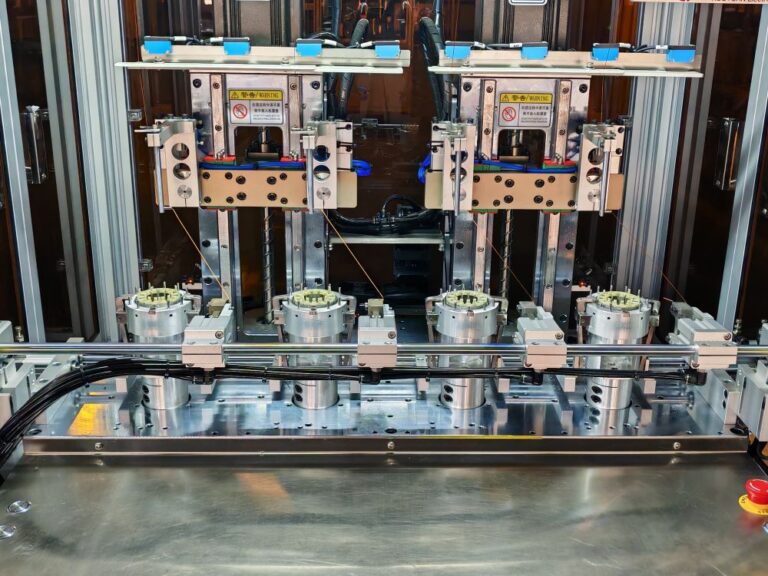
Motor Production Line
Advanced production lines ensure consistent quality and high production capacity for global DC motor application manufacturers.
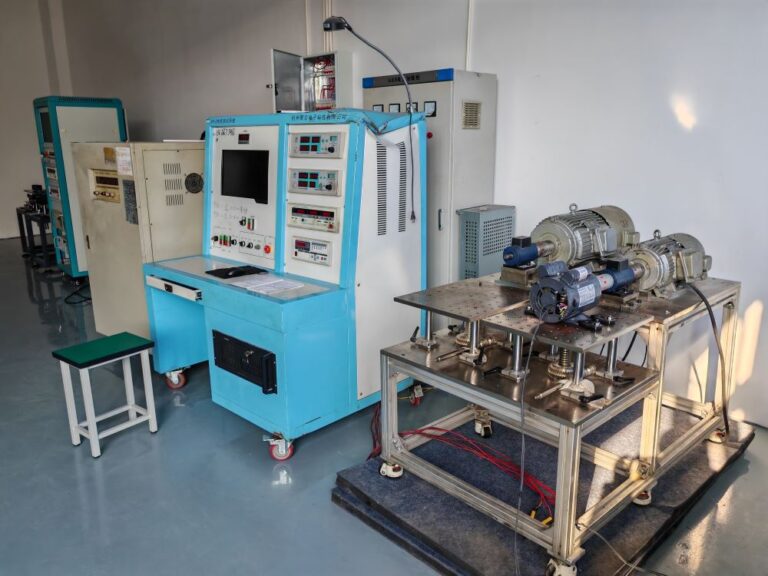
Motor Testing Laboratory
Professional testing equipment verifies torque, efficiency, durability and performance before shipment.
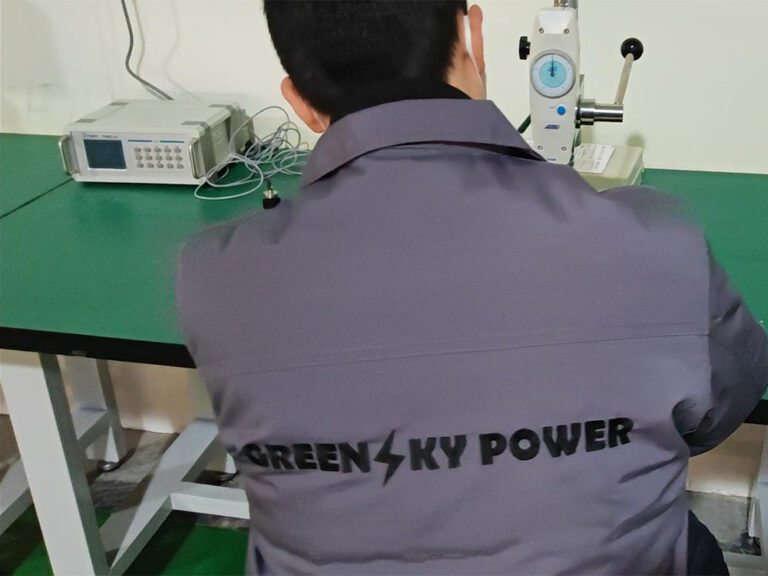
Quality Inspection
Strict inspection procedures ensure each motor meets international standards and customer specifications.

OEM Production
Flexible OEM manufacturing supports custom DC motor solutions for application manufacturers.
Why Choose Greensky as Your Motor Manufacturer
Greensky is a professional electric motor manufacturer specializing in motion control solutions, working with DC motor application manufacturers worldwide to develop reliable motor solutions.
- Strong R&D team — winding, magnetics and drive design in house
- Advanced manufacturing equipment — automated winding and assembly lines
- Strict quality control — incoming, in-process and outgoing inspection on every batch
- OEM customization capability — from a first sample to annual volume
- Global export experience — motors shipped to more than 50 countries

Need a 36 Volt DC Motor for Your Project?
Talk with our sales engineers
- Load — continuous torque or force and radius, plus the peak and its duration.
- Speed — output speed after any gearbox, and the range you need to control.
- Type — brushed, brushless or geared, from the four above.
- Supply and duty — 36 V nominal, hours per day and ambient.
- Interface — shaft, flange and mounting drawing, feedback or brake needs.
- Order plan — sample quantity, annual volume and labelling.
Send an inquiry
Send a load case and a mounting drawing — we reply with a motor proposal within 24 hours.
36 Volt DC Motor FAQ
1. What is a 36 volt DC motor?
An electric motor that runs on 36 volts direct current. It reaches and holds high rotational speeds without gears, comes in a wide range of sizes, and is built to withstand continuous use — which is why it is the battery-voltage default for e-mobility and AGVs.
2. What if I do not know what kind of motor I need?
If you are unsure of the motor you currently use, we load-test it for you to determine its specifications, and work directly with your engineers to match it. Send the existing motor or its application and we find the right 36 V replacement.
3. Are there other options than a 36 volt DC motor?
Yes — Greensky offers numerous DC motor types at the voltage your company needs, including 24 Volt DC Motors, 12 Volt DC Motors, Variable Speed Motors and Solar Powered Motors. Our sales engineers guide you to the style that fits your application best.
4. Is 36 V more expensive than brushless?
No — that mixes up two different axes. 36 V is the voltage, while brushed and brushless are the motor type. A 36 V brushed motor is cheaper than a 36 V brushless one; the voltage itself does not make the motor more expensive. We build all of them on the same bus.
5. How much current does a 36 V motor draw?
About 16.3 A at 500 W and 85% efficiency — two-thirds of the 24 V figure for the same power. The exact value follows the winding and appears on the issued drawing.
6. Is 36 V still in the safety low-voltage band?
Yes. 36 V sits below the 120 V DC safety extra-low-voltage limit of IEC 60364-4-41, so the motor stays in the low-voltage protection band without the extra isolation a higher bus requires.
7. Do you support OEM customization?
Yes — custom shaft and mounting, gearbox integration, controller and driver matching, voltage and speed adjustment, and thermal and protection customization, from a first prototype to large-scale OEM manufacturing.
Looking for DC Motor Solutions?
Contact us for a customized 36 volt DC motor quotation, or see the 24 volt and 12 volt pages for the other voltage classes.
Professional response guaranteed within 24 hours. Factory Add.: Quanxi Industry Zone, Wuyi, Zhejiang, China · Office Add.: 1509 Binsheng Rd, Hangzhou, Zhejiang, China · E-mail: mkt@greensky-power.com · TEL: +86 571 8819 5488 · Fax: +86 571 8819 4366