
How Does a Variable Speed Motor Work? (Complete Engineering Guide)
Quick Answer: How Does a Variable Speed Motor Work?
A variable speed motor works by adjusting the frequency, voltage, or electronic commutation of the motor to control rotational speed. Most variable speed systems use a Variable Frequency Drive (VFD) or electronic controller to increase or decrease motor RPM based on application requirements.
What Is a Variable Speed Motor?

A variable speed motor is an electric motor designed to operate at different rotational speeds depending on load demand, control signals, or system requirements. Unlike fixed-speed motors that run at a constant RPM, variable speed motors can dynamically adjust speed for improved efficiency, precision, and energy savings.
Definition
A variable speed motor is an electromechanical system where motor speed is controlled electronically rather than being fixed by supply frequency alone.
Variable Speed vs Fixed Speed Motor
| Feature | Variable Speed Motor | Fixed Speed Motor |
|---|---|---|
| Speed Control | Adjustable | Constant |
| Energy Efficiency | High (load-based) | Lower |
| Control Method | VFD / Electronic Controller | Direct AC Supply |
| Applications | HVAC, Robotics, Pumps | Simple mechanical systems |
| Cost | Higher initial, lower operating cost | Lower initial cost |
How Variable Speed Motors Control Speed
Variable speed motors rely on electronic control systems that adjust key electrical parameters to regulate rotational speed.
1. Frequency Control
In AC motors, speed is directly proportional to supply frequency. By changing frequency, the motor speed can be increased or decreased.
This is the most common method used in industrial systems via VFDs.
2. Voltage Control
Reducing voltage reduces torque and indirectly affects speed in certain motor types. Voltage control is often used in simple fan and pump systems.
3. PWM Control (Pulse Width Modulation)
PWM is widely used in DC and BLDC motors. By rapidly switching voltage on and off, the controller regulates effective power delivered to the motor.
4. Electronic Commutation
In BLDC motors, mechanical brushes are replaced by electronic switching. The controller determines rotor position and switches current accordingly to control speed and torque precisely.
Variable Frequency Drive (VFD) Explained
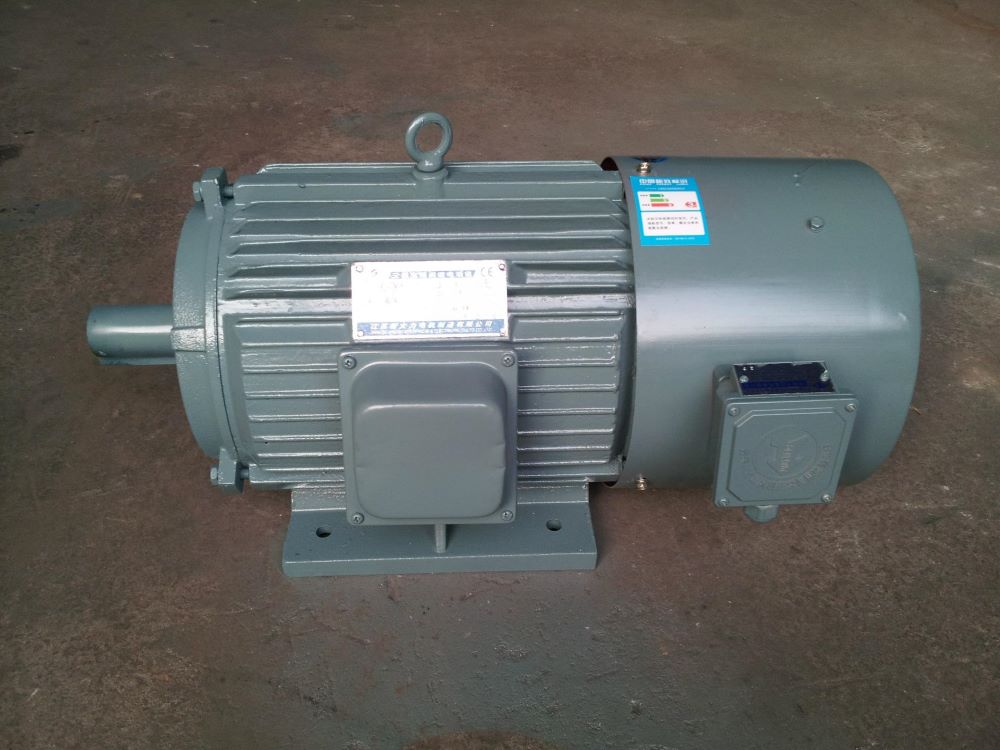
A Variable Frequency Drive (VFD) is the most important technology behind AC variable speed motors. It controls motor speed by adjusting the frequency and voltage supplied to the motor.
A VFD typically consists of three stages:
- Rectifier (AC to DC conversion)
- DC Bus (energy storage and smoothing)
- Inverter (DC back to variable frequency AC)
By modifying output frequency, the VFD directly controls motor RPM, enabling smooth acceleration, deceleration, and load-based optimization.
Variable Speed AC Motor Working Principle
AC variable speed motors, especially induction motors, rely on the relationship between synchronous speed and supply frequency.
Induction Motor Principle
An induction motor generates a rotating magnetic field in the stator. The rotor follows this rotating field through electromagnetic induction.
Motor speed depends on:
- Supply frequency
- Number of poles
- Load conditions
By using a VFD to modify frequency, the rotating magnetic field speed is adjusted, resulting in variable motor speed.
Variable Speed BLDC Motor Working Principle
Brushless DC (BLDC) motors achieve variable speed through electronic commutation rather than mechanical brushes.
Hall Sensor Feedback
Hall sensors detect rotor position and send signals to the controller, enabling precise switching of current phases.
Controller-Based Speed Regulation
The motor controller adjusts switching frequency and duty cycle to regulate speed and torque output.
PWM Speed Control
Pulse Width Modulation determines how much power is delivered to the motor windings, allowing fine control over RPM.
BLDC motors are widely used in robotics, electric lawn equipment, HVAC systems, and OEM industrial applications due to their efficiency and controllability.
Advantages of Variable Speed Motors
| Benefit | Description |
|---|---|
| Energy Saving | Up to 50% energy reduction in variable load applications |
| Better Control | Precise speed and torque adjustment |
| Lower Noise | Smoother operation with reduced vibration |
| Longer Life | Reduced mechanical stress on system components |
| Improved Efficiency | Optimized operation under partial load conditions |
Variable Speed vs Fixed Speed Motors
| Factor | Variable Speed Motor | Fixed Speed Motor |
|---|---|---|
| Speed Control | Flexible | None |
| Energy Efficiency | High | Medium/Low |
| Complexity | Higher | Simple |
| Cost | Higher upfront | Lower upfront |
| Applications | Dynamic load systems | Constant load systems |
Common Applications of Variable Speed Motors
Variable speed motors are widely used across industries where load conditions change dynamically.
- Lawn mowers and outdoor power equipment
- HVAC systems and ventilation fans
- Water pumps and fluid control systems
- Industrial automation and conveyors
- Robotics and motion control systems
- Security systems (turnstiles, gates)
How to Choose a Variable Speed Motor
Selecting the right variable speed motor depends on application requirements, load characteristics, and control system design.
1. Torque and Load Profile
Understanding whether the load is constant torque, variable torque, or intermittent is critical for correct motor sizing.
2. Speed Range Requirements
Different applications require different speed ranges. HVAC systems typically require wide speed modulation, while robotics requires precise low-speed control.
3. Motor Type Selection
- AC Induction Motor + VFD for industrial systems
- BLDC Motor for high efficiency and precision control
- Servo Motor for high dynamic response
4. Thermal Performance
Low-speed operation may reduce cooling efficiency, requiring forced cooling or design optimization.
5. Controller Compatibility
Ensure compatibility between motor and controller (VFD or BLDC driver) for stable operation.
Why OEM Buyers Choose Greensky Power
For OEM manufacturers and industrial buyers, selecting a motor supplier is not only about performance—it is about engineering support, customization capability, and supply chain reliability.
Greensky Core Strengths
- BLDC motor engineering for variable speed systems
- Planetary gear motor integration solutions
- Custom variable speed motor design
- Controller and motor matching support
- OEM product development assistance
Application-Focused Solutions
- Lawn mower drive systems
- HVAC variable speed fans
- Industrial automation equipment
- Robotic motion systems
- Smart mechanical devices
Greensky Power focuses on providing adaptable motor systems that integrate seamlessly into OEM products requiring variable speed performance and high efficiency.
FAQ: Variable Speed Motors
What is the difference between a VFD and a variable speed motor?
A VFD is a control device that adjusts frequency and voltage, while a variable speed motor is the system that responds to these changes to alter rotational speed.
Can a BLDC motor run at variable speed?
Yes, BLDC motors are inherently variable speed motors because their speed is controlled electronically via PWM and commutation control.
Do variable speed motors save energy?
Yes, especially in variable load applications such as HVAC systems and pumps, where energy savings can exceed 30–50%.
Are variable speed motors more efficient?
In most partial-load conditions, variable speed motors are significantly more efficient than fixed-speed motors due to optimized power usage.
References
- International Energy Agency (IEA) – Motor Systems Efficiency https://www.iea.org
- U.S. Department of Energy – Motor and Drive Systems https://www.energy.gov
- International Electrotechnical Commission (IEC) Standards https://www.iec.ch
- ABB Variable Speed Drive Technology Overview https://global.abb
- Siemens Drive Systems Documentation https://www.siemens.com
- Nidec Motor Control Technologies https://www.nidec.com
- WEG Variable Speed Drive Applications https://www.weg.net
