
BLDC Motor for Swing Gate Turnstile
Reliable brushless motor solutions for swing gate turnstile systems, ensuring smooth motion, quiet operation, and long-term durability. The arm turns a quarter turn, hangs out over the passage, and has to stop dead at both ends — that is what the drive gets specified around.
What Makes a Swing Gate Turnstile Drive Different
A flap barrier moves a short blade a few centimetres. A swing gate turnstile swings an arm of 400–900 mm through 90° out over the passage. Same access-control job, very different load.
Three things follow from that arm. Its inertia grows with the square of its length, so a longer arm is far harder to stop than a heavier short one. The arm is unsupported at the tip, so everything it hits is a bending load on the shaft. And when the gate is closed, the only thing stopping a shoulder is the holding torque of the drive.
- Quarter-turn stroke — the arm has to arrive and hold, not just rotate
- Inertia scales as m · L²/3, so arm length drives the sizing, not motor power
- Closed position is a torque requirement, not a mechanical stop
What we build for swing gate turnstiles
- 24 V / 36 V / 48 V BLDC motors, 50 – 500 W
- FOC control with an S-curve speed profile per swing
- Planetary or self-locking worm reduction at the arm shaft
- 60 mm gate-machine motor already on file (see downloads)
Not sure which mechanism you are specifying? Our BLDC motors for turnstile systems page compares flap, swing and tripod drives side by side, and the flap barrier motor page covers the short-stroke case.
Where the Motor Sits in a Swing Gate Turnstile
Top view: each arm is driven from its own pedestal and swings 90° off the passage. Solid line is the closed position, dashed is open. The red mark is the motor inside the housing.
Sizing a Swing Gate Turnstile Motor
Arm length is the number that decides the motor, and it is the number most drawings leave off. Peak torque at the shaft is the arm inertia times the angular acceleration you need to finish the swing in the time the gate promises.
Torque figures on this page are quoted the way IEC 60034-1 defines a rating — continuous output at a stated speed and duty, not a start-up peak. Where we quote a peak, it is named as one.
Worked example below is for illustration only. Send the arm drawing, the cycle time and the supply and we recalculate against your numbers.
What we need to size it
- Arm length, and mass of arm plus any glass or rail
- Travel: 90°, or a different angle for a half-height gate
- Open time promised to the client
- Supply voltage already inside the pedestal
- Whether the gate must fail open or stay locked on power loss
| Worked example | Value | Where it comes from |
|---|---|---|
| Arm length L | 0.50 m | From the gate drawing |
| Arm mass m | 6 kg | Arm plus fixings |
| Inertia J at the shaft | 0.58 kg·m² | m·L²/3 × 1.15 allowance |
| Travel | 1.571 rad | 90° |
| Open time | 0.9 s | Client requirement |
| Peak shaft torque | 7.5 N·m | J × angular acceleration × 1.5 |
| Arm speed at the shaft | 25 rpm | Travel divided by cycle time |
| Motor side at i = 50 | ≈0.25 N·m at 1250 rpm | Shaft torque ÷ (i × efficiency) |
Challenges in Swing Gate Turnstile Systems
Four complaints account for most swing gate call-outs. Each one traces back to the drive, not the housing.
Jerky Movement
Unstable opening and closing affects user experience.
Fix: FOC control with an S-curve profile through the quarter turn, so the arm accelerates out of the pedestal and decelerates into the end stop instead of arriving at full speed — our Smooth & Precise Motion build.
Noise Issues
Disturbing in offices, metros, and public spaces.
Fix: Brushless commutation removes brush and commutator noise, and a damped stop takes the clack out of the end position — Ultra-Low Noise.
Frequent Maintenance
Short lifespan increases cost.
Fix: No brushes to replace, no brush dust inside a sealed pedestal, and the gearbox is matched to the arm inertia rather than to the motor alone — High Durability.
Slow Response Time
Reduces throughput efficiency.
Fix: Low rotor inertia and a profile tuned to the arm mass shorten the swing without overshoot at the end stop — Fast Response.
What the Gate Does When the Power Drops
This decision changes the gearbox, not just the controller, and it is cheaper to settle before the drawing is frozen.
| Behaviour | What it needs from the drive | Typical use |
|---|---|---|
| Fail open — arm releases on power loss | Non-locking reduction or a release clutch, so the arm can be pushed clear | Escape routes, metro and airport evacuation paths |
| Fail secure — arm stays closed | Self-locking worm reduction plus holding torque; battery or UPS for one last cycle | Perimeter and staff-only entrances |
| Controlled release — opens once, then locks | Holding torque plus a capacitor or battery bank sized for one swing | Lobbies where free passage is not wanted |
Where the arm can close on a person, the anti-crush function is a safety function and the stopping reaction is designed as one — the framework for that is ISO 13849-1, and the performance level your gate has to reach is set by your own risk assessment.
Recommended Motor Solutions
24V–48V BLDC Motor
Standard solution for most swing gate turnstiles.
FOC drive, speed adjustable, 50 – 500 W.
Geared BLDC Motor
Higher torque for heavy-duty gates.
Worm reduction adds a self-locking closed position for wide or glazed arms.
Integrated Motor + Controller
Compact design for easy installation.
Fits the pedestal envelope and cuts the wiring between drive and controller.
Custom OEM Motor
Designed to match your system requirements.
Winding, shaft, clamp face, connector and label to your drawing.
BLDC Motor for Swing Gate Turnstile — Technical Specifications
Range we quote for swing gate drives, followed by one real model from our current drawing set.
| Parameter | Specification |
|---|---|
| Voltage | 24 V / 36 V / 48 V |
| Power | 50 W – 500 W |
| Control mode | FOC |
| Speed control | Adjustable, S-curve profile per swing |
| Travel | 90° nominal, other angles to drawing |
| Noise level | Stated per project, dB(A) at test distance |
| Service life | Stated per project, cycles at rated load |
| GSBLD60S40D24-60G100K | 60 mm gate motor, on file |
|---|---|
| Rated voltage | 24 V DC (21 – 30 V) |
| Motor type | BLDC, inner rotor, 3-phase 8-pole |
| Rated power | 40 W |
| Rated torque | 9.3 N·m at 30 rpm |
| Rated current | 3 A max. |
| Weight | 1410 ± 30 g |
| Drive | Requires the dedicated controller |
The 60-gate motor above is a 40 W build from an existing drawing set — the 50 – 500 W range covers what we quote for new swing gate projects. Send the arm length, arm mass and required swing time and we return the matching drawing set.
Where Swing Gate Turnstiles With These Motors Run
Metro Stations
High cycle rates, and an arm that hesitates is a queue at the gate line.
Airports
Long operating hours, security integration, and a gate that must release on evacuation.
Office Buildings
Quiet operation next to reception and meeting rooms.
Stadiums
Burst throughput at entry peaks, then long idle periods at hold.
Government Facilities
Duty of care, tamper resistance and a closed position that holds.
Commercial Buildings
Public-facing reliability with few service visits.
Why Choose Our Solution
Stable Performance
Reliable in high-frequency operation, cycle after cycle.
Same stop point at the end of a shift as at the start.
Quiet Operation
Ideal for indoor applications.
No brush noise, and a damped stop instead of a metal clack.
Compact Design
Easy integration into systems.
Gearbox and controller sized to the pedestal, not to a catalogue page.
OEM Support
Fully customizable solutions.
Winding, shaft and label to your drawing, from prototype to volume.
OEM & Custom BLDC Motor for Swing Gate Turnstile Solutions
We provide customized BLDC motor solutions based on project requirements:
- Torque and size customization
- Integrated controller design
- Private labeling
- System integration support
We support
- Prototype development
- Small batch production
- Large scale OEM manufacturing
Our Manufacturing Capabilities
Greensky supports OEM and ODM development for BLDC motor application manufacturers.
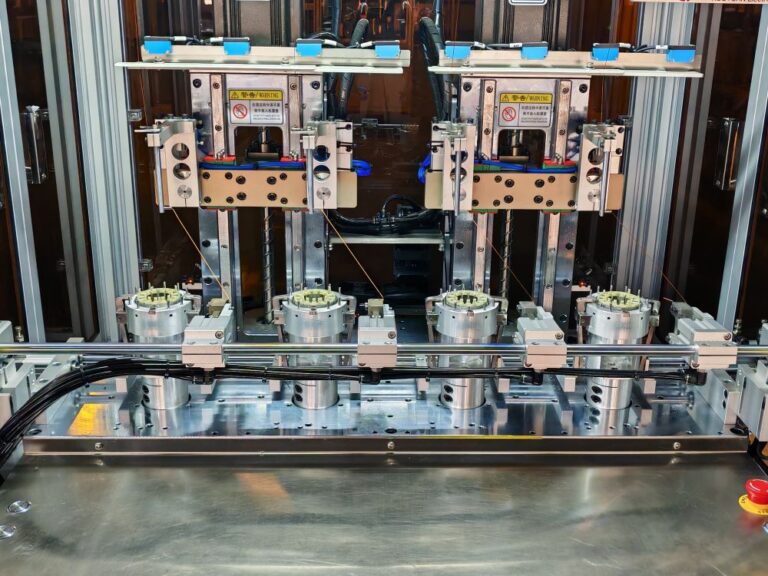
Motor Production Line
Advanced motor production lines ensure consistent quality and high production capacity for BLDC motor application manufacturers.
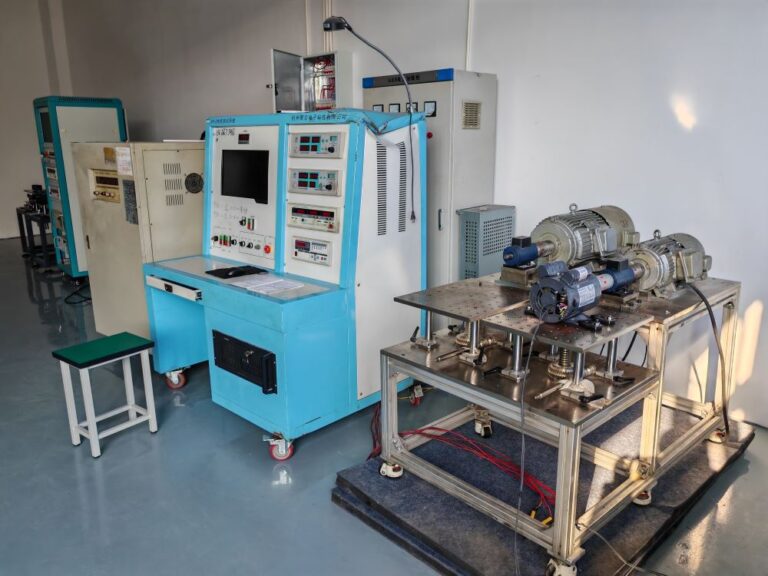
Motor Testing Laboratory
Professional motor testing equipment verifies torque, efficiency, durability and performance before shipment.
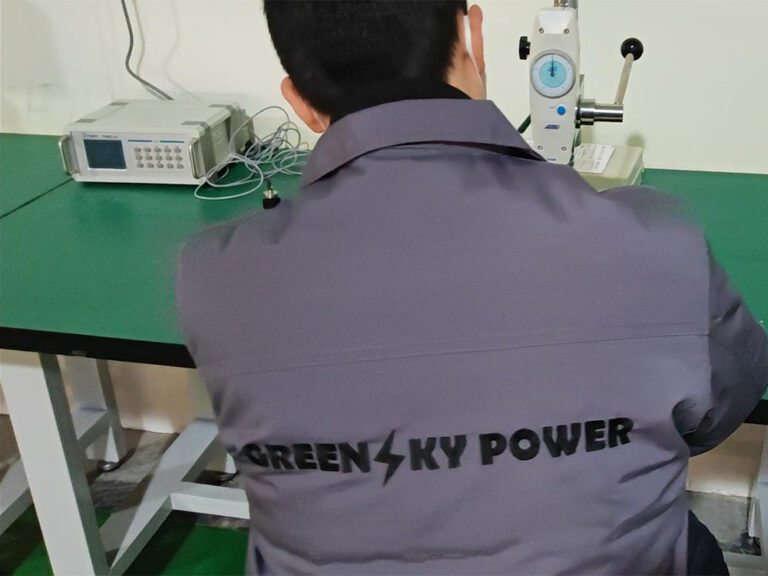
Quality Inspection
Strict quality inspection procedures ensure each motor meets international standards and customer specifications.

OEM Production
Flexible OEM manufacturing supports custom BLDC motor solutions for BLDC motor application manufacturers.
Why Choose Greensky as Your Motor Manufacturer
Greensky is a professional electric motor manufacturer specializing in motion control solutions. Our strengths include:
- Strong R&D team
- Advanced motor manufacturing equipment
- Strict quality control
- OEM customization capability
- Global export experience
We work with BLDC motor application manufacturers worldwide to develop reliable motor solutions. Gate and barrier builders also use us for automatic door drives, where the same arm inertia problem shows up in a different housing.


Get Your Swing Gate Turnstile Motor Solution
What to include in your message
- Arm length and mass — how far the arm reaches past the shaft, and what one arm weighs with its fixings.
- Swing time — required open and close time, and whether both arms are driven by one motor or two.
- Supply and control — 24 V, 36 V or 48 V, and whether you take a bare motor or motor + controller.
- Power-off behaviour — must the arm release for evacuation, or stay locked?
- Order plan — sample quantity, annual volume and OEM branding needs.
Send an inquiry
Send a drawing or a short brief — we reply with a motor proposal within 24 hours.
FAQ – BLDC Motor for Swing Gate Turnstile
Why use BLDC motors for swing gate turnstiles?
They provide smooth motion, low noise, and high durability. On a swing gate the useful part is control: FOC gives an even torque profile so the arm accelerates out of the pedestal and decelerates into the end stop instead of arriving at full speed.
What voltage is commonly used?
24 V and 48 V systems are most common. 36 V builds are available as well, and the winding is set to the supply already inside the pedestal rather than to a standard catalogue voltage.
Do you provide integrated solutions?
Yes, motor + controller solutions are available. The 60-gate motor listed on this page is specified against its dedicated controller, so the pair is matched when we quote.
Can you customize for our system?
Yes, full OEM customization is supported: torque and size, integrated controller design, private labeling and system integration, from prototype through small batch to volume production.
How much holding torque does the closed position need?
Enough to resist the push a person can put on the arm at its tip — which is why the requirement is quoted at the shaft, not at the motor. Tell us the force the gate must withstand at the arm end and the arm length, and the shaft torque follows directly. Above that point a self-locking worm reduction carries the load and the motor only has to move the arm.
What happens to the arm on power failure?
That is a design choice made at the gearbox, so tell us which one you need. Fail open releases the arm for evacuation through a non-locking reduction or a release clutch; fail secure keeps the arm closed with a self-locking reduction plus holding torque, and a battery or capacitor bank if the gate must complete one last cycle.
Looking for a Swing Gate Turnstile Motor Supplier?
Greensky Power is committed to becoming your reliable long-term motor manufacturing partner. Whether you need standard models or fully customized OEM solutions, we are ready to support your project.
Professional response guaranteed within 24 hours. Add.: No.597 Bin’an, Hangzhou, China 310052 · E-mail: mkt@greensky-power.com · TEL: +86 571 8819 5488