
1.5 kW BLDC Motor for Fan
A 1500 W brushless DC motor for industrial fans, HVAC air handling and ventilation equipment. The reason to fit one is not the nameplate watt — it is that airflow can be trimmed to what the space actually needs, and fan power falls with the cube of speed while it does.
Why a Fan Wants a Brushless Motor
A fan is a quadratic load. Below its design point it needs very little torque, which is why the motor almost never has to be sized for starting — it has to be sized for the one operating point the duct system settles at, plus whatever margin the filter loading will eat over a service interval.
That is also why a fixed-speed AC fan is expensive to run. It is either on at full airflow or off. A brushless motor with a variable speed drive lets the airflow follow the actual demand, and the power falls away steeply as it does — the numbers are in the next section.
- Rated at 1.5 kW continuous, 48 V / 72 V / 110 V DC or 220 V AC input
- 1500 – 3000 rpm, with the winding and controller matched to your fan curve
- Air cooled as standard, IP54 or IP65 when the fan sits in a dirty or wet airstream
- CE / RoHS on the motor as a component — the finished fan is declared at machine level
What we build in this class
- 1500 W continuous, four supply options from 48 V DC to 220 V AC
- 1500 – 3000 rpm base speed, FOC controller matched to the winding
- Integrated drive version for a direct AC-fan retrofit
- Shaft, flange and hub interface cut to your impeller
The Fan Laws Decide the Payback
For a fan running at a constant system resistance, three relationships hold as speed changes: airflow follows speed, static pressure follows its square, and shaft power follows its cube. That last exponent is the whole economic argument for variable speed.
| Speed | Airflow | Static pressure | Shaft power |
|---|---|---|---|
| 100% | 100% | 100% | 100% — 1.50 kW |
| 80% | 80% | 64% | 51% — 0.77 kW |
| 60% | 60% | 36% | 22% — 0.32 kW |
| 50% | 50% | 25% | 13% — 0.19 kW |
A 20% cut in airflow costs just under half the power. Two related effects follow the same cube-ish behaviour: sound power drops by roughly 50 × log(n2 / n1), so half speed is about 15 dB quieter, and motor heat falls with the load, which is why a variable-speed fan often runs cooler than the fixed-speed unit it replaces. Fan airflow and pressure should be rated to ISO 5801, the standard for fan performance testing on standardized airways, so the curve you are trimming is a measured one.
48 V, 72 V, 110 V or 220 V
The same 1.5 kW shaft power needs a very different current depending on the supply. At 90% efficiency the motor draws about 1.67 kW from the bus or mains, so the current column below is the number to size cable, fusing and connector against — not the 1500 W nameplate.
| Supply | Input current at rated load | Where it fits |
|---|---|---|
| 48 V DC | ≈35 A | Battery and low-voltage DC bus installations, off-grid ventilation |
| 72 V DC | ≈23 A | Higher-voltage DC systems, longer cable runs at the same loss |
| 110 V DC | ≈15 A | Legacy DC control buses and retrofit panels |
| 220 V AC, single phase | ≈7.6 A at unity power factor | Direct replacement of an AC fan motor on the existing mains supply |
The 220 V option is normally a single-phase AC input taken through an internal rectifier, which is what makes it a drop-in for an existing AC fan motor. If the 220 V on your site is a DC bus rather than mains, say so at RFQ and the front end is configured for DC instead — the winding does not change, the rectifier stage does.
Why the 220 V version matters
Most ventilation fans in existing buildings are already wired for single-phase 220–240 V. A 220 V version carries its own rectifier and drive, so the motor and electronics together hang on the same three wires as the AC motor they replace — no new DC bus, no separate cabinet. This is the EC fan upgrade path, and it is the one that gets approved without rewiring the plant room.
Fans driven by motors in this power class sold into the EU also fall inside the ecodesign scope of Regulation (EU) No 327/2011, which sets minimum fan efficiency for units driven by motors between 125 W and 500 kW. Speed control is usually how a fan meets that target without changing the impeller.
What changes between the voltages
- Cable and fusing — 35 A at 48 V against 7.6 A at 220 V is a different installation
- Front end — DC versions take a bus; the 220 V version carries rectifier, filter and drive
- EMC — the AC version needs a filtered front end to stay inside the emission limits
- Nothing in the magnetics — the winding is matched to the internal DC link, not to the supply
From Airflow and Pressure to Motor Size
Shaft power is the product of airflow and total pressure divided by fan efficiency: P = Q × Δp / η. Turn it around and 1.5 kW buys a predictable amount of air at any pressure rise — which is the quickest way to tell whether this motor class is the right one for a project.
| Total pressure rise | Airflow available at 1.5 kW | Typical duty |
|---|---|---|
| 250 Pa | ≈12,900 m³/h · 7,600 CFM | Short duct runs, free-blow ventilation, relief air |
| 500 Pa | ≈6,480 m³/h · 3,800 CFM | Standard AHU supply or return, medium duct networks |
| 750 Pa | ≈4,320 m³/h · 2,540 CFM | Filtered supply air, cooling coils, heat recovery |
| 1000 Pa | ≈3,240 m³/h · 1,910 CFM | Long or high-resistance ductwork, cleanroom supply |
Worked with a fan total efficiency of 0.60 and air density of 1.2 kg/m³. Axial fans in this size usually land between 0.45 and 0.60, centrifugal fans with a decent impeller between 0.55 and 0.70; substitute your own figure and the numbers move. Add 10–20% margin on shaft power for filter loading and site tolerance, and check that the motor’s rated torque is above the peak on the fan curve, not the average.
The other half of the check: torque at the shaft
At 1.5 kW the rated torque is 9.6 N·m at 1500 rpm and 4.8 N·m at 3000 rpm. A direct-drive axial fan at 1400–1500 rpm is comfortably inside that. A belt-driven centrifugal fan turning at 700 rpm is not — it needs a reduction stage or a lower base-speed winding rather than a bigger motor.
Three numbers we need from you
- Duty point — airflow and total pressure at the design condition
- Fan efficiency — from the fan supplier’s curve, or we estimate from type and size
- Speed at the shaft — direct drive, belt ratio, or variable across a range
Key Features of the 1.5 kW BLDC Fan Motor
Energy Saving
Reduce electricity costs in continuous fan operation. Above 90% motor efficiency, and far less than that at part speed.
Matters most where the fan runs 8,000 hours a year.
Long Lifespan
Brushless design ensures minimal wear — there are no brushes or commutator to consume, only bearings.
Bearing choice sets the service interval, so tell us the mounting.
Stable Operation
Smooth torque output for consistent airflow, with closed-loop speed holding against duct pressure changes.
Airflow stays where it was set as filters load up.
Speed Regulation
Wide speed range for airflow control, driven from a 0–10 V signal, PWM, or the building management system.
The same motor covers demand-controlled ventilation.
Six Things That Decide Whether the Installation Works
These are the points that separate a fan that runs for years from one that fails in the first season. None of them are on a nameplate.
Windmilling on a rooftop exhaust
If the fan sits in a stack, airflow can spin it after the drive stops or during a power cut. The motor then acts as a generator and pushes the DC link up. Either a brake resistor or a drive rated for regeneration is needed — this is a specification item, not an accessory.
The motor sits in the airstream
For duct and plug fans the motor is cooled by the air it moves. Above roughly 40 °C ambient the continuous rating has to be de-rated, and a hot airstream also heats the magnets. Tell us the air temperature at the motor, not the room temperature.
Vertical shaft mounting
Many AHU fans hang the motor below the impeller with the shaft vertical. That changes the bearing load direction and the grease path. It is a normal requirement, but it has to be stated when the motor is ordered rather than discovered on site.
Impeller balance, not motor balance
Vibration on a fan is almost always the impeller. Balance the wheel to ISO 1940-1 grade G6.3 and check the hub fit on the shaft; a motor balanced to a finer grade will not rescue a wheel that is out.
Condensation in a cold duct
A motor moving cold air in a humid plant room collects condensate. An IP65 build with a breather or a sealed winding keeps moisture out of the stator, which is the failure mode that shows up as an insulation trip months later.
Long cable between drive and motor
Plant rooms put the controller in a panel 20 m from the fan. Long cable runs add voltage drop and PWM reflection, so the cable size and any output choke are part of the drive selection, not the electrician’s problem on the day.
Fan Applications
Where a 1.5 kW brushless fan motor is the right size, and what the duty looks like in each case.
HVAC Systems
Supply and return air in commercial buildings, where airflow has to follow occupancy rather than run flat out all day.
Industrial Ventilation Fans
Workshop and plant ventilation running long shifts, usually on a dusty or warm airstream.
Axial & Centrifugal Fans
Direct-drive axial units at 1400–1500 rpm, and centrifugal units through a belt or a reduction stage.
Air Handling Units (AHU)
Plug fans and belt-driven fans inside the unit, with the motor often mounted shaft-vertical.
Cooling & Exhaust Systems
Kitchen extract, car park extract and process cooling, where speed control follows the actual load.
Data Center Ventilation
Continuous duty with tight speed control, where the fan runs every hour of the year and part-speed efficiency is the whole cost case.
1.5 kW BLDC Fan Motor — Technical Specifications
The working range we build to for fan duty, followed by the documents available today.
| Parameter | Value |
|---|---|
| Rated power | 1.5 kW (1500 W), continuous |
| Voltage | 48 V / 72 V / 110 V / 220 V |
| Speed | 1500 – 3000 rpm (customizable) |
| Torque | 4.8 – 9.6 N·m across that range |
| Efficiency | ≥90% |
| Cooling method | Air cooling |
| Protection class | IP54 / IP65 |
| Certification | CE / RoHS (motor as a component) |
| Control | FOC controller, 0–10 V / PWM / bus input |
| Options | Integrated drive, brake resistor, encoder, custom shaft and flange |
Input current at rated load is about 35 A at 48 V, 23 A at 72 V, 15 A at 110 V and 7.6 A at 220 V AC — size cable, fusing and connector against those figures, and allow for the acceleration peak above them. Speed, base frequency and shaft interface are configured per order; the drawing set is issued against your fan curve, not taken from a catalogue page.
Need the drawing for a specific duty? Send the fan curve and supply voltage, and we issue a 1500 W datasheet against it. There is no fan-specific catalogue sheet for this class today, so we do not pretend the general catalogue is one.
BLDC Fan Motor vs Traditional AC Motor
The comparison that matters is not at full speed — it is at the 60–80% speed a fan actually spends most of its life at.
| Feature | BLDC Motor | AC Motor |
|---|---|---|
| Efficiency | 90%+ | 70–80% |
| Noise level | Low | Higher |
| Speed control | Precise, continuous from 0–10 V or bus | Limited — damper, vane or a separate VFD |
| Maintenance | Low — bearings only | Higher — bearings plus start capacitor or contactor |
| Part-speed power | Falls with the cube of speed | Damper throttling keeps the motor drawing near full power |
| Starting current | Soft start through the controller | Several times rated current on direct-on-line start |
Damper control is the point people miss. Throttling a fan reduces airflow but the motor keeps turning at full speed and dissipates nearly the same power, so the energy is spent pushing air against a restriction. A brushless motor at 80% speed uses 51% of the power and delivers 80% of the air.
OEM & Custom Fan Motor Solutions
We provide customized BLDC motor solutions based on project requirements. For fan duty the four changes that come up most often are these.
Custom voltage and speed range
Winding and base speed set for your supply and your fan’s design point, from 1500 rpm direct drive up to 3000 rpm.
Integrated controller solutions
Drive mounted on or inside the motor so the fan needs one supply connection, not a separate cabinet.
Fan blade matching
Shaft, hub and flange cut to your impeller, and the speed loop tuned to the inertia of the wheel you fit.
Noise reduction design
Commutating strategy and rotor balance adjusted to keep motor noise below the blade-pass tone it sits behind.
We support
- Prototype development — a working sample against your fan curve before tooling
- Small batch production — pilot runs for field trials and certification
- Large scale OEM manufacturing — volume production with your branding and packaging
Samples are built on the same line as production, so the unit you approve is the unit you receive. Drawings, test reports and change notices come with the order, which is what an OEM audit will ask for.
What to send with an RFQ
- Fan curve or the duty point: airflow and total pressure
- Supply: DC bus voltage or single-phase AC
- Speed range and control signal
- Mounting orientation and shaft interface
- Annual volume and sample quantity
Our Manufacturing Capabilities
Greensky supports OEM and ODM development for BLDC motor application manufacturers.
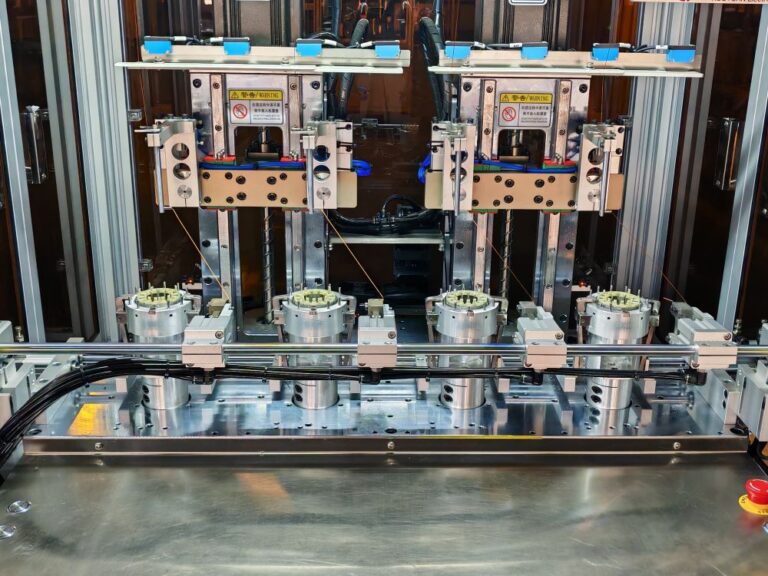
Motor Production Line
Advanced motor production lines ensure consistent quality and high production capacity for global BLDC motor application manufacturers.
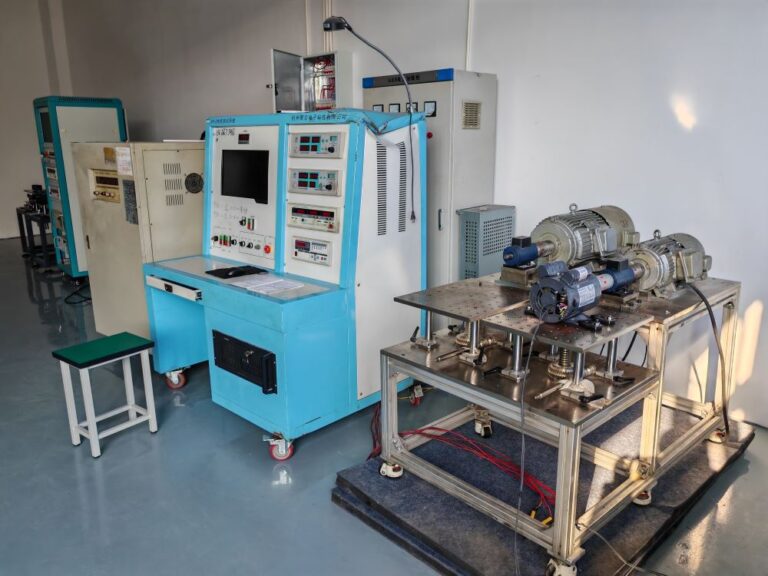
Motor Testing Laboratory
Professional motor testing equipment verifies torque, efficiency, durability and performance before shipment.

Quality Inspection
Strict quality inspection procedures ensure each motor meets international standards and customer specifications.
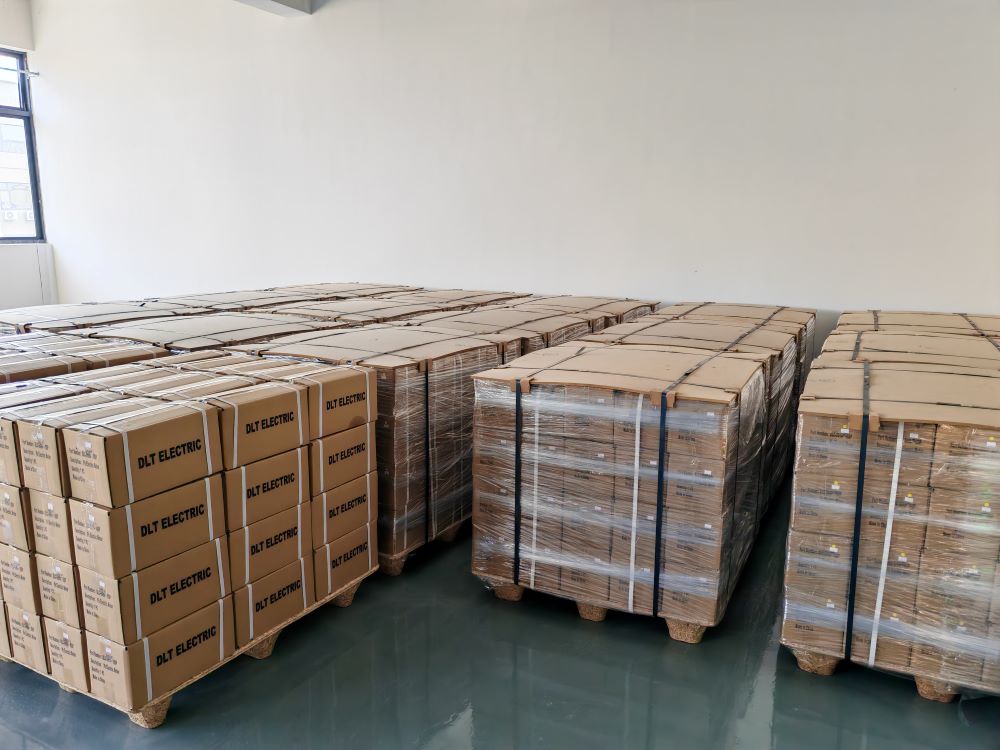
OEM Production
Flexible OEM manufacturing supports custom BLDC motor solutions, with your labelling and packing on the finished units.
Why Choose Greensky as Your Motor Manufacturer
Greensky is a professional electric motor manufacturer specializing in motion control solutions. We work with BLDC motor application manufacturers worldwide to develop reliable motor solutions.
- Strong R&D team — winding, magnetics and drive design in house
- Advanced motor manufacturing equipment — automated winding and magnet assembly lines
- Strict quality control — incoming, in-process and outgoing inspection on every batch
- OEM customization capability — from a first sample to annual volume
- Global export experience — motors shipped to more than 50 countries

Get Your 1.5 kW BLDC Fan Motor Solution
What to include in your message
- Duty point — airflow and total pressure, or the fan curve if you have one.
- Supply — 48 V, 72 V or 110 V DC bus, or 220 V single-phase AC for a retrofit.
- Air temperature and environment — the temperature at the motor, plus dust or washdown, settles IP54 versus IP65.
- Mounting and impeller — shaft-vertical or horizontal, shaft diameter, hub or keyway.
- Control signal — 0–10 V, PWM or bus, and whether the drive is supplied with the motor.
- Order plan — sample quantity, annual volume and OEM branding needs.
Send an inquiry
Send a fan curve or a short brief — we reply with a motor proposal within 24 hours.
FAQ – 1.5 kW BLDC Motor for Fan
Is this motor suitable for HVAC systems?
Yes, it is widely used in HVAC and ventilation applications. What makes it a fit is not only efficiency: the speed loop holds airflow against rising filter pressure, which is the failure mode of a fixed-speed fan halfway through a service interval.
Can the motor speed be adjusted?
Yes, it supports variable speed control with BLDC controllers across 1500–3000 rpm. The reference can be 0–10 V, PWM or a bus command from the building management system, and the same motor covers demand-controlled ventilation without a separate VFD.
What is the lifespan of this motor?
Typically over 20,000 hours depending on usage conditions. In a fan the limiting item is the bearing, not the winding, so the mounting orientation, ambient temperature and belt tension matter more than run hours. Tell us how the motor is mounted and we will quote a bearing and grease spec against it.
Will a BLDC motor really cut fan energy?
At full speed the gain is the efficiency difference, roughly 90% against 70–80% for an AC motor. The larger gain is at part speed: because shaft power follows the cube of speed, running at 80% airflow needs about 51% of the power — 0.77 kW instead of 1.50 kW. A damper does not give you that, because the motor keeps turning at full speed.
Can it replace an AC fan motor on a 220 V single-phase supply?
Yes. The 220 V version carries its own rectifier and drive, so it connects to the existing supply without a new DC bus or a separate controller cabinet. Check three things first: the shaft and mounting interface of the old motor, the space for the electronics, and whether reverse airflow can spin the fan after shutdown — that needs a brake resistor or a regenerative-capable drive.
Do you support OEM customization?
Yes, we provide full OEM and ODM solutions — custom voltage and speed range, integrated controller, fan blade matching, noise reduction design, custom shaft and flange, from prototype through small batch to volume production.
Request a Quote for a 1.5 kW BLDC Fan Motor
Contact us for a customized 1.5 kW BLDC fan motor, or ask for the standard 1.5 kW brushless motor if the duty is not airflow. Greensky Power is committed to becoming your reliable long-term motor manufacturing partner — standard models or fully customized OEM solutions.
Professional response guaranteed within 24 hours. Add.: No.597 Bin’an, Hangzhou, China 310052 · E-mail: mkt@greensky-power.com · TEL: +86 571 8819 5488