
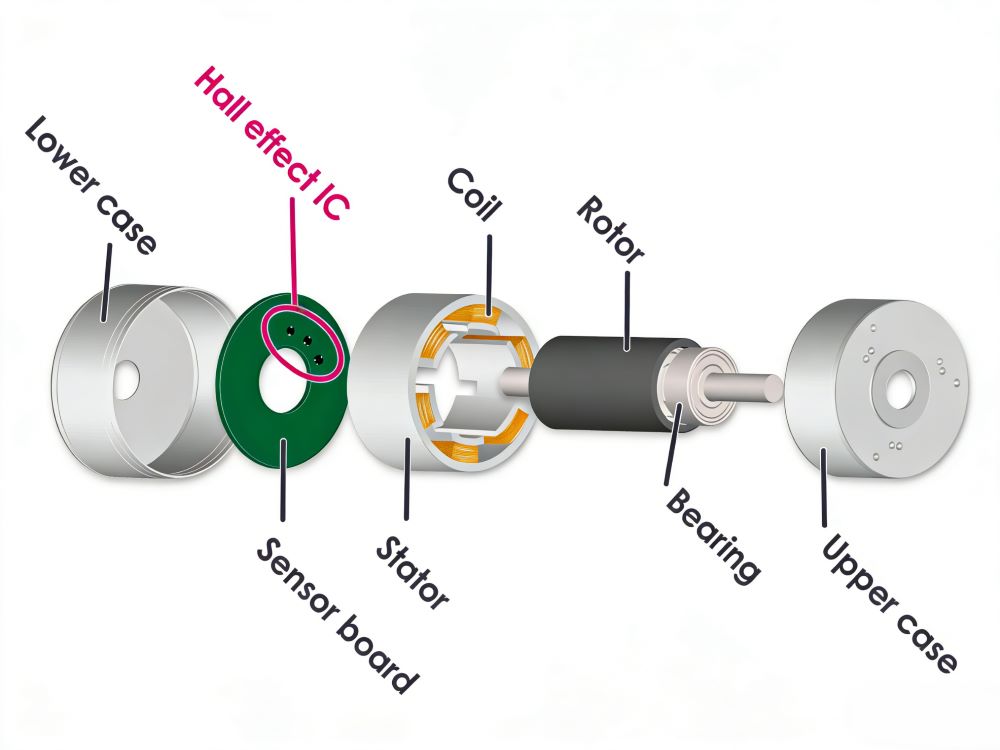
Hall Effect Sensor in BLDC Motors: A Guide to Principles, Control, and Application Selection
Introduction
Brushless DC (BLDC) motors are renowned for their high efficiency, reliability, and long lifespan. A key component that enables this performance in many BLDC motors is the Hall Effect sensor. These sensors provide the critical feedback needed for electronic commutation, allowing the motor controller to precisely time the energizing of the stator windings. This article delves into how Hall Effect sensors function within BLDC motors, their advantages, and how to decide if they are the right choice for your application.
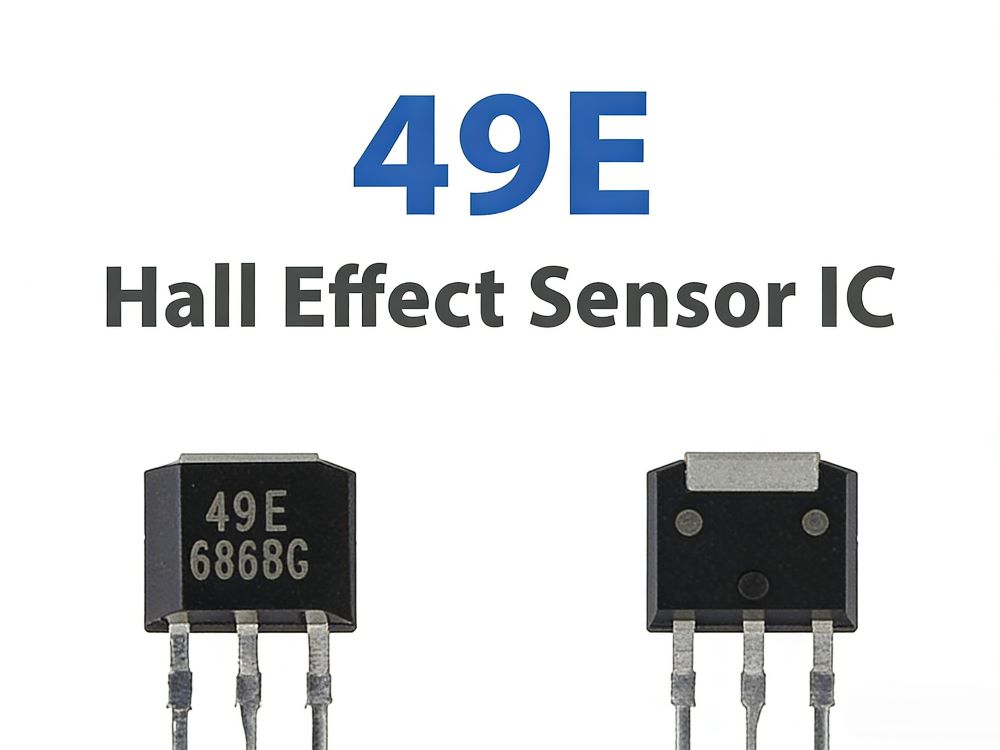
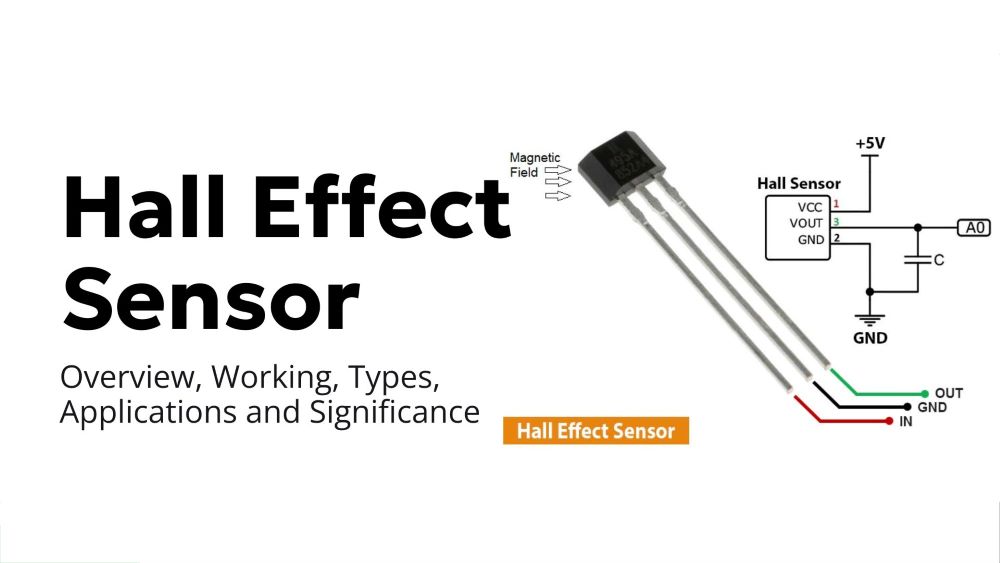
1 What is a Hall Effect Sensor and the Hall Effect Principle?
A Hall Effect sensor is a transducer that varies its output voltage in response to a magnetic field. Its operation is based on the Hall Effect. When a current-carrying conductor is placed in a magnetic field that is perpendicular to the current flow, the charge carriers experience a force (Lorentz force), causing them to deflect. This deflection creates a measurable voltage difference, known as the Hall voltage, across the conductor. In a BLDC motor context, Hall sensors use this principle to detect the magnetic field of the rotating rotor magnets .
2 The Role of Hall Effect Sensor in BLDC Motor Commutation
In a BLDC motor, the permanent magnets are on the rotor, and the windings are on the stator. To keep the motor turning smoothly, the controller must continuously switch the current to different stator windings in a specific sequence—a process known as commutation. The timing of these switches is critical and depends on knowing the exact position of the rotor relative to the stator .
Hall Effect sensors are strategically placed in the stator assembly to provide this real-time rotor position data. As the rotor’s magnets pass by these sensors, they detect changes in the magnetic field polarity (North or South pole). This information is sent as a digital signal (typically HIGH or LOW) to the motor controller. The controller then uses this data to determine exactly which windings to energize next, ensuring optimal torque production and smooth rotation .
Typically, three Hall sensors are embedded in the stator, spaced 120 degrees apart electrically. As the rotor turns, these sensors generate a specific sequence of three-bit digital signals (e.g., 101, 100, 110, etc.). This sequence creates six distinct commutation states per electrical cycle, providing the controller with the precise information needed for accurate commutation .
3 Key Benefits of Using Hall Effect Sensor in BLDC Motors
- Precise Control and Reliable Startup: Hall sensors provide direct rotor position feedback, enabling accurate control from standstill. This ensures reliable starting torque and smooth low-speed operation, which is a challenge for sensorless methods .
- High Efficiency: By ensuring windings are energized at the perfect moment, Hall sensors minimize energy loss due to mistimed commutation, contributing to the overall high efficiency of BLDC motors .
- Simplified Control Algorithm: Compared to sensorless techniques that require complex algorithms to estimate position from back-EMF (which is negligible at low speeds), control based on Hall sensor signals is relatively straightforward to implement .
- Durability and Cost-Effectiveness: As solid-state devices with no physical contact, Hall sensors are robust and require no maintenance. They offer a reliable sensing solution at a reasonable cost.
4 Hall Sensor BLDC Motors vs. Sensorless BLDC Motors
The choice between a motor with Hall sensors and a sensorless motor depends heavily on the application requirements .
| Feature | BLDC Motor with Hall Sensors | Sensorless BLDC Motor |
|---|---|---|
| Position Feedback | Direct, precise rotor position feedback | Estimated from back-EMF, less accurate |
| Startup & Low-Speed | Excellent. Reliable torque from zero speed | Poor. Can struggle or jerk at startup/low speeds |
| Control Complexity | Simpler control algorithms | More complex algorithms required |
| Cost & Components | Slightly higher cost due to sensors and wiring | Lower cost, fewer components, simpler design |
| Best For | Applications requiring high torque at startup, precise low-speed control, or reliable operation across a wide speed range. | Applications where cost is critical, startup torque isn’t critical, and operation is primarily at medium to high speeds. |
Choosing the Right Technology:
- Opt for Hall sensors if your application requires high starting torque, smooth and precise control at very low speeds, or must operate reliably across a wide speed range (e.g., robotic arms, electric vehicles, conveyor belts, high-performance pumps) .
- A sensorless design may be sufficient for applications like fans or pumps that start under low load and operate predominantly at medium-high speeds, where minimizing cost is a top priority .
5 Key Considerations for Implementation and Selection
When integrating Hall Effect sensor in BLDC motor system, several factors are crucial for optimal performance :
- Precise Sensor Placement: The mechanical alignment and angular spacing of the sensors are critical for generating accurate commutation signals. Even small errors can lead to reduced efficiency and torque ripple .
- Signal Integrity: Motors are electrically noisy environments. Proper shielding of sensor cables and using filters on the signal lines are essential to prevent erroneous readings from electromagnetic interference (EMI) .
- Sensor Selection Parameters: When selecting a Hall sensor for a motor design, key specifications include magnetic sensitivity (BOP/BRP), operating voltage range, output type (digital latch vs. linear), speed (frequency) capability, jitter, temperature rating, and physical package size .
Conclusion
Hall Effect sensors are a cornerstone technology for achieving precise, efficient, and reliable control in BLDC motors. By providing direct feedback on rotor position, they enable the sophisticated electronic commutation that defines the superior performance of BLDC systems. The choice between a sensored (with Hall sensors) and sensorless solution is a fundamental design decision, hinging on the specific requirements for startup torque, low-speed control, cost, and operational complexity.
At Greensky Power, we deeply understand these technical trade-offs. We offer a range of high-performance BLDC motor solutions, including models equipped with robust Hall Effect sensors, to meet the demanding needs of applications from industrial automation to electric mobility.
Ready to find the optimal motor solution for your project? Explore Greensky Power‘s [BLDC Motor Series] or [Contact Our Experts] for a personalized consultation.
