
1000W BLDC Motor for eBike
A 1000 W brushless DC motor for high-power electric bikes, cargo bikes and off-road platforms. Hub motor and mid drive options, 48 V / 60 V / 72 V windings, and matched controller, display and sensor packages for OEM builds. The number that matters is not the nameplate watt — it is wheel torque at the speed you actually climb at.
What a 1000 W eBike Actually Asks of a Motor
Our 1000 W BLDC motors are designed for high-performance electric bikes, delivering powerful acceleration, excellent climbing ability and extended riding range. They are specified for off-road use, cargo bikes and heavy-load platforms where a 250 W or 500 W system runs out of torque on a gradient.
A 1000 W nameplate does not tell you the wheel torque. Torque at the motor shaft depends on speed (T = 9550 × P / n), and the torque at the wheel is that figure multiplied by the reduction ratio. A geared hub motor and a mid drive with the same 1000 W winding produce very different forces at the contact patch, which is why the architecture is decided before the winding.
Voltage, wheel size, shaft and axle interface, controller, display and sensor package are configurable. The published working range is listed in the specifications below; anything not fixed there is confirmed against the drawing set issued for your order.
Three checks before the motor is chosen
- Wheel diameter and target speed — wheel rpm sets road speed, and a small wheel needs a different winding from a 29″ wheel at the same speed.
- Gradient and gross vehicle mass — climbing is a continuous-torque and thermal problem, not a peak-power problem.
- Where the bike will be used — a 1000 W system sits outside the common on-road bicycle definitions. See the compliance section before you fix the specification.
Seal and connector materials must be verified against the actual service environment: salt spray, mud, pressure washing and cleaning agents do not attack the same elastomers. An IP rating describes the enclosure test, not chemical compatibility.
1000W BLDC Motor for EBike Types
Four configurations are built from the same 1000 W class. The bullets in bold are the published characteristics; the note underneath explains the trade-off that shows up on the bike.
Rear Hub Motor 1000W
High speed · Easy installation · Urban & commuting. The drive wheel carries all the torque, so traction on wet or loose surfaces limits how much of the 1000 W can be used. Unsprung mass increases, and rear dropout, torque arm and axle standard must be checked for the load.
Front Hub Motor 1000W
Cost-effective · Lightweight · Entry-level systems. At 1000 W the front fork sees the reaction torque and steering feel changes under power. For high-power builds we normally steer the enquiry to a rear hub or a mid drive and confirm the fork manufacturer’s limit first.
Mid Drive Motor 1000W
Maximum torque · Superior climbing · Off-road & MTB. Torque passes through the chain and sprockets, so a low gear multiplies wheel torque on a climb instead of heating the windings. Chain, cassette and chainring wear become the service items.
Geared BLDC Motor 1000W
High torque output · Compact design · Heavy load bikes. A planetary reduction and one-way clutch give high launch torque with low drag when coasting. The gears and clutch are wearing parts, so duty cycle and grease specification belong in the drawing.
A direct-drive hub, a geared hub and a mid drive can all be labelled “1000 W” while delivering very different wheel torque. Ask for the torque curve at the output you care about, not the electrical input rating alone.
Shaft Torque, Wheel Torque and the Reduction Ratio
Torque, power and speed are tied together by T = 9550 × P / n (N·m, kW, rpm). At 1000 W and 500 rpm, a motor shaft delivers about 19.1 N·m — not 60 N·m. A published figure of 60–120 N·m is therefore a wheel or output-side number after reduction, which implies roughly a 3:1 to 6:1 ratio depending on the operating point.
| Operating point | Shaft torque | Wheel torque at 5:1 |
|---|---|---|
| 300 rpm — current limited | 19.1 N·m | 95.5 N·m |
| 500 rpm — base speed | 19.1 N·m | 95.5 N·m |
| 900 rpm — constant power | 10.6 N·m | 53.0 N·m |
The published 500–900 rpm and 60–120 N·m figures on the original page are carried into the specification table below as published. Taken together they cannot both describe the same shaft at 1000 W, so one of them is an output-side or pre-reduction value. Confirm the measurement point and reduction ratio before the frame, sprocket or controller is frozen — we do not guess which one it is.
Battery Voltage, Current and the Controller Front End
At 1000 W shaft output and the published >88% efficiency, the pack has to supply about 1.14 kW. The same power at a higher bus voltage means less current, less cable loss and a smaller connector — but it does not change the torque the motor can make.
| Nominal pack | DC current at 1.14 kW | What it changes on the bike | What the BMS must cover |
|---|---|---|---|
| 48 V | ≈23.7 A | Highest current of the three; heaviest cable and the largest voltage sag under acceleration | Continuous discharge above the calculated value, plus headroom for the launch peak |
| 60 V | ≈19.0 A | Middle ground; common on high-power cargo and off-road builds | Cell count and charger matching, low-voltage cut-off under load |
| 72 V | ≈15.8 A | Lowest current and best part-load voltage stability; higher component voltage rating | Higher-voltage MOSFETs, capacitors and connectors in the controller |
These currents are calculated from 1000 W at 88% efficiency for cable, fuse and connector sizing; the acceleration peak sits well above them. Controller phase current is not the same as battery current: at low speed the drive can circulate a much higher phase current while drawing modest pack current. See the eBike controller notes for the control side of that distinction.
Continuous, not nominal
Specify the pack by continuous discharge current and usable capacity at that current, not by the headline amp-hour. A pack that sags on a climb makes the controller pull more current for the same power.
Phase current limit
The controller’s phase current limit sets launch torque. Ask for it in writing together with the battery current limit; a mismatch is the usual reason a 1000 W build feels flat off the line.
Sustained gradient
Winding copper loss scales with torque squared. A temperature sensor in the winding and a thermal derating ramp in the drive protect the magnets on long climbs without a sudden power cut.
Power Ratings and Where a 1000 W Bike Can Be Used
A 1000 W drive is a high-power system, and the two best-known on-road bicycle definitions stop well below it. This is a design and sourcing consideration, not legal advice: classification belongs to the complete vehicle in the market where it is sold.
European Union
Regulation (EU) No 168/2013, Article 2(2)(h), excludes pedal cycles with an auxiliary motor of less than or equal to 250 W continuous rated power, whose output is cut off when pedalling stops and progressively reduced and cut off before 25 km/h. A 1000 W system does not meet that exclusion and must be assessed under the rules that do apply to the finished vehicle.
United States
15 U.S.C. §2085(b) defines a low-speed electric bicycle as having an electric motor of less than 750 W and a motor-only maximum speed of less than 20 mph on a paved level surface. State class systems set their own limits; a 1000 W build falls outside this federal definition.
Enclosure protection is a separate question from power classification: IP54 and IP65 are ingress protection codes defined by IEC 60529 (IP Code). Neither rating covers the connector seals, cable gland or chemical resistance of the elastomers, so confirm those against the actual service environment.
Why Choose 1000W BLDC Motor for EBikes?
The first four are the reasons a high-power bike gets specified with a brushless drive; the last two are what keep it serviceable once it is in the field.
Strong Climbing Power
Handles steep slopes and heavy loads easily. With a geared hub or a mid drive, wheel torque is multiplied at low speed instead of being limited by the winding alone.
High Speed Performance
Ideal for high-speed electric bikes. The constant-power region above base speed keeps useful output as wheel rpm rises, provided the winding matches the wheel diameter.
Extended Range
Efficient power delivery improves battery usage. Above 88% efficiency and a matched controller mean less of the pack is spent as heat on a long climb.
Durability
Built for long-term heavy-duty riding conditions. No brushes to wear, so service intervals are set by bearings, gears and seals rather than commutation.
Precise Control
FOC control with cadence or torque sensor input, throttle, brake cut-off and display integration. Assist level and speed limit are configured in the drive, not fixed by the winding.
Low Noise
Electronic commutation avoids brush friction. A direct-drive hub is quietest; a geared hub or mid drive adds mechanical noise that should be checked on the sample bike.
How to Choose a 1000 W E-Bike Motor
- Choose a hub motor for easy installation and lower cost — fewest changes to the frame and drivetrain.
- Choose a mid drive motor for high torque and off-road riding — the gears do the torque multiplication on a climb.
- Consider battery voltage (48 V vs 72 V) for speed and efficiency — it changes current and cable loss, not shaft power.
- Match controller and motor for optimal performance — phase current, Hall or sensorless commutation and thermal limits must be set together.
- Fix the wheel diameter and axle standard early — 20″ to 29″ wheels need different windings for the same road speed.
- Confirm the intended market and power labelling — a 1000 W component does not make the finished bike a low-speed electric bicycle.
What we need at RFQ
- Wheel diameter and axle / dropout standard
- Gross vehicle mass, maximum gradient and duty cycle
- Target speed and whether an assist cut-off is required
- Pack voltage, continuous discharge current and BMS limits
- Assist input: cadence, torque sensor or throttle
- Display protocol, brake cut-off and lighting supply
- Target market and intended vehicle classification
Technical Specifications for 1000W E-Bike Motor
The published working range for this class, followed by the system interface, the items still to be confirmed, and the documents available today.
| Parameter | Value |
|---|---|
| Rated power | 1000 W (1 kW) |
| Voltage | 48 V / 60 V / 72 V |
| Speed | 500 – 900 rpm (as published; measurement point to confirm) |
| Torque | 60 – 120 N·m (as published; measurement point to confirm) |
| Efficiency | >88% |
| Protection level | IP54 / IP65 |
| Certification | CE / RoHS as published; certificate numbers not specified |
| Configurations | Rear hub, front hub, mid drive, geared BLDC |
| Options | Matched controller, display, torque or cadence sensor, custom axle and cable length |
There is no eBike-specific 1000 W catalogue sheet today, so we do not present the general BLDC series datasheet as one. Send the wheel size, pack voltage and duty cycle and we issue a motor drawing against that build. If the download does not start in a mobile in-app browser, open this page in the system browser and tap again.
System interface — confirm before design freeze
What to ask for · its current status · why it matters on a complete eBike| Interface item | Status | Why it is on this list |
|---|---|---|
| Assist input: cadence, torque sensor or throttle | Not specified — confirm before design freeze | The three inputs need different controller firmware and wiring; a torque sensor also needs a crank-side mechanical interface. See the eBike torque sensor options. |
| Phase, Hall and temperature sensor pinout | See the BLDC series datasheet | Phase and Hall order must match between motor and drive; reversing either way will not run correctly. The temperature sensor type decides the thermal derating logic. |
| Display protocol and speed limit | Configured per order | Assist levels, speed cut-off and wheel diameter are set in the display and drive together. A wrong wheel diameter makes the displayed speed and the legal cut-off both wrong. |
| Brake cut-off and lighting supply | Configured per order | Brake lever switches must interrupt assist reliably. Any 6 V or 12 V lighting feed from the pack needs its own converter and fuse. |
| Connector, cable length and axle exit | Issued with the matched controller per order | Decides routing through the frame, strain relief and whether the harness clears the dropout and disc brake. It is confirmed on the issued drawing. |
1000 W BLDC vs Brushed Hub and Lower-Power Systems
The useful comparison is at the climb and the service interval, not at the peak wattage on the box.
| Feature | 1000 W BLDC | Brushed hub motor | 250 / 500 W eBike system |
|---|---|---|---|
| Efficiency | >88% as published | Lower; brush and commutator losses | Similar electrical efficiency, less total power |
| Maintenance | Bearings, gears and seals | Brush replacement and commutator wear | Bearings and seals |
| Climbing torque | High, multiplied by the reduction ratio | High but thermally limited | Limited by the lower rated power |
| Assist control | FOC with cadence, torque or throttle input | Usually simple voltage control | FOC with cadence or torque input |
| Thermal headroom | Large winding and hub mass | Heat concentrated at the commutator | Smaller thermal mass |
| Unsprung mass | Highest on a hub build | Highest on a hub build | Lower |
| On-road classification | Outside the common 250 W / 750 W definitions | Depends on rated power | Can fall inside those definitions |
| Typical use | Off-road, cargo, heavy load, performance builds | Cost-sensitive legacy designs | Urban commuting and pedal-assist bikes |
For a lower-power commuter build, see the 500 W BLDC motor for eBike. The 500 W class is the usual starting point when the finished bike has to sit inside a pedal-assist definition; the 1000 W class is for duty cycles that need the torque.
OEM & Custom E-Bike Motor Solutions
We provide customized BLDC motor solutions based on project requirements. These are the four changes that come up most often on a 1000 W eBike programme.
Wheel compatibility
Winding, axle and lacing set for 20″–29″ wheels, with the speed constant matched to the target road speed and assist cut-off.
System integration
Controller, display and battery integration with cadence or torque sensor, throttle and brake cut-off wired to the same harness.
Custom torque & speed tuning
Phase current, assist maps and speed limits tuned to the gradient, mass and classification of the finished vehicle rather than a generic profile.
Waterproof design
IP54 or IP65 enclosure, sealed connectors and cable exits for outdoor use, with seal materials verified against the actual cleaning and exposure environment.
We support
- Prototype development — a working sample on the sample bike before tooling
- Small batch production — pilot runs for field trials and certification testing
- Large scale OEM manufacturing — volume production with your branding and packaging
Samples are built on the same line as production, so the unit you approve is the unit you receive. Drawings, test reports and change notices come with the order, which is what an OEM audit will ask for.
What to send with an RFQ
- Hub, geared hub or mid drive, and wheel diameter
- Gross vehicle mass, maximum gradient and climb duration
- Pack voltage, continuous discharge current and BMS limits
- Assist input: cadence, torque sensor or throttle
- Display protocol, brake cut-off and lighting supply
- Target market and intended vehicle classification
- Annual volume and sample quantity
Our Manufacturing Capabilities
Greensky supports OEM and ODM development for BLDC motor application manufacturers.
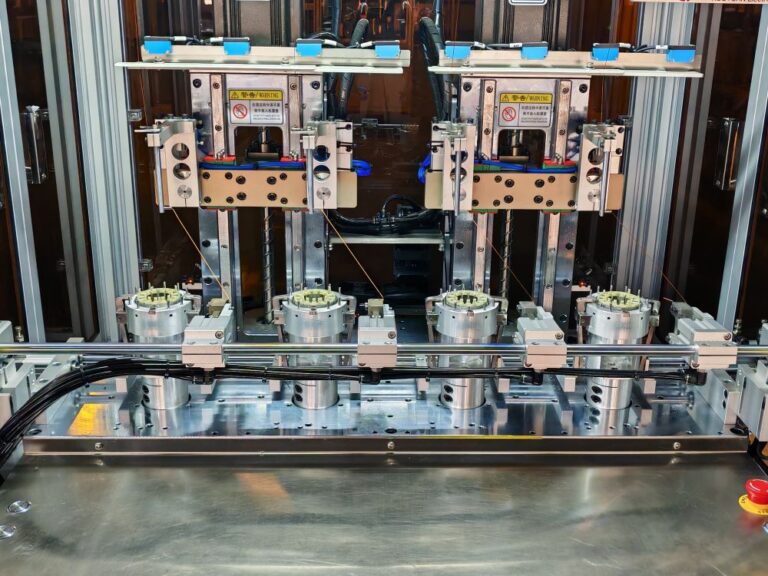
Motor Production Line
Advanced motor production lines ensure consistent quality and high production capacity for global BLDC motor application manufacturers.
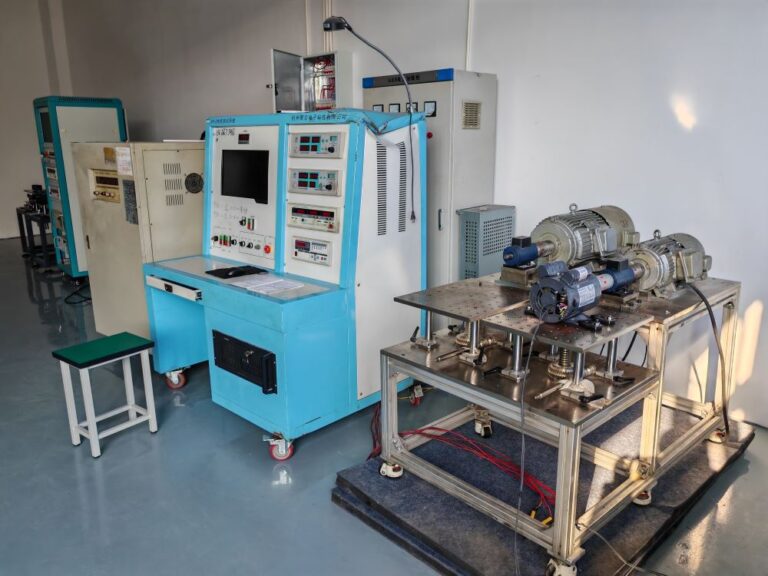
Motor Testing Laboratory
Professional motor testing equipment verifies torque, efficiency, durability and performance before shipment.
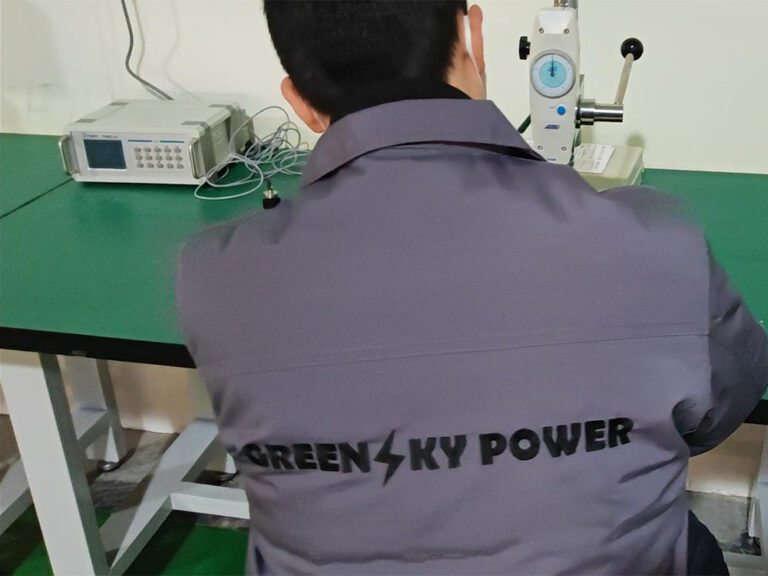
Quality Inspection
Strict quality inspection procedures ensure each motor meets international standards and customer specifications.
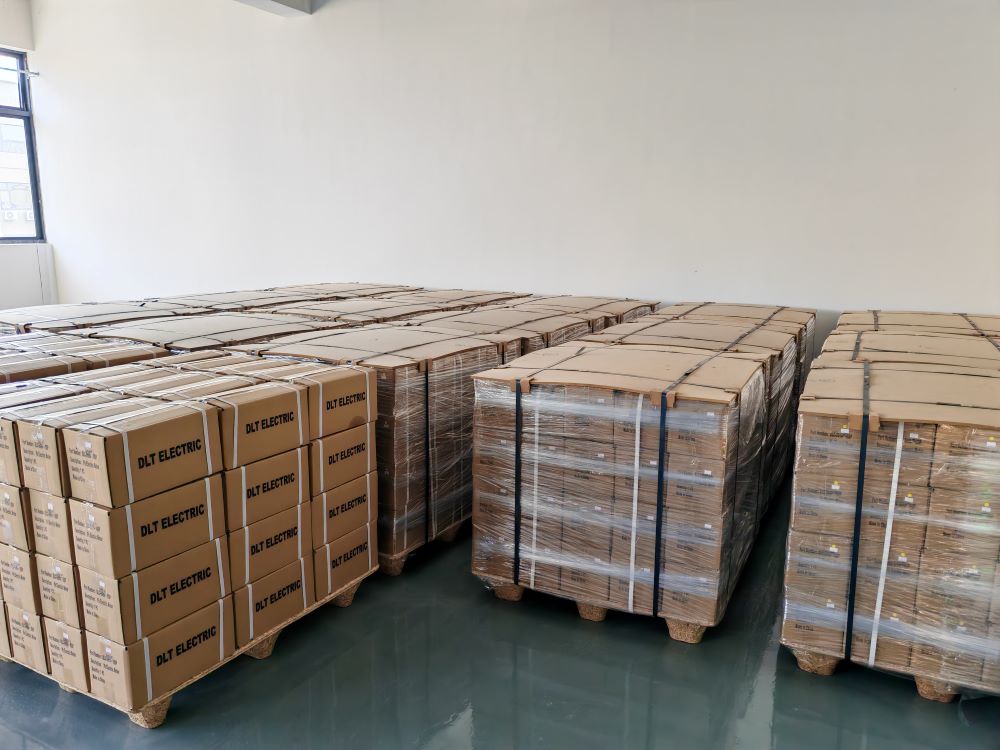
OEM Production
Flexible OEM manufacturing supports custom BLDC motor solutions, with your labelling and packing on the finished units.
Why Choose Greensky as Your Motor Manufacturer
Greensky is a professional electric motor manufacturer specializing in motion control solutions. We work with BLDC motor application manufacturers worldwide to develop reliable motor solutions.
- Strong R&D team — winding, magnetics and drive design in house
- Advanced motor manufacturing equipment — automated winding and magnet assembly lines
- Strict quality control — incoming, in-process and outgoing inspection on every batch
- OEM customization capability — from a first sample to annual volume
- Global export experience — motors shipped to more than 50 countries

Get a Custom 1000W E-Bike Motor Solution
What to include in your message
- Architecture — rear hub, front hub, mid drive or geared hub, plus wheel diameter.
- Duty cycle — gross mass, maximum gradient, climb duration and target speed.
- Electrical — 48 V, 60 V or 72 V pack, continuous discharge current and BMS limits.
- System signals — cadence, torque sensor or throttle; display protocol and brake cut-off.
- Market — target country and intended vehicle classification, so the power label and cut-off are configured correctly.
- Order plan — sample quantity, annual volume and OEM branding needs.
Send an inquiry
Send a wheel size, pack voltage and a short brief — we reply with a motor proposal within 24 hours.
FAQ – 1000W E-Bike Motor
1. Is a 1000W motor good for an e-bike?
Yes — 1000 W motors provide strong acceleration and are ideal for high-speed, cargo and off-road electric bikes. They are a poor fit for a commuter bike that has to sit inside a 250 W or 750 W pedal-assist definition. Check the intended market before you fix the power rating; we cover the classification question in the section above.
2. What torque does a 1000W e-bike motor produce?
The published range is typically 60–120 N·m depending on motor type and gearing. That is an output-side figure: a 1000 W shaft at 500 rpm produces about 19.1 N·m before reduction, so the ratio and the measurement point matter. Ask us to state the datum on the drawing — shaft, hub shell or crank — before comparing quotes.
3. Can you provide complete e-bike motor systems?
Yes, we offer complete OEM solutions including motor, controller, display and system integration, with cadence or torque sensor, throttle and brake cut-off wired to the same harness. The signal list is confirmed against the issued drawing before you freeze the wiring loom.
4. Is a 1000 W e-bike legal on public roads?
Not as a standard pedal-assist bicycle in many markets. The EU exclusion in Regulation (EU) No 168/2013 applies to motors of 250 W or less cut off before 25 km/h, and the US federal low-speed electric bicycle definition in 15 U.S.C. §2085 uses less than 750 W and less than 20 mph. A 1000 W build falls outside both. Classification depends on the finished vehicle and local rules; Greensky supplies components and does not certify complete bicycles.
5. What battery and controller do I need?
At 1000 W and the published >88% efficiency, the pack supplies about 1.14 kW: roughly 23.7 A at 48 V, 19.0 A at 60 V or 15.8 A at 72 V. Size the BMS and cabling for continuous current with headroom for the launch peak, and specify the controller phase current limit separately — it is not the same as battery current.
6. What do IP54 and IP65 mean on a hub motor?
They are enclosure ingress protection ratings defined by IEC 60529, covering solid particle and water ingress. IP54 suits splashing and road spray; IP65 is the one to specify for pressure washing or sustained wet use. Neither rating covers the connector seals, the cable exit or the chemical resistance of the elastomers, so confirm those against the actual environment.
7. Hub or mid drive for climbing?
A mid drive multiplies torque through the bike’s gears, so it holds a climb at lower motor current and less winding heat — at the cost of chain and sprocket wear. A geared hub gives strong launch torque with simpler installation but adds unsprung mass. Send the gross mass, gradient and climb duration and we will size it against the continuous torque limit rather than a peak wattage.
Get a Custom 1000W E-Bike Motor Solution
Contact us for customized 1000W E-Bike Motor solutions, or consider the 500 W eBike motor if the finished bike has to sit inside a pedal-assist classification. Greensky Power is committed to becoming your reliable long-term motor manufacturing partner — standard models or fully customized OEM solutions.
Professional response guaranteed within 24 hours. Add.: No.597 Bin’an, Hangzhou, China 310052 · E-mail: mkt@greensky-power.com · TEL: +86 571 8819 5488