
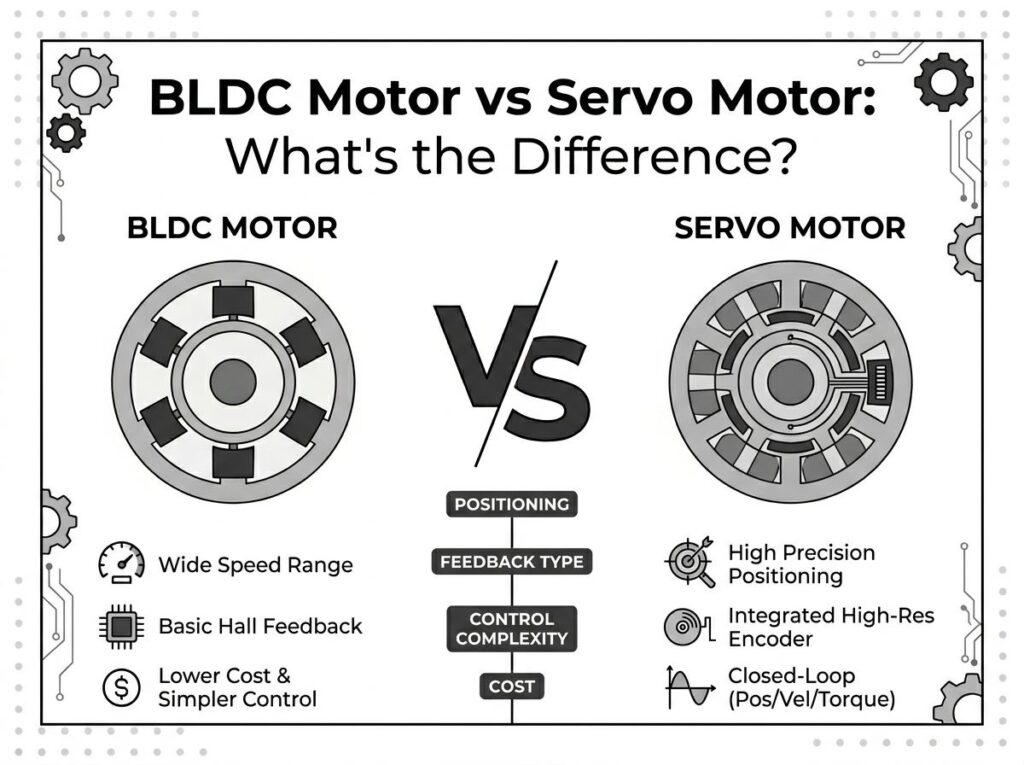
Двигатель BLDC против серводвигателя: В чем разница?
Выбор правильной технологии двигателя является одним из наиболее важных решений при проектировании современного оборудования.. Разрабатывается ли роботизированная рука, автоматизированное управляемое транспортное средство (АГВ), промышленный конвейер, газонокосилка, или прецизионный производственный станок, инженеры должны тщательно оценить требования к производительности, сложность управления, точность, эффективность, и общая стоимость системы.
Среди наиболее часто сравниваемых технологий — Brushless DC. (BLDC) двигатели и серводвигатели. Хотя оба широко используются в приложениях управления движением., они не являются прямыми эквивалентами. Фактически, Одно из самых больших заблуждений в автомобильной промышленности состоит в том, что серводвигатель — это просто другой тип двигателя..
Реальность такова, что двигатель BLDC — это технология двигателя., тогда как серводвигатель представляет собой полноценную систему управления движением, объединяющую двигатель, устройство обратной связи, и контроллер для достижения высокоточного позиционирования и динамических характеристик.
В этом руководстве представлено подробное инженерное сравнение двигателей BLDC и серводвигателей., помощь OEM-производителям, инженеры, и отделы закупок определяют, какое решение лучше всего соответствует требованиям их приложений..
Двигатель BLDC против серводвигателя
Двигатели BLDC и серводвигатели используются для точного управления движением., но двигатель BLDC - это тип двигателя, тогда как серводвигатель представляет собой полную систему управления движением, включающую в себя двигатель, энкодер, и контроллер. Серводвигатели обеспечивают более высокую точность позиционирования и динамический отклик., тогда как двигатели BLDC предлагают более низкую стоимость и более простую реализацию..
В общем, сервосистемы предпочтительны для робототехники, оборудование с ЧПУ, и прецизионная автоматизация, в то время как двигатели BLDC часто выбирают для газонокосилок, системы отопления, вентиляции и кондиционирования, насосы, промышленные приводы, и экономичные OEM-продукты.
Что такое двигатель BLDC?
Бесщеточный двигатель постоянного тока (BLDC двигатель) представляет собой двигатель с электронной коммутацией, в котором отсутствуют щетки и коммутатор, используемые в традиционных двигателях постоянного тока.. Вместо механического переключения, электронные контроллеры подают напряжение на обмотки статора в зависимости от положения ротора.
Двигатели BLDC стали одной из самых быстрорастущих технологий двигателей благодаря своему высокому КПД., Компактный размер, долгий срок службы, и отличная удельная мощность.
Конструкция двигателя BLDC
Типичный двигатель BLDC состоит из:
- Ротор с постоянными магнитами
- Ламинированный сердечник статора
- Многофазные обмотки статора
- Датчики Холла (необязательный)
- Электронный контроллер
- Инверторный каскад мощности
В отличие от матовых двигателей, между неподвижными и вращающимися электрическими компонентами отсутствует физический контакт.
Электронная коммутация
Ключевой инновацией в двигателях BLDC является электронная коммутация..
Контроллер двигателя постоянно контролирует положение ротора и подает напряжение на обмотки статора в такой последовательности, которая создает вращающееся магнитное поле.. Ротор следует за этим полем и производит вращательное движение..
Электронная коммутация дает ряд преимуществ.:
- Отсутствие износа щеток
- Более низкие требования к техническому обслуживанию
- Снижение электрического шума
- Более высокая эффективность
- Более длительный срок эксплуатации
Датчики Холла
Многие двигатели BLDC используют датчики Холла для определения положения ротора..
Эти датчики обнаруживают изменения магнитного поля при вращении ротора и обеспечивают обратную связь по положению контроллеру..
Датчики Холла позволяют:
- Надежная работа при запуске
- Точное время переключения
- Улучшенное управление на низкой скорости.
- Улучшенное производство крутящего момента
Современные бездатчиковые системы BLDC могут оценивать положение ротора посредством обнаружения противоЭДС., устранение необходимости в датчиках Холла в некоторых приложениях.
Контроллер двигателя BLDC
Контроллер действует как мозг двигательной системы..
Функции включают в себя:
- Регулирование скорости
- Текущий контроль
- Управление крутящим моментом
- Функции защиты
- Генерация ШИМ
- Интерфейсы связи
Простота управления BLDC является одной из причин, по которой эти двигатели широко используются в коммерческих продуктах, требующих баланса между производительностью и доступностью..
Распространенные приложения BLDC
- Электрические газонокосилки
- Роботизированные газонокосилки
- Вентиляторы ОВКВ
- Водяные насосы
- Промышленные вентиляторы
- AGV
- Турникетные системы
- Электрические велосипеды
- Медицинские приборы
- Бытовая техника
Что такое серводвигатель?
Одной из наиболее неправильно понимаемых концепций управления движением является определение серводвигателя..
Многие люди считают, что серводвигатель — это особый тип двигателя.. На самом деле, сервосистема представляет собой комплексное решение для управления движением с обратной связью.
Архитектура сервосистемы
Сервосистема состоит из:
Сервосистема =
Мотор
+
Кодер
+
Контроллер
Сам двигатель может быть:
- ПМСМ двигатель
- BLDC двигатель
- Синхронный двигатель переменного тока
- Двигатель с прямым приводом
Определяющей характеристикой является не технология двигателя, а использование непрерывной обратной связи и управления с обратной связью..
Core Components of a Servo System
1. Мотор
The motor generates rotational motion and torque.
Modern industrial servo systems most commonly use PMSM motors because of their smooth torque characteristics and high efficiency.
2. Кодер
The encoder continuously measures:
- Position
- Скорость
- Direction
- Angular displacement
Encoder feedback allows the controller to make real-time corrections.
3. Servo Drive
The servo drive processes feedback signals and adjusts current, Напряжение, and switching patterns to achieve target motion profiles.
The drive ensures:
- Точное позиционирование
- Stable speed control
- Dynamic torque response
- Accurate acceleration and deceleration
Why Servo Systems Are Different
Unlike standard BLDC motor systems that may operate open-loop or semi-closed-loop, servo systems constantly compare commanded motion with actual motion.
If an error occurs, the controller immediately compensates.
Этот механизм обратной связи позволяет:
- Позиционирование на микронном уровне
- Высокоскоростной динамический отклик
- Исключительная повторяемость
- Точный контроль траектории
Типичные приложения для сервоприводов
- Промышленные роботы
- обрабатывающие центры с ЧПУ
- Полупроводниковое оборудование
- Упаковочное оборудование
- Автоматизированные системы сборки
- Медицинские роботы
- Прецизионное инспекционное оборудование
- Аэрокосмические системы движения
BLDC против серводвигателя: Ключевые различия
Хотя двигатели BLDC и сервосистемы иногда могут использовать внутри себя схожие технологии двигателей., их предполагаемые функции и уровни производительности существенно различаются.
| Особенность | BLDC двигатель | Серводвигатель |
|---|---|---|
| Обратная связь по позиции | Необязательный | Необходимый |
| Точность | Середина | Очень высокий |
| Контроль скорости | Хороший | Отличный |
| Контроль крутящего момента | Хороший | Отличный |
| Расходы | Ниже | Выше |
| Сложность | Ниже | Выше |
| Метод управления | Открытый цикл / Полузамкнутый контур | Закрытый цикл |
| Кодер | Необязательный | Обязательный |
| Типичное применение | Газонокосилки, Насосы, ОВК | Робототехника, ЧПУ, Прецизионная автоматизация |
Самым важным отличием является то, что сервосистемы отдают приоритет точности и управлению с обратной связью., в то время как системы BLDC отдают приоритет эффективности, простота, и экономическая эффективность.
Сравнение принципов работы
Понимание принципов работы двигателей и сервосистем BLDC помогает понять, почему их рабочие характеристики различаются..
Как работают двигатели BLDC
Двигатели BLDC используют электронную коммутацию вместо механических щеток..
Контроллер подает питание на обмотки статора в заранее заданной последовательности на основе информации о положении ротора..
Ключевые эксплуатационные характеристики:
- Электронная коммутация
- Обратная связь датчика Холла (необязательный)
- ШИМ-регулирование скорости
- Работа в разомкнутом или полузамкнутом контуре
Большинство приложений BLDC ориентированы на поддержание скорости, а не на достижение точного контроля положения..
Как работают сервосистемы
Сервосистемы постоянно контролируют фактическое положение двигателя и сравнивают его с заданным положением..
Любое отклонение немедленно вызывает корректирующие действия со стороны диспетчера..
Эта замкнутая архитектура позволяет:
- Высокоточное позиционирование
- Точное отслеживание траектории
- Быстрая реакция на изменения нагрузки
- Превосходный контроль крутящего момента
Энкодер служит критически важным устройством обратной связи, которое делает возможным сервоуправление..
Открытый цикл против закрытого цикла
| Тип управления | BLDC | Сервопривод |
|---|---|---|
| Операция разомкнутого цикла | Общий | Нет |
| Замкнутый цикл работы | Необязательный | Стандарт |
| Зависимость от обратной связи | Низкий | Высокий |
| Коррекция позиции | Ограничено | Непрерывный |
Сравнение точности позиции
Для инженеров, оценивающих системы управления движением, точность позиционирования часто является наиболее важным фактором.
Именно здесь сервосистемы демонстрируют свое наибольшее преимущество..
Точность положения BLDC
Стандартные двигатели BLDC обычно предназначены для регулирования скорости и создания крутящего момента, а не для точного позиционирования..
Без обратной связи с энкодером, точность позиционирования по своей сути ограничена.
Типичные характеристики BLDC включают::
- Умеренная способность позиционирования
- Хорошее регулирование скорости
- Подходит для применений с непрерывным вращением.
- Ограниченная точность позиционирования
Точность положения сервопривода
Сервосистемы специально разработаны для точного позиционирования..
Энкодеры высокого разрешения позволяют контроллеру непрерывно отслеживать движение ротора и вносить поправки в режиме реального времени..
Типичные преимущества сервопривода включают в себя:
- Точность позиционирования до градуса
- Отличная повторяемость
- Точный контроль траектории
- Высокая скорость отклика
- Минимальная ошибка позиционирования
Эта возможность объясняет, почему робототехника, станки с ЧПУ, полупроводниковое оборудование, и автоматизированные производственные системы в подавляющем большинстве полагаются на сервотехнологии..
Продолжить расставание 2: Сравнение крутящего момента, Сравнение управления скоростью, Сравнение эффективности, Сравнение затрат, Приложения для робототехники, АГВ & Приложения УПП, Применение газонокосилок, Руководство по выбору промышленной автоматизации, Почему OEM-покупатели выбирают Greensky Power, Часто задаваемые вопросы, Стратегия внутренних ссылок, и ссылки.
Сравнение крутящего момента
Крутящий момент является одним из наиболее важных параметров при оценке систем управления движением.. Он определяет способность двигателя ускорять нагрузки., преодолеть сопротивление, сохранять позицию, и выполнять динамические движения в различных условиях эксплуатации.
В механических системах, крутящий момент может быть выражен как:
τ = rFsin(я)
Где:
- т = Крутящий момент (Н·м)
- ведущий = Расстояние от точки поворота (м)
- Ф = Приложенная сила (Н)
- я = Угол между силой и плечом рычага
Например:
т = (3)(6)грех(90°) = 18 Н·м
Только составляющая силы, перпендикулярная плечу рычага, способствует созданию крутящего момента..
Непрерывный крутящий момент
Непрерывный крутящий момент представляет собой величину крутящего момента, который двигатель может производить бесконечно без перегрева..
| Характеристика | BLDC двигатель | Серводвигатель |
|---|---|---|
| Непрерывная плотность крутящего момента | Высокий | Очень высокий |
| Тепловое управление | Хороший | Отличный |
| Долгосрочная стабильность | Хороший | Отличный |
Пиковый крутящий момент
Пиковый крутящий момент относится к максимальному кратковременному крутящему моменту, который может обеспечить двигатель..
Серводвигатели специально разработаны для обеспечения значительно более высокого пикового крутящего момента во время ускорения., позиционирование, и резкие изменения нагрузки.
Это особенно важно в робототехнике., оборудование с ЧПУ, и автоматизированные системы сборки.
Крутящий момент
Момент срыва — это крутящий момент, возникающий, когда вал двигателя не вращается..
Сервосистемы обычно обеспечивают превосходное управление крутящим моментом, поскольку обратная связь энкодера позволяет точно регулировать ток, сохраняя при этом положение вала..
Сводная информация о характеристиках крутящего момента
| Фактор крутящего момента | BLDC | Сервопривод |
|---|---|---|
| Непрерывный крутящий момент | Высокий | Очень высокий |
| Пиковый крутящий момент | Хороший | Отличный |
| Контроль крутящего момента при срыве | Ограничено | Отличный |
| Точность крутящего момента | Умеренный | Очень высокий |
| Пульсация крутящего момента | Выше | Ниже |
Для требовательных приложений управления движением, сервосистемы обычно превосходят стандартные двигатели BLDC по контролю крутящего момента и динамическому отклику..
Сравнение управления скоростью
Регулирование скорости — еще одно важное отличие двигателей BLDC от сервосистем..
BLDC контроль скорости
Двигатели BLDC обычно используют:
- Управление с разомкнутым контуром
- Полузамкнутое управление
- ШИМ-регулирование скорости
- Коммутация датчика Холла
Характеристики регулирования скорости обычно достаточны для применений, где не требуется точное позиционирование..
Примеры включают в себя:
- Газонокосилки
- Фанаты
- Насосы
- системы отопления, вентиляции и кондиционирования
- Конвейеры
Сервопривод управления скоростью
Сервосистемы используют полное управление с обратной связью..
Контроллер постоянно сравнивает:
- Заданная скорость
- Фактическая скорость
- Условия нагрузки
- Обратная связь по позиции
Коррекции в реальном времени обеспечивают высокостабильное регулирование скорости даже при быстро меняющихся нагрузках..
Сравнительная таблица регулирования скорости
| Фактор | BLDC | Сервопривод |
|---|---|---|
| Стабильность скорости | Хороший | Отличный |
| Динамический отклик | Хороший | Отличный |
| Компенсация нагрузки | Ограничено | Автоматический |
| Низкоскоростное управление | Умеренный | Отличный |
Сравнение эффективности BLDC и сервоприводов
Эффективность напрямую влияет на эксплуатационные расходы, срок службы батареи, тепловые характеристики, и общая надежность оборудования.
Обе технологии обеспечивают значительно более высокий КПД, чем коллекторные двигатели постоянного тока..
Эффективность двигателя BLDC
- Обычно 85–95%
- Низкие потери ротора
- Отличное использование батареи
- Высокая удельная мощность
Эффективность серводвигателя
Современные сервосистемы часто используют внутри себя двигатели PMSM., включает в себя:
- 90–98% эффективность
- Оптимизированный контроль тока
- Снижение гармонических потерь
- Превосходное использование энергии
Сравнительная таблица эффективности
| Тип двигателя | Типичная эффективность |
|---|---|
| Матовый двигатель постоянного тока | 70–85% |
| Индукционный двигатель | 80–93% |
| BLDC двигатель | 85–95% |
| Сервомоторная система | 90–98% |
Для большинства коммерческого оборудования, Эффективность BLDC уже превосходна. Однако, сервосистемы сохраняют преимущество в прецизионных приложениях, требующих максимальной производительности..
Сравнение стоимости BLDC и сервопривода
Стоимость часто является решающим фактором для OEM-покупателей..
Хотя сервосистемы обеспечивают превосходную производительность, они требуют дополнительных аппаратных и программных компонентов.
| Статья затрат | BLDC | Сервопривод |
|---|---|---|
| Мотор | Ниже | Выше |
| Контроллер | Ниже | Выше |
| Кодер | Необязательный | Необходимый |
| Приводная электроника | Проще | Более сложный |
| Общая стоимость системы | Ниже | Выше |
Для применений, где не требуется сверхвысокая точность, Двигатели BLDC часто обеспечивают наилучшую окупаемость инвестиций..
Что лучше для робототехники?
Робототехника — один из самых ценных рынков технологий управления движением..
Большинству роботизированных систем требуется:
- Точное позиционирование
- Плавное управление траекторией
- Быстрое ускорение
- Высокая повторяемость
- Замкнутая обратная связь
Из-за этих требований, сервосистемы доминируют в промышленной робототехнике.
Почему серводвигатели выигрывают в робототехнике
- Обратная связь с энкодером
- Возможность позиционирования на микронном уровне
- Превосходный динамический отклик
- Высокоточный контроль траектории
- Отличная повторяемость
Победитель в категории «Робототехника»: Серводвигатель
Что лучше для AGV и AMR?
Автоматизированные управляемые транспортные средства (AGV) и автономные мобильные роботы (AMR) занимать уникальную золотую середину.
Когда BLDC предпочтительнее
- Экономически чувствительные AGV
- Складские перевозки
- Базовые навигационные системы
- Требования к длительному сроку службы батареи
Когда сервопривод предпочтителен
- Высокоскоростная навигация
- Точная стыковка
- Коллаборативные роботы
- Передовые автономные системы
Многие современные AGV успешно используют приводные двигатели BLDC с обратной связью от энкодера., создание гибридного решения между традиционными BLDC и сервоархитектурами.
Победитель среди AGV: Зависит от требований к точности навигации.
Что лучше для газонокосилок?
Газонокосилки требуют:
- Высокий выходной крутящий момент
- Прочность на открытом воздухе
- Эффективность батареи
- Конкурентоспособность затрат
- Надежная работа
В отличие от робототехники, газонокосилки редко требуют точности позиционирования ниже градуса.
Вместо, производители отдают предпочтение эффективности, надежность, и доступность.
Почему двигатели BLDC идеально подходят для газонокосилок
- Более низкая стоимость системы
- Отличная эффективность
- Высокий пусковой момент
- Простая электронная архитектура
- Проверенная надежность на открытом воздухе
Это одна из причин, почему современные аккумуляторные газонокосилки и газонокосилки-роботы все чаще полагаются на технологию BLDC..
Победитель в категории «Газонокосилки»: BLDC двигатель
Что лучше для промышленной автоматизации?
Промышленная автоматизация охватывает широкий спектр типов оборудования..
| Заявление | Рекомендуемое решение |
|---|---|
| Конвейеры | BLDC |
| Упаковочные машины | Сервопривод |
| Турникеты | BLDC |
| Оборудование с ЧПУ | Сервопривод |
| Промышленные вентиляторы | BLDC |
| Системы подбора и размещения | Сервопривод |
В общем, выбор зависит от того, отдает ли приложение приоритет точности или экономической эффективности.
Как выбрать между BLDC и серводвигателями
Следующее руководство по выбору может упростить принятие решений по технологии двигателей..
| Заявление | Лучший выбор |
|---|---|
| Робототехника | Сервопривод |
| ЧПУ | Сервопривод |
| Газонокосилка | BLDC |
| ОВК | BLDC |
| Насос | BLDC |
| Турникет | BLDC |
| АГВ | Зависит от |
Выбирайте сервосистему, когда точность, точность позиционирования, и динамический отклик имеют решающее значение.
Выбирайте двигатель BLDC, когда эффективность, надежность, простота, и более низкая стоимость являются основными приоритетами.
Почему OEM-покупатели выбирают Greensky Power
Greensky Power специализируется на индивидуальных решениях в области управления движением для OEM-производителей по всему миру..
Основной портфель продуктов
- BLDC Motors
- Редукторные двигатели
- Планетарные мотор-редукторы
- Червячные мотор-редукторы
- Индивидуальные решения для двигателей
Инженерные возможности OEM
- Интеграция кодировщика
- Согласование контроллера
- Конструкция планетарной коробки передач
- Быстрое прототипирование
- Пользовательская оптимизация производительности
Ключевые отрасли промышленности
- Газонное оборудование
- Системы отопления, вентиляции и кондиционирования
- Промышленная автоматизация
- Робототехника
- Медицинские устройства
- Системы безопасности
Часто задаваемые вопросы
Является ли серводвигатель двигателем BLDC??
Не обязательно. Серводвигатель представляет собой полноценную систему управления с замкнутым контуром.. Многие современные серводвигатели используют технологию двигателей PMSM или BLDC..
Какой мотор лучше для робототехники?
Серводвигатели обычно предпочтительнее, поскольку они обеспечивают превосходную точность позиционирования., динамический отклик, и повторяемость.
Какой мотор дешевле?
Двигатели BLDC обычно имеют более низкую стоимость., затраты на контроллер, и общие затраты на систему.
Нужны ли двигателям BLDC энкодеры??
Нет. Многие двигатели BLDC успешно работают с использованием датчиков Холла или бездатчиковых методов управления.. Энкодеры не являются обязательными, если не требуется точное позиционирование..
Можно ли использовать двигатель BLDC в качестве серводвигателя??
Да. В сочетании с энкодером и контроллером с обратной связью, двигатель BLDC может работать как часть сервосистемы.
Похожие статьи
Ссылки
- https://www.ieee.org
- https://ieeexplore.ieee.org
- https://www.energy.gov
- https://www.iea.org
- https://www.iec.ch
- https://www.mathworks.com
- https://www.microchip.com
- https://www.ti.com
- https://www.nidec.com
- https://www.siemens.com
- https://global.abb
- https://www.weg.net