
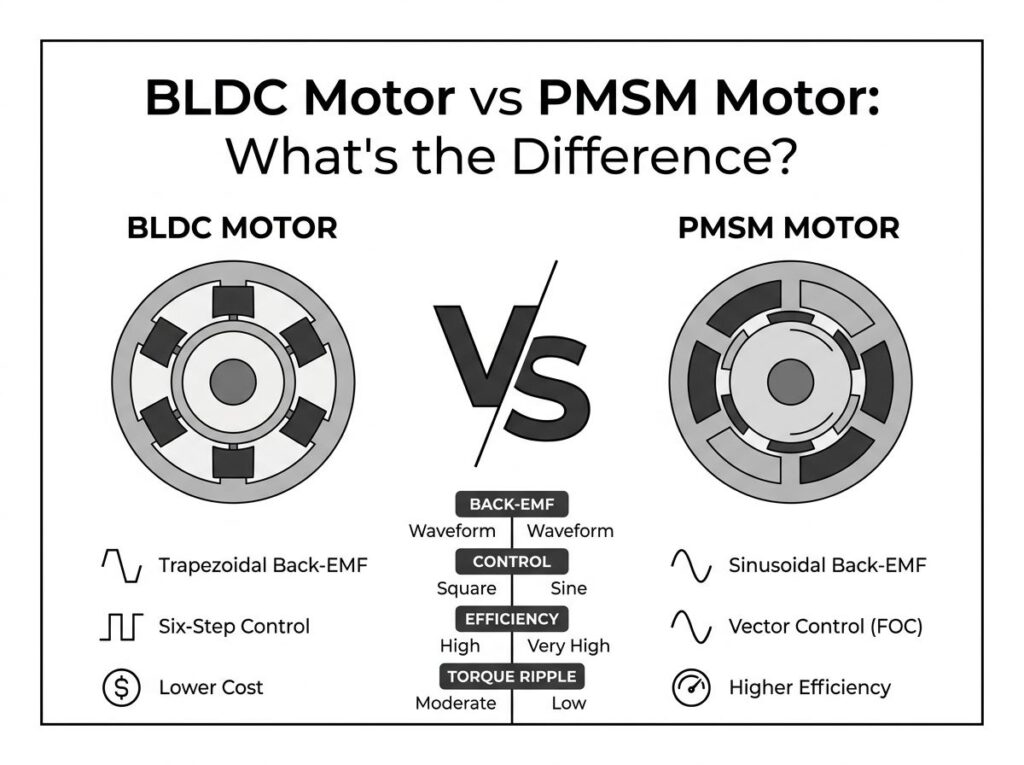
Двигатель BLDC против двигателя PMSM: В чем разница?
Технологии двигателей с постоянными магнитами стали предпочтительным выбором для современных систем электропривода благодаря их превосходной эффективности., высокая плотность мощности, Компактный размер, и точная управляемость. Среди этих технологий, Бесщеточные двигатели постоянного тока (BLDC) и синхронные двигатели с постоянными магнитами (ПМСМ) — два наиболее широко распространенных решения в электромобилях, робототехника, системы отопления, вентиляции и кондиционирования, Индустриальная автоматизация, медицинское оборудование, и наружное силовое оборудование.
Поскольку в обоих типах двигателей используются постоянные магниты и электронные системы управления., многие инженеры и специалисты по закупкам полагают, что это, по сути, одна и та же технология.. На самом деле, существуют важные различия в характеристиках обратной ЭДС, алгоритмы управления, пульсация крутящего момента, акустический шум, эффективность, и стоимость системы.
В этом инженерном руководстве представлено подробное сравнение двигателей BLDC и PMSM, которое поможет инженерам, OEM-производители, и промышленные покупатели выбирают наиболее подходящую технологию двигателей для своих применений..
Двигатель BLDC против двигателя PMSM
Двигатели BLDC и двигатели PMSM используют постоянные магниты., но двигатели BLDC обычно используют трапециевидную обратную ЭДС и шестиступенчатую коммутацию., в то время как двигатели PMSM используют синусоидальную обратную ЭДС и синусоидальное управление.. Двигатели PMSM обычно обеспечивают более плавную работу и более высокий КПД., тогда как двигатели BLDC обеспечивают более простое управление и более низкую стоимость системы..
В практических приложениях, Двигатели BLDC обычно выбираются для экономичных систем, требующих хорошей производительности., в то время как двигатели PMSM предпочтительнее для приложений премиум-класса, требующих максимальной эффективности., плавная передача крутящего момента, и точный контроль.
Что такое двигатель BLDC?
Бесщеточный двигатель постоянного тока (BLDC двигатель) представляет собой двигатель с постоянными магнитами, который заменяет механические щетки электронной коммутацией.. Вместо использования физических контактов щетки, электронный контроллер подает питание на обмотки статора на основе обратной связи по положению ротора..
Двигатели BLDC характеризуются обратной электродвижущей силой трапециевидной формы. (обратная ЭДС) форму сигнала и обычно работают с использованием шестиступенчатой стратегии управления коммутацией..
Базовая конструкция двигателя BLDC
- Ротор с постоянными магнитами
- Обмотка статорных катушек
- Электронный контроллер
- Датчики положения на эффекте Холла (необязательный)
- Схема силового инвертора
Как работает двигатель BLDC
Контроллер последовательно подает напряжение на обмотки статора, создавая вращающееся магнитное поле.. Постоянные магниты, установленные на роторе, следуют за этим магнитным полем., производя вращательное движение.
Информация о положении ротора обычно получается от датчиков Холла или оценивается с использованием алгоритмов бездатчикового управления..
Преимущества двигателей BLDC
- Высокая эффективность
- Компактный размер
- Отличная плотность мощности
- Низкие требования к техническому обслуживанию
- Отсутствие износа щеток
- Хорошая возможность контроля скорости
- Более низкая стоимость контроллера
Типичные применения BLDC
- Электрические газонокосилки
- Аккумуляторные электроинструменты
- Вентиляторы ОВКВ
- Промышленная автоматизация
- Медицинское оборудование
- AGV и AMR
- Турникеты безопасности
- Электрические велосипеды
Из-за баланса между стоимостью и производительностью., Двигатели BLDC стали одной из самых популярных технологий в современном OEM-оборудовании..
Что такое двигатель PMSM?
Синхронный двигатель с постоянными магнитами (ПМСМ) также является двигателем с постоянными магнитами, но в отличие от двигателя BLDC, он предназначен для работы с синусоидальной формой волны обратной ЭДС и синусоидальным током возбуждения..
Ротор вращается синхронно с вращающимся магнитным полем статора., устранение проскальзывания и обеспечение высокоэффективной работы.
Базовая конструкция двигателя с постоянными магнитами (PMSM)
- Ротор с постоянными магнитами
- Распределенные обмотки статора
- Высокопроизводительный инвертор
- Датчик положения или резольвер
- Усовершенствованный контроллер двигателя
Как работает двигатель PMSM
Контроллер генерирует синусоидальные сигналы тока, которые взаимодействуют с постоянным магнитным полем ротора.. Двигатель работает в точной синхронизации с вращающимся магнитным полем, создаваемым статором..
Большинство систем PMSM используют полеориентированное управление. (ВОК), что обеспечивает плавное создание крутящего момента и точный контроль скорости и положения..
Преимущества двигателей PMSM
- Очень высокая эффективность
- Отличная плотность крутящего момента
- Плавный выходной крутящий момент
- Низкий акустический шум
- Низкий уровень вибрации
- Superior dynamic performance
- Высокая скорость
Typical PMSM Applications
- Электрические транспортные средства
- Промышленные сервосистемы
- Робототехника
- станки с ЧПУ
- Аэрокосмические системы
- Прецизионное оборудование для автоматизации
- Высококлассные системы отопления, вентиляции и кондиционирования воздуха
Технология PMSM доминирует во многих высокопроизводительных приложениях, где эффективность, точность, and smooth operation are critical requirements.
BLDC против PMSM: Ключевые различия
Хотя обе технологии относятся к семейству двигателей с постоянными магнитами., их электромагнитное поведение и философия управления существенно различаются.
| Особенность | BLDC двигатель | ПМСМ Мотор |
|---|---|---|
| Обратная ЭДС | Трапециевидный | Синусоидальный |
| Текущая форма волны | Прямоугольный | Синусоидальный |
| Метод управления | Шестиступенчатая коммутация | Управление ВОК |
| Эффективность | Высокий | Очень высокий |
| Уровень шума | Середина | Низкий |
| Пульсация крутящего момента | Выше | Ниже |
| Динамический отклик | Хороший | Отличный |
| Сложность контроллера | Ниже | Выше |
| Стоимость системы | Ниже | Выше |
| Типичные применения | Газонное оборудование, ОВК | электромобили, Робототехника |
Самое важное техническое различие заключается в том, как двигатели генерируют и используют электромагнитный крутящий момент..
Сравнение обратной ЭДС
Обратная электродвижущая сила (Обратная ЭДС) напряжение, генерируемое двигателем при движении ротора через магнитное поле статора. Форма волны обратной ЭДС напрямую влияет на стратегию управления двигателем., эффективность, плавность крутящего момента, и общая производительность.
Обратная ЭДС двигателя BLDC
Двигатели BLDC предназначены для создания волны обратной ЭДС трапециевидной формы..
Для максимизации крутящего момента, контроллер подает прямоугольные импульсы тока, синхронизированные с трапециевидной формой сигнала напряжения.
Такой подход упрощает конструкцию контроллера и снижает стоимость системы., но это также приводит к пульсациям крутящего момента во время коммутации фаз..
Характеристики обратной ЭДС BLDC
- Трапецеидальная форма волны
- Упрощенный алгоритм управления
- Более низкие требования к обработке
- Более высокая пульсация крутящего момента
- Повышенный акустический шум
Обратная ЭДС двигателя PMSM
Двигатели с постоянными магнитами (PMSM) генерируют синусоидальную обратную ЭДС..
Контроллер подает синусоидальный ток, соответствующий форме генерируемого сигнала., что приводит к непрерывному производству крутящего момента на протяжении всего электрического цикла.
Это значительно снижает пульсации крутящего момента и улучшает общую плавность работы двигателя..
Характеристики противоЭДС СДСМ
- Синусоидальный сигнал
- Более плавное создание крутящего момента
- Более низкая вибрация
- Более высокая эффективность
- Превосходный динамический контроль
Почему обратная ЭДС имеет значение
Влияние характеристик обратной ЭДС:
- КПД двигателя
- Крутящий момент
- Генерация шума
- Сложность контроллера
- Плотность мощности
- Пригодность приложения
Для высокопроизводительных приложений, таких как робототехника, сервосистемы, и электромобили, синусоидальная обратная ЭДС дает существенные преимущества.
Сравнение методов управления
Метод управления представляет собой одно из наиболее существенных различий между двигателями BLDC и PMSM..
Управление двигателем BLDC: Шестиступенчатая коммутация
В двигателях BLDC обычно используется шестиступенчатая коммутация., также известный как трапециевидная коммутация.
Контроллер подает питание на две фазы одновременно, оставляя третью фазу плавающей.. Каждый 60 электрические степени, контроллер переходит в следующее состояние коммутации.
Преимущества шестиступенчатого управления
- Простая реализация
- Более низкие требования к процессору
- Сниженная стоимость контроллера
- Простая системная интеграция
Ограничения шестиступенчатого управления
- Более высокая пульсация крутящего момента
- Повышенный шум
- Снижение плавности хода на низкой скорости.
- Более низкая точность
Управление двигателем ПМСМ: Полеориентированное управление (ВОК)
В двигателях PMSM обычно используется полеориентированное управление. (ВОК), один из самых передовых методов управления двигателем, используемых сегодня.
FOC разделяет ток статора на компоненты, создающие крутящий момент и создающие поток., позволяющий точно контролировать работу двигателя в различных условиях нагрузки.
Преимущества ФОК
- Максимальная эффективность
- Плавное создание крутящего момента
- Превосходное управление на низких скоростях
- Превосходный динамический отклик
- Сниженная вибрация
- Высокая точность позиционирования
Ограничения FOC
- Более дорогой контроллер
- Более высокая сложность программного обеспечения
- Повышенные требования к обработке
Полупроводниковая технология продолжает развиваться, FOC становится все более доступным даже в экономически чувствительных приложениях..
Продолжить расставание 2: Сравнение эффективности, Сравнение крутящего момента, Сравнение шума и вибрации, Анализ затрат, Приложения для электромобилей, Приложения для робототехники, Применение газонокосилок, Руководство по выбору OEM, Грински Пауэр Солюшнс, Часто задаваемые вопросы, Кластер внутренних ссылок, и ссылки.
Сравнение эффективности BLDC и PMSM
КПД – один из важнейших показателей производительности при выборе электродвигателя.. Более высокая эффективность напрямую приводит к снижению энергопотребления., снижение тепловыделения, повышенная надежность, и снижение эксплуатационных затрат на протяжении всего жизненного цикла оборудования.
Двигатели BLDC и PMSM достигают значительно более высокого КПД, чем традиционные коллекторные двигатели постоянного тока и асинхронные двигатели.. Однако, Технология PMSM обычно обеспечивает высочайший уровень эффективности благодаря синусоидальному магнитному полю и передовым стратегиям управления..
Типичные диапазоны эффективности
| Тип двигателя | Типичная эффективность | Пиковая эффективность |
|---|---|---|
| Матовый двигатель постоянного тока | 70–85% | 88% |
| Индукционный двигатель | 80–93% | 95% |
| BLDC двигатель | 85–95% | 96% |
| ПМСМ Мотор | 90–97% | 98%+ |
Почему двигатели PMSM более эффективны
- Синусоидальное магнитное поле снижает гармонические потери
- Поле-ориентированное управление оптимизирует использование тока
- Меньшая пульсация крутящего момента снижает механические потери
- Снижение гармоник тока статора
- Улучшенные высокоскоростные рабочие характеристики
Когда эффективности BLDC достаточно
Для многих OEM-продуктов, таких как газонокосилки, насосы, фанаты, ворота безопасности, и системы промышленной автоматизации, Эффективность BLDC уже достаточно высока, поэтому предельный выигрыш от PMSM может не оправдать дополнительные затраты на контроллер..
Это одна из причин, почему двигатели BLDC продолжают доминировать во многих коммерческих и промышленных приложениях, несмотря на технические преимущества PMSM..
Сравнение крутящего момента BLDC и PMSM
Производство крутящего момента напрямую влияет на ускорение двигателя., возможность обработки грузов, низкая скорость работы, и общая производительность машины.
В системах электродвигателей, крутящий момент в основном определяется как:
Где:
- т = Крутящий момент (Н·м)
- ведущий = Расстояние от точки поворота (м)
- Ф = Приложенная сила (Н)
- я = Угол силы
Например:
Если сила 6 N применяется в радиусе 3 м под углом 90°, результирующий крутящий момент становится:
т = 3 × 6 × грех(90°) = 18 Н·м
В двигателях, Электромагнитный крутящий момент создается за счет взаимодействия магнитных полей статора и постоянных магнитов ротора..
Характеристики крутящего момента BLDC
- Высокий пусковой момент
- Сильная способность ускорения
- Более высокая пульсация крутящего момента
- Подходит для периодических нагрузок.
- Отличное соотношение цены и крутящего момента
Характеристики крутящего момента PMSM
- Более плавный выходной крутящий момент
- Меньшая пульсация крутящего момента
- Более высокая плотность непрерывного крутящего момента
- Превосходная управляемость на низких скоростях
- Отличная производительность сервопривода
Сравнение плотности крутящего момента
| Фактор | BLDC | ПМСМ |
|---|---|---|
| Стартовый крутящий момент | Отличный | Отличный |
| Непрерывный крутящий момент | Высокий | Очень высокий |
| Пульсация крутящего момента | Выше | Ниже |
| Низкоскоростная точность | Хороший | Отличный |
| Производительность сервопривода | Умеренный | Отличный |
Для высокоточных систем перемещения, Двигатели PMSM обычно превосходят двигатели BLDC из-за более плавной генерации крутящего момента и превосходных характеристик управления..
Сравнение шума и вибрации
Шум и вибрация становятся все более важными факторами при проектировании современного оборудования.. Низкий акустический шум улучшает удобство использования, в то время как снижение вибрации увеличивает срок службы компонентов и точность позиционирования.
Шумовые характеристики двигателя BLDC
Из-за трапециевидной коммутации и более высокой пульсации крутящего момента., Двигатели BLDC обычно создают более громкий шум, чем двигатели PMSM..
Общие источники шума включают в себя:
- События переключения коммутации
- Крутящий момент
- Механический резонанс
- Шум подшипников
Шумовые характеристики двигателя PMSM
Синусоидальное токовое возбуждение и управление FOC минимизируют резкие изменения крутящего момента., что приводит к гораздо более плавной работе.
Преимущества включают в себя:
- Низкая акустическая эмиссия
- Сниженная вибрация
- Повышенная точность
- Повышенный комфорт пользователя
Таблица сравнения шума
| Фактор производительности | BLDC | ПМСМ |
|---|---|---|
| Акустический шум | Середина | Низкий |
| Пульсация крутящего момента | Выше | Ниже |
| Уровень вибрации | Умеренный | Минимальный |
| Прецизионные приложения | Хороший | Отличный |
Сравнение затрат BLDC и PMSM
Стоимость часто является решающим фактором для OEM-покупателей и производителей оборудования..
Хотя двигатели PMSM обеспечивают превосходную производительность, они обычно требуют:
- Более сложные контроллеры
- Более высокая производительность процессора
- Передовые программные алгоритмы
- Дополнительное сенсорное оборудование
Сравнение общей стоимости системы
| Фактор стоимости | BLDC | ПМСМ |
|---|---|---|
| Стоимость двигателя | Ниже | Выше |
| Стоимость контроллера | Ниже | Выше |
| Сложность программного обеспечения | Ниже | Выше |
| Стоимость разработки | Ниже | Выше |
| Эксплуатационные расходы | Низкий | Очень низкий |
Для чувствительных к затратам продуктов, BLDC often delivers the best balance between performance and affordability.
Какой двигатель лучше для электромобилей?
The EV industry has become one of the largest consumers of permanent magnet motor technologies.
Современные электромобили в приоритете:
- Максимальная эффективность
- Увеличенный запас хода
- Плавное ускорение
- Высокая скорость
- Превосходное рекуперативное торможение
Из-за этих требований, PMSM motors have become the dominant choice for passenger EVs.
Major automotive manufacturers frequently use PMSM technology because it offers:
- Более высокая эффективность
- Превосходная плотность крутящего момента
- Улучшенная производительность NVH
- Расширенный диапазон
Победитель среди электромобилей: ПМСМ
Какой двигатель лучше для робототехники?
Роботизированные системы требуют:
- Точное управление положением
- Плавное движение
- Стабильность на низкой скорости
- Быстрый ответ
- Высокая повторяемость
These requirements strongly favor PMSM technology combined with servo control systems.
Промышленные роботы, коллаборативные роботы, and CNC systems commonly use PMSM servo motors because of their excellent dynamic response and positioning accuracy.
Победитель в категории «Робототехника»: ПМСМ
Какой двигатель лучше для газонокосилки?
Lawn mower applications present a different set of priorities:
- Высокий выходной крутящий момент
- Прочность на открытом воздухе
- Конкурентоспособность затрат
- Эффективность батареи
- Простое электронное управление
For walk-behind electric lawn mowers and robotic lawn mowers, Двигатели BLDC часто являются предпочтительным решением..
Преимущества включают в себя:
- Более низкая стоимость системы
- Высокий пусковой момент
- Отличная производительность аккумулятора
- Упрощенная архитектура контроллера
- Высокая надежность
Победитель в категории «Газонокосилки»: BLDC
Как выбрать между BLDC и PMSM
Выбор лучшего двигателя зависит от приоритетов применения..
| Если вам нужно… | Выбирать |
|---|---|
| Самая низкая стоимость | BLDC |
| Максимальная эффективность | ПМСМ |
| Точное управление движением | ПМСМ |
| Промышленная автоматизация | Или |
| Робототехника | ПМСМ |
| Электромобили | ПМСМ |
| Газонное оборудование | BLDC |
| Системы отопления, вентиляции и кондиционирования | БЛДК или ПМСМ |
Почему OEM-покупатели выбирают Greensky Power
Для производителей OEM-оборудования, selecting the right motor supplier is as important as selecting the motor technology itself.
Greensky Power специализируется на индивидуальных решениях в области двигателей для OEM-клиентов по всему миру..
Основной портфель продуктов
Преимущества OEM
- Разработка индивидуального двигателя
- Поддержка интеграции контроллера
- Согласование планетарного редуктора
- Быстрое прототипирование
- Варианты с низким минимальным объемом заказа
- Мировой экспортный опыт
Ключевые отрасли промышленности
- Робототехника
- Газонокосилки
- климатическое оборудование
- Промышленная автоматизация
- Медицинские приборы
- Системы безопасности
Часто задаваемые вопросы-двигатель BLDC и двигатель PMSM
PMSM лучше, чем BLDC??
Не обязательно. PMSM обеспечивает более высокую эффективность и плавность работы., в то время как BLDC обеспечивает более низкую стоимость системы и более простое управление.. Лучший выбор зависит от требований приложения..
Почему двигатели PMSM используются в электромобилях?
Двигатели PMSM обеспечивают превосходную эффективность, плотность крутящего момента, гладкость, и дальность действия, что делает их идеальными для современных платформ электромобилей.
Могут ли двигатели BLDC использовать управление FOC??
Да. Многие современные двигатели BLDC могут работать по алгоритмам FOC., уменьшение пульсаций крутящего момента и повышение эффективности.
Какой двигатель эффективнее, БЛДК или ПМСМ?
Двигатели с постоянными магнитами обычно достигают более высокого КПД благодаря синусоидальной обратной ЭДС и усовершенствованным стратегиям управления..
Какой мотор лучше для газонокосилки?
Двигатели BLDC часто являются предпочтительным решением из-за превосходного баланса эффективности., крутящий момент, надежность, и стоимость.
Связанные ресурсы
Ссылки
- https://www.ieee.org
- https://ieeexplore.ieee.org
- https://www.nidec.com
- https://www.siemens.com
- https://global.abb
- https://www.weg.net
- https://www.energy.gov
- https://www.iea.org
- https://www.iec.ch
- https://www.mathworks.com
- https://www.microchip.com
- https://www.ti.com