
BLDC モーターと PMSM モーターの比較: 違いは何ですか?
永久磁石モーター技術は、その優れた効率により、現代の電気駆動システムにとって好ましい選択肢となっています。, 高い電力密度, コンパクトサイズ, そして正確なコントロール性. これらの技術の中には, ブラシレス DC モーター (BLDC) および永久磁石同期モーター (PMSM) 電気自動車全体で最も広く採用されている 2 つのソリューション, ロボット工学, HVAC システム, 産業自動化, 医療機器, および屋外電源設備.
どちらのタイプのモーターも永久磁石と電子制御システムを使用しているため、, 多くのエンジニアや調達専門家は、これらが本質的に同じテクノロジーであると考えています。. 実際には, 重要な違いは逆起電力特性にあります, 制御アルゴリズム, トルクリップル, 音響ノイズ, 効率, そしてシステムコスト.
このエンジニアリング ガイドでは、エンジニアを支援するために、BLDC モーターと PMSM モーターの詳細な比較を提供します。, OEMメーカー, 産業用バイヤーは、アプリケーションに最適なモーター技術を選択します。.
BLDC モーターと PMSM モーターの比較
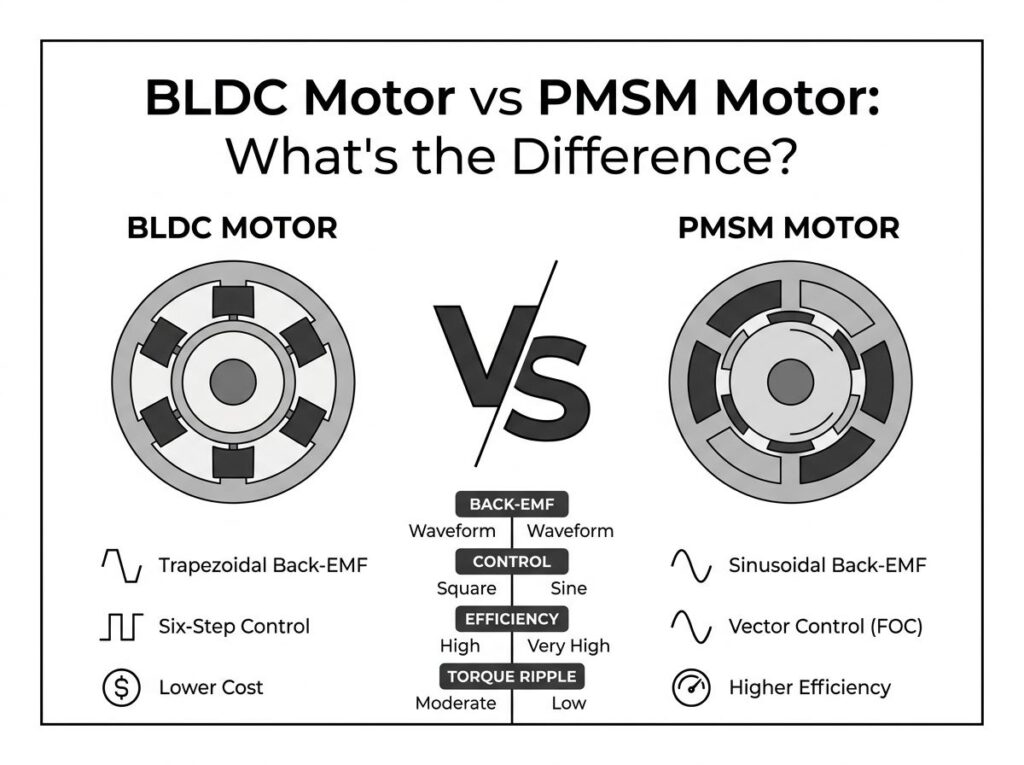
BLDC モーターと PMSM モーターは両方とも永久磁石を使用します, ただし、BLDC モーターは通常、台形逆起電力と 6 ステップ整流を使用します。, 一方、PMSM モーターは正弦波逆起電力と正弦波制御を使用します。. PMSM モーターは通常、よりスムーズな動作と高い効率を実現します。, 一方、BLDC モーターは制御が簡単でシステムコストが低くなります。.
実際の応用例では, BLDC モーターは、優れたパフォーマンスを必要とするコスト重視のシステムによく選ばれます。, 一方、PMSM モーターは最大の効率が要求される高級アプリケーションに好まれます。, スムーズなトルク伝達, そして正確なコントロール.
BLDCモーターとは?
ブラシレスDCモーター (BLDCモーター) 機械式ブラシを電子整流に置き換える永久磁石モーターです。. 物理的なブラシ接触を使用する代わりに, 電子コントローラーがローター位置フィードバックに基づいてステーター巻線に通電します.
BLDCモーターは台形の逆起電力が特徴です (逆起電力) 波形を生成し、通常は 6 ステップの整流制御戦略を使用して動作します。.
BLDCモーターの基本構造
- 永久磁石ローター
- 巻かれたステータコイル
- 電子コントローラー
- ホール効果位置センサー (オプション)
- 電力インバータ回路
BLDC モーターの仕組み
コントローラーは固定子巻線に順次通電して回転磁界を生成します。. ローターに取り付けられた永久磁石はこの磁場に従います。, 回転運動を生み出す.
ローターの位置情報は通常、ホール センサーから取得されるか、センサーレス制御アルゴリズムを使用して推定されます。.
BLDCモーターの利点
- 高効率
- コンパクトなサイズ
- 優れた電力密度
- メンテナンスの必要性が低い
- ブラシの磨耗なし
- 優れた速度制御能力
- コントローラーのコストを削減
典型的な BLDC アプリケーション
- 電動芝刈り機
- コードレス電動工具
- HVAC 送風機
- 産業オートメーション
- 医療機器
- AGV と AMR
- セキュリティ回転式改札口
- 電動自転車
コストとパフォーマンスのバランスが取れているため、, BLDC モーターは、最新の OEM 機器で最も人気のあるモーター技術の 1 つとなっています。.
PMSMモーターとは?
永久磁石同期モーター (PMSM) これも永久磁石モーターです, ただし、BLDCモーターとは異なります, 正弦波逆起電力波形と正弦波電流励起で動作するように設計されています。.
ローターはステーターの回転磁界に同期して回転します, 滑りをなくし高効率な運転を可能にします。.
PMSMモーターの基本構造
- 永久磁石ローター
- 分布固定子巻線
- 高性能インバーター
- 位置エンコーダまたはレゾルバ
- 高度なモーターコントローラー
PMSM モーターの仕組み
コントローラーはローターの永久磁場と相互作用する正弦波電流波形を生成します。. モーターはステーターが生成する回転磁界と正確に同期して動作します。.
ほとんどの PMSM システムはフィールド指向制御を使用します (FOC), これにより、スムーズなトルク生成と、速度と位置の正確な制御が可能になります。.
PMSMモーターの利点
- 非常に高い効率
- 優れたトルク密度
- スムーズなトルク出力
- 低い音響ノイズ
- 低い振動レベル
- 優れた動的性能
- 高速性能
典型的な PMSM アプリケーション
- 電気自動車
- 産業用サーボシステム
- ロボット工学
- CNC機械
- 航空宇宙システム
- 精密自動化装置
- ハイエンド HVAC システム
PMSM テクノロジーは、効率性を高める多くの高性能アプリケーションを支配しています。, 精度, スムーズな動作が重要な要件です.
BLDC 対 PMSM: 主な違い
どちらのテクノロジーも永久磁石モーターファミリーに属していますが、, それらの電磁的動作と制御哲学は大きく異なります.
| 特徴 | BLDCモーター | PMSMモーター |
|---|---|---|
| 逆起電力 | 台形 | 正弦波 |
| 電流波形 | 長方形 | 正弦波 |
| 制御方法 | 6 ステップ整流 | FOC制御 |
| 効率 | 高い | 非常に高い |
| 騒音レベル | 中くらい | 低い |
| トルクリップル | より高い | より低い |
| 動的応答 | 良い | 素晴らしい |
| コントローラーの複雑さ | より低い | より高い |
| システムコスト | より低い | より高い |
| 代表的な用途 | 芝生設備, 空調設備 | EV, ロボット工学 |
最も重要な技術的特徴は、モーターが電磁トルクをどのように生成して利用するかにあります。.
逆起電力の比較
逆起電力 (逆起電力) ローターがステーターの磁界中を移動するときにモーターによって生成される電圧です。. 逆起電力の波形形状はモーター制御戦略に直接影響します, 効率, トルクの滑らかさ, そして全体的なパフォーマンス.
BLDC モーター逆起電力
BLDC モーターは、台形の逆起電力波形を生成するように設計されています。.
トルク発生を最大化するには, コントローラーは台形電圧波形と同期した方形電流パルスを印加します。.
このアプローチにより、コントローラーの設計が簡素化され、システムコストが削減されます。, ただし、相転流中にトルクリップルも発生します。.
BLDC 逆起電力の特性
- 台形波形
- よりシンプルな制御アルゴリズム
- 処理要件が低い
- 高いトルクリップル
- 騒音が大きくなる
PMSM モーター逆起電力
PMSM モーターは正弦波の逆起電力波形を生成します.
コントローラーは生成された波形に一致する正弦波電流を供給します。, その結果、電気サイクル全体を通じて継続的なトルクが生成されます。.
これによりトルクリップルが大幅に低減され、モーター全体の滑らかさが向上します。.
PMSM 逆起電力の特性
- 正弦波波形
- よりスムーズなトルク発生
- 振動の低減
- より高い効率
- 優れたダイナミックコントロール
逆起電力が重要な理由
逆起電力特性の影響:
- モーター効率
- トルクリップル
- ノイズの発生
- コントローラーの複雑さ
- 電力密度
- アプリケーションの適合性
ロボット工学などの高性能アプリケーション向け, サーボシステム, そして電気自動車, 正弦波逆起電力は大きな利点をもたらします.
制御方式の比較
制御方法は、BLDC モーターと PMSM モーターの最も大きな違いの 1 つです。.
BLDC モーター制御: 6 ステップ整流
BLDC モーターは通常、6 ステップの整流を使用します。, 台形整流とも呼ばれます.
コントローラーは一度に 2 つの相に通電し、3 番目の相はフローティングのままにします。. 毎 60 電気学位, コントローラは次の整流状態に切り替わります.
6段階制御のメリット
- シンプルな実装
- プロセッサ要件が低い
- コントローラーコストの削減
- 簡単なシステム統合
6 段階制御の限界
- 高いトルクリップル
- 騒音の増加
- 低速時の滑らかさの低下
- 精度が低い
PMSMモーター制御: フィールド指向制御 (FOC)
PMSM モーターは通常、フィールド指向制御を採用しています (FOC), 現在使用されている最も高度なモーター制御技術の 1 つ.
FOC はステータ電流をトルク生成成分と磁束生成成分に分離します, さまざまな負荷条件下でのモーター動作の正確な制御が可能.
FOCのメリット
- 最大効率
- スムーズなトルク発生
- 優れた低速制御
- 優れた動的応答性
- 振動の低減
- 高い位置決め精度
FOCの限界
- より高価なコントローラー
- ソフトウェアの複雑さの増加
- より大きな処理要件
半導体技術が進化し続ける中、, コスト重視のアプリケーションでも FOC が利用しやすくなっています.
パートに進む 2: 効率の比較, トルク比較, 騒音・振動比較, コスト分析, EVアプリケーション, ロボット工学の応用, 芝刈り機の用途, OEM 選択ガイド, グリーンスカイ パワー ソリューションズ, よくある質問, 内部リンククラスタ, および参考文献.
BLDC と PMSM の効率比較
効率は電気モーターを選択する際の最も重要な性能指標の 1 つです. 効率の向上はエネルギー消費の削減に直接つながります, 発熱の減少, 信頼性の向上, 機器のライフサイクル全体を通じて運用コストを削減します.
BLDC モーターと PMSM モーターはどちらも、従来のブラシ付き DC モーターや誘導モーターよりも大幅に高い効率を達成します。. しかし, PMSM テクノロジーは、正弦波磁場と高度な制御戦略により、一般に最高の効率レベルを実現します。.
一般的な効率範囲
| モーターの種類 | 標準的な効率 | ピーク効率 |
|---|---|---|
| ブラシ付き DC モーター | 70–85% | 88% |
| 誘導電動機 | 80–93% | 95% |
| BLDCモーター | 85–95% | 96% |
| PMSMモーター | 90–97% | 98%+ |
PMSM モーターの効率が高い理由
- 正弦波磁場が高調波損失を低減
- フィールド指向制御により電流使用率を最適化
- トルクリップルの低減により機械損失が低減されます
- 固定子電流高調波の低減
- 高速動作特性の向上
BLDC の効率が十分な場合
芝刈り機など多くのOEM製品に対応, パンプス, ファン, セキュリティゲート, および産業オートメーション システム, BLDC の効率はすでに十分に高いため、PMSM の限界利益ではコントローラの追加コストが正当化されない可能性があります。.
これが、PMSM の技術的利点にもかかわらず、BLDC モーターが数多くの商用および産業用アプリケーションを支配し続ける理由の 1 つです。.
BLDC と PMSM のトルク比較
トルク生成はモーターの加速に直接影響します, 負荷処理能力, 低速性能, および全体的な機械の生産性.
電気モーターシステムの場合, トルクは基本的に次のように定義されます:
どこ:
- t = トルク (N・m)
- r = ピボットからの距離 (メートル)
- ふ = 加えられる力 (N)
- 私 = 力の角度
例えば:
もし力が 6 N は半径で適用されます。 3 m、角度90°, 結果として生じるトルクは次のようになります:
t = 3 × 6 ×罪(90°) = 18 N・m
モーター用途では, 電磁トルクはステーターの磁界とローターの永久磁石の間の相互作用によって生成されます。.
BLDCトルク特性
- 高い始動トルク
- 強力な加速能力
- 高いトルクリップル
- 断続的な負荷に適しています
- 優れたコスト対トルク比
PMSMトルク特性
- よりスムーズなトルク出力
- トルクリップルの低減
- より高い連続トルク密度
- 優れた低速コントロール性
- 優れたサーボ性能
トルク密度比較
| 要素 | BLDC | PMSM |
|---|---|---|
| 始動トルク | 素晴らしい | 素晴らしい |
| 連続トルク | 高い | 非常に高い |
| トルクリップル | より高い | より低い |
| 低速精度 | 良い | 素晴らしい |
| サーボ性能 | 適度 | 素晴らしい |
高精度モーションシステム向け, PMSM モーターは、よりスムーズなトルク生成と優れた制御特性により、一般に BLDC モーターよりも優れた性能を発揮します。.
騒音・振動比較
騒音と振動は、現代の機器設計においてますます重要な要素となっています. 音響ノイズの低減によりユーザーエクスペリエンスが向上, 振動が軽減されると同時に、コンポーネントの寿命と位置決め精度が向上します。.
BLDCモーターの騒音特性
台形整流と高いトルクリップルのため, BLDC モーターは通常、PMSM モーターよりも多くの可聴ノイズを生成します。.
一般的なノイズ源には次のものがあります。:
- 転流切り替えイベント
- トルクリップル
- 機械的共振
- ベアリングノイズ
PMSMモーターの騒音特性
正弦波電流励起とFOC制御により、急激なトルク遷移を最小限に抑えます。, よりスムーズな操作が可能になります.
利点としては次のものが挙げられます。:
- 音響放射の低減
- 振動の低減
- 精度の向上
- ユーザーの快適性の向上
騒音比較表
| パフォーマンスファクター | BLDC | PMSM |
|---|---|---|
| 音響ノイズ | 中くらい | 低い |
| トルクリップル | より高い | より低い |
| 振動レベル | 適度 | 最小限 |
| 精密用途 | 良い | 素晴らしい |
BLDC と PMSM のコスト比較
OEM バイヤーや機器メーカーにとって、多くの場合、コストが決定要因になります。.
PMSM モーターは優れたパフォーマンスを提供しますが、, 彼らは通常必要とする:
- より洗練されたコントローラー
- より高いプロセッサー能力
- 高度なソフトウェアアルゴリズム
- 追加のセンシングハードウェア
システム総コストの比較
| コスト要因 | BLDC | PMSM |
|---|---|---|
| モーターのコスト | より低い | より高い |
| コントローラーのコスト | より低い | より高い |
| ソフトウェアの複雑さ | より低い | より高い |
| 開発費 | より低い | より高い |
| 運営コスト | 低い | 非常に低い |
コスト重視の製品向け, BLDC は多くの場合、パフォーマンスと手頃な価格の間で最適なバランスを実現します。.
どのモーターが電気自動車に適しているか?
EV 業界は永久磁石モーター技術の最大の消費者の 1 つとなっています.
現代の電気自動車が優先される:
- 最大効率
- 航続距離の延長
- スムーズな加速
- 高速性能
- 優れた回生ブレーキ
こうした要件があるため、, PMSMモーターは乗用EV用の有力な選択肢となっている.
大手自動車メーカーは PMSM テクノロジーを頻繁に使用しています。:
- より高い効率
- 優れたトルク密度
- NVH パフォーマンスの向上
- 強化された範囲
EVの勝者: PMSM
どのモーターがロボット工学に適しているか?
ロボットシステムが必要とするのは、:
- 正確な位置制御
- スムーズな動き
- 低速安定性
- 素早い応答
- 高い再現性
これらの要件は、サーボ制御システムと組み合わせた PMSM テクノロジーを強く支持します。.
産業用ロボット, 協働ロボット, CNC システムでは、優れた動的応答と位置決め精度により、PMSM サーボ モーターが一般的に使用されます。.
ロボット工学部門の優勝者: PMSM
芝刈り機に適したモーターはどれですか?
芝刈り機のアプリケーションには異なる優先順位が存在します:
- 高トルク出力
- 屋外耐久性
- コスト競争力
- バッテリー効率
- シンプルな電子制御
歩行型電動芝刈り機およびロボット芝刈り機用, 多くの場合、BLDC モーターが推奨されるソリューションです.
メリットとしては以下が挙げられます:
- システムコストの削減
- 高い始動トルク
- 優れたバッテリー性能
- 簡素化されたコントローラーアーキテクチャ
- 強い信頼性
芝刈り機の優勝者: BLDC
BLDC と PMSM のどちらを選択するか
最適なモーターはアプリケーションの優先順位によって決まります.
| 必要な場合… | 選ぶ |
|---|---|
| 最低コスト | BLDC |
| 最大効率 | PMSM |
| 精密モーションコントロール | PMSM |
| 産業オートメーション | どちらか |
| ロボット工学 | PMSM |
| 電気自動車 | PMSM |
| 芝生設備 | BLDC |
| HVAC システム | BLDC または PMSM |
OEMバイヤーがGreensky Powerを選ぶ理由
OEM機器メーカー向け, 適切なモーターサプライヤーを選択することは、モーターテクノロジー自体を選択することと同じくらい重要です.
Greensky Power は、世界中の OEM 顧客向けにカスタマイズされたモーター ソリューションを専門としています。.
コア製品ポートフォリオ
OEMの利点
- カスタムモーターの開発
- コントローラー統合のサポート
- 遊星ギアボックスのマッチング
- ラピッドプロトタイピング
- 低MOQオプション
- 世界的な輸出経験
サービスを提供する主要産業
- ロボット工学
- 芝刈り機
- 空調設備
- 産業オートメーション
- 医療機器
- セキュリティシステム
FAQ-BLDC モーターと PMSM モーターの比較
PMSM は BLDC よりも優れていますか?
必ずしもではありません. PMSM はより高い効率とよりスムーズな動作を実現します, BLDC はシステムコストを削減し、制御を簡素化します。. 最適な選択はアプリケーションの要件によって異なります.
PMSMモーターが電気自動車に使用される理由?
PMSM モーターは優れた効率を提供します, トルク密度, 滑らかさ, そして射程性能, 最新のEVプラットフォームに最適です.
BLDC モーターは FOC 制御を使用できますか?
はい. 最新の BLDC モーターの多くは、FOC アルゴリズムを使用して動作できます。, トルクリップルの低減と効率の向上.
どのモーターがより効率的ですか, BLDC または PMSM?
PMSM モーターは一般に、正弦波逆起電力と高度な制御戦略により、より高い効率を実現します。.
芝刈り機に適したモーターはどれですか?
BLDC モーターは、効率のバランスが優れているため、多くの場合、推奨されるソリューションです。, トルク, 信頼性, そしてコスト.
関連リソース
参照
- https://www.ieee.org
- https://ieeexplore.ieee.org
- https://www.日本電産.com
- https://www.siemens.com
- https://グローバル.abb
- https://www.weg.net
- https://www.energy.gov
- https://www.iea.org
- https://www.iec.ch
- https://www.mathworks.com
- https://www.microchip.com
- https://www.ti.com