
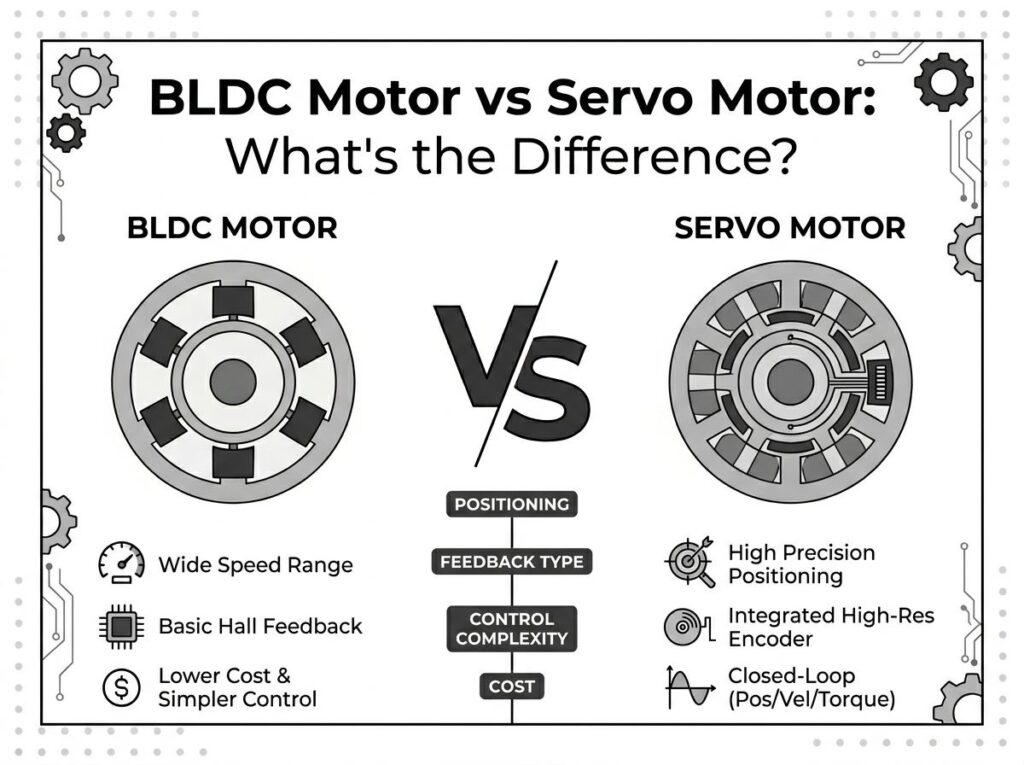
Motore BLDC e servomotore: Qual è la differenza??
La scelta della giusta tecnologia del motore è una delle decisioni più importanti nella progettazione delle apparecchiature moderne. Sia che si sviluppi un braccio robotico, un veicolo a guida automatizzata (AGV), un trasportatore industriale, un tosaerba, o una macchina di produzione di precisione, gli ingegneri devono valutare attentamente i requisiti prestazionali, complessità del controllo, precisione, efficienza, e il costo totale del sistema.
Tra le tecnologie più comunemente confrontate ci sono Brushless DC (BLDC) motori e servomotori. Mentre entrambi sono ampiamente utilizzati nelle applicazioni di controllo del movimento, non sono equivalenti diretti. Infatti, uno dei più grandi malintesi nel settore automobilistico è presumere che un servomotore sia semplicemente un altro tipo di motore.
La realtà è che un motore BLDC è una tecnologia motoristica, mentre un servomotore è un sistema di controllo del movimento completo che combina un motore, dispositivo di feedback, e controller per ottenere un posizionamento altamente preciso e prestazioni dinamiche.
Questa guida fornisce un confronto tecnico dettagliato tra motori BLDC e servomotori, aiutare i produttori OEM, ingegneri, e i team di procurement determinano quale soluzione si adatta meglio ai requisiti della loro applicazione.
Motore BLDC e servomotore
I motori BLDC e i servomotori sono entrambi utilizzati per un controllo preciso del movimento, ma un motore BLDC è un tipo di motore, mentre un servomotore è un sistema di controllo del movimento completo che include un motore, codificatore, e controllore. I servomotori forniscono una maggiore precisione di posizionamento e risposta dinamica, mentre i motori BLDC offrono costi inferiori e un'implementazione più semplice.
Generalmente, I servosistemi sono preferiti per la robotica, Attrezzatura CNC, e automazione di precisione, mentre i motori BLDC sono spesso selezionati per i tosaerba, Sistemi HVAC, pompe, azionamenti industriali, e prodotti OEM sensibili ai costi.
Cos'è un motore BLDC?
Un motore CC senza spazzole (Motore BLDC) è un motore a commutazione elettronica che elimina le spazzole e il commutatore utilizzati nei tradizionali motori DC. Invece della commutazione meccanica, i controller elettronici energizzano gli avvolgimenti dello statore in base alla posizione del rotore.
I motori BLDC sono diventati una delle tecnologie motoristiche in più rapida crescita grazie alla loro elevata efficienza, dimensione compatta, lunga durata, ed eccellente densità di potenza.
Struttura del motore BLDC
Un tipico motore BLDC è costituito da:
- Rotore a magnete permanente
- Nucleo dello statore laminato
- Avvolgimenti statorici multifase
- Sensori ad effetto Hall (opzionale)
- Controllore elettronico
- Stadio inverter di potenza
A differenza dei motori spazzolati, non esiste alcun contatto fisico tra i componenti elettrici fissi e rotanti.
Commutazione elettronica
L'innovazione chiave alla base dei motori BLDC è la commutazione elettronica.
Il controller del motore monitora continuamente la posizione del rotore ed eccita gli avvolgimenti dello statore in una sequenza che genera un campo magnetico rotante. Il rotore segue questo campo e produce un movimento rotatorio.
La commutazione elettronica offre numerosi vantaggi:
- Nessuna usura delle spazzole
- Minori esigenze di manutenzione
- Rumore elettrico ridotto
- Maggiore efficienza
- Vita operativa più lunga
Sensori Hall
Molti motori BLDC utilizzano sensori ad effetto Hall per determinare la posizione del rotore.
Questi sensori rilevano le variazioni del campo magnetico mentre il rotore ruota e forniscono un feedback di posizione al controller.
I sensori Hall si abilitano:
- Prestazioni di avvio affidabili
- Tempi di commutazione precisi
- Controllo migliorato a bassa velocità
- Produzione di coppia migliorata
I moderni sistemi BLDC senza sensori possono stimare la posizione del rotore attraverso il rilevamento del back-EMF, eliminando la necessità di sensori Hall in alcune applicazioni.
Controller motore BLDC
Il controller funge da cervello del sistema motorio.
Le funzioni includono:
- Regolazione della velocità
- Controllo corrente
- Gestione della coppia
- Funzioni di protezione
- Generazione PWM
- Interfacce di comunicazione
La semplicità del controllo BLDC è uno dei motivi per cui questi motori sono ampiamente utilizzati in prodotti commerciali che richiedono un equilibrio tra prestazioni e convenienza.
Applicazioni BLDC comuni
- Tosaerba elettrici
- Rasaerba robotizzati
- Ventilatori HVAC
- Pompe dell'acqua
- Ventilatori industriali
- AGV
- Sistemi di tornelli
- Biciclette elettriche
- Dispositivi medici
- Elettrodomestici di consumo
Cos'è un servomotore?
Uno dei concetti più fraintesi nel controllo del movimento è la definizione di servomotore.
Molte persone credono che un servomotore sia un tipo di motore specifico. In realtà, un servosistema è una soluzione completa di controllo del movimento a circuito chiuso.
Architettura del servosistema
Un servosistema è costituito da:
Servosistema =
Il motore
+
Codificatore
+
Controllore
Il motore stesso potrebbe esserlo:
- Motore PMSM
- Motore BLDC
- Motore sincrono CA
- Motore ad azionamento diretto
La caratteristica distintiva non è la tecnologia del motore ma l'uso del feedback continuo e del controllo ad anello chiuso.
Componenti principali di un servosistema
1. Il motore
Il motore genera movimento rotatorio e coppia.
I moderni servosistemi industriali utilizzano più comunemente motori PMSM per le loro caratteristiche di coppia fluida e l'elevata efficienza.
2. Codificatore
L'encoder misura continuamente:
- Posizione
- Velocità
- Direzione
- Spostamento angolare
Il feedback dell'encoder consente al controller di apportare correzioni in tempo reale.
3. Servoazionamento
Il servoazionamento elabora i segnali di feedback e regola la corrente, voltaggio, e cambiare modello per ottenere profili di movimento target.
L'unità garantisce:
- Posizionamento preciso
- Controllo stabile della velocità
- Risposta dinamica della coppia
- Accelerazione e decelerazione precise
Perché i servosistemi sono diversi
A differenza dei sistemi motore BLDC standard che possono funzionare ad anello aperto o semi-chiuso, i servosistemi confrontano costantemente il movimento comandato con il movimento reale.
Se si verifica un errore, il controllore compensa immediatamente.
Questo meccanismo di feedback consente:
- Posizionamento a livello di micron
- Risposta dinamica ad alta velocità
- Ripetibilità eccezionale
- Controllo preciso della traiettoria
Applicazioni tipiche dei servo
- Robot industriali
- Centri di lavoro CNC
- Apparecchiature per semiconduttori
- Macchine per l'imballaggio
- Sistemi di assemblaggio automatizzato
- Robot medici
- Attrezzature per ispezioni di precisione
- Sistemi di movimento aerospaziale
BLDC e servomotore: Differenze chiave
Sebbene i motori BLDC e i servosistemi possano talvolta utilizzare tecnologie motoristiche simili internamente, le funzioni previste e i livelli di prestazione differiscono in modo significativo.
| Caratteristica | Motore BLDC | Servomotore |
|---|---|---|
| Feedback sulla posizione | Opzionale | Necessario |
| Precisione | Medio | Molto alto |
| Controllo di velocità | Bene | Eccellente |
| Controllo della coppia | Bene | Eccellente |
| Costo | Inferiore | Più alto |
| Complessità | Inferiore | Più alto |
| Metodo di controllo | Ciclo aperto / Circuito semichiuso | Ciclo chiuso |
| Codificatore | Opzionale | Obbligatorio |
| Applicazione tipica | Tosaerba, Pompe, HVAC | Robotica, CNC, Automazione di precisione |
La distinzione più importante è che i servosistemi danno priorità alla precisione e al controllo del feedback, mentre i sistemi BLDC danno priorità all’efficienza, semplicità, ed efficacia in termini di costi.
Confronto dei principi di funzionamento
Comprendere i principi di funzionamento dei motori BLDC e dei servosistemi aiuta a chiarire perché le loro caratteristiche prestazionali differiscono.
Come funzionano i motori BLDC
I motori BLDC si basano sulla commutazione elettronica per sostituire le spazzole meccaniche.
Il controller eccita gli avvolgimenti dello statore in una sequenza predefinita basata sulle informazioni sulla posizione del rotore.
Principali caratteristiche operative:
- Commutazione elettronica
- Feedback del sensore Hall (opzionale)
- Controllo della velocità PWM
- Funzionamento ad anello aperto o semichiuso
La maggior parte delle applicazioni BLDC si concentra sul mantenimento della velocità piuttosto che sul raggiungimento di un controllo preciso della posizione.
Come funzionano i servosistemi
I servosistemi monitorano continuamente la posizione effettiva del motore e la confrontano con la posizione comandata.
Qualsiasi deviazione attiva immediatamente un'azione correttiva da parte del controllore.
Questa architettura a circuito chiuso consente:
- Posizionamento ad alta precisione
- Tracciamento accurato della traiettoria
- Risposta rapida ai cambiamenti di carico
- Controllo di coppia superiore
L'encoder funge da dispositivo di feedback critico che rende possibile il servocontrollo.
Ciclo aperto e ciclo chiuso
| Tipo di controllo | BLDC | Servo |
|---|---|---|
| Operazione ad anello aperto | Comune | NO |
| Funzionamento a circuito chiuso | Opzionale | Standard |
| Dipendenza dal feedback | Basso | Alto |
| Correzione della posizione | Limitato | Continuo |
Confronto della precisione della posizione
Per gli ingegneri che valutano i sistemi di controllo del movimento, la precisione della posizione è spesso il fattore più importante.
È qui che i servosistemi dimostrano il loro più grande vantaggio.
Precisione della posizione BLDC
I motori BLDC standard sono generalmente progettati per il controllo della velocità e la generazione di coppia piuttosto che per il posizionamento di precisione.
Senza feedback dell'encoder, la precisione posizionale è intrinsecamente limitata.
Le caratteristiche tipiche del BLDC includono:
- Capacità di posizionamento moderata
- Buona regolazione della velocità
- Adatto per applicazioni a rotazione continua
- Precisione di posizionamento limitata
Precisione della posizione del servo
I servosistemi sono progettati specificatamente per un posizionamento accurato.
Gli encoder ad alta risoluzione consentono al controller di monitorare continuamente il movimento del rotore e applicare correzioni in tempo reale.
I tipici vantaggi del servo includono:
- Precisione di posizionamento inferiore al grado
- Eccellente ripetibilità
- Controllo preciso della traiettoria
- Risposta ad alta velocità
- Errore di posizionamento minimo
Questa capacità spiega perché la robotica, Macchine CNC, apparecchiature per semiconduttori, e i sistemi di produzione automatizzati si affidano in gran parte alla servotecnologia.
Continua alla parte 2: Confronto di coppia, Confronto del controllo della velocità, Confronto di efficienza, Confronto dei costi, Applicazioni della robotica, AGV & Applicazioni AMR, Applicazioni per tosaerba, Guida alla scelta dell'automazione industriale, Perché gli acquirenti OEM scelgono Greensky Power, Domande frequenti, Strategia di collegamento interno, e riferimenti.
Confronto di coppia
La coppia è uno dei parametri più critici quando si valutano i sistemi di controllo del movimento. Determina la capacità di un motore di accelerare i carichi, superare la resistenza, mantenere la posizione, ed eseguire movimenti dinamici in diverse condizioni operative.
Nei sistemi meccanici, la coppia può essere espressa come:
τ = rFsen(io)
Dove:
- T = Coppia (N·m)
- R = Distanza dal punto cardine (M)
- F = Forza applicata (N)
- io = Angolo tra forza e braccio di leva
Per esempio:
t = (3)(6)peccato(90°) = 18 N·m
Solo la componente di forza perpendicolare al braccio di leva contribuisce alla generazione della coppia.
Coppia continua
La coppia continua rappresenta la quantità di coppia che un motore può produrre indefinitamente senza surriscaldarsi.
| Caratteristica | Motore BLDC | Servomotore |
|---|---|---|
| Densità di coppia continua | Alto | Molto alto |
| Gestione termica | Bene | Eccellente |
| Stabilità a lungo termine | Bene | Eccellente |
Coppia di picco
La coppia di picco si riferisce alla coppia massima di breve durata che un motore può fornire.
I servomotori sono progettati specificatamente per fornire una coppia di picco significativamente più elevata durante l'accelerazione, posizionamento, e improvvisi cambiamenti di carico.
Ciò è particolarmente importante nella robotica, Attrezzatura CNC, e sistemi di assemblaggio automatizzati.
Coppia di stallo
La coppia di stallo è la coppia prodotta quando l'albero del motore non ruota.
I servosistemi generalmente offrono una gestione superiore della coppia di stallo poiché il feedback dell'encoder consente una regolazione precisa della corrente mantenendo la posizione dell'albero.
Riepilogo delle prestazioni della coppia
| Fattore di coppia | BLDC | Servo |
|---|---|---|
| Coppia continua | Alto | Molto alto |
| Coppia di picco | Bene | Eccellente |
| Controllo della coppia di stallo | Limitato | Eccellente |
| Precisione della coppia | Moderare | Molto alto |
| Ondulazione della coppia | Più alto | Inferiore |
Per applicazioni esigenti di controllo del movimento, I servosistemi in genere superano i motori BLDC standard nel controllo della coppia e nella risposta dinamica.
Confronto del controllo della velocità
La regolazione della velocità è un'altra importante differenza tra i motori BLDC e i servosistemi.
Controllo della velocità BLDC
I motori BLDC utilizzano tipicamente:
- Controllo a circuito aperto
- Controllo a circuito semichiuso
- Regolazione della velocità PWM
- Commutazione del sensore Hall
Le prestazioni del controllo della velocità sono generalmente sufficienti per le applicazioni in cui non è richiesto il posizionamento esatto.
Gli esempi includono:
- Tosaerba
- Tifosi
- Pompe
- Sistemi HVAC
- Trasportatori
Servocontrollo della velocità
I servosistemi utilizzano il controllo completo a circuito chiuso.
Il controller confronta continuamente:
- Velocità comandata
- Velocità effettiva
- Condizioni di carico
- Feedback sulla posizione
Le correzioni in tempo reale consentono una regolazione della velocità altamente stabile anche in caso di carichi che cambiano rapidamente.
Tabella comparativa del controllo della velocità
| Fattore | BLDC | Servo |
|---|---|---|
| Stabilità della velocità | Bene | Eccellente |
| Risposta dinamica | Bene | Eccellente |
| Compensazione del carico | Limitato | Automatico |
| Controllo a bassa velocità | Moderare | Eccellente |
Confronto tra BLDC e servoefficienza
L’efficienza influisce direttamente sui costi operativi, durata della batteria, prestazione termica, e l'affidabilità complessiva dell'apparecchiatura.
Entrambe le tecnologie offrono un'efficienza significativamente più elevata rispetto ai motori DC con spazzole.
Efficienza del motore BLDC
- Tipicamente 85-95%
- Basse perdite del rotore
- Ottimo utilizzo della batteria
- Alta densità di potenza
Efficienza del servomotore
I moderni servosistemi utilizzano spesso motori PMSM internamente, abilitazione:
- 90–98% di efficienza
- Controllo della corrente ottimizzato
- Perdite armoniche ridotte
- Utilizzo energetico superiore
Tabella comparativa dell'efficienza
| Tipo di motore | Efficienza tipica |
|---|---|
| Motore DC spazzolato | 70–85% |
| Motore a induzione | 80–93% |
| Motore BLDC | 85–95% |
| Sistema di servomotori | 90–98% |
Per la maggior parte delle apparecchiature commerciali, L’efficienza del BLDC è già eccellente. Tuttavia, i servosistemi mantengono un vantaggio nelle applicazioni di precisione che richiedono le massime prestazioni.
Confronto dei costi tra BLDC e servo
Il costo è spesso il fattore decisivo per gli acquirenti OEM.
Sebbene i servosistemi forniscano prestazioni superiori, richiedono componenti hardware e software aggiuntivi.
| Voce di costo | BLDC | Servo |
|---|---|---|
| Il motore | Inferiore | Più alto |
| Controllore | Inferiore | Più alto |
| Codificatore | Opzionale | Necessario |
| Elettronica di guida | Più semplice | Più complesso |
| Costo totale del sistema | Inferiore | Più alto |
Per applicazioni in cui non è necessaria una precisione ultraelevata, I motori BLDC spesso offrono il miglior ritorno sull’investimento.
Che è meglio per la robotica?
La robotica è uno dei mercati di maggior valore per le tecnologie di controllo del movimento.
La maggior parte dei sistemi robotici richiede:
- Posizionamento preciso
- Controllo fluido della traiettoria
- Accelerazione rapida
- Alta ripetibilità
- Feedback a circuito chiuso
A causa di questi requisiti, i servosistemi dominano la robotica industriale.
Perché i servomotori vincono nella robotica
- Feedback dell'encoder
- Capacità di posizionamento a livello di micron
- Risposta dinamica superiore
- Controllo della traiettoria ad alta precisione
- Eccellente ripetibilità
Vincitore per la Robotica: Servomotore
Il che è meglio per AGV e AMR?
Veicoli a guida automatizzata (AGV) e robot mobili autonomi (AMR) occupano una via di mezzo unica.
Quando è preferibile il BLDC
- AGV sensibili ai costi
- Trasporto in magazzino
- Sistemi di navigazione di base
- Requisiti di lunga durata della batteria
Quando è preferibile il servo
- Navigazione ad alta velocità
- Aggancio di precisione
- Robot collaborativi
- Sistemi autonomi avanzati
Molti AGV moderni utilizzano con successo motori di azionamento BLDC con feedback dell'encoder, creando una soluzione ibrida tra le tradizionali architetture BLDC e servo.
Vincitore per gli AGV: Dipende dai requisiti di precisione della navigazione.
Che è meglio per i tosaerba?
I tosaerba richiedono:
- Elevata coppia erogata
- Durabilità all'aperto
- Efficienza della batteria
- Competitività di costo
- Funzionamento affidabile
A differenza della robotica, i tosaerba raramente richiedono una precisione di posizionamento inferiore al grado.
Invece, i produttori danno priorità all’efficienza, affidabilità, e convenienza.
Perché i motori BLDC sono ideali per i tosaerba
- Costo del sistema inferiore
- Eccellente efficienza
- Coppia di spunto elevata
- Architettura elettronica semplice
- Affidabilità esterna comprovata
Questo è uno dei motivi per cui i moderni rasaerba a batteria e i robot rasaerba si affidano sempre più alla tecnologia BLDC.
Vincitore per Tosaerba: Motore BLDC
Che è meglio per l’automazione industriale?
L’automazione industriale comprende un’ampia gamma di tipologie di apparecchiature.
| Applicazione | Soluzione consigliata |
|---|---|
| Trasportatori | BLDC |
| Macchine per l'imballaggio | Servo |
| Tornelli | BLDC |
| Attrezzatura CNC | Servo |
| Ventilatori industriali | BLDC |
| Sistemi Pick-and-Place | Servo |
Generalmente, la scelta dipende dal fatto che l'applicazione dia priorità alla precisione o all'efficienza in termini di costi.
Come scegliere tra BLDC e servomotori
La seguente guida alla selezione può semplificare le decisioni sulla tecnologia dei motori.
| Applicazione | La scelta migliore |
|---|---|
| Robotica | Servo |
| CNC | Servo |
| Taglia erba | BLDC |
| HVAC | BLDC |
| Pompa | BLDC |
| Tornello | BLDC |
| AGV | Dipende |
Scegli un servosistema quando sei preciso, precisione di posizionamento, e la risposta dinamica sono fondamentali.
Scegli un motore BLDC quando l'efficienza, affidabilità, semplicità, e la riduzione dei costi sono le priorità principali.
Perché gli acquirenti OEM scelgono Greensky Power
Greensky Power è specializzata in soluzioni di movimento personalizzate per i produttori OEM di tutto il mondo.
Portafoglio di prodotti principali
- Motori BLDC
- Motori a marcia
- Motoriduttori epicicloidali
- Motoriduttori a vite senza fine
- Soluzioni motoristiche personalizzate
Capacità ingegneristiche OEM
- Integrazione dell'encoder
- Corrispondenza del controller
- Progettazione del riduttore epicicloidale
- Prototipazione rapida
- Ottimizzazione personalizzata delle prestazioni
Principali industrie servite
- Attrezzatura da prato
- Sistemi HVAC
- Automazione industriale
- Robotica
- Dispositivi medici
- Sistemi di sicurezza
Domande frequenti
Un servomotore è un motore BLDC?
Non necessariamente. Un servomotore è un sistema di controllo completo a circuito chiuso. Molti servomotori moderni utilizzano internamente la tecnologia dei motori PMSM o BLDC.
Quale motore è migliore per la robotica?
I servomotori sono generalmente preferiti perché forniscono una precisione di posizionamento superiore, risposta dinamica, e ripetibilità.
Quale motore è più economico?
I motori BLDC hanno in genere costi inferiori, costi del controllore, e i costi complessivi del sistema.
I motori BLDC necessitano di encoder?
NO. Molti motori BLDC funzionano con successo utilizzando sensori Hall o metodi di controllo sensorless. Gli encoder sono opzionali a meno che non sia richiesto un posizionamento preciso.
Un motore BLDC può essere utilizzato come servomotore?
SÌ. In combinazione con un encoder e un controllore ad anello chiuso, un motore BLDC può funzionare come parte di un servosistema.
Articoli correlati
Riferimenti
- https://www.ieee.org
- https://ieeexplore.ieee.org
- https://www.energia.gov
- https://www.iea.org
- https://www.iec.ch
- https://www.mathworks.com
- https://www.microchip.com
- https://www.ti.com
- https://www.nidec.com
- https://www.siemens.com
- https://globale.abb
- https://www.weg.net