
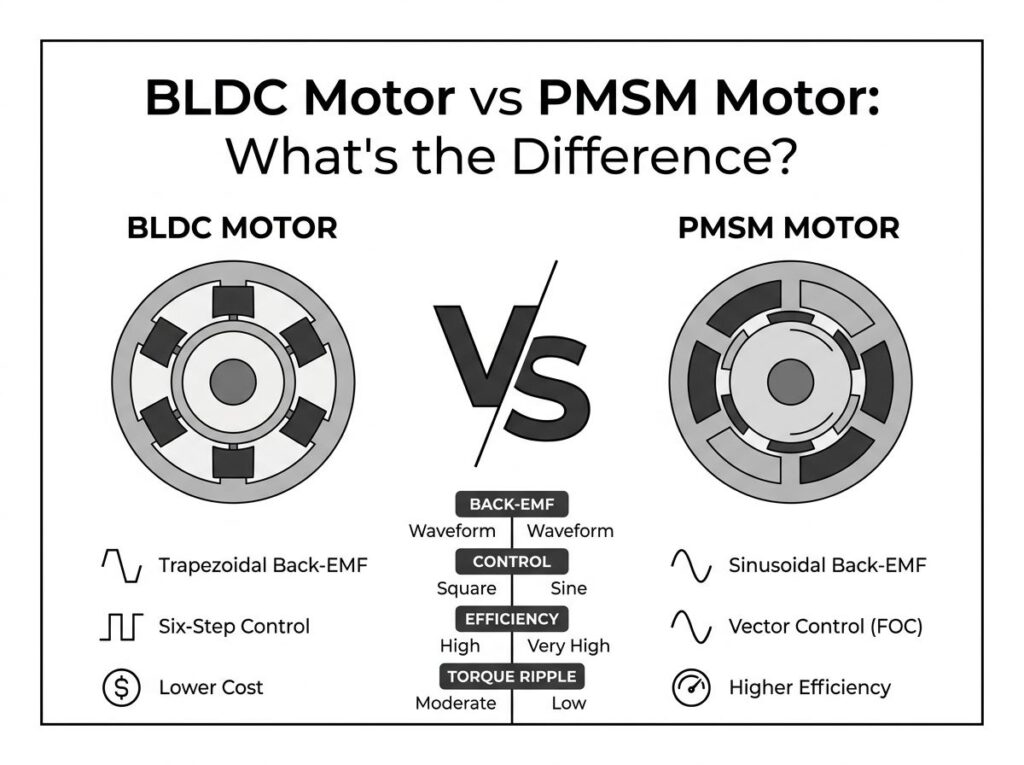
Motore BLDC e motore PMSM: Qual è la differenza??
Le tecnologie dei motori a magneti permanenti sono diventate la scelta preferita per i moderni sistemi di azionamento elettrico grazie alla loro efficienza superiore, alta densità di potenza, dimensione compatta, e controllabilità precisa. Tra queste tecnologie, Motori CC senza spazzole (BLDC) e motori sincroni a magneti permanenti (PMSM) sono le due soluzioni più adottate tra i veicoli elettrici, robotica, Sistemi HVAC, automazione industriale, attrezzature mediche, e apparecchiature elettriche per esterni.
Perché entrambi i tipi di motore utilizzano magneti permanenti e sistemi di controllo elettronico, molti ingegneri e professionisti degli appalti presumono che si tratti essenzialmente della stessa tecnologia. In realtà, esistono differenze importanti nelle caratteristiche dei campi elettromagnetici posteriori, algoritmi di controllo, ondulazione della coppia, rumore acustico, efficienza, e costo del sistema.
Questa guida tecnica fornisce un confronto dettagliato tra i motori BLDC e PMSM per aiutare gli ingegneri, Produttori OEM, e gli acquirenti industriali selezionano la tecnologia del motore più adatta per le loro applicazioni.
Motore BLDC e motore PMSM
I motori BLDC e i motori PMSM utilizzano entrambi magneti permanenti, ma i motori BLDC utilizzano tipicamente la forza elettromotrice trapezoidale posteriore e la commutazione a sei fasi, mentre i motori PMSM utilizzano la forza elettromotrice sinusoidale posteriore e il controllo sinusoidale. I motori PMSM generalmente offrono un funzionamento più fluido e una maggiore efficienza, mentre i motori BLDC forniscono un controllo più semplice e costi di sistema inferiori.
Nelle applicazioni pratiche, I motori BLDC sono comunemente scelti per sistemi sensibili ai costi che richiedono buone prestazioni, mentre i motori PMSM sono preferiti per le applicazioni premium che richiedono la massima efficienza, erogazione di coppia regolare, e controllo preciso.
Cos'è un motore BLDC?
Un motore CC senza spazzole (Motore BLDC) è un motore a magneti permanenti che sostituisce le spazzole meccaniche con commutazione elettronica. Invece di utilizzare contatti fisici a spazzola, un controller elettronico energizza gli avvolgimenti dello statore in base al feedback della posizione del rotore.
I motori BLDC sono caratterizzati dalla loro forza elettromotrice posteriore trapezoidale (indietro EMF) forma d'onda e tipicamente funzionano utilizzando strategie di controllo della commutazione a sei fasi.
Costruzione di base di un motore BLDC
- Rotore a magnete permanente
- Bobine dello statore avvolte
- Controllore elettronico
- Sensori di posizione ad effetto Hall (opzionale)
- Circuiti dell'inverter di potenza
Come funziona un motore BLDC
Il controller eccita gli avvolgimenti dello statore in sequenza per creare un campo magnetico rotante. I magneti permanenti montati sul rotore seguono questo campo magnetico, producendo un movimento rotatorio.
Le informazioni sulla posizione del rotore vengono generalmente ottenute dai sensori Hall o stimate utilizzando algoritmi di controllo senza sensori.
Vantaggi dei motori BLDC
- Alta efficienza
- Dimensioni compatte
- Eccellente densità di potenza
- Bassi requisiti di manutenzione
- Nessuna usura delle spazzole
- Buona capacità di controllo della velocità
- Costo del controller inferiore
Applicazioni BLDC tipiche
- Tosaerba elettrici
- Utensili elettrici senza fili
- Ventilatori HVAC
- Automazione industriale
- Attrezzature mediche
- AGV e AMR
- Tornelli di sicurezza
- Biciclette elettriche
A causa del loro equilibrio tra costi e prestazioni, I motori BLDC sono diventati una delle tecnologie motoristiche più popolari nelle moderne apparecchiature OEM.
Cos'è un motore PMSM?
Un motore sincrono a magneti permanenti (PMSM) è anche un motore a magnete permanente, ma a differenza di un motore BLDC, è progettato per funzionare con una forma d'onda EMF posteriore sinusoidale e un'eccitazione di corrente sinusoidale.
Il rotore ruota in sincronia con il campo magnetico rotante dello statore, eliminando lo scivolamento e consentendo un funzionamento altamente efficiente.
Costruzione di base di un motore PMSM
- Rotore a magnete permanente
- Avvolgimenti statorici distribuiti
- Invertitore ad alte prestazioni
- Encoder o risolutore di posizione
- Controller motore avanzato
Come funziona un motore PMSM
Il controller genera forme d'onda di corrente sinusoidali che interagiscono con il campo magnetico permanente del rotore. Il motore funziona in preciso sincronismo con il campo magnetico rotante generato dallo statore.
La maggior parte dei sistemi PMSM utilizzano il controllo ad orientamento di campo (Foc), che consente una produzione di coppia fluida e un controllo preciso della velocità e della posizione.
Vantaggi dei motori PMSM
- Efficienza molto elevata
- Eccellente densità di coppia
- Emissione di coppia fluida
- Basso rumore acustico
- Bassi livelli di vibrazioni
- Prestazioni dinamiche superiori
- Capacità ad alta velocità
Applicazioni PMSM tipiche
- Veicoli elettrici
- Servosistemi industriali
- Robotica
- Macchinari CNC
- Sistemi aerospaziali
- Apparecchiature per l'automazione di precisione
- Sistemi HVAC di fascia alta
La tecnologia PMSM domina molte applicazioni ad alte prestazioni in cui l'efficienza, precisione, e un funzionamento regolare sono requisiti critici.
BLDC contro PMSM: Differenze chiave
Sebbene entrambe le tecnologie appartengano alla famiglia dei motori a magneti permanenti, il loro comportamento elettromagnetico e le filosofie di controllo differiscono in modo significativo.
| Caratteristica | Motore BLDC | Motore PMSM |
|---|---|---|
| Indietro EMF | Trapezoidale | Sinusoidale |
| Forma d'onda corrente | Rettangolare | Sinusoidale |
| Metodo di controllo | Commutazione in sei fasi | Controllo FOC |
| Efficienza | Alto | Molto alto |
| Livello di rumore | Medio | Basso |
| Ondulazione della coppia | Più alto | Inferiore |
| Risposta dinamica | Bene | Eccellente |
| Complessità del controllore | Inferiore | Più alto |
| Costo del sistema | Inferiore | Più alto |
| Applicazioni tipiche | Attrezzatura da prato, HVAC | Veicoli elettrici, Robotica |
La distinzione tecnica più importante risiede nel modo in cui i motori generano e utilizzano la coppia elettromagnetica.
Confronto EMF indietro
Forza elettromotrice controcorrente (Indietro EMF) è la tensione generata da un motore mentre il rotore si muove attraverso il campo magnetico dello statore. La forma d'onda della forza elettromotrice posteriore influenza direttamente le strategie di controllo motorio, efficienza, scorrevolezza della coppia, e prestazioni complessive.
FEM posteriore del motore BLDC
I motori BLDC sono progettati per produrre una forma d'onda EMF posteriore trapezoidale.
Per massimizzare la produzione di coppia, il controller applica impulsi di corrente rettangolari sincronizzati con la forma d'onda trapezoidale della tensione.
Questo approccio semplifica la progettazione del controller e riduce i costi del sistema, ma introduce anche un'ondulazione di coppia durante la commutazione di fase.
Caratteristiche del BLDC Back EMF
- Forma d'onda trapezoidale
- Algoritmo di controllo più semplice
- Requisiti di elaborazione inferiori
- Maggiore ondulazione della coppia
- Rumore acustico più elevato
PMSM Forza elettromagnetica posteriore motore
I motori PMSM generano una forma d'onda sinusoidale EMF posteriore.
Il controller fornisce corrente sinusoidale per adattarsi alla forma d'onda generata, con conseguente produzione continua di coppia durante tutto il ciclo elettrico.
Ciò riduce significativamente l'ondulazione della coppia e migliora la scorrevolezza complessiva del motore.
Caratteristiche del PMSM Back EMF
- Forma d'onda sinusoidale
- Produzione di coppia più fluida
- Vibrazioni inferiori
- Maggiore efficienza
- Controllo dinamico superiore
Perché è importante sostenere i campi elettromagnetici
Indietro Influenza delle caratteristiche EMF:
- Efficienza del motore
- Coppia ondulata
- Generazione di rumore
- Complessità del controllore
- Densità di potenza
- Idoneità all'applicazione
Per applicazioni ad alte prestazioni come la robotica, servosistemi, e veicoli elettrici, La FEM sinusoidale posteriore offre vantaggi sostanziali.
Confronto dei metodi di controllo
Il metodo di controllo rappresenta una delle differenze più significative tra i motori BLDC e PMSM.
Controllo motore BLDC: Commutazione in sei fasi
I motori BLDC utilizzano tipicamente la commutazione a sei fasi, noto anche come commutazione trapezoidale.
Il controller eccita due fasi alla volta lasciando la terza fase flottante. Ogni 60 gradi elettrici, il controller passa allo stato di commutazione successivo.
Vantaggi del controllo in sei fasi
- Implementazione semplice
- Requisiti del processore inferiori
- Costo del controller ridotto
- Facile integrazione del sistema
Limitazioni del controllo in sei fasi
- Maggiore ondulazione della coppia
- Aumento del rumore
- Scorrevolezza ridotta a bassa velocità
- Precisione inferiore
Controllo motore PMSM: Controllo orientato al campo (Foc)
I motori PMSM generalmente utilizzano il controllo ad orientamento di campo (Foc), una delle tecniche di controllo motorio più avanzate utilizzate oggi.
Il FOC separa la corrente dello statore in componenti che producono coppia e che producono flusso, consentendo un controllo preciso del funzionamento del motore in condizioni di carico variabili.
Vantaggi del FOC
- Massima efficienza
- Produzione di coppia fluida
- Eccellente controllo a bassa velocità
- Risposta dinamica superiore
- Vibrazioni ridotte
- Elevata precisione di posizionamento
Limitazioni del FOC
- Controller più costoso
- Maggiore complessità del software
- Maggiori requisiti di elaborazione
Poiché la tecnologia dei semiconduttori continua ad avanzare, Il FOC sta diventando sempre più accessibile anche in applicazioni sensibili ai costi.
Continua alla parte 2: Confronto di efficienza, Confronto di coppia, Confronto di rumore e vibrazioni, Analisi dei costi, Applicazioni per veicoli elettrici, Applicazioni della robotica, Applicazioni per tosaerba, Guida alla selezione OEM, Soluzioni energetiche Greensky, Domande frequenti, Cluster di collegamenti interni, e riferimenti.
Confronto efficienza BLDC vs PMSM
L’efficienza è uno degli indicatori di prestazione più importanti nella scelta di un motore elettrico. Una maggiore efficienza si traduce direttamente in un minore consumo energetico, ridotta generazione di calore, affidabilità migliorata, e minori costi operativi durante tutto il ciclo di vita delle apparecchiature.
Entrambi i motori BLDC e PMSM raggiungono efficienze significativamente più elevate rispetto ai tradizionali motori DC con spazzole e ai motori a induzione. Tuttavia, La tecnologia PMSM offre generalmente i massimi livelli di efficienza grazie al campo magnetico sinusoidale e alle strategie di controllo avanzate.
Intervalli di efficienza tipici
| Tipo di motore | Efficienza tipica | Massima efficienza |
|---|---|---|
| Motore DC spazzolato | 70–85% | 88% |
| Motore a induzione | 80–93% | 95% |
| Motore BLDC | 85–95% | 96% |
| Motore PMSM | 90–97% | 98%+ |
Perché i motori PMSM sono più efficienti
- Il campo magnetico sinusoidale riduce le perdite armoniche
- Il controllo ad orientamento di campo ottimizza l'utilizzo corrente
- La minore ondulazione della coppia riduce le perdite meccaniche
- Armoniche della corrente statorica ridotte
- Migliori caratteristiche di funzionamento ad alta velocità
Quando l'efficienza del BLDC è sufficiente
Per molti prodotti OEM come i tosaerba, pompe, fan, cancelli di sicurezza, e sistemi di automazione industriale, L’efficienza del BLDC è già sufficientemente elevata da far sì che il guadagno marginale del PMSM potrebbe non giustificare il costo aggiuntivo del controller.
Questo è uno dei motivi per cui i motori BLDC continuano a dominare numerose applicazioni commerciali e industriali nonostante i vantaggi tecnici del PMSM.
Confronto della coppia BLDC vs PMSM
La produzione di coppia influisce direttamente sull'accelerazione del motore, capacità di movimentazione del carico, prestazioni a bassa velocità, e la produttività complessiva della macchina.
Nei sistemi di motori elettrici, la coppia è fondamentalmente definita come:
Dove:
- T = Coppia (N·m)
- R = Distanza dal perno (M)
- F = Forza applicata (N)
- io = Angolo di forza
Per esempio:
Se una forza di 6 N viene applicato a un raggio di 3 m con un angolo di 90°, la coppia risultante diventa:
t = 3 × 6 × peccato(90°) = 18 N·m
Nelle applicazioni motorie, la coppia elettromagnetica è generata dall'interazione tra i campi magnetici dello statore e i magneti permanenti del rotore.
Caratteristiche di coppia BLDC
- Coppia di spunto elevata
- Forte capacità di accelerazione
- Maggiore ondulazione della coppia
- Adatto per carichi intermittenti
- Ottimo rapporto costo/coppia
Caratteristiche di coppia PMSM
- Emissione di coppia più fluida
- Ondulazione di coppia inferiore
- Maggiore densità di coppia continua
- Controllabilità superiore a bassa velocità
- Eccellenti prestazioni del servo
Confronto della densità di coppia
| Fattore | BLDC | PMSM |
|---|---|---|
| Coppia di avviamento | Eccellente | Eccellente |
| Coppia continua | Alto | Molto alto |
| Ondulazione della coppia | Più alto | Inferiore |
| Precisione a bassa velocità | Bene | Eccellente |
| Prestazioni del servo | Moderare | Eccellente |
Per sistemi di movimento ad alta precisione, I motori PMSM generalmente superano i motori BLDC grazie alla generazione di coppia più fluida e alle caratteristiche di controllo superiori.
Confronto di rumore e vibrazioni
Il rumore e le vibrazioni sono fattori sempre più importanti nella progettazione delle apparecchiature moderne. Il rumore acustico inferiore migliora l'esperienza dell'utente, mentre la riduzione delle vibrazioni aumenta la durata dei componenti e la precisione del posizionamento.
Caratteristiche del rumore del motore BLDC
A causa della commutazione trapezoidale e della maggiore ondulazione della coppia, I motori BLDC generalmente generano un rumore più udibile rispetto ai motori PMSM.
Le fonti di rumore comuni includono:
- Eventi di commutazione della commutazione
- Coppia ondulata
- Risonanza meccanica
- Rumore dei cuscinetti
Caratteristiche del rumore del motore PMSM
L'eccitazione della corrente sinusoidale e il controllo FOC riducono al minimo le brusche transizioni di coppia, con conseguente funzionamento molto più fluido.
I vantaggi includono:
- Minori emissioni acustiche
- Vibrazioni ridotte
- Precisione migliorata
- Migliore comfort per l'utente
Tabella comparativa del rumore
| Fattore di prestazione | BLDC | PMSM |
|---|---|---|
| Rumore acustico | Medio | Basso |
| Ondulazione della coppia | Più alto | Inferiore |
| Livello di vibrazione | Moderare | Minimo |
| Applicazioni di precisione | Bene | Eccellente |
Confronto dei costi BLDC e PMSM
Il costo è spesso il fattore decisivo per gli acquirenti OEM e i produttori di apparecchiature.
Sebbene i motori PMSM forniscano prestazioni superiori, di solito richiedono:
- Controller più sofisticati
- Maggiore capacità del processore
- Algoritmi software avanzati
- Hardware di rilevamento aggiuntivo
Confronto dei costi totali del sistema
| Fattore di costo | BLDC | PMSM |
|---|---|---|
| Costo del motore | Inferiore | Più alto |
| Costo del controllore | Inferiore | Più alto |
| Complessità del software | Inferiore | Più alto |
| Costo di sviluppo | Inferiore | Più alto |
| Costo operativo | Basso | Molto basso |
Per prodotti sensibili ai costi, BLDC offre spesso il miglior equilibrio tra prestazioni e convenienza.
Quale motore è migliore per i veicoli elettrici?
L’industria dei veicoli elettrici è diventata uno dei maggiori consumatori di tecnologie di motori a magneti permanenti.
I moderni veicoli elettrici hanno la priorità:
- Massima efficienza
- Autonomia estesa
- Accelerazione fluida
- Capacità ad alta velocità
- Eccellente frenata rigenerativa
A causa di questi requisiti, I motori PMSM sono diventati la scelta dominante per i veicoli elettrici per passeggeri.
I principali produttori automobilistici utilizzano spesso la tecnologia PMSM perché offre:
- Maggiore efficienza
- Densità di coppia superiore
- Migliori prestazioni NVH
- Gamma migliorata
Vincitore per i veicoli elettrici: PMSM
Quale motore è migliore per la robotica?
I sistemi robotici richiedono:
- Controllo preciso della posizione
- Movimento fluido
- Stabilità a bassa velocità
- Risposta rapida
- Alta ripetibilità
Questi requisiti favoriscono fortemente la tecnologia PMSM combinata con i sistemi di servocontrollo.
Robot industriali, robot collaborativi, e i sistemi CNC utilizzano comunemente servomotori PMSM per la loro eccellente risposta dinamica e precisione di posizionamento.
Vincitore per la Robotica: PMSM
Quale motore è migliore per i tosaerba?
Le applicazioni dei tosaerba presentano una serie diversa di priorità:
- Elevata coppia erogata
- Durabilità all'aperto
- Competitività di costo
- Efficienza della batteria
- Controllo elettronico semplice
Per rasaerba elettrici con guida da terra e rasaerba robotizzati, I motori BLDC sono spesso la soluzione preferita.
I vantaggi includono:
- Costo del sistema inferiore
- Coppia di spunto elevata
- Eccellenti prestazioni della batteria
- Architettura del controller semplificata
- Forte affidabilità
Vincitore per Tosaerba: BLDC
Come scegliere tra BLDC e PMSM
Il motore migliore dipende dalle priorità dell'applicazione.
| Se hai bisogno… | Scegliere |
|---|---|
| Costo più basso | BLDC |
| Massima efficienza | PMSM |
| Controllo del movimento di precisione | PMSM |
| Automazione industriale | O |
| Robotica | PMSM |
| Veicoli elettrici | PMSM |
| Attrezzatura da prato | BLDC |
| Sistemi HVAC | BLDC o PMSM |
Perché gli acquirenti OEM scelgono Greensky Power
Per i produttori di apparecchiature OEM, selezionare il giusto fornitore di motori è importante quanto selezionare la tecnologia del motore stesso.
Greensky Power è specializzata in soluzioni di motori personalizzati per clienti OEM globali.
Portafoglio di prodotti principali
Vantaggi dell'OEM
- Sviluppo motore personalizzato
- Supporto per l'integrazione del controller
- Abbinamento riduttore epicicloidale
- Prototipazione rapida
- Opzioni MOQ basso
- Esperienza di esportazione globale
Principali industrie servite
- Robotica
- Tosaerba
- Apparecchiature HVAC
- Automazione industriale
- Dispositivi medici
- Sistemi di sicurezza
Domande frequenti: motore BLDC e motore PMSM
PMSM è migliore di BLDC?
Non necessariamente. PMSM offre maggiore efficienza e funzionamento più fluido, mentre BLDC offre costi di sistema inferiori e un controllo più semplice. La scelta migliore dipende dai requisiti dell'applicazione.
Perché i motori PMSM vengono utilizzati nei veicoli elettrici?
I motori PMSM forniscono un'efficienza superiore, densità di coppia, levigatezza, e prestazioni della gamma, rendendoli ideali per le moderne piattaforme di veicoli elettrici.
I motori BLDC possono utilizzare il controllo FOC?
SÌ. Molti moderni motori BLDC possono funzionare utilizzando algoritmi FOC, riducendo l'ondulazione della coppia e migliorando l'efficienza.
Quale motore è più efficiente, BLDC o PMSM?
I motori PMSM generalmente raggiungono un'efficienza più elevata grazie alla forza elettromotrice sinusoidale e alle strategie di controllo avanzate.
Quale motore è migliore per i tosaerba?
I motori BLDC sono spesso la soluzione preferita grazie al loro eccellente equilibrio di efficienza, coppia, affidabilità, e costo.
Risorse correlate
Riferimenti
- https://www.ieee.org
- https://ieeexplore.ieee.org
- https://www.nidec.com
- https://www.siemens.com
- https://globale.abb
- https://www.weg.net
- https://www.energia.gov
- https://www.iea.org
- https://www.iec.ch
- https://www.mathworks.com
- https://www.microchip.com
- https://www.ti.com