
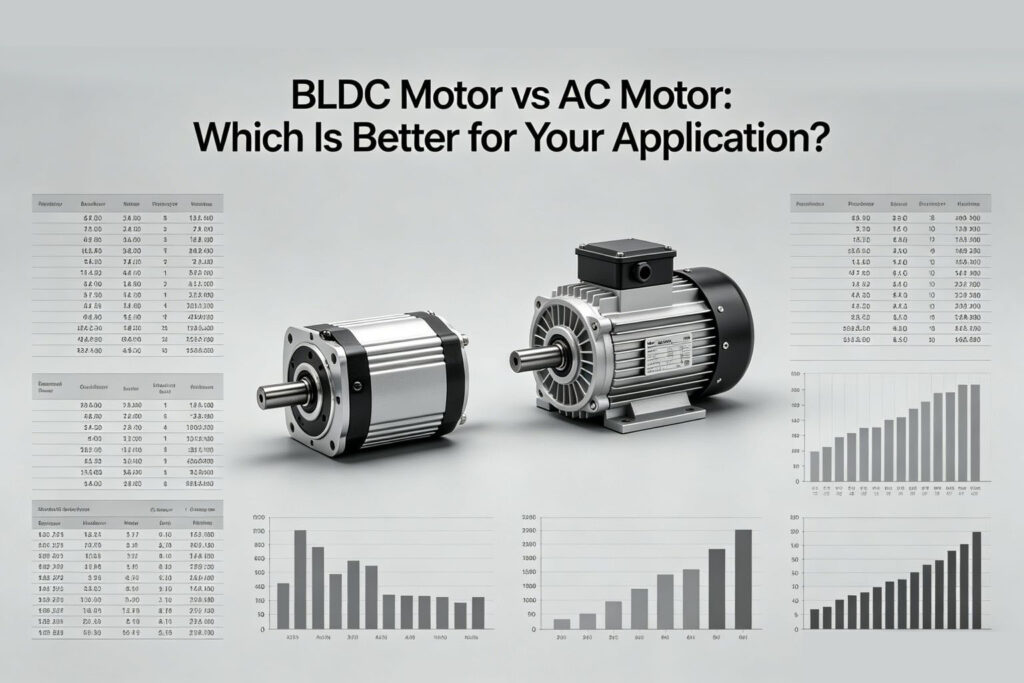
BLDC 電機與交流電機: 哪個更適合您的應用?
精選片段:
無刷直流電機 are generally better for applications requiring high efficiency, 精確控制, and compact size, while AC motors are preferred for cost-sensitive, high-power, and rugged industrial environments. The best choice depends on factors such as torque requirements, 控制複雜性, 熱條件, 和生命週期成本. For OEMs and engineers, selecting between BLDC and AC motors requires a performance-driven analysis rather than a simple cost comparison.
In modern industrial systems, choosing between a BLDC motor vs AC motor is a critical engineering decision that directly impacts efficiency, 可靠性, 和總擁有成本. Whether you are designing electric vehicles, 暖通空調系統, 泵, or automation equipment, understanding the differences between these motor technologies is essential for achieving optimal performance and ROI.
什麼是 BLDC 電機?
無刷直流 (無刷直流電機) motor is an electronically commutated motor that eliminates mechanical brushes by using a controller to switch current in the stator windings. The rotor typically contains permanent magnets, allowing for high torque density and efficiency.
BLDC 馬達的主要特性
- Electronic commutation using Hall sensors or sensorless control
- 高效率 (通常為 85–95%)
- Compact design with high power-to-weight ratio
- Low maintenance due to absence of brushes
BLDC motors are widely used in applications where efficiency and precise speed control are critical, 例如機器人技術, 電動車, 和智慧暖通空調系統.
👉 Explore industrial solutions: BLDC 馬達產品範圍
什麼是交流電機?
交流電機, including induction motors and synchronous motors, operate using alternating current supplied directly from the grid. The most common type in industrial applications is the induction motor, known for its simplicity and robustness.
Key Characteristics of AC Motors
- 簡單而堅固的結構
- Lower upfront cost compared to BLDC motors
- Suitable for high-power industrial applications
- Can operate directly from AC supply without complex electronics
AC motors dominate traditional industrial sectors such as pumps, 壓縮機, and heavy machinery due to their reliability and scalability.
BLDC 電機與交流電機: 主要差異解釋
| 範圍 | 無刷直流電機 | 交流電機 (就職) |
|---|---|---|
| 效率 | 85–95% | 75–90% |
| 扭矩密度 | 高的 | 緩和 |
| 控制 | Advanced electronic control | Simple or VFD-based |
| 初始成本 | 更高 | 降低 |
| 維護 | 低的 | 低到中等 |
| 應用領域 | 電動車, 機器人技術, 暖通空調 | Industrial pumps, 粉絲 |
The fundamental difference lies in commutation: BLDC 馬達依賴電子開關, while AC motors use electromagnetic induction. 這導致了效率的差異, control flexibility, 和系統複雜性.
為什麼 BLDC 馬達效率更高
Efficiency is one of the most important factors in modern motor selection, especially in energy-sensitive applications.
Engineering Reasons for Higher Efficiency
- 無電刷摩擦損失
- Reduced rotor heating due to permanent magnets
- Precise current control minimizes copper losses
In applications like electric vehicles or HVAC systems, a 5–10% efficiency improvement can significantly reduce energy consumption over time. This is why BLDC motors are increasingly replacing traditional AC motors in energy-regulated markets.
扭力密度和性能比較
Torque density determines how much torque a motor can deliver relative to its size. BLDC motors outperform AC motors in this aspect due to their permanent magnet design.
無刷直流馬達的優點
- Higher torque at lower speeds
- 更好的動態響應
- 佔地面積緊湊
AC Motor Characteristics
- Stable operation at constant speed
- Better suited for continuous-duty heavy loads
For OEM designs where space is limited, such as AGV robots or electric scooters, BLDC motors provide a clear advantage.
Thermal Performance and Cooling Considerations
熱管理直接影響馬達的使用壽命和可靠性. BLDC motors typically generate less heat due to higher efficiency, but their electronics require careful cooling design.
BLDC Cooling
- Air cooling or liquid cooling in high-power systems
- Controller heat dissipation must be considered
AC Motor Cooling
- Often uses fan-based cooling
- More tolerant of harsh environments
In industrial environments with high ambient temperatures, AC motors may still be preferred for their robustness.
控制系統: BLDC 電機與交流電機
Control strategy is a major differentiator between these motor types.
無刷直流控制
- 需要電子速度控制器 (ESC鍵)
- 支援精確的速度和扭力控制
- Enables IoT and smart system integration
AC Motor Control
- Can run directly on AC supply
- 變頻驅動器 (變頻器) improve flexibility
For smart manufacturing and automation, BLDC motors provide superior control capabilities.
可靠性和壽命比較
Both BLDC and AC motors offer long service life, but their failure modes differ.
- 無刷直流電機: Longer lifespan due to no brushes, but sensitive to electronics failure
- 交流電機: Extremely robust, fewer electronic components
In mission-critical applications, engineers often consider redundancy and controller quality when selecting BLDC systems.
BLDC Motor vs AC Motor how to Choose for Your Application
Choosing the right motor requires balancing performance, 成本, and system requirements.
關鍵選擇因素
- 電壓: 24V, 48V, 72V for BLDC; 220V/380V for AC
- 力量: From watts to hundreds of kW
- 速度 & 力矩: Match load requirements
- 冷卻: Air vs liquid cooling
- 控制器相容性: ESC vs VFD
針對具體應用的建議
- 電動車 → BLDC 電機
- Industrial pumps → AC motor
- 機器人 → BLDC 電機
- Heavy machinery → AC motor
👉 Request a custom solution: OEM Motor Design Service
Industrial Applications of BLDC and AC Motors
Different industries prioritize different performance characteristics.
BLDC 馬達應用
- 電動車和電動自行車
- 機器人技術和自動化
- 暖通空調系統
交流馬達應用
- 泵浦和壓縮機
- 輸送系統
- Heavy-duty industrial equipment
👉 探索電動車解決方案: 電動汽車馬達解決方案
成本比較: BLDC vs AC Motor
| 成本因素 | 無刷直流電機 | 交流電機 |
|---|---|---|
| 初始成本 | 更高 | 降低 |
| 營運成本 | 降低 (高效率) | 更高 (能量損失) |
| 維護 | 低的 | 低的 |
| 總擁有成本 | Lower in long term | Higher in energy-intensive use |
For B2B buyers, lifecycle cost is often more important than upfront price, especially in energy-intensive applications.
未來趨勢: Why BLDC Motors Are Gaining Market Share
The global motor market is shifting toward energy-efficient solutions due to regulatory and sustainability pressures.
- Stricter energy efficiency regulations (瀏覽器3, IE4 standards)
- Growth of electric vehicles
- Smart manufacturing and Industry 4.0
BLDC motors are expected to see rapid adoption in both industrial and consumer applications.
常問問題: BLDC 電機與交流電機
1. 哪種馬達效率較高, BLDC or AC?
BLDC motors are generally more efficient due to the absence of brushes and reduced energy losses. They can achieve efficiencies above 90%, making them ideal for energy-sensitive applications.
2. Why are AC motors still widely used?
AC motors are cost-effective, 強壯的, and easy to operate. They are suitable for heavy-duty industrial applications where efficiency is less critical.
3. BLDC馬達更適合電動車嗎?
是的, BLDC motors are widely used in EVs due to their high efficiency, 尺寸緊湊, 和精確的控制能力.
4. What is the cost difference between BLDC and AC motors?
BLDC motors have higher upfront costs but lower operating costs, while AC motors are cheaper initially but less efficient over time.
5. Can AC motors replace BLDC motors?
在某些應用中, 是的. 然而, for high-performance and energy-efficient systems, BLDC motors are generally preferred.
結論: 您應該選擇哪種電機?
The choice between a BLDC motor vs AC motor ultimately depends on your application requirements. If you prioritize efficiency, 緊湊的設計, 和控制精度, BLDC motors are the better option. For cost-sensitive, 高功率工業應用, AC motors remain a reliable choice.
對於原始設備製造商和工業買家, the best approach is to evaluate total lifecycle cost, 性能要求, 和系統整合的複雜性.
需要協助選擇合適的電機?
✔ 索取資料表
✔ Get OEM customization support
✔ 立即聯絡我們的工程師
參考
- IEEE 工業電子學報
- 國際能源署 (國際能源總署) Motor Systems Report
- IEC Efficiency Standards Documentation