
All you should know about sensors and controller for ebike
pengenalan,
In modern electric bicycle systems, while the motor serves as the core power unit, the controller for ebike and sensor components act as intelligent assistants that enable precise power delivery and riding efficiency. These electronic systems have transformed ebikes from simple throttle-controlled vehicles to sophisticated Pedelec (Pedal Electric Cycle) systems that respond intelligently to rider input. This comprehensive guide explores the working principles, jenis, and selection criteria for ebike controllers and sensors, providing essential knowledge for enthusiasts and manufacturers alike.
The Symbiotic Relationship: How Ebike Controllers and Sensors Work Together,
The operational synergy between sensors and controller for ebike begins when the rider starts pedaling. Sensors detect pedaling force, kelajuan, and cadence, transmitting this data to the controller. The pengawal then processes this information and sends commands to the motor, determining how much assistance to provide. This closed-loop system ensures natural riding feel while optimizing battery efficiency and power output.
Understanding Ebike Sensors: The Nervous System of Your E-Bicycle,
According to EPAC (Electric Powered Assisted Cycles) piawaian, ebikes must initiate power assistance only when pedaling occurs. Sensors serve as the critical components that enable this functionality:
Torque Sensors,
These precision instruments measure the actual force applied to the pedals, providing high-accuracy torque readings that reflect the rider’s power output intention. Torque sensors deliver immediate and proportional assistance, creating a natural riding experience where motor support matches the rider’s effort.
Cadence Sensors,
Installed on the crankset assembly, cadence sensors detect pedaling rhythm through magnetic rings and sensing contacts. They typically offer assistance levels based on pedaling speed rather than force, with higher cadence triggering stronger motor support. While generally more affordable, they may provide less nuanced response compared to Sensor tork.
Advanced Sensor Technologies and Integration Trends: Modern high-performance ebikes increasingly utilize combined sensor systems that integrate both torque and cadence sensing. This hybrid approach allows for more sophisticated power delivery algorithms that consider both how fast and how hard the rider is pedaling. Selain itu, new sensor technologies including accelerometers, gradient sensors, and GPS integration are emerging, enabling smart controllers to anticipate terrain changes and optimize power distribution accordingly. These advancements represent the evolution toward truly intelligent ebike systems that adapt to both rider input and environmental conditions.
Ebike Controllers: The Intelligent Brain Powering Your Ride,
The controller for ebike serves as the central processing unit that connects all electronic components – including battery, motor, display, and sensors – into a cohesive system. After receiving signals from sensors, the controller calculates optimal power output and manages motor operation including speed, acceleration, and cutoff functions.
Key Controller Functions and Protection Features,
- Power Management: Regulates energy flow between battery and motor
- System Protection: Provides over-voltage, under-voltage, over-temperature, and over-current protection
- Ciri keselamatan: Includes brake cutoff functionality and error code monitoring
- Communication Hub: Interfaces with displays, Bluetooth modules, and diagnostic tools
Controller Types: Sine Wave vs. Square Wave
Technical Comparison and Application Scenarios: Sine wave controllers generate smooth, sinusoidal current output that results in virtually silent motor operation and extremely precise control, making them ideal for high-end urban and touring ebikes. Square wave controllers utilize simpler digital switching patterns that can produce audible humming and slightly less smooth power delivery, but offer cost advantages for entry-level applications. The choice between these technologies involves trade-offs between acoustic performance, control precision, and system cost that should be matched to specific ebike categories and target markets.
Programming and Control Algorithms: The Invisible Performance Factor,
The controller’s programming determines the riding characteristics through various assistance modes:
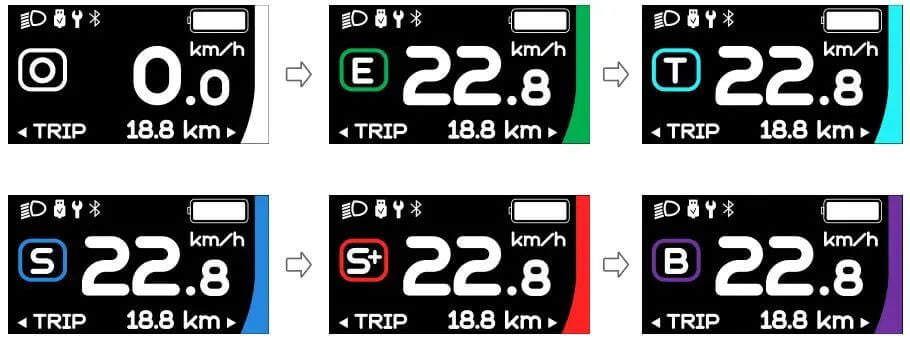
- Eco Mode: Maximizes battery range with minimal power assistance
- Tour Mode: Balanced assistance for comfortable riding
- Sport/Sport+ Modes: Progressive power delivery for energetic riding
- Boost Mode: Maximum power output for challenging terrain,
Selection Criteria and Industry Trends: When selecting a controller for ebike applications, consider compatibility with motor specifications, waterproof ratings (IP classification), programmability options, and certification compliance (CE, UL, dan lain-lain.). The industry is moving toward connected controllers with mobile app integration, over-the-air updates, and anti-theft functionalities. Manufacturers like Kuasa Greensky offer both standard and customized controller solutions to meet diverse market requirements.
According to the EPAC (Electric Assisted Cycle) standard, electric powered bicycles must be started by stepping, and if stepping stops, the bicycle must also stop. The manufacturer needs to place a speed sensor on the pedal shaft, or add a sensor to measure the force (tork) that the rider places on the pedal.
Although most users of electric powered bicycles are able to independently change their riding kelajuan, more often than not, bicycles rely on the pedal rhythm and force sensed by sensors to control their speed.
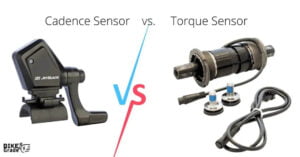
↑↑↑↑ Step frequency sensor vs torque sensor
(Image source: bikegrade. com)
Sensors can be divided into Sensor tork and step frequency sensors.
Seperti namanya, torque sensors obtain high-precision torque values by sensing the force of the rider’s foot pedal, thereby understanding the rider’s riding intention. The step frequency sensor is installed on the crankshaft assembly, consisting of sensing contacts and magnetic steel rings. By measuring the step frequency, the assistance demand is determined. The higher the step frequency, the stronger the assistance.
Like any system that needs to work together, the performance of an electric powered bicycle starts with the accuracy of the input signal. Secara umumnya, sensors are equivalent to the sensory system of the human body, and the clearer the sensation, the better one’s judgment ability.
Compared to torque sensors, torque sensors are more complex and precise. By measuring torque, torque sensors provide more accurate input values for the controller’s operation.
A high-performance electric assisted bicycle usually uses more than just a single sensor, but a combination of pedal frequency and torque to comprehensively calculate the current riding status.
Taking Frey Evolve as an example, the M510 motor is equipped with high-precision torque and step frequency sensors, which can accurately transmit rider information based on step frequency and step force, helping the sensors determine and output assistance.
Pengawal

The sensor accurately transmits the input signal to the controller. After receiving torque, kelajuan, and step frequency signals, the controller calculates the output signal to control the motor’s operating speed, start, stop, and other functions, guiding the motor on how to output power.
The controller, like a human brain, can connect all komponen elektronik of an electric bicycle together, such as the battery, motor, accelerator, display, and various sensors. It is responsible for tracking the important functions of the electric bicycle, such as pedal activity, battery voltage, kuasa motor, acceleration and deceleration.
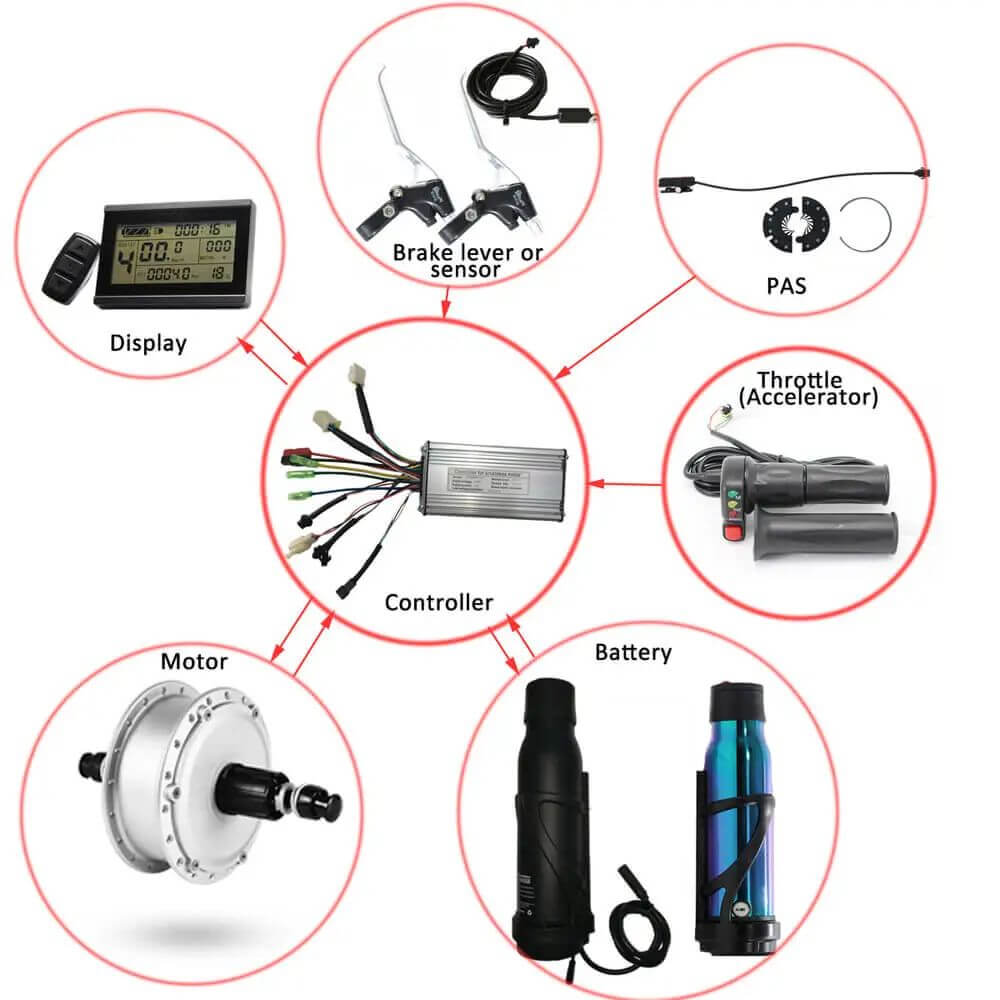
(Image source: elecycles. com)
Sebagai tambahan, the controller also provides some simple protection functions, such as high-voltage and low-voltage protection of the battery to prevent overcharging or excessive discharge of the battery. It can also monitor the temperature and current of the motor and ensure the safety of riders through braking protection.
The controller also has the difference between sine wave and square wave, masing -masing dengan kelebihan dan kekurangannya sendiri, which will not be explained here. Many electric powered mountain bike players choose to manually replace the controller in order to pursue speed, but the wiring of the controller is complex and requires professional knowledge as assistance. It is best for Xiaobai not to try it easily.

↑↑↑↑ The complex connection lines of the Ebike controller
The algorithm of the controller is what we call the control program, also known as the “invisible hand of God” by our technical department.
Sebagai contoh, Evolve has Eco (most economical mode), Tour (comfortable mode), Sport (sport mode), Sport+(sport enhanced mode), Boost (maximum power mode), and Boost mode. The selection of the boost gear determines the power level during cycling, which all depend on the program’s function.
Kesimpulan,
The sophisticated interaction between sensors and controller for ebike represents the technological heart of modern electric bicycles. Understanding these components enables better product selection, system optimization, and troubleshooting capabilities. As ebike technology continues to evolve, these electronic systems will play an increasingly vital role in delivering safe, cekap, and enjoyable riding experiences.
Greensky Power Co., Ltd. ialah pengilang profesional yang terlibat dalam penyelidikan, pembangunan, pengeluaran, sale of Ebike controller.
Jika anda sedang mencari pengawal Ebike untuk projek anda, sila hubungi pasukan jualan kami.