
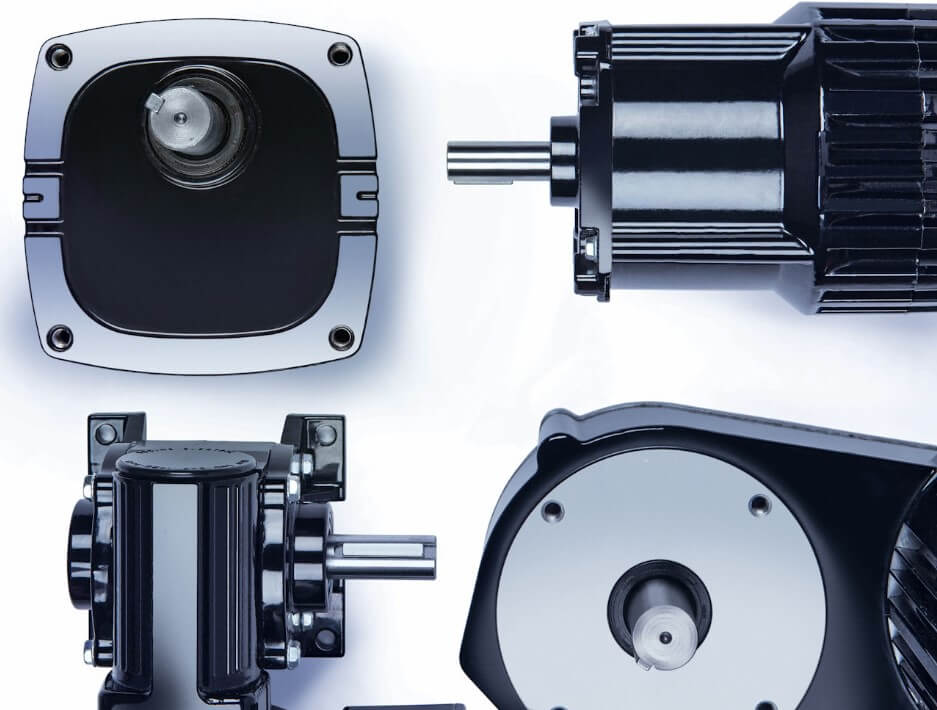
What’s the Difference Between a Gearbox and a Gear Motor?
ตอบด่วน
ก กระปุกเกียร์ is a standalone mechanical transmission device that reduces speed and multiplies torque from an external motor, ในขณะที่ก มอเตอร์เกียร์ integrates an electric motor and gearbox into a single factory-matched unit. The core difference is integration: a gearbox requires separate motor selection, shaft alignment, and coupling installation, whereas a gear motor arrives pre-assembled, ทดสอบแล้ว, and optimized for compact, reliable operation. According to the IEA Electric Motor Systems Platform, motor-driven systems account for 53% ของปริมาณการใช้ไฟฟ้าทั่วโลก, making the choice between these two configurations critical for energy efficiency, ค่าบำรุงรักษา, และต้นทุนการเป็นเจ้าของทั้งหมด.
What Is a Gearbox?
A gearbox—also called a ลดเกียร์ หรือ speed reducer—is a mechanical device consisting of gear sets housed within an enclosure. It does ไม่ generate power; instead, it modifies the speed, แรงบิด, and direction of rotational motion transmitted from an external power source (มอเตอร์ไฟฟ้า, engine, or turbine) to a driven load. เดอะ ไออีซี 60034-1 standard classifies gearboxes as mechanical transmission components, ในขณะที่ ไม่มีเอ็มจี 1 provides dimensional and performance guidelines for motors paired with gearboxes in the North American market.
Core Functions of a Gearbox
- Speed reduction: Lowers the input rotational speed to match load requirements
- Torque multiplication: Increases output torque proportional to the gear ratio and efficiency
- Direction change: Redirects rotational axis (เช่น., bevel gears for 90° turns)
- Load matching: Matches motor output characteristics to the driven equipment’s demand curve
- Inertia matching: Reduces reflected load inertia to improve motor control stability
Gearbox Types by Transmission Architecture
| พิมพ์ | Gear Configuration | ประสิทธิภาพโดยทั่วไป | อัตราส่วนสูงสุด (Single Stage) | ดีที่สุดสำหรับ |
|---|---|---|---|---|
| Spur Gearbox | Parallel shafts, straight teeth | 95–98% | ~10:1 | Low-speed, low-noise applications |
| กระปุกเกียร์แบบเกลียว | Parallel shafts, angled teeth | 96–98% | ~15:1 | High-load, quiet industrial drives |
| กระปุกเกียร์เอียง | Intersecting shafts (90°) | 94–97% | ~6:1 | Direction change, ระบบสายพานลำเลียง |
| กระปุกเกียร์หนอน | Worm wheel + screw | 60–90% | ~60:1 | High reduction, self-locking needs |
| กล่องเกียร์ดาวเคราะห์ | ดวงอาทิตย์ + planet + ring gears | 95–97% | ~10:1 | ความหนาแน่นของแรงบิดสูง, วิทยาการหุ่นยนต์ |
Efficiency data sourced from ข้อมูลจำเพาะทางเทคนิคของ SIMOGEAR ของซีเมนส์ and IEEE research on planetary gear optimization (ดอย: 10.1109/TMECH.2019.2946403).
มอเตอร์เกียร์คืออะไร?
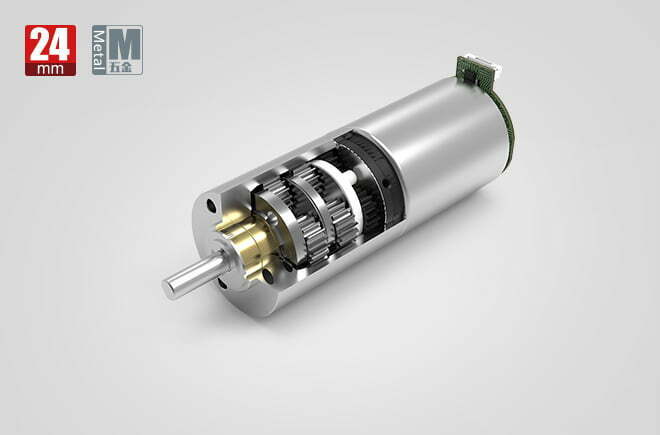
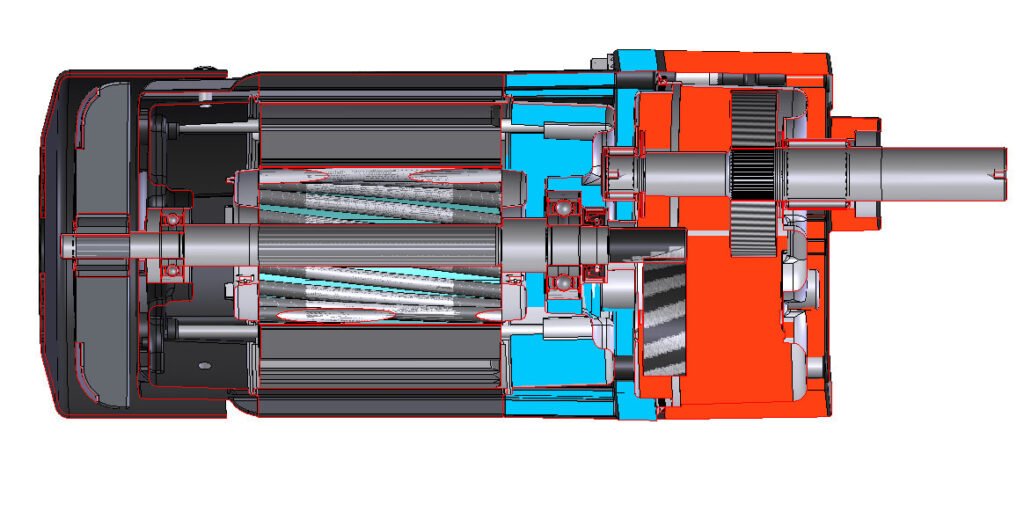
A gear motor (หรือ gearmotor) is an integrated drive unit that combines an electric motor and a gearbox into a single, factory-matched assembly. The motor’s rotor shaft typically serves as the input pinion for the first gear stage, eliminating the need for external couplings, alignment procedures, and separate mounting hardware. Gear motors are classified under ไออีซี 60034-1 as complete motor systems and must comply with efficiency requirements defined in ไออีซี 60034-30-1 และ กรมวิชาการเกษตร 10 ส่วนซีเอฟอาร์ 431 regulation.
Types of Gear Motors
| ประเภทมอเตอร์ | Gearbox Options | Typical Power Range | ระดับประสิทธิภาพ | Common Applications |
|---|---|---|---|---|
| มอเตอร์เกียร์เหนี่ยวนำกระแสสลับ | ลาน, เอียง, หนอน | 0.09–55 kW | IE2–IE4 | สายพานลำเลียง, เครื่องผสม, ปั๊ม |
| Brushed DC Gear Motor | เดือย, ดาวเคราะห์ | 1–1500 W | 70–85% | Automotive seats, ที่ปัดน้ำฝน |
| BLDC Gear Motor | เกี่ยวกับดาวเคราะห์, ขดลวด | 20–750 W | 85–92% | วิทยาการหุ่นยนต์, AGV, ทางการแพทย์ |
| Servo Gear Motor | เกี่ยวกับดาวเคราะห์, เอียง | 0.1–30 kW | IE4–IE5 | ซีเอ็นซี, บรรจุภัณฑ์, ความแม่นยำ |
Benefits of Integrated Gear Motors
- Factory-matched optimization: Motor and gearbox are engineered together, ensuring the pinion, อัตราทดเกียร์, and thermal characteristics are perfectly aligned—eliminating the guesswork of separate sizing.
- Compact footprint: By using the motor shaft as the input pinion, the overall length is significantly reduced compared to a separate motor + กระปุกเกียร์ + coupling configuration.
- Reduced alignment failures: No external coupling means no misalignment-induced bearing failures, which account for approximately 30% of premature gearbox failures per SKF bearing life analysis.
- Simplified maintenance: Fewer mechanical interfaces mean fewer wear points and simplified lubrication management.
- Higher system efficiency: Eliminating coupling losses (typically 1–3% per coupling) and optimizing the motor-gear interface improves overall system efficiency by 2–5%.

How a Gearbox Works — Step-by-Step
- Power input: An external motor delivers rotational energy to the gearbox input shaft via a coupling or direct connection.
- First gear mesh: The input shaft drives the first gear stage (pinion), which meshes with a larger gear to achieve initial speed reduction and torque increase.
- Subsequent stages: For multi-stage gearboxes, the output of each stage becomes the input of the next, progressively reducing speed and multiplying torque.
- Bearing support: Bearings at each shaft position maintain gear alignment and support radial/axial loads. ต่อ SKF bearing rating life, L10 life is calculated as L10 = (ซี/พี)^p, where C is the dynamic load rating, P is the equivalent load, and p = 3 สำหรับลูกปืนหรือ 10/3 สำหรับแบริ่งลูกกลิ้ง.
- การหล่อลื่น: Oil bath or grease lubrication reduces friction between meshing gears and dissipates heat. เดอะ ไออีซี 60034-1 standard specifies operating temperature limits based on insulation class.
- Power output: The final stage delivers reduced speed and multiplied torque to the driven load via the output shaft.
How a Gear Motor Works — Step-by-Step
- Electrical input: Power is supplied to the motor winding (เครื่องปรับอากาศ, กระแสตรง, or BLDC), generating a magnetic field that interacts with the rotor.
- Rotor rotation: The electromagnetic field produces torque on the rotor, which rotates at a speed determined by supply frequency (เครื่องปรับอากาศ) or voltage (กระแสตรง).
- Integrated pinion drive: The rotor shaft extends directly into the gearbox housing, where the machined pinion gear engages the first reduction stage—no coupling required.
- Multi-stage reduction: Gear stages progressively reduce speed and multiply torque. ตัวอย่างเช่น, ก แมกซอน GPX 32 planetary gearhead achieves a 138:1 ratio across 3 stages with 75% efficiency and 5 N·m continuous torque.
- Thermal management: The motor and gearbox share a common housing, allowing heat from both components to dissipate through the same structure. ต่อ ไออีซี 60034-1, Class F insulation permits winding temperatures up to 155°C.
- Output delivery: The output shaft delivers the final torque and speed to the application, with the entire unit pre-tested and certified as a single assembly.
กล่องเกียร์เทียบกับ. มอเตอร์เกียร์: ตารางเปรียบเทียบคุณสมบัติ
| คุณสมบัติ | กระปุกเกียร์ (Standalone) | มอเตอร์เกียร์ (แบบบูรณาการ) |
|---|---|---|
| แหล่งพลังงาน | External motor required | Motor included in unit |
| Integration Level | Mechanical component only | เครื่องยนต์ + gearbox combined |
| Installation Complexity | High—requires shaft alignment, coupling, การติดตั้ง | Low—plug-and-play, pre-assembled |
| Footprint | Larger overall assembly | กะทัดรัด, space-saving |
| Motor Selection Flexibility | High—any compatible motor can be paired | Limited to factory-installed motor |
| Coupling Losses | 1–3% per coupling interface | None—direct pinion integration |
| System Efficiency | ต่ำกว่า (การจัดแนวที่ไม่ตรง + coupling losses) | สูงกว่า (2–5% improvement typical) |
| Misalignment Risk | High—common failure mode | Minimal—factory-aligned |
| การซ่อมบำรุง | Motor and gearbox serviced separately | Fewer interfaces, simplified schedule |
| Failure Replacement | Individual component replacement | Entire unit may need replacement |
| ต้นทุนเริ่มต้น | ต่ำกว่า (กระปุกเกียร์ + separate motor) | สูงกว่า (integrated unit) |
| Long-term TCO | สูงกว่า (การติดตั้ง + การซ่อมบำรุง + downtime) | Often lower (reduced labor + downtime) |
| Best Power Range | >1 เอชพี (large industrial) | <1 HP to ~50 kW (compact/mid) |
| Standard Compliance | กอ.รมน 6336 (gear rating), AGMA 925 | ไออีซี 60034-30-1, ไม่มีเอ็มจี 1, กรมวิชาการเกษตร 10 ซีเอฟอาร์ 431 |
ข้อมูลทางวิศวกรรม: ประสิทธิภาพ, ขีดจำกัดอุณหภูมิ, และสูตรแรงบิด
ไออีซี 60034-30-1 Efficiency Classes for Gear Motor Motors
| ไออีซีคลาส | เทียบเท่า NEMA | คำอธิบาย | Loss Reduction vs. IE1 | การใช้งานทั่วไป |
|---|---|---|---|---|
| IE1 | ประสิทธิภาพมาตรฐาน | พื้นฐาน (phased out in most markets) | — | Legacy equipment |
| IE2 | ประสิทธิภาพสูง | Mandatory minimum in some regions | ~10% less loss | อุตสาหกรรมทั่วไป |
| IE3 | ประสิทธิภาพระดับพรีเมี่ยม | Current US minimum (กรมวิชาการเกษตร 10 ซีเอฟอาร์ 431) | ~20% less loss | New installations (post-2026) |
| IE4 | ซุปเปอร์พรีเมียม | Required June 2027 for mid-range motors | ~30% less loss | Energy-critical, VFD applications |
| IE5 | อัลตร้าพรีเมียม (ยังไม่ได้กำหนดโดย NEMA) | Future standard under development | ~40% less loss | Cutting-edge efficiency |
แหล่งที่มา: ไออีซี 60034-30-1:2014 และ DOE Small Electric Motors Program. บันทึก: กรมวิชาการเกษตร 2026 final rule mandates IE3 minimum for all 1–500 HP three-phase motors effective December 1, 2026; IE4 required for mid-range motors from June 1, 2027.
ไออีซี 60034-1 ขีดจำกัดอุณหภูมิของชั้นฉนวน
| ชั้นฉนวน | Max Temperature Rise | Hot Spot Allowance | อุณหภูมิที่คดเคี้ยวสูงสุด | Typical Gear Motor Example |
|---|---|---|---|---|
| คลาสเอ | 60องศาเซลเซียส | 5องศาเซลเซียส | 105องศาเซลเซียส | ต้นทุนต่ำ, light-duty |
| คลาส E | 75องศาเซลเซียส | 5องศาเซลเซียส | 120องศาเซลเซียส | Standard consumer |
| คลาสบี | 80องศาเซลเซียส | 10องศาเซลเซียส | 130องศาเซลเซียส | Industrial standard |
| คลาส F | 100องศาเซลเซียส | 15องศาเซลเซียส | 155องศาเซลเซียส | แมกซอน GPX 32 (operating range −40 to +100°C) |
| คลาสเอช | 125องศาเซลเซียส | 15องศาเซลเซียส | 180องศาเซลเซียส | อุณหภูมิสูง, งานหนัก |
แหล่งที่มา: ไออีซี 60034-1 เครื่องใช้ไฟฟ้าแบบหมุนได้ — พิกัดและประสิทธิภาพ. Ambient temperature: 40องศาเซลเซียส, ระดับความสูง: ≤1000 m.
สูตรทางวิศวกรรมหลัก
1. อัตราทดเกียร์
i = N_motor / N_output = T_output / (T_motor × η_gear)
ที่ไหน: ผม = อัตราทดเกียร์, N = speed (รอบต่อนาที), T = torque (น.ม), η_gear = gearbox mechanical efficiency.
2. แรงบิดเอาท์พุต
T_output = T_motor × i × η_gear
ตัวอย่าง: ก 0.5 N·m motor with a 50:1 planetary gearbox at 95% efficiency produces T_output = 0.5 × 50 × 0.95 - 23.75 น.ม.
3. Gearbox Mechanical Efficiency
η_gear = (T_output × N_output) / (T_input × N_input)
ต่อ Siemens SIMOGEAR data: 2-stage helical gearboxes achieve ≥96%; 3-stage achieve ≥94%; worm gearboxes range 60–90% depending on ratio.
4. System Efficiency (เครื่องยนต์ + กระปุกเกียร์)
η_system = η_motor × η_gear × (1 – L_coupling)
For a gear motor (no coupling): η_system = η_motor × η_gear. For a separate gearbox + เครื่องยนต์ + coupling: η_system = η_motor × η_gear × 0.98 (สมมติว่า 2% coupling loss).
5. SKF Bearing L10 Life
L10ชม. = (10⁶ / 60n) × (ค / พี)^p
ที่ไหน: L10h = rated life in hours (90% ความน่าเชื่อถือ), C = อัตราโหลดไดนามิกพื้นฐาน (กิโลนิวตัน), P = equivalent dynamic bearing load (กิโลนิวตัน), n = ความเร็วในการหมุน (รอบต่อนาที), พี = 3 สำหรับตลับลูกปืน, 10/3 สำหรับแบริ่งลูกกลิ้ง. แหล่งที่มา: SKF Bearing Rating Life.
6. ไม่มีเอ็มจี 1 ปัจจัยการบริการ
SF = P_allowable / P_rated
ไม่มีเอ็มจี 1 กำหนดปัจจัยการบริการ (โดยทั่วไป 1.15 for general-purpose motors) that allows intermittent overload operation. IEC motors do not use service factors (equivalent SF = 1.0), so a larger frame size may be needed for the same application.
Manufacturer Datasheet Comparison: Standalone Gearbox vs. Integrated Gear Motor
| พารามิเตอร์ | แมกซอน GPX 32 (Standalone Gearbox) | ซีเมนส์ SIMOGEAR (Integrated Gear Motor) |
|---|---|---|
| อัตราทดเกียร์ | 138:1 (3-stage planetary) | 3.57–500 (1–3 stage, multiple types) |
| Max Continuous Torque | 5 น.ม | ขึ้นไป 19,500 น.ม |
| ประสิทธิภาพเชิงกล | 75% | ≥96% (2-เวที), ≥94% (3-เวที) |
| ฟันเฟือง | 0.9° (เฉลี่ย) | ต่ำ (helical gear design) |
| Input Speed | ขึ้นไป 8,000 รอบต่อนาที | Motor-dependent (1,400–3,600 rpm typical) |
| Temperature Range | −40 to +100°C | −20 to +60°C (ambient) |
| แหล่งพลังงาน | External motor required | IE2/IE3/IE4 motor integrated |
| ระดับการป้องกัน | Not rated (open) | IP55 |
แหล่งที่มา: แมกซอน GPX 32 datasheet; Siemens SIMOGEAR servo geared motors.
Best Applications for Gearboxes
| แอปพลิเคชัน | Why a Standalone Gearbox? | Typical Power Range |
|---|---|---|
| Wind Turbine Drivetrains | Custom gearbox design for extreme torque (MW-class); motor selection flexibility for different generator types | 100 kW – 10 MW |
| การทำเหมืองแร่ & Heavy Material Handling | Custom-built gearboxes for shock loads; ability to pair with oversized motors for extreme duty | 50–500 kW |
| Large Industrial Mixers | Flexible motor-gearbox pairing for varying batch sizes; easier motor replacement without gearbox removal | 15–200 kW |
| การขับเคลื่อนทางทะเล | Custom gear ratios for propeller matching; separate motor allows maintenance without gearbox disassembly | 100–10,000 kW |
| Retrofit & Upgrade Projects | Keep existing motor, replace only gearbox—or vice versa—reducing capital expenditure | Any |
Best Applications for Gear Motors
| แอปพลิเคชัน | Why an Integrated Gear Motor? | Typical Power Range |
|---|---|---|
| ระบบสายพานลำเลียง | กะทัดรัด, pre-aligned unit reduces installation time on production lines; IP55 rated for dust environments | 0.09–7.5 kW |
| วิทยาการหุ่นยนต์ & AGV | ความหนาแน่นของแรงบิดสูง, precise backlash control, integrated encoder options; BLDC planetary gear motors deliver 80–200 N·m in compact footprints | 20–750 W |
| เครื่องจักรบรรจุภัณฑ์ | การทำงานเงียบ, high cycle durability, easy replacement during maintenance windows | 0.18–5.5 kW |
| Food & Beverage Processing | Stainless steel or coated housings, IP65 washdown ratings, food-grade lubrication options | 0.12–15 kW |
| Automotive Seat Actuators | 12V DC gear motors provide 4–19 N·m torque in a palm-sized package; learn more in our power seat guide | 5–50 W |
Step-by-Step Selection Guide: กล่องเกียร์เทียบกับ. มอเตอร์เกียร์
- Define your load requirements: Determine the required output torque (น.ม), ความเร็วเอาต์พุต (รอบต่อนาที), รอบหน้าที่ (S1–S8 per IEC 60034-1), and peak/overload conditions.
- Calculate the gear ratio: i = N_motor / N_output. Select a motor with a nominal speed close to standard supply frequencies (1,400 rpm at 50 Hz 4-pole; 1,800 rpm at 60 Hz 4-pole). Refer to our 6-pole motor RPM guide for pole-speed relationships.
- Verify torque capacity: T_output = T_motor × i × η_gear. Apply a safety factor of 1.3–1.5 for variable loads, or use NEMA MG 1 ปัจจัยการบริการ (1.15) for NEMA-rated motors.
- Evaluate power range:
- สำหรับ ≤50 kW with standard ratios: ก มอเตอร์เกียร์ is typically more cost-effective and reliable.
- สำหรับ >50 กิโลวัตต์ or custom ratios: a standalone gearbox + motor offers better flexibility and serviceability.
- Assess environmental conditions: Check ambient temperature (ไออีซี 60034-1: −20 to +60°C standard), ความชื้น, ฝุ่น, and washdown requirements. Gear motors offer IP55–IP65 integrated protection; standalone gearboxes may require additional sealing.
- Calculate total cost of ownership (ต้นทุนการเป็นเจ้าของ):TCO = Purchase cost + Installation cost + ค่าพลังงาน + ค่าบำรุงรักษา + Downtime costPer DOE analysis, energy costs represent 90–95% of TCO over a 20-year motor life. Each efficiency class improvement (เช่น., IE3 → IE4) reduces losses by approximately 10–15%.
- ตรวจสอบอายุการใช้งานตลับลูกปืน: Using the SKF L10 formula, verify that the selected bearings will achieve the required service life (typically 20,000–40,000 hours for industrial gear motors). If L10h < เป้า, upgrade bearing size or type.
- Check compliance: Verify that the motor meets ไออีซี 60034-30-1 efficiency requirements for your region and กรมวิชาการเกษตร 10 ส่วนซีเอฟอาร์ 431 for the US market. สำหรับทวีปอเมริกาเหนือ, ensure NEMA MG 1 frame size compatibility.
ข้อผิดพลาดทางวิศวกรรมทั่วไป
| # | ความผิดพลาด | ผลที่ตามมา | แนวทางที่ถูกต้อง |
|---|---|---|---|
| 1 | Using a separate gearbox + motor without proper shaft alignment | ตลับลูกปืนชำรุดก่อนกำหนด, การสั่นสะเทือน, coupling wear (accounts for ~30% of failures per SKF) | Use laser alignment tools; consider a gear motor to eliminate coupling entirely |
| 2 | การเพิ่มขนาดของมอเตอร์ “for safety” without recalculating gear ratio | Motor operates below optimal efficiency point; energy waste of 5–15% | Size motor to actual load + reasonable service factor (1.15 ไม่มี / 1.0–1.3 IEC) |
| 3 | Selecting a worm gearbox for continuous high-duty applications | Low efficiency (60–90%) generates excessive heat; energy waste of 10–35% | Use helical or planetary gearboxes for continuous duty; สำรองเฟืองตัวหนอนสำหรับการใช้งานแบบไม่ต่อเนื่องหรือแบบล็อคตัวเอง |
| 4 | Ignoring thermal limits when integrating motor and gearbox | Combined heat exceeds IEC 60034-1 ชั้นฉนวน; winding failure | Verify thermal model: T_winding = T_ambient + ΔT_motor + ΔT_gear × coupling factor |
| 5 | Replacing only the motor on a gear motor unit with a non-matched motor | Pinion mismatch, incorrect gear mesh, accelerated gear wear | Replace the entire gear motor assembly or contact the manufacturer for a compatible replacement motor |
| 6 | Not accounting for efficiency losses in TCO calculations | Underestimating operating costs by 10–20% over the product lifecycle | Use system efficiency: η_system = η_motor × η_gear × (1 – L_coupling); reference IEEE research on gear efficiency optimization |
ตารางการแก้ไขปัญหา: ปัญหา → สาเหตุ → วิธีแก้ไข
| ปัญหา | สาเหตุน่าจะ | สารละลาย |
|---|---|---|
| Excessive vibration and noise | Misalignment between motor and gearbox (standalone); gear tooth wear; bearing damage | Realign shaft with laser tool; inspect gear teeth for pitting; เปลี่ยนตลับลูกปืน (verify SKF L10 life) |
| Gearbox overheating (>90°C oil temp) | Insufficient lubrication; overloaded gear stage; การระบายอากาศที่ถูกบล็อก | Check oil level and viscosity; verify load against rated torque; clean cooling fins or add forced cooling |
| Oil leakage at input/output shafts | Worn shaft seals; over-pressurization from high-speed operation; incorrect seal installation | Replace lip seals and O-rings; verify breather valve function; reduce input speed if above rated maximum |
| Output shaft not rotating | Broken gear tooth; แบริ่งที่ยึด; มอเตอร์ขัดข้อง (มอเตอร์เกียร์); sheared coupling (standalone) | Disassemble and inspect gear train; replace damaged components; verify motor continuity and winding resistance |
| Reduced output torque | Worn gear teeth increasing backlash; motor degradation (การสึกหรอของแปรง, insulation breakdown) | วัดฟันเฟือง (compare to manufacturer spec, เช่น., แมกซอน GPX 32: 0.9°); test motor torque constant Kt |
| Intermittent operation / stalling | Insufficient motor power for peak load; thermal protection tripping; voltage drop | Verify motor power vs. peak torque requirement; check thermal overload settings; measure supply voltage under load |
| Audible gear whine at specific speeds | Gear resonance; incorrect backlash; insufficient lubrication film | Operate outside resonance frequency band; adjust backlash to specification; use higher-viscosity lubricant |
| Bearing failure (recurring) | Inadequate bearing load rating for application; การปนเปื้อน; over-greasing | Recalculate L10 life with actual load spectrum; upgrade to sealed bearings; follow relubrication intervals per SKF guidelines |
คำถามที่พบบ่อย
Is a gearbox the same as a gear motor?
เลขที่. A gearbox is a standalone mechanical transmission device that requires an external motor for power input. A gear motor integrates both the electric motor and gearbox into a single factory-matched unit. The key difference is integration: a gearbox is one component, while a gear motor is a complete drive system. For a deeper comparison of gearbox types, ดูคำแนะนำของเราใน gear motor manufacturers and suppliers in China.
When should I choose a gearbox over a gear motor?
Choose a standalone gearbox when you need motor selection flexibility (เช่น., pairing with a specific servo motor), for high-power applications above 50 กิโลวัตต์, for custom gear ratios not available in integrated units, or for retrofit projects where you want to keep an existing motor. For applications below 50 kW requiring compact, เชื่อถือได้, and easy-to-install drives, ก มอเตอร์เกียร์ is typically the better choice.
What efficiency standards apply to gear motors?
The motor portion of a gear motor must comply with ไออีซี 60034-30-1 efficiency classes (IE1–IE5) หรือ ไม่มีเอ็มจี 1 ระดับประสิทธิภาพ. ในสหรัฐอเมริกา, กรมวิชาการเกษตร 10 ส่วนซีเอฟอาร์ 431 mandates IE3 minimum for 1–500 HP three-phase motors as of December 2026, with IE4 required for mid-range motors from June 2027. The gearbox portion follows ISO 6336 for gear rating and AGMA 925 for surface durability.
How do I calculate the output torque of a gear motor?
ใช้สูตร: T_output = T_motor × i × η_gear, where T_motor is the motor’s rated torque, ฉันคืออัตราทดเกียร์, and η_gear is the gearbox mechanical efficiency. ตัวอย่างเช่น, ก 0.5 N·m motor with a 50:1 planetary gearbox at 95% efficiency produces 23.75 N·m output torque. Always apply a safety factor of 1.3–1.5 for variable loads. For DC motor torque calculations, ดูของเรา DC motor weight capacity guide.
Can I replace the motor on a gear motor without replacing the gearbox?
Generally no. In most gear motors, the motor shaft is machined as the input pinion for the first gear stage, making the motor and gearbox an inseparable matched pair. Replacing the motor with a non-matched unit will cause gear mesh problems and accelerated wear. Contact the manufacturer for a compatible replacement motor, or replace the entire gear motor assembly.
What is the typical lifespan of a gear motor vs. a standalone gearbox?
Both can achieve 20,000–40,000 hours of operation under proper loading and maintenance. Gear motors often have longer actual service life because the factory-aligned design eliminates coupling-related failures (which account for ~30% of premature failures in standalone configurations per SKF bearing analysis). อย่างไรก็ตาม, if either component fails in a gear motor, the entire unit typically needs replacement, whereas standalone gearboxes allow individual component replacement. For brushless motor lifespan factors, see our article on BLDC motor disadvantages.
เหตุใดจึงเลือก Greensky Power?
Understanding the difference between a gearbox and a gear motor is only the first step—selecting the right manufacturing partner is equally critical. พลังงานกรีนสกี้ has been designing and manufacturing DC motors, กระปุกเกียร์, and integrated gear motor solutions since 2011, ให้บริการลูกค้า OEM กว่า 50 ประเทศ.
What Sets Us Apart
- บูรณาการในแนวตั้ง: We manufacture both the motor and gearbox in-house—brushed DC motors, มอเตอร์ BLDC, และ กระปุกเกียร์ที่แม่นยำ—ensuring factory-matched optimization without third-party compatibility risks.
- Engineering-driven approach: ร.ของเรา&ทีมงานดี 8 PhD-level engineers reinvests 10% of annual revenue into development. We provide custom gear motor solutions tailored to your specific torque, ความเร็ว, and mounting requirements—including BLDC planetary gear motors with up to 200 N·m torque.
- 100% การทดสอบรายบุคคล: Every gear motor undergoes complete performance testing—torque, ประสิทธิภาพ, เสียงรบกวน, and temperature—before shipment, ensuring compliance with IEC 60034 และ NEMA MG 1 มาตรฐาน.
- Global compliance: กอ.รมน 9001, ส.ศ, และการรับรองประสิทธิภาพการใช้พลังงาน. Our motors meet กรมวิชาการเกษตร 10 ส่วนซีเอฟอาร์ 431 requirements for the US market and ไออีซี 60034-30-1 คลาสประสิทธิภาพ IE3/IE4.
- การสนับสนุนระดับภูมิภาค: Through our partnership with United Motion Inc., we provide local engineering support, การทดสอบตัวอย่าง, and after-sales service in North America and Europe.
- Scale and experience: Production capacity of 30,000+ units per month, with proven expertise across automotive, วิทยาการหุ่นยนต์, ระบบอัตโนมัติอุตสาหกรรม, and consumer goods sectors.
Whether you need a standalone gearbox, a fully integrated gear motor, or a DC right-angle gear motor for a specific application, our engineering team is ready to help you select or customize the optimal solution. ติดต่อเรา for a free technical consultation.
อ้างอิง
- ไออีซี 60034-1:2022, เครื่องใช้ไฟฟ้าแบบหมุนได้ — ส่วนหนึ่ง 1: คะแนนและประสิทธิภาพ. คณะกรรมาธิการไฟฟ้าเทคนิคระหว่างประเทศ. https://webstore.iec.ch/publication/60746
- ไออีซี 60034-30-1:2014, เครื่องใช้ไฟฟ้าแบบหมุนได้ — ส่วนหนึ่ง 30-1: ระดับประสิทธิภาพของมอเตอร์ไฟฟ้ากระแสสลับที่ทำงานด้วยเส้น. คณะกรรมาธิการไฟฟ้าเทคนิคระหว่างประเทศ. https://webstore.iec.ch/publication/60746
- ไม่มีเอ็มจี 1-2024, มอเตอร์และเครื่องกำเนิดไฟฟ้า. สมาคมผู้ผลิตไฟฟ้าแห่งชาติ. https://www.nema.org/standards/view/motors-and-generators
- เรา. กรมพลังงาน, มาตรฐานการอนุรักษ์พลังงานสำหรับมอเตอร์ไฟฟ้า: 2026 Amendment, 10 ส่วนซีเอฟอาร์ 431. https://www.energy.gov/cmei/buildings/small-electric-motors
- IEA Electric Motor Systems Platform (EMSA), Electric motor systems account for 53% ของปริมาณการใช้ไฟฟ้าทั่วโลก. https://www.iea-4e.org/emsa/
- เอสเคเอฟ, Bearing rating life — L10 calculation per ISO 281. https://www.skf.com/africa/en/products/bearings-units-housings/principles/bearing-selection-process/bearing-size/size-selection-based-on-rating-life/bearing-rating-life/index.html
- Siemens SIMOGEAR Gear Motor Products, Technical specifications: 0.09–55 kW, torque up to 19,500 นิวตันเมตร, efficiency ≥96%. https://simotech.com/products/servo-geared-motors/
- Matsuki H, Nagano K, Fujimoto Y. “Bilateral Drive Gear — A Highly Backdrivable Reduction Gearbox for Robotic Actuators,” IEEE/ASME Transactions on Mechatronics, 2019;24(6):2661-2673. ดอย: 10.1109/TMECH.2019.2946403
- Wu YC, Chen GC, Yan HS. “Optimization design of a DC commutator motor with an integrated planetary gear train,” ธุรกรรม IEEE บน Magnetics, 2011;47(10):4461-4464. ดอย: 10.1109/TMAG.2011.2157666
- Kobuse D, Fujimoto Y. “Efficiency optimization of high-reduction-ratio planetary gears for very high power density actuators,” 2016 IEEE 25th International Symposium on Industrial Electronics (ISIE), 2016:1240-1245. ดอย: 10.1109/isie.2016.7745072