
What Causes a DC Motor to Lose Torque?
What Does “Losing Torque” Mean in a DC Motor?
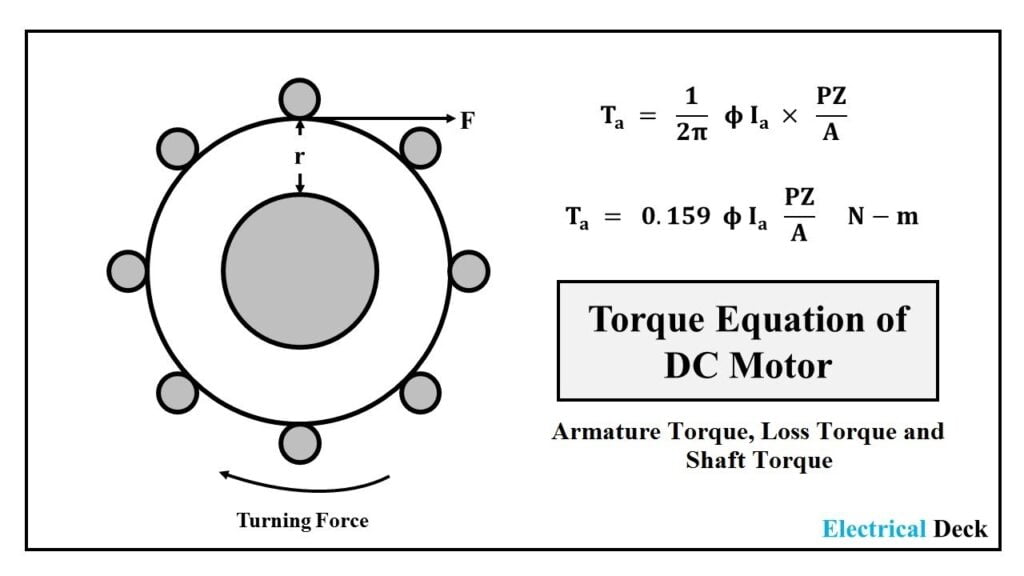
Motor torque is the rotational force the shaft delivers to the load, expressed in newton-meters (Нм) or ounce-inches (oz-in). В двигателе постоянного тока, torque is produced by the interaction of the magnetic field and the current flowing in the armature windings. The shaft torque at any instant is:
- Т = кТ · Iа — torque equals the torque constant times the armature current.
- For a permanent-magnet DC (ПМДК) двигатель, кТ is set by the magnet flux and the number of effective turns; it is a fixed property until the magnets weaken.
- For a wound-field motor, кТ also depends on the field current — a weak field directly lowers torque.
“Losing torque” therefore means one of two things has changed: either кТ has dropped (the machine makes less torque per amp) или же яа has dropped (less current is reaching or being used by the armature). Every cause in this article maps to one of those two variables. To understand the parts involved, start with our guide to what a DC motor is and how it is built.
The Two Variables That Decide Torque
| Переменная | What changes it | Effect on torque |
|---|---|---|
| кТ (torque constant) | Magnet strength, effective turns, field current | Falls with demagnetization or shorted turns → less torque per amp |
| яа (armature current) | Напряжение питания, сопротивление обмотки, нагрузка, drive limit | Falls with low voltage, high R, перегрузка, or current cap |
How a DC Motor Produces Torque (and Where It Leaks)
A DC motor is a closed electromechanical loop. Follow the chain and you can see exactly where torque is lost:
- Supply applies voltage (ВТ) across the brushes or the drive terminals.
- Текущий (яа) flows in the armature windings sitting in the magnetic field (Б) from the permanent magnets or field coils.
- The Lorentz force (F = B·I·L) on each conductor produces a torque about the shaft.
- The rotor accelerates, and a back-EMF (Еб = кЕ·ой) builds up, opposing the supply.
- Steady state is reached when Eб ≈ VТ − Iа·Ра, fixing the current and therefore the torque T = kТ·Яа.
The governing equations make the leak points obvious:
- Баланс терминала: ВТ = Еб + яа·Ра
- Противо-ЭДС: Еб = кЕ·ой (and in SI units, кЕ ≈ кТ)
- Уравнение скорости: ω = (ВТ/кЕ) - (ра/кЕ·кТ)·Т
Trace the failure modes through these equations:
- Low supply voltage → lower Iа available → lower torque and lower speed.
- Demagnetized magnets → lower kТ and kЕ → less torque per amp, higher speed at no load.
- Hot winding → Rа rises and kТ falls → less current and less torque at the same voltage.
- Shorted armature turns → fewer effective turns → lower kТ, higher current, больше тепла.
- Изношенные подшипники / dragging gearbox → load torque rises → Iа climbs until the drive or thermal protection limits it.
Brushed PMDC vs Brushless (BLDC): Where Torque Leaks
Both types use permanent magnets and obey T = kТ·Яа, but the failure map differs because commutation is mechanical in one and electronic in the other.
| Cause of torque loss | Brushed PMDC | Brushless PMDC (BLDC) |
|---|---|---|
| Permanent-magnet demagnetization | Yes — over-current / нагревать | Yes — same physics |
| Brush friction (no-load torque Mр) | Yes — wears brushes, raises Mр | Никто (нет кистей) |
| Commutation timing | Mechanical off-neutral setting | Electronic — wrong Hall angle (60°/120°) |
| Drive current limit | Simple supply (rarely capped) | PWM current cap — common cause of “weak” крутящий момент |
| Winding fault test | Сопротивление между перекладинами | Phase-to-phase balance |
For a deeper look at brush wear and sparking, см. наше руководство по why brushed motors spark, and for electronic-commutation trade-offs read Недостатки двигателя BLDC.
Root-Cause Comparison Table
The table below ranks the seven most common causes by how they attack the torque equation. Use it to triage a motor that feels weak.
| # | Причина | Attacks | Typical symptom | Двусторонний? |
|---|---|---|---|---|
| 1 | Over-current demagnetization | кТ ↓ | High no-load speed, низкий крутящий момент, runs hot under load | No — magnets damaged |
| 2 | Low supply voltage | яа ↓ | Slow, weak, especially under load | Yes — fix supply |
| 3 | Thermal drift (нагревать) | кТ ↓, ра ↑ | Torque sags as the motor warms up | Partial — allow cooling |
| 4 | Winding fault (закороченные повороты) | кТ ↓, ра ↓ | Overheats, высокий ток, низкий крутящий момент | No — rewind/replace |
| 5 | Mechanical overload | яа capped → T capped | Stalls, trips breaker, высокий ток | Yes — reduce load |
| 6 | Щетка / commutator wear | Мр ↑, плохой контакт | Искрение, uneven torque, slow start | Yes — service brushes |
| 7 | Водить машину / controller limit | яа capped | Weak only under load, fine unloaded | Yes — raise current limit |
Инженерные данные: Формулы крутящего момента & Рабочий пример
Quantifying torque loss turns guesswork into measurement. These are the relations used by manufacturer datasheets such as FAULHABER and maxon.
| Количество | Формула | Use in diagnosis |
|---|---|---|
| крутящий момент | Т = кТ·Яа | Ток задает крутящий момент; кТ is the multiplier |
| Ларек (locked-rotor) крутящий момент | ТLR = (ВТ/ра)·кТ | Maximum torque at zero speed (FAULHABER MЧАС) |
| Противо-ЭДС | Еб = кЕ·ой | Spin test confirms kЕ = кТ (И) |
| Ток якоря | яа = (ВТ − Эб)/ра | Low VТ or high Rа → low Iа |
| Terminal resistance vs temp | р(ж) = R(я)·[1 + αcond(θf − θi)] | Copper αcond ≈ +0.004 К−1 (ФАЛЬХАБЕР) |
| Torque constant vs temp | к(ж) = к(я)·[1 + αmag(θf − θi)] | Magnet αmag ≈ −0.002 K−1 (negative) |
Рабочий пример: Heat Alone Cuts Torque ~20%
This is taken from a published PMDC thermal analysis (Хейдон Керк Питтман). А 24 V motor has Rа = 0.59 Ω and kТ = 0.071 Nm/A at 25 °С. Compare 25 °C to 125 °С:
| Параметр | В 25 °С | В 125 °С | Изменять |
|---|---|---|---|
| Terminal resistance Rа | 0.59 Ой | 0.83 Ой | +41% |
| Torque constant kТ | 0.071 Нм/А | 0.057 Нм/А | −20% |
| Locked-rotor current ILR = ВТ/ра | 40.7 А | 28.9 А | −29% |
| Locked-rotor torque TLR = ЯLR·кТ | 2.89 Нм | 1.65 Нм | −43% |
The takeaway: heat does double damage — it raises winding resistance (less current) а также weakens the magnets (less torque per amp). A motor that is fine cold can lose close to half its stall torque once hot. Согласно МЭК 60034-1, winding temperature limits are Class B 130 °С, Класс F 155 °С, and Class H 180 °C — exceeding them accelerates permanent demagnetization.
Demagnetization & Armature Reaction (peer-reviewed data)
- Перегрузка по току / реакция якоря: В 70 Вт, 24 V PM BLDC, armature reaction alone reduced peak torque by 2.8% and dropped air-gap flux density by 5.59 mT per amp from no-load to full-load (Upadhyay & Rajagopal, IEEE PEDES 2006). At stall currents (many times rated), the effect is far larger and can become permanent.
- Thermal demagnetization: NdFeB and SmCo magnets have a negative coercive thermal coefficient, so demagnetization risk is highest at maximum operating temperature (ScienceDirect, Дж. Magn. Magn. Mater., 2020). Once the working point falls below the knee of the B–H curve, magnet flux — and kТ — does not recover.
This is why a motor that has been “shorted” or stalled repeatedly loses torque permanently; see our explainer on what happens when you short a DC motor.
Where DC Motor Torque Loss Matters Most
The dominant failure mode tracks the duty cycle and environment. Knowing your application’s main risk shortens diagnosis.
| Заявление | Dominant torque-loss risk | What to watch |
|---|---|---|
| Автомобильный (окна, сиденья, дворники) | Ларек / jam → over-current demag | Locked-rotor current vs peak rating |
| Робототехника & AGV | Frequent start-stop, gearbox friction | Gear lubrication, duty-cycle heating |
| Медицинский & лабораторные инструменты | Commutation quality, тихий шум | Stable kТ, clean commutation |
| Электроинструменты & дроны | High current, thermal demag | Magnet grade, вентиляция, current limit |
| Конвейеры & автоматизация | Sustained overload, нагревать | Загрузить аудит, класс изоляции |
Robotic joints in particular depend on a reducer to multiply motor torque; a weak motor there cascades into the whole arm — our piece on why robotic arms need speed reducers explains the torque–speed trade.
Руководство по выбору: How to Spec a DC Motor That Won’t Lose Torque
If diagnosis points to replacement, size the new motor so torque loss never becomes a field complaint.
- Соответствуйте напряжению и типу: confirm PMDC, серии, шунт, или БЛДК, and the supply polarity/range.
- Size torque with margin: select rated torque at least 1.3–1.5× the worst-case load, not the average. Stall/locked-rotor torque must clear the starting load.
- Budget for thermal rise: pick an insulation/magnet class that keeps the winding below IEC 60034-1 limits at your duty cycle; add venting or a larger frame if the motor runs hot.
- Set the drive current limit correctly: для БЛДК, set the limit to ~1.2–1.5× rated current for short overload headroom — too low and torque collapses under load.
- Choose magnet grade for temperature: NdFeB for high flux density; verify the knee point stays above your max operating temperature to avoid demag.
- Сопоставьте монтажный фланец: IEC B5/B14 or NEMA C-face so it drops into the existing mount — see our направляющая фланца двигателя.
Common Engineering Mistakes That Cause Torque Loss
| Ошибка | Why it costs torque |
|---|---|
| Exceeding peak / pulse current rating | Permanent magnet demagnetization — kТ never recovers |
| Undersized supply or long, thin wires | Voltage drop at the terminals → Iа ↓ → T ↓ (T roughly proportional to V) |
| Ignoring duty-cycle heating | Motor only weak when hot; passes a cold bench test |
| Wrong Hall angle (60° vs 120°) on BLDC | Incorrect commutation timing → weak starting torque |
| Над- or under-lubricating a gearmotor | Grease drag raises load torque and wastes shaft output |
| Reading inrush current as a fault | Stall current VТ/ра is normal at start; masking the real issue |
| Sizing by rated torque only | No margin for starting/overload → chronic “weak” feel |
DC Motor Torque-Loss Troubleshooting Table (Проблема → Причина → Решение)
| Проблема | Вероятная причина | Решение |
|---|---|---|
| Weak or no torque at start | Low supply V, demagnetized magnets, открытая обмотка, заклинило подшипник | Measure VТ at terminals; check magnet kТ; test winding R; free the shaft |
| Torque drops only as it warms up | Thermal drift: ра ↑, кТ ↓ | Allow cooling; reduce duty; upgrade insulation/magnet class |
| Weak only under load, fine unloaded | Drive current limit too low, или реальная перегрузка | Raise current limit to 1.2–1.5× rated; уменьшить нагрузку |
| High no-load speed but low torque | Permanent demagnetization | Confirm via back-EMF / кТ test vs nameplate; replace magnets or motor |
| Intermittent weak torque | Loose connection, тепловое путешествие, dirty commutator | Затяните клеммы; check current limit; clean/resurface commutator |
| Torque decays over months | Gradual demag, bearing wear, brush loss | Replace brushes/bearings; re-lubricate; re-magnetize or replace |
| New motor is weak out of the box | Wrong part number, wrong Hall angle, bad drive setting | Verify spec; set 60°/120°; match drive parameters |
For the full diagnostic sequence (including insulation and back-EMF tests), use our DC motor troubleshooting guide.
Часто задаваемые вопросы
Does low voltage reduce DC motor torque?
Да. Torque follows T ≈ kТ·(ВТ − Эб)/ра, so a lower terminal voltage means less armature current and therefore less torque. A motor on a weak supply or long, thin wiring will feel sluggish and slow, especially under load, because the voltage at the terminals drops under current draw.
Can a DC motor lose torque permanently?
Yes — if the permanent magnets are demagnetized by sustained over-current or excessive heat, the torque constant kТ drops and does not recover. The only fixes are re-magnetizing the magnets (rarely practical) or replacing the rotor/motor. This is why peak and stall currents must stay within the nameplate rating.
How much torque does heat cost a DC motor?
Существенный. In a documented 24 V PMDC, raising the winding temperature from 25 °C to 125 °C cut the torque constant about 20% and locked-rotor torque from ~2.9 Nm to ~1.65 Nm — roughly a 43% loss of stall torque. Heat raises winding resistance and weakens the magnets at the same time.
Why does my BLDC lose torque after a stall?
Stall current equals VТ/ра and can be many times the rated value. Sustained stall overheats the windings and demagnetizes the magnets, and most BLDC drives also impose a current limit that caps torque. Repeated stalling is the fastest route to permanent torque loss.
How do I test a DC motor for demagnetization?
Compare its actual performance to the nameplate: a demagnetized motor shows high no-load speed с низкий крутящий момент, and a reduced back-EMF constant (spin it as a generator and measure V per 1000 об/мин) and reduced torque constant kТ. A megger test (IEEE 43) checks the winding; demag is confirmed by the torque/back-EMF drop, not by insulation.
Is torque loss different in brushed vs brushless DC motors?
The magnet physics (Т = кТ·Яа) is identical, but brushed motors also lose torque through brush friction and commutator wear, while brushless motors lose it through drive current limits and Hall-sensor/timing errors. A brushed motor’s torque loss is usually mechanical and repairable; a BLDC’s is often in the controller settings.
Почему стоит выбрать Greensky для округа Колумбия & Сменные двигатели движения?
When torque loss points to replacement rather than repair, Greensky supplies a complete DC portfolio — ПМДК, матовый, и бесщеточный (BLDC) двигатели плюс встроенные мотор-редукторы — построено по стандарту IEC 60034 и НЭМА МГ 1 размеры, чтобы они попадали в существующие крепления. For maintenance and procurement teams we provide:
- Documented torque constants: nameplate kТ, Крутящий момент, rated current and insulation class so your baseline is clear from day one.
- Thermal headroom: Class F and H insulation options and magnet grades selected for your duty-cycle temperature, not just the catalog average.
- Совместимость фланцев: IEC B5/B14 and NEMA C-face with customized pilot diameters — see our направляющая фланца двигателя.
- Матовый или BLDC: выберите механическую простоту или электронную коммутацию с согласованными датчиками Холла и приводами.
- OEM/ODM с низким минимальным объемом заказа: небольшие партии для программ запасных частей и нестандартных конфигураций вала/энкодера.
Связанное чтение
- Что такое двигатель постоянного тока? Типы, Принцип & Формулы
- How to Troubleshoot a DC Motor: Step-by-Step Guide
- Почему коллекторные двигатели искрят?? Причины & Исправления
- How to Short a DC Motor (Short-Circuit Braking)
- Недостатки двигателей BLDC, которые должны знать инженеры
- Что такое фланец двигателя? Монтаж IEC и NEMA
- Двигатель переменного и постоянного тока: Что выбрать
- Коробка передач против мотор-редуктора: Различия & Выбор
- Синхронный и асинхронный двигатель: Ключевые различия
- Почему роботизированному манипулятору нужны редукторы скорости
Ссылки
- МЭК 60034-1 — Вращающиеся электрические машины: Рейтинг и производительность (temperature classes, torque definitions). webstore.iec.ch/publication/67467
- МЭК 60034-30-1 — Классы эффективности вращающихся электрических машин (IE1–IE5). webstore.iec.ch/publication/67784
- НЕТ МГ 1 — Двигатели и Генераторы (безопасность, термический, mounting dimensions). nema.org/standards/view/mg-1-motors-and-generators
- IEEE 43-2013 — Рекомендуемая практика испытаний сопротивления изоляции вращающихся механизмов.. стандарты.ieee.org/ieee/43/4385
- IEEE 112 — Standard Test Procedure for Polyphase Induction & Двигатели постоянного тока (потеря & методы обратной ЭДС). стандарты.ieee.org/ieee/112/4213
- НАС. DOE — Определение эффективности электродвигателя & Repair Guidance. Energy.gov/eere/amo/articles/determination-electric-motors
- SKF — Техническое обслуживание и смазка подшипников электродвигателей. skf.com/us/products/maintenance-products/bearing-maintenance
- Haydon Kerk Pittman — Temperature Effects on DC Motor Performance (thermal torque-constant model). haydonkerkpittman.com/learningzone/whitepapers/temperature-effects-on-dc-motor-performance
- FAULHABER — DC-Motors Technical Information (кМ, кЕ, α coefficients, Крутящий момент). faulhaber.com/en/техническая информация
- maxon — DC motor commutation and application notes. maxon.com/en-us/technologies/tech-papers