
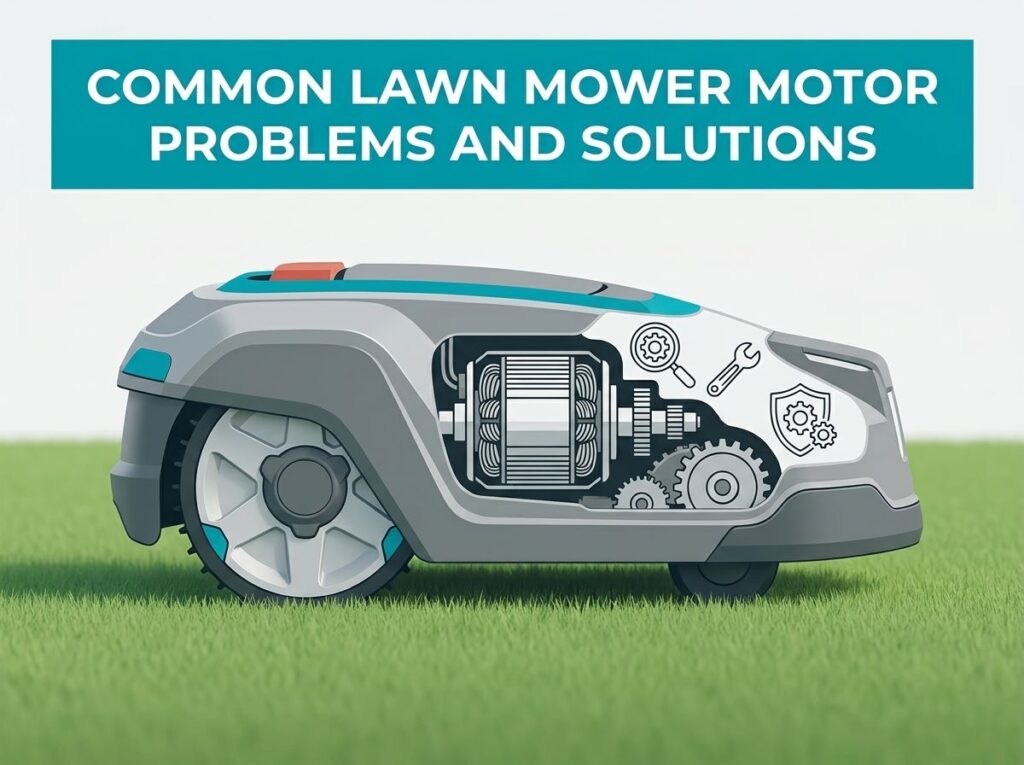
Распространенные проблемы с двигателем газонокосилки и их решения
Избранный фрагмент:
The most common lawn mower motor problems include overheating, loss of torque, startup failure, excessive current draw, abnormal noise, controller faults, and premature motor wear. These issues are typically caused by improper motor sizing, poor thermal management, inadequate controller tuning, environmental contamination, or excessive mechanical loads. Modern BLDC lawn mower motors generally offer higher reliability than brushed motors, but proper system integration remains essential. Understanding root causes and corrective actions helps OEM manufacturers improve performance, reduce warranty claims, and extend product lifespan.
This engineering guide explains the most frequent lawn mower motor failures, their underlying mechanisms, troubleshooting procedures, and best practices for selecting reliable motor systems for residential, коммерческий, and robotic mower applications.
What Are the Most Common Lawn Mower Motor Problems?
Electric lawn mower motors operate under demanding environmental conditions. Unlike many indoor motor applications, mower motors face dust, влага, вибрация, shock loads, high temperatures, and rapidly changing torque demands.
Как результат, motor failures often originate from multiple interacting factors rather than a single defective component.
Most Frequently Reported Issues
- Перегрев двигателя
- Motor fails to start
- Loss of cutting power
- Excessive current consumption
- Abnormal vibration
- Bearing failures
- Controller communication faults
- Reduced battery runtime
- Thermal shutdown events
- Premature motor aging
Для OEM-производителей, understanding these failure modes during the design phase is significantly less expensive than resolving field failures after product launch.
Why Do Lawn Mower Motors Overheat?
Motor overheating is one of the most common causes of reduced reliability and shortened service life.
Every electric motor generates heat during operation. Однако, excessive heat indicates that the motor is operating outside its optimal efficiency range or that cooling capacity is insufficient.
Common Causes of Overheating
- Undersized motor selection
- Continuous overload operation
- Blocked cooling airflow
- Poor winding design
- Controller misconfiguration
- High ambient temperatures
- Dull mower blades increasing load
Инженерное воздействие
When motor temperatures exceed design limits, winding insulation begins degrading. Permanent magnets may lose magnetic strength, bearing grease deteriorates, and controller electronics experience accelerated aging.
A temperature increase of only 10°C above rated conditions can significantly reduce expected motor lifespan.
Recommended Solutions
- Increase motor power margin
- Improve airflow design
- Use high-efficiency BLDC motors
- Optimize FOC controller parameters
- Monitor motor temperature in real time
Motor Starts Slowly or Fails to Start
Startup failures represent a major customer complaint, especially in battery-powered lawn mowers.
| Possible Cause | Симптомы | Recommended Action |
|---|---|---|
| Low Battery Voltage | Motor does not rotate | Verify battery condition |
| Controller Failure | No response from motor | Check controller diagnostics |
| Damaged Hall Sensors | Intermittent startup | Replace sensors |
| Mechanical Obstruction | Motor stalls | Inspect blade system |
| Loose Wiring | Inconsistent operation | Inspect connectors |
In robotic mower applications, startup reliability is especially critical because the machine often operates unattended for extended periods.
Why Does a Lawn Mower Motor Lose Torque?
Loss of torque directly affects cutting performance and customer satisfaction.
Users frequently interpret reduced cutting effectiveness as motor failure, although the root cause may originate elsewhere in the system.
Common Reasons for Torque Reduction
- Voltage drop under load
- Battery degradation
- Controller current limitations
- Demagnetization of rotor magnets
- Overheating conditions
- Excessive RPM operation
Efficiency vs Torque Tradeoff
Engineers often increase motor RPM to improve cutting speed. Однако, increasing speed without increasing power reduces available torque.
Premium lawn mower designs balance blade speed and torque reserves to ensure consistent performance in dense grass conditions.
Abnormal Noise and Vibration Problems
Noise and vibration issues frequently indicate developing mechanical or electrical failures.
Mechanical Sources
- Износ подшипников
- Blade imbalance
- Rotor eccentricity
- Loose mounting structures
- Shaft misalignment
Electrical Sources
- Controller commutation errors
- Current ripple
- Faulty Hall sensor feedback
- Poor FOC tuning
Early identification of vibration issues can prevent catastrophic failures and significantly reduce warranty expenses.
BLDC Motor vs Brushed Motor Failure Rates
| Параметр | BLDC двигатель | Матовый двигатель |
|---|---|---|
| Brush Wear | Никто | Высокий |
| Maintenance Frequency | Очень низкий | Высокий |
| Тепловой КПД | Отличный | Умеренный |
| Уровень шума | Низкий | Высокий |
| Expected Lifespan | Длинный | короче |
| Failure Probability | Низкий | Выше |
While BLDC motors introduce additional controller complexity, they generally provide superior reliability and lower maintenance requirements compared with brushed alternatives.
Battery and Controller Problems Often Misdiagnosed as Motor Failures
Many field service reports classify issues as motor failures when the actual cause originates in the battery pack or controller.
Battery-Related Issues
- Cell imbalance
- Voltage sag
- BMS shutdown
- Capacity degradation
Controller-Related Issues
- Overcurrent protection activation
- Thermal shutdown
- Communication faults
- Incorrect parameter settings
System-level diagnostics should always be performed before replacing a motor assembly.
How Motor Efficiency Affects Reliability and Lifespan
Efficiency is often viewed as an energy-saving metric, but its impact on reliability is equally important.
Higher efficiency reduces waste heat generation, lowering thermal stress throughout the system.
Benefits of High-Efficiency Motors
- Reduced operating temperatures
- Longer bearing life
- Lower winding degradation
- Extended controller lifespan
- Improved battery performance
Modern BLDC motors operating at 90% efficiency generate significantly less heat than traditional motor technologies, contributing directly to longer service life.
How to Choose a Reliable Lawn Mower Motor for Long-Term Performance
Selecting the right motor during product development is the most effective way to prevent field failures.
Диапазон напряжения
- 24V robotic mowers
- 36V residential systems
- 48V premium mowers
- 72V commercial platforms
Диапазон мощности
| Заявление | Recommended Power |
|---|---|
| Robotic Mower | 100W–1000W |
| Residential Mower | 500Вт–3кВт |
| Commercial Mower | 3kW–10kW+ |
Требования к скорости и крутящему моменту
- Cutting deck size
- Grass density
- Slope conditions
- Desired blade speed
Метод охлаждения
- Natural air cooling
- Forced-air cooling
- Aluminum housing heat sinks
- Advanced thermal monitoring systems
Совместимость контроллера
Select motors designed for Field-Oriented Control (ВОК) systems and advanced diagnostics to maximize reliability and performance.
OEM buyers should evaluate complete motor-controller integration rather than selecting components independently.
Applications Requiring High-Reliability Lawn Mower Motors
The technologies developed for modern lawn mower motors increasingly support other demanding industries.
Промышленное применение
- Autonomous mobile robots
- Складские AGV
- Material handling systems
Automotive and EV Applications
- Ступичные моторы
- Utility EVs
- Электрические скутеры
HVAC Applications
- Variable-speed fans
- Smart pumps
- Energy-efficient air handling units
Приложения для робототехники
- Agricultural robots
- Service robots
- Inspection robots
Future Trends in Lawn Mower Motor Reliability
Several innovations are helping manufacturers reduce motor failure rates.
- Predictive maintenance algorithms
- AI-based fault detection
- Integrated thermal monitoring
- Умные контроллеры двигателей
- Cloud-connected diagnostics
- Digital twin simulation
Future lawn mower platforms will increasingly diagnose and prevent failures before they impact users.
Часто задаваемые вопросы: Распространенные проблемы с двигателем газонокосилки и их решения
Why does my lawn mower motor overheat?
Overheating is usually caused by overload conditions, плохое охлаждение, excessive grass density, controller issues, or an undersized motor. Continuous operation above rated load accelerates temperature rise and component aging.
Why is my lawn mower losing power?
Common causes include battery degradation, падение напряжения, motor overheating, controller current limits, or excessive mechanical resistance from dull blades and debris buildup.
How long should a lawn mower motor last?
High-quality BLDC motors can exceed 10,000 operating hours under proper operating conditions. Lifespan depends on thermal management, controller design, bearing quality, and maintenance practices.
Are BLDC motors more reliable than brushed motors?
Да. Двигатели BLDC исключают износ щеток., reduce maintenance requirements, improve efficiency, and generally provide longer operational life.
Can controller problems damage a lawn mower motor?
Абсолютно. Incorrect current limits, poor tuning, thermal management failures, or faulty commutation can increase motor stress and accelerate failure.
How can OEM manufacturers reduce warranty claims?
Selecting properly sized high-efficiency motors, implementing robust thermal management, using advanced controllers, and performing extensive validation testing are the most effective strategies.
Заключение
Most lawn mower motor problems can be traced to thermal stress, improper motor sizing, poor controller integration, inadequate maintenance, or environmental factors. Understanding these failure mechanisms allows engineers and OEM manufacturers to design more reliable products while reducing lifecycle costs.
High-efficiency BLDC motor systems continue to outperform traditional technologies by offering superior reliability, более низкие требования к техническому обслуживанию, improved thermal behavior, and longer operational life.
Greensky Power provides advanced решения для двигателей газонокосилок including high-efficiency 48V and 72V BLDC motors, integrated FOC control systems, robotic mower drive motors, and custom OEM motor development services.
Request a datasheet, get an OEM solution, or contact our engineers to discuss your lawn mower motor project.
Ссылки
- https://ieeexplore.ieee.org
- https://www.ieee.org
- https://www.sciencedirect.com/topics/engineering/electric-motor-failure
- https://www.sciencedirect.com/topics/engineering/brushless-dc-motor
- https://www.energy.gov/eere/amo/articles/premium-efficiency-motor-selection-and-application-guide
- https://www.nrel.gov/docs/fy19osti/73396.pdf
- https://www.mdpi.com/1996-1073/14/3/655
- https://www.britannica.com/technology/electric-motor