
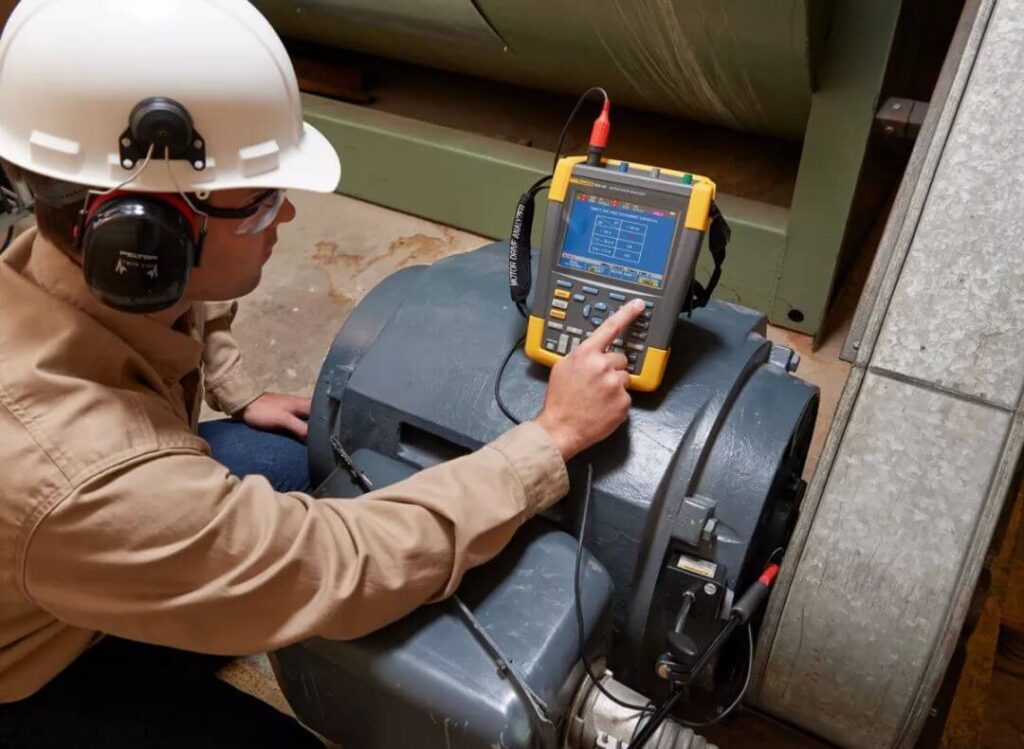
How to Troubleshoot DC Motor: Step-by-Step Diagnostic Guide (2026)
Pagina-inhoud
SchakelaarWhat Is DC Motor Troubleshooting?
DC motor troubleshooting is the systematic process of isolating a failure to one of three subsystems — elektrisch, mechanisch, or commutation — using a fixed test sequence rather than guesswork. A motor that will not start, runs slow, overheats, vonken, or trips a breaker is reporting a fault through its symptoms; the job of diagnostics is to decode those symptoms into a root cause and a confirmed fix. Most faults are concentrated in a small set of parts: the supply circuit, the armature and field windings, the brushes and commutator (brushed types), and the bearings.
Safety First: Lockout/Tagout (LOTO) Before Any Test
Every off-power test begins with energy isolation. Per GEEN MG 1 and standard industrial practice (OSHA 29 CFR 1910.147), disconnect the motor from its supply, apply a lockout/tagout device, confirm zero voltage with a tester, and discharge any capacitors in the drive before touching terminals. Rotational bench tests must secure the shaft, and live-circuit work requires CAT-rated meters, safety glasses and insulating gloves.
The Three Failure Subsystems
| Subsystem | Belangrijke componenten | Typical Faults |
|---|---|---|
| Elektrisch | Supply, armature, field winding, borstels | Open / shorted winding, low insulation, slecht contact, wrong polarity |
| Mechanisch | Lagers, schacht, koppelen, laden | Seized bearing, shaft play, verkeerde uitlijning, overbelasting, binding |
| Commutatie | Borstels, commutator, interpoles | Excessive sparking, raised mica, uneven film, off-neutral brush timing |
How a DC Motor Fails: The Electrical–Mechanical Chain
Diagnosis works because a DC motor is a closed loop of cause and effect. When one link breaks, the downstream variables move in a predictable way. The governing relations are:
- Terminal balance: VT = EB + IA·RA
- Terug-EMF: EB = kE·ω (volts per rad/s, SI)
- Koppel: T = kT·IA (and in SI, kT = kE)
- Speed equation: ω = (VT/kE) - (RA/kE·kT)·T
Trace the chain: low supply voltage → low IA available → low torque and low back-EMF → low speed; shorted armature turns → lower RA and fewer effective turns → higher current, more heat, weaker field → overheating and high sparking; seized bearing → load torque rises → IA climbs until thermal or magnetic protection trips. Each standard test targets one link.
Why Each Test Exists
| Test | What It Confirms | Pass / Fail Signal |
|---|---|---|
| Supply voltage | Source and wiring healthy | Within ±10% of nameplate; otherwise under-voltage fault |
| Winding resistance | No open or shorted coil | OL = open; reading far below spec = shorted turns |
| Insulation (megger) | Windings not grounded | >1 MΩ and PI >2 (IEEE 43); below = ground risk |
| Terug-EMF | Armature + field integrity | Proportional DC volts when spun; near-zero = open/shorted |
| Nullast stroom / snelheid | Lagers, ventilatie, tuning | Matches nameplate; high = friction or shorted turns |
| Loaded current | Overall in-service health | Within 5–10% of rated; sustained high = fault or overload |
Brushed vs Brushless (BLDC) Fault Maps
Borstelloze gelijkstroom (BLDC) motors share the winding-resistance and insulation tests but replace the mechanical commutator with electronic switching, so the fault map shifts. A brushed motor fails through brushes and commutator; a BLDC fails through Hall sensors, phase balance, and the drive.
| Fault Type | Geborsteld gelijkstroom | Borstelloze gelijkstroom (BLDC) |
|---|---|---|
| Borstel slijtage | Yes — replace at <1/3 lengte | Geen (geen borstels) |
| Commutator sparking | Yes — mechanical commutation | None — electronic commutation |
| Position sensing | Commutator (self) | Hall sensors — test 0–5 V pulse output |
| Drijfveer / controleur | Eenvoudig (or none) | Complex — phase-to-phase balance, PWM, bedrading |
Sparking & Insulation Acceptance Limits
Two quantitative standards turn “looks bad” into a defensible pass/fail decision. Both are missing from almost every competitor troubleshooting post.
Commutator Sparking Classes (IEC 60034-1)
IEC 60034-1 defines four commutation sparking grades. A service technician should never accept Class 3, en Klasse 2 is only permissible under the overload conditions stated on the nameplate.
| Klas | Beschrijving (IEC 60034-1) | Acceptable? |
|---|---|---|
| 1 | No sparking; commutator and brushes unchanged | Ideal at all loads |
| 1½ | Faint sparking at brush edges only; commutation not inadmissible | Permissible continuously |
| 2 | Permissible sparking under stated conditions (short overload) | Allowed, but investigate |
| 3 | Dangerous sparking, fire/erosion risk | Never acceptable |
Insulation Resistance Acceptance (IEEE 43-2013)
The IEEE 43-2013 recommended practice sets the insulation floor and the polarization index (PI). A megger below the floor, or a PI under 2, means moisture, besmetting, or groundwall degradation — a ground fault is imminent.
| Parameter | Criterium (IEEE 43-2013) | Action if Failed |
|---|---|---|
| Minimum insulation R | ≥1 MΩ at ≤1 kV; ≥(kV+1) MΩ above 1 kV | Bake out / rewind |
| Polarization index PI | R(10 min) / R(1 min) ≥ 2 | Dry, clean, re-test |
| Trend vs baseline | Compare to commissioned value | Investigate drift early |
Symptom-to-Subsystem Diagnostic Table
Use this map to pick the confirming test before opening the motor. It is the fastest way to avoid “shotgun” repairs that replace good parts.
| Symptoom | Likely Subsystem | Confirming Test |
|---|---|---|
| Will not start at all | Elektrisch / levering | Voltage at terminals, winding resistance (OL?) |
| Starts but runs slow | Elektrisch (low V, weak field) / Mechanisch (laden) | Supply voltage, no-load speed test |
| Overheats under load | Elektrisch (shorted turns) / Mechanisch (bearing) | Winding resistance, shaft rotation check |
| Excessive sparking | Commutatie | Brush/commutator inspection, bar-to-bar R |
| Trips breaker | Elektrisch (ground) / Mechanisch (seized) | Megger, manual shaft turn |
| Slijpen / rough noise | Mechanisch (bearing) | Hand-rotate shaft, vibration check |
Test Tools & Acceptance Criteria
| Tool | Measures | Key Pass / Fail |
|---|---|---|
| Digital multimeter | Spanning, weerstand, continuity | V within ±10%; OL = open; very low R = short |
| Clamp meter | Running / inrush current | ≤5–10% above nameplate; inrush 6–10× FLA |
| Megohmmeter | Insulation to ground | >1 MΩ and PI >2 |
| Tachometer | Shaft speed | Matches nameplate at no-load |
| Growler / bar-to-bar | Shorted armature coils | Even resistance between adjacent bars |
Technische gegevens: Formules & Worked Example
QuANTifying the fault matters more than describing it. These relations let you prove a motor is bad from meter readings alone.
| Hoeveelheid | Formule | Diagnostic Use |
|---|---|---|
| Terug-EMF | EB = kE·ω | Spin test: voltage confirms armature/field |
| Armature current | IA = (VT − EB) / RA | Steady-state current from terminal data |
| Opstarten (inrush) | Ibegin = VT / RA | No back-EMF yet; expect 6–10× FLA |
| Copper loss | Pku = IA²·RA | Heat source; rises with current² |
| Koppel | T = kT·IA (kT=kE in SI) | Current sets torque |
| Snelheid | ω = (VT/kE) - (RA/kE·kT)·T | Load↑ → speed↓ |
Worked Example: 24 V PMDC Under Fault
Nameplate: 24 V, 3.75 A rated, RA ≈ 0.5 Ω. In healthy operation, EB = 24 − 3.75×0.5 = 22.1 V and copper loss = 3.75²×0.5 ≈ 7 W. Now suppose the motor runs hot and the clamp meter reads 8 A at the same load:
- Back-EMF collapses to EB = 24 − 8×0.5 = 20 V (field/efficiency dropping).
- Copper loss jumps to 8²×0.5 = 32 W — 4.5× the healthy heat, the direct cause of overheating.
- Verdict: 8 A is 113% above nameplate → internal short, seized bearing, or genuine overload. Not a tuning issue.
Separately, a megger reads 0.2 MΩ to ground. That is below the IEEE 43 floor of 1 MΩ → the winding is contaminated or degraded and a ground fault is imminent. Dry, clean, and re-test before re-energizing.
Isolatietemperatuurlimieten (IEC 60034-1)
| Isolatieklasse | Max. wikkeltemperatuur | Typisch gebruik |
|---|---|---|
| Klasse A (legacy) | 105 ° C | Old / small motors |
| Klasse B | 130 ° C | Algemeen industrieel |
| Klasse F | 155 ° C | Demanding / enclosed |
| Klasse H | 180 ° C | Wreed / tractie |
Touch or IR temperature above the class limit under no-load is itself a fault signal (shorted turns or failed bearings) — see the NEMA MG 1 thermal guidance.
Where DC Motor Failures Cluster (Toepassingen)
Failure mode tracks duty cycle and environment. Knowing the dominant risk in your application shortens diagnosis.
| Industrie / Use | Dominant Failure Mode | Watch Item |
|---|---|---|
| Material handling, AGV | Frequent start-stop → brush wear, bearing load | Brush length, commutator film |
| Automobiel (ramen, zitplaatsen) | Stall / jam → over-current | Inrush vs locked-rotor current |
| Medisch, lab instruments | Commutation quality critical | Keep sparking ≤ Class 1½ |
| Transportbanden, industriële automatie | Overload → overheating, insulation | Load audit, venting |
| Elektrisch gereedschap | High current → commutator erosion | Bar-to-bar resistance |
Selectiegids: Repair vs Replace, and How to Spec a Replacement
Stap 1 — Repair or Replace Decision
| Condition | Decision |
|---|---|
| Rewind cost > 50% of new motor | Vervangen |
| Frame or key mechanical parts damaged | Vervangen |
| Efficiency fallen sharply with age | Replace with IE-class motor |
| Only brushes / lagers / commutator surface | Repair |
Stap 2 — Selecting a Replacement Motor (6 Steps)
- Match voltage and type: confirm DC polarity and whether the original is PMDC, serie, shunt, or BLDC.
- Match speed and torque: include locked-rotor / starting torque, not just rated.
- Match the mounting flange: IEC B5/B14 or NEMA C-face — see our motor flange guide.
- Match insulation class and IP rating to the operating environment and temperature class above.
- Verify serviceability: brush/commutator access (geborsteld) or Hall-sensor / drive compatibility (BLDC).
- Check drive capacity: the supply or controller must exceed the inrush current (6–10× FLA).
Common Engineering Mistakes in DC Motor Troubleshooting
| Fout | Why It Hurts |
|---|---|
| Skipping the visual inspection | Wastes instrument time; misses obvious burn or wear |
| Testing live / no LOTO | Shock and arc-flash hazard (GEEN MG 1 / OSHA) |
| Resistance only, no megger | Misses ground faults that trip breakers |
| Reading inrush as a fault | 6–10× FLA at start is normal for DC |
| Using emery cloth on commutator | Copper grit embeds, worsens sparking — use a commutator stone |
| Wrong brush grade | Accelerated wear and out-of-class sparking |
| Spec’ing replacement by peak torque only | Overheats on the real duty cycle |
| Ignoring mica undercut | Carbon builds between bars, drives sparking |
DC Motor Troubleshooting Table (Probleem → Oorzaak → Oplossing)
| Probleem | Waarschijnlijke oorzaak | Oplossing |
|---|---|---|
| Motor will not start | No supply, open winding, or seized bearing | Verify voltage at terminals; test winding resistance (OL = open); free or replace the shaft |
| Runs but slow | Low voltage, overbelasting, worn brushes, shorted turns | Raise supply; reduce load; reseat brushes; bar-to-bar test the armature |
| Overheats under load | Shorted turns, geblokkeerde ventilatie, bad bearing | Rewind; clear vents; replace bearing; confirm class limit |
| Excessive sparking | Worn brush, damaged commutator, wrong spring tension | Replace brush to spec; resurface commutator; set brush pressure |
| Trips the breaker | Ground fault or mechanical seizure | Megger (<1 MΩ = ground risk); free or replace bearings |
| Slijpen / rough noise | Dry or worn bearing | Lubricate with specified grease or replace the bearing |
| Intermittent stopping | Loose connection or thermal trip | Tighten terminals; check load and cooling |
| High current only at one position | Faulty commutator segment | Bar-to-bar resistance test; resurface or rewind |
Veelgestelde vragen
How do I test if a DC motor winding is bad?
Use a digital multimeter for continuity and resistance (OL = open circuit; a reading far below spec = shorted turns), and a megohmmeter per IEEE 43-2013 (≥1 MΩ, polarization index ≥2). A back-EMF spin test catches shorted armature turns that simple resistance testing misses.
What causes excessive sparking at the brushes?
The usual causes are worn brushes, a damaged or contaminated commutator, incorrect brush spring tension, or the wrong brush grade. Volgens IEC 60034-1, commutator sparking should stay at Class 1 or 1½; Klas 3 is never acceptable and means immediate service.
What is a normal back-EMF for a DC motor?
When spun as a generator with no supply, a healthy permanent-magnet DC motor produces a DC voltage proportional to speed — typically several volts per 1,000 RPM depending on design. A near-zero reading means an open or shorted armature or field winding.
How often should DC motor brushes be inspected?
Inspect at every planned shutdown and replace brushes when worn below one-third of their original length — typically every 1,500–2,000 operating hours, depending on duty cycle and environment.
Can a DC motor run with a grounded winding?
Nee. A megger reading below 1 MΩ (IEEE 43-2013) signals imminent ground-fault risk. De-energize the motor, dry and clean the winding, and re-test before returning it to service.
Which is easier to troubleshoot — brushed or brushless DC?
Brushed DC fails through mechanical parts (borstels, commutator) and is usually simpler to diagnose with basic meters. Brushless DC adds Hall-sensor, phase-balance, and drive-controller checks that require electronics testing.
Why Choose Greensky for DC & Motion Replacement Motors?
When diagnostics point to replacement rather than repair, Greensky supplies a full DC portfolio — PMDC, geborsteld, and brushless (BLDC) motors plus integrated gear motors — built to IEC 60034 en NEMAMG 1 dimensions so they drop into existing mounts. Benefits for maintenance and procurement teams:
- Flange compatibility: IEC B5/B14 and NEMA C-face options, with customized pilot diameters — see our motor flange guide.
- Documented ratings: nameplate voltage, huidig, insulation class, and IE efficiency so your troubleshooting baseline is clear from day one.
- Brushed or BLDC: choose mechanical simplicity or electronic commutation with matched Hall sensors and drives.
- Low-MOQ OEM/ODM: small batches for spares programs and custom shaft/encoder configurations.
Gerelateerde lectuur
- What Is a DC Motor? Soorten, Principle & Formules
- Why Do Brushed Motors Spark? Oorzaken & Fixes
- BLDC Motor Disadvantages Engineers Should Know
- What Is a Motor Flange? IEC vs NEMA Mounting
- AC vs DC Motor: Welke te kiezen
- Gearbox vs Gear Motor: Verschillen & Selectie
- Synchronous vs Induction Motor: Belangrijkste verschillen
- Why Robotic Arms Need Speed Reducers
Referenties
- IEC 60034-1 — Rotating Electrical Machines: Beoordeling en prestaties (sparking classes, temperature limits). webstore.iec.ch/publication/67467
- IEC 60034-30-1 — Efficiency Classes for Rotating Electrical Machines. webstore.iec.ch/publication/67784
- GEEN MG 1 — Motors and Generators (veiligheid, thermal, montage). nema.org/standards/view/mg-1-motors-and-generators
- IEEE 43-2013 — Recommended Practice for Insulation Resistance Testing of Rotating Machinery. standards.ieee.org/ieee/43/4385
- IEEE 112 — Standard Test Procedure for Polyphase Induction Motors (verlies & back-EMF methods). standards.ieee.org/ieee/112/4213
- ONS. DOE — Electric Motor Efficiency Determination & Repair. energy.gov/eere/amo/articles/determination-electric-motors
- EASA — DC Motor Testing & Commutation Issues (Bishop). easa.com/training/private-webinars/dc-motor-testing-commutation-issues
- maxon — DC motor commutation and brush application notes. maxon.com/en-us/technologies/tech-papers
- Faulhaber — DC micromotor application notes. faulhaber.com/en/technical-information
- SKF — Bearing maintenance and lubrication for electric motors. skf.com/us/products/maintenance-products/bearing-maintenance