
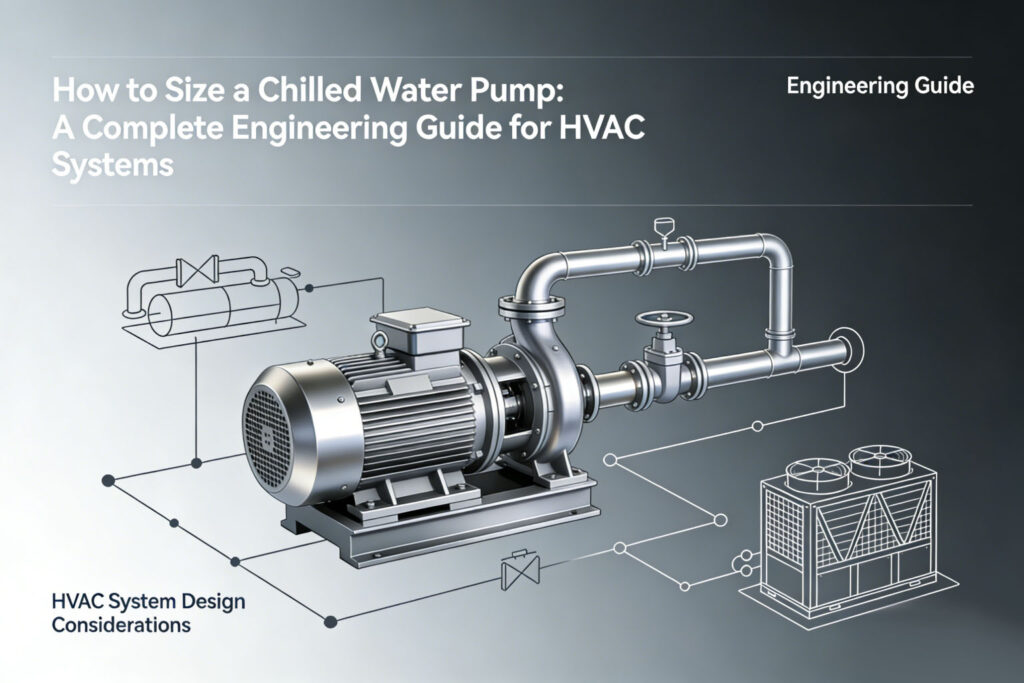
냉각수 펌프의 크기를 조정하는 방법: HVAC 시스템을 위한 완벽한 엔지니어링 가이드
적절한 펌프 크기는 효율적인 냉수 시스템을 설계하는 데 있어 가장 중요한 단계 중 하나입니다.. 상업용 HVAC 시스템용 여부, 데이터 센터, 또는 산업용 냉각 공정, 올바른 펌프 크기를 선택하면 시스템 성능에 직접적인 영향을 미칩니다, 에너지 소비, 장기적인 신뢰성.
검색하고 계시다면 크기를 조정하는 방법 냉각수 펌프, 이 가이드는 완전한 엔지니어링 접근 방식을 제공합니다., 수식 포함, 계산 방법, 시스템 고려 사항, 그리고 실용적인 선택팁.
이 문서는 엔지니어를 위해 작성되었습니다., HVAC 계약업체, 정확하고 안정적인 펌프 크기 조정 솔루션이 필요한 OEM 제조업체. 또한 BLDC 모터와 같은 최신 고효율 모터가 어떻게 펌프 성능을 크게 향상시킬 수 있는지 설명합니다..
추천 스니펫: 냉각수 펌프의 크기를 조정하는 방법
크기에 냉각수 펌프, 필요한 유량과 총 동적 수두를 계산해야 합니다. (TDH).
- 유량은 냉각 부하를 기준으로 합니다. (GPM 또는 m³/h)
- 헤드는 시스템 저항에 의해 결정됩니다.
- 성능 곡선을 기준으로 펌프 선택
- 최적의 성능을 위해 고효율 모터와 일치
정확한 펌프 크기 조정으로 효율적인 작동 보장, 에너지 소비 감소, 그리고 긴 시스템 수명.
HVAC 시스템에서 펌프 크기가 중요한 이유
펌프 크기가 잘못되면 심각한 시스템 문제가 발생할 수 있습니다..
대형 펌프
- 과도한 에너지 소비
- 높은 운영 비용
- 마모 증가
소형 펌프
- 냉각 용량이 부족함
- 시스템 성능 저하
- 온도 불안정
적절한 크기 조정으로 성능과 효율성 간의 최적의 균형 보장.
냉각수 펌프 크기 조정을 위한 주요 매개변수
1. 유량 (큐)
유량은 시스템을 통해 순환해야 하는 냉각수의 양을 결정합니다..
2. 총 동적 헤드 (TDH)
TDH는 펌프가 극복해야 하는 총 저항을 나타냅니다..
3. 냉각 부하
냉동 톤수로 측정 (TR) 또는 kW.
4. 파이프 시스템 설계
파이프 길이 포함, 피팅, 그리고 고도 변화.
단계별: 유량 계산 방법
기본 공식
유량 (GPM) = 냉방부하 (BTU/시간) ¶ (500 × ΔT)
여기서 ΔT는 공급수와 반환수의 온도차입니다..
계산 예
100톤 시스템의 경우:
- 1 톤 = 12,000 BTU/시간
- 총 부하 = 1,200,000 BTU/시간
- ΔT = 10°F로 가정
유량 = 1,200,000 ¶ (500 × 10) = 240 GPM
단계별: 총 동적 헤드를 계산하는 방법 (TDH)
TDH의 구성 요소
- 파이프의 마찰 손실
- 피팅 및 밸브의 손실
- 고도 차이
마찰 손실 계산
파이프 직경 기준, 유량, 그리고 길이.
일반적인 TDH 범위
- 소규모 시스템: 10-30미터
- 중간 시스템: 30-60미터
- 대형 시스템: 60+ 미터
펌프 성능 곡선 이해
유량과 양정을 계산한 후, 성능 곡선을 사용하여 펌프 선택.
주요 곡선 요소
- 흐름 대 머리
- 효율성 곡선
- 소비전력
최고의 효율성 지점 근처에서 작동하는 펌프를 선택하십시오. (BEP).
1차 펌프와 2차 펌프 크기 비교
1차 펌프
냉각기 흐름 요구 사항 처리.
2차 펌프
냉수를 다양한 구역에 분배.
각 펌프의 크기는 특정 기능에 따라 결정되어야 합니다..
일정한 흐름과 가변 흐름 시스템
일정한 흐름
부하에 관계없이 고정된 유량.
가변 흐름
수요에 따라 흐름을 조정합니다., 효율성 향상.
가변 유량 시스템에는 고급 제어 전략이 필요합니다..
냉각수 펌프용 모터 선택
모터는 펌프 성능에 중요한 역할을 합니다..
일반적인 모터 유형
- AC 유도 전동기
- 영구 자석 모터
- BLDC 모터
모터 효율성이 중요한 이유
모터 효율은 시스템 에너지 소비에 직접적인 영향을 미칩니다.
펌프 응용 분야에서 BLDC 모터의 장점
BLDC 모터는 최신 HVAC 시스템에서 점점 더 많이 사용되고 있습니다..
- 최대 효율성 95%
- 정확한 속도 제어
- 낮은 에너지 소비
- 긴 서비스 수명
- 낮은 유지보수
가변 속도 제어와 결합, BLDC 모터는 시스템 효율성을 크게 향상시킵니다..
실용적인 펌프 선택 팁
1. 선택하기 전에 항상 계산하십시오.
가정을 기반으로 펌프를 선택하지 마십시오..
2. 고효율 장비를 선택하세요
장기 운영 비용 절감.
3. 향후 확장 고려
시스템 성장 허용.
4. 제어 전략 최적화
효율성을 위해 가변 속도 드라이브 사용.
5. 신뢰할 수 있는 공급업체와 협력
제품 품질 및 지원 보장.
일반적인 펌프 크기 조정 실수
- 시스템 저항 무시
- 안전 마진을 과대평가함
- 모터 효율 무시
- 부적절한 제어 구성
이러한 실수는 성능 저하와 높은 비용으로 이어질 수 있습니다..
에너지 효율성 및 비용 최적화
에너지 소비는 HVAC 시스템의 주요 비용 요소입니다..
고효율 모터와 적절한 펌프 크기 조정으로 운영 비용 절감.
가변 유량 시스템과 고급 제어로 추가적인 비용 절감 효과 제공.
냉각수 펌프 설계의 미래 동향
- 스마트 HVAC 시스템
- IoT 기반 모니터링
- 고효율 BLDC 모터
- 고급 제어 알고리즘
결론
효율적인 HVAC 및 산업용 냉각 시스템을 설계하려면 냉수 펌프의 크기를 결정하는 방법을 아는 것이 필수적입니다.. 유량과 총동적양정을 정확하게 계산하여, 엔지니어는 최적의 성능을 위해 올바른 펌프를 선택할 수 있습니다..
현대 시스템은 에너지 소비를 줄이고 신뢰성을 향상시키기 위해 점점 더 BLDC 모터와 같은 고효율 모터에 의존하고 있습니다..
OEM 제조업체 및 HVAC 전문가용, 적절한 펌프 크기와 모터 선택은 장기적인 시스템 효율성과 비용 절감을 달성하는 데 중요합니다..
참조
https://www.ashrae.org/technical-resources
https://www.energy.gov/eere/buildings/articles/chilled-water-systems
https://www.sciencedirect.com/topics/engineering/chilled-water-system
https://www.engineeringtoolbox.com/pumps-d_637.html
https://www.carrier.com/commercial/en/us/products/chillers/