
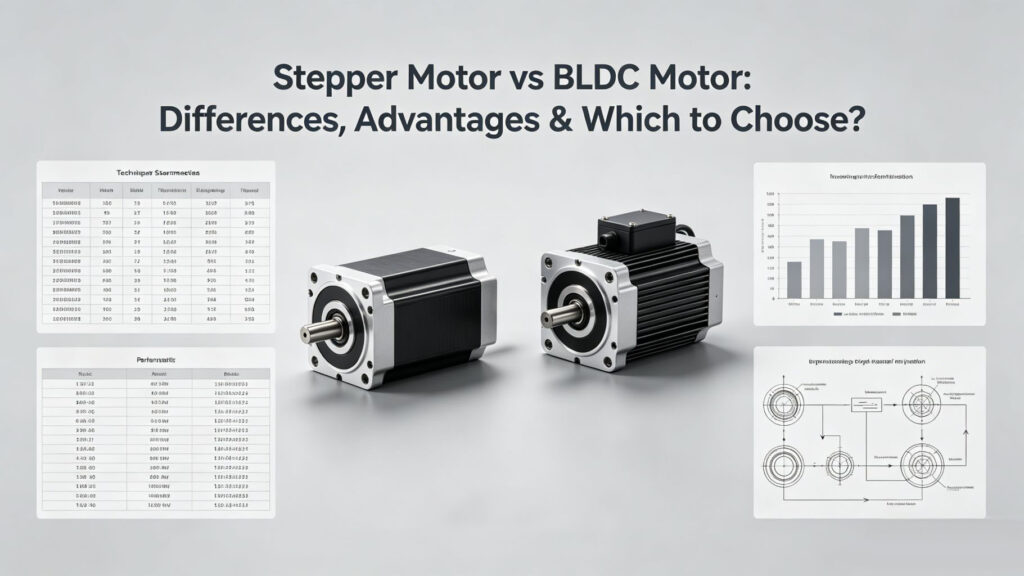
ステッピングモーターとBLDCモーターの比較: 違い, 利点 & どれを選ぶか?
注目のスニペット:
ステッピング モーターは、フィードバック システムなしでの正確な位置決めと低速制御に最適です。, その間 BLDCモーター より高い効率を提供します, より良いトルク密度, 動的で高速なアプリケーションにおける優れたパフォーマンス. 最適な選択は、アプリケーションが精度を優先するかどうかによって異なります。, コストのシンプルさ, エネルギー効率と長期信頼性. OEM および産業用バイヤー向け, BLDC モーターは通常、パフォーマンス重視のシステムに好まれます。, 一方、ステッピング モーターは、CNC や 3D プリンティングなどの位置決めに重点を置いたアプリケーションに引き続き最適です。.
評価する場合 ステッピングモーターとBLDCモーターの比較, エンジニアと調達マネージャーは基本仕様以上のことを考慮する必要があります. この決定はシステム アーキテクチャに影響を与えます, 制御戦略, エネルギー消費, そして長期的なメンテナンス費用も. 自動化が行われる現代の産業環境では, 効率, 信頼性が重要です。これらのモーター タイプ間の工学的トレードオフを理解することが不可欠です.
ステッピングモーターとは?
ステッピング モーターは、1 回転を個別のステップに分割するブラシレス同期モーターです。. モーターに送信される各パルスにより、正確な角運動が生じます。, フィードバックシステムなしで開ループ位置制御を可能にする.
主要なエンジニアリング特性
- 離散的なステップ動作 (例えば, 1.8ステップごとに°)
- 停止時の高い保持トルク
- フィードバックループのないシンプルな制御
- BLDCモーターと比較して効率が低い
ステッピング モーターは、正確な位置決めが必要なアプリケーションで広く使用されています。, CNCマシンなど, 3Dプリンター, および医療機器.
BLDCモーターとは?
ブラシレスDC (BLDC) モーターは電子整流と永久磁石を使用して、高効率と正確な制御による連続回転を実現します。.
主要なエンジニアリング特性
- スムーズなトルク出力による連続回転
- 高効率 (85–95%)
- 電子スピードコントローラーが必要です (ESC)
- 高い電力密度
BLDC モーターは電気自動車で広く使用されています, ロボット工学, HVAC システム, および産業オートメーション.
👉 ソリューションを探す: BLDC モーターの製品範囲
ステッピングモーターとBLDCモーターの比較: 主な違いの説明
| パラメーター | ステッピングモーター | BLDCモーター |
|---|---|---|
| 制御タイプ | オープンループ (フィードバックはありません) | 閉ループ (コントローラー付き) |
| 効率 | 低い (50–70%) | 高い (85–95%) |
| トルクの挙動 | 低速でも高速 | 速度範囲全体で一貫した |
| 速度範囲 | 低から中程度 | 広い (低速から高速まで) |
| 精度 | 非常に高い位置決め精度 | 精度を高めるにはフィードバックが必要 |
| 料金 | システムコストの削減 | 初期費用が高い |
主要な違いはモーションの生成方法にあります: ステッピングモーターは個別のステップで動きます, BLDCモーターは連続回転を提供します. これがパフォーマンスの根本的な違いにつながります, 効率, および制御要件.
BLDC モーターがステッピング モーターより効率的である理由
効率は現代のモーター選択における重要な要素です, 特にエネルギーに敏感な産業システムにおいて.
エンジニアリング分析
- ステッピングモーターは負荷に関係なく一定の電流を消費します → エネルギー損失
- BLDC モーターは負荷に基づいて電流を動的に調整します
- BLDC 設計における銅損と鉄損の削減
コンベアシステムや電動モビリティなどの用途, switching from stepper to BLDC motors can significantly reduce energy consumption and operating costs.
Torque Density and Dynamic Performance Comparison
Torque density and dynamic response are critical in modern automation systems.
Stepper Motor Characteristics
- High holding torque at zero speed
- Torque drops rapidly at higher speeds
BLDC モーターの利点
- High torque across wide speed range
- Better acceleration and deceleration
- Higher power density
For dynamic systems such as AGVs or robotic arms, BLDC モーターは優れたパフォーマンスを提供します.
熱性能と熱管理
熱管理はモーターの寿命と信頼性に直接影響します.
ステッピングモーター
- Continuous current leads to constant heat generation
- Lower efficiency increases thermal stress
BLDCモーター
- Lower heat due to higher efficiency
- ステータに熱が集中 → 冷却が容易になる
This makes BLDC motors more suitable for continuous-duty industrial applications.
制御システムの違い: Stepper motor vs BLDC motor
Control strategy is a key decision factor for engineers.
Stepper Motor Control
- Simple pulse-based control
- No feedback required (open-loop)
- Lower system complexity
BLDC モーター制御
- ESCまたはドライバーが必要です
- Supports closed-loop control with sensors
- Enables high precision and smart integration
For Industry 4.0 スマートオートメーション, BLDC motors provide more flexibility.
信頼性と寿命の比較
Reliability is a key concern for OEM buyers.
- ステッピングモーター: Simple design but prone to overheating
- BLDCモーター: Longer lifespan due to efficient operation
In continuous-use systems, BLDC motors typically offer better long-term reliability.
How to Choose Stepper or BLDC Motor for Your Application
Motor selection should be based on application requirements rather than general preferences.
主要な選択要素
- 電圧: 12V / 24V / 48V / 72Vシステム
- 力: From small precision motors to kW-level systems
- スピード & トルク: Continuous vs holding torque needs
- 冷却: Passive or forced cooling
- コントローラ: Stepper driver vs ESC
アプリケーションベースの推奨事項
- CNC / 3D printing → Stepper motor
- 電気自動車→BLDCモーター
- ロボティクス → BLDCモーター
- Precision positioning → Stepper motor
👉 Get OEM support: カスタムモーターソリューション
Industrial Applications of Stepper and BLDC Motors
ステッピングモーターの用途
- CNCマシン
- 3Dプリンター
- 医療機器
- Precision positioning systems
BLDC モーターの用途
- 電気自動車 (48V / 72Vシステム)
- ロボティクスとオートメーション
- HVAC システム
- 産業機械
👉 EV ソリューションを探索する: 電気自動車モーター
コスト比較: ステッピングモーターとBLDCモーターの比較
| コスト要因 | ステッピングモーター | BLDCモーター |
|---|---|---|
| 初期費用 | より低い | より高い |
| 運営コスト | より高い (非効率な) | より低い |
| メンテナンス | 低い | 低い |
| 総所有コスト | 長期使用でさらに高くなる | 連続運転の場合は低くなります |
ステッピングモーターは初期費用が安くなりますが、, BLDCモーター エネルギー集約型アプリケーションでより優れた ROI を実現.
将来の傾向: 現代産業におけるステッピング モーターと BLDC モーター
業界のトレンドは効率性とスマートなシステムへと移行しています.
- オートメーションにおける BLDC モーターの採用の増加
- IoTおよびスマート制御システムとの統合
- BLDC の成長を促進するエネルギー効率規制
ステッピングモーターはニッチな精密アプリケーションで引き続き重要です, しかし、BLDC モーターはより広範な産業用途で主流になりつつあります.
よくある質問: ステッピングモーターとBLDCモーターの比較
1. 精密用途に適したモーターはどれですか?
ステッピング モーターは固定ステップで移動し、フィードバック システムを必要としないため、精密な位置決めに適しています。.
2. BLDC モーターの効率が高い理由?
BLDC モーターは負荷に基づいて電流を調整し、一定の電力消費を排除します, エネルギー損失を大幅に削減.
3. BLDC モーターはステッピング モーターの代わりに使用できますか?
一部のアプリケーションでは, はい. しかし, ステッピングモーターは低コストのため依然として好まれています, 高精度位置決め作業.
4. 連続運転に適したモーターはどれですか?
BLDC モーターは効率が高く、発熱が少ないため優れています。.
5. コストの差は何ですか?
ステッピングモーターは初期費用が低い, しかし、BLDC モーターはより優れた長期的な価値を提供します.
6. BLDCはステッピングモーターより優れていますか?
どちらが優れているというわけではなく、BLDC は高速効率と動的トルクに優れています。, 一方、ステッパーは開ループ位置決めのシンプルさと低速安定性をリードします。.
7. どのモーターがより精度が高いか?
ステッピング モーターは通常、フィードバック ハードウェアなしで優れた開ループ位置決め精度を提供します。, 一方、BLDC では精度を一致させるためにエンコーダが必要です.
8. BLDC は CNC のステッピング モーターを置き換えることができますか?
はい, ただし閉ループ制御システムのみ; BLDC は高 RPM 切断タスクで優れたパフォーマンスを発揮します, ステッパーは低速精密フライス加工用にシンプルなままですが.
結論: どのモーターを選ぶべきか?
比較する場合 ステッピングモーターとBLDCモーターの比較, 選択はアプリケーションの優先順位によって異なります. ステッピングモーターは精度とシンプルさに優れています, BLDC モーターは優れた効率を実現します, パフォーマンス, そして長期的な信頼性.
ほとんどの最新の OEM および産業用アプリケーションに対応, BLDC モーターは、その効率性と拡張性により、推奨される選択肢になりつつあります。.
適切なモーターを選択するのに助けが必要です?
✔ データシートをリクエストする
✔ OEM モーター ソリューションを入手
✔ 今すぐ当社のエンジニアにご連絡ください
参照
- 産業用エレクトロニクスに関するIEEEトランザクション
- IECモーター効率規格
- 産業用モーションコントロールレポート