
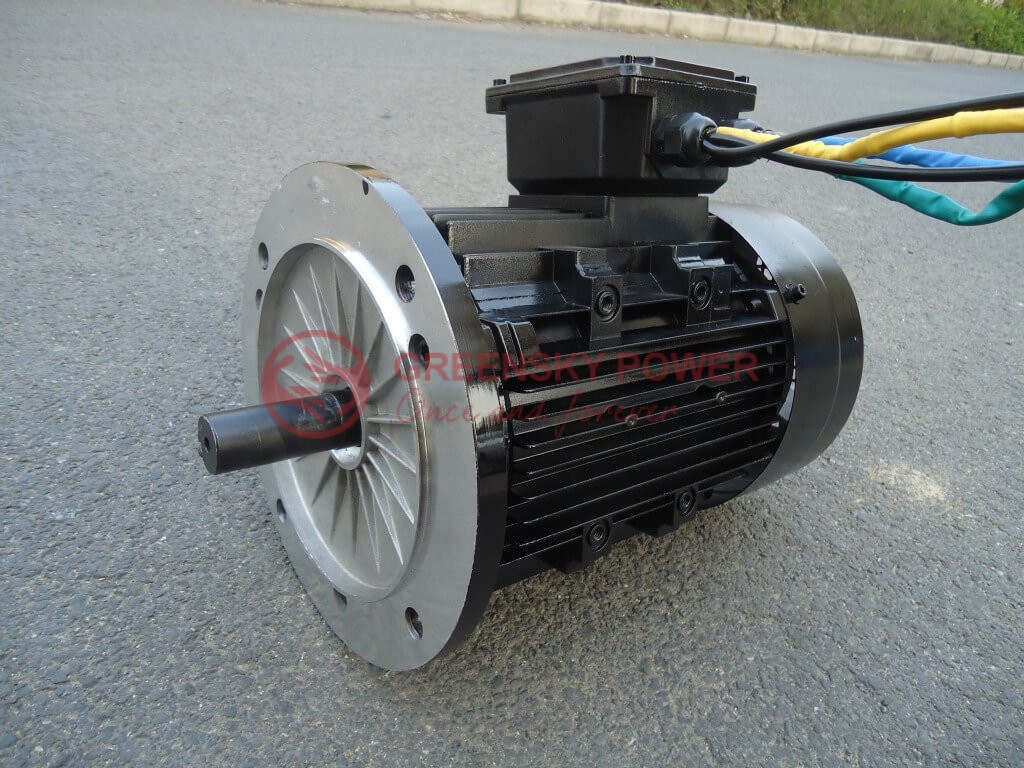
How Much Weight Can a DC Motor Carry?
簡単な回答
The weight a DC motor can carry depends on three factors: これは トルク出力, の radius of the pulley or lever arm, そして gear reduction ratio. The fundamental formula is mass = torque / (radius × g), where g is gravitational acceleration (9.81 m/s²). A small DC motor rated at a few watts may lift only a few kilograms, while a gear motor rated at several hundred watts can lift hundreds of kilograms. 例えば, a motor with 173.6 N-cm rated torque using a 2 cm radius pulley can lift approximately 8.85 kg directly — and with a 10:1 gearbox at 90% 効率, that capacity increases to about 79.7 kg. あたり IEC 60034-1 と MGはありません 1, motors must be derated when operated above their continuous duty rating, so a safety factor of 1.5–2.0× should always be applied to weight capacity calculations.
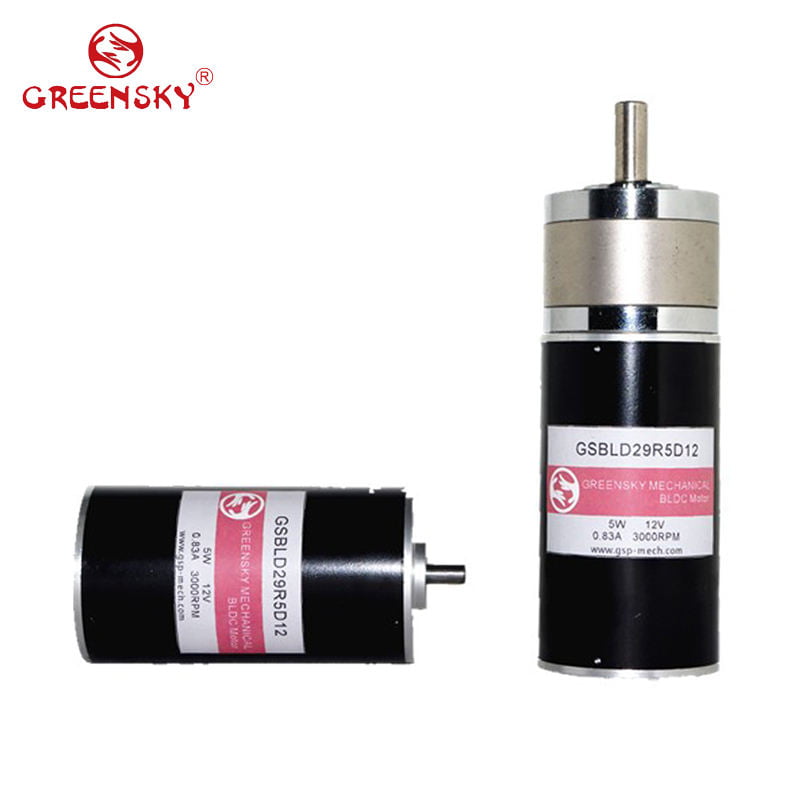
What Determines DC Motor Weight Capacity?
DC motor weight capacity is not a single specification — it is the result of the interaction between the motor’s トルク出力, the mechanical transmission system, and the thermal limits of the motor. Understanding these relationships requires defining several key terms:
- トルク (T) — The rotational force produced by the motor, measured in N·m (ニュートンメーター) or kg·cm. Torque is the primary determinant of how much weight a motor can move.
- ストールトルク (Tストール) — The maximum torque the motor produces when the shaft is prevented from rotating. Operating at stall torque for more than a few seconds will destroy most motors due to excessive current and heat.
- Rated (nominal) トルク (T評価された) — The torque the motor can deliver continuously without exceeding its insulation class temperature limit. This is the value used for sustained weight-lifting calculations.
- Pulley radius (r) — The distance from the motor shaft center to the point where the lifting force is applied. A smaller radius allows the motor to lift more weight but at a slower linear speed.
- ギア比 (私) — The ratio by which a ギアボックス reduces speed and multiplies torque. あ 10:1 gear ratio multiplies torque by approximately 9× (を説明する 90% gearbox efficiency).
- デューティサイクル — Per NEMA MG 1 一部 10 およびIEC 60034-1, the duty cycle (S1 continuous, S2 short-time, S3 intermittent) defines how long the motor can sustain a given load. Weight capacity must be calculated against the intended duty cycle.
The relationship between these parameters is governed by the torque equilibrium equation: the motor’s output torque must exceed the torque created by the load (mass × gravity × radius) for lifting to occur.
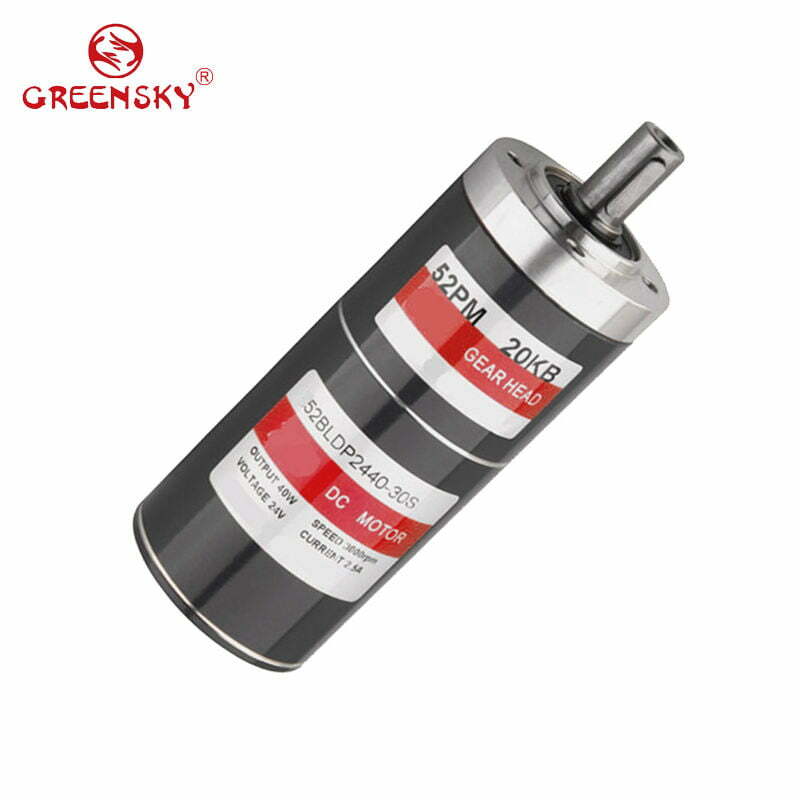
How DC Motors Generate Torque: ステップバイステップ
To understand weight capacity, it helps to trace how a DC motor converts electrical input into the mechanical torque that ultimately lifts a load:
- 磁場の確立 — In a ブラシ付きDCモーター, 永久磁石 (or field windings) in the stator create a stationary magnetic field. で ブラシレスDCモーター, the controller sequentially energizes stator phases to create a rotating field.
- Armature current flow — When voltage is applied, current flows through the armature windings (起毛した) or stator phases (ブラシレス). The magnitude of this current directly determines torque: T = Kt ×Φ×Iある, ここで、Kt はトルク定数です, Φ is magnetic flux, そして私ある is armature current.
- Lorentz force and rotation — Current-carrying conductors in the magnetic field experience a force (F = BIL) perpendicular to both field and current. This force creates torque on the rotor, 回転させる.
- Back-EMF and equilibrium — ローターが回転すると, 逆起電力が発生します (逆起電力) 速度に比例する. At steady state, the motor reaches an equilibrium where the net current produces exactly enough torque to balance the load.
- Torque transmission to load — The motor shaft torque is transmitted through a coupling, 滑車, 装備, or leadscrew to the load. The mechanical advantage of this transmission system determines the final lifting force.
The key insight for weight capacity is step 5: the motor’s shaft torque is only the starting point. The transmission system — gears, 滑車, levers — determines how that torque translates into lifting force. This is why a small motor with the right gearbox can lift surprisingly heavy loads.
DC Motor Types: Weight Capacity Comparison Table
| モーターの種類 | Typical Torque Range | Typical Weight Capacity* | 最適な用途 | Limitation |
|---|---|---|---|---|
| Coreless DC motor (例えば, Faulhaber 1506SR) | 0.4–0.6 mNm (ストール) | < 1 gram (direct drive) | Precision instruments, micro-robotics | Extremely low torque; requires micro-gearbox |
| Small brushed DC motor (例えば, ファールハーバー 0816) | 1.0–1.15 mNm (ストール) | ~10–15 grams (direct drive) | おもちゃ, small actuators, camera drives | ブラシの摩耗; limited continuous torque |
| BLDCサーボモーター (例えば, ファールハーバー 2057 BA) | 309 mNm (ストール); 13.7 mNm (評価された) | ~1.5 kg (direct); ~15 kg (と 10:1 ギアボックス) | ロボット工学, 医療機器, オートメーション | コントローラーが必要です; より高いコスト |
| High-performance DC motor (例えば, maxon RE 40) | 1,020 mNm (ストール); 189 mNm (評価された) | ~5.2 kg (direct); ~47 kg (と 10:1 ギアボックス) | ロボット工学, 産業自動化, climbing robots | Brush maintenance; 48V supply required |
| Industrial gear motor (例えば, 12V 390W with 800:1) | 560 N・m (output, ギアボックス付き) | ~800 kg (with appropriate pulley) | Door operators, ホイスト, ゲート, リフト | 低速; large physical size |
*Weight capacity values assume vertical lifting with a 2 cm radius pulley at motor rated torque (not stall torque), と 0.7 安全係数. Actual capacity depends on gear ratio, pulley diameter, デューティサイクル, and ambient temperature.
エンジニアリングデータ: トルクの計算式, 効率, and Temperature Limits
Core Torque and Weight Formulas
The following equations govern the relationship between motor torque and lifting capacity. These are derived from classical mechanics and are consistent with the torque calculation methodologies described in the maxon DC motor technical handbook and Faulhaber product documentation:
1. Torque required to lift a mass (vertical lifting):
t = (m × g) × r
where τ = torque (N・m), m = mass (kg), g = 9.81 m/s², r = pulley radius (メートル)
2. Maximum weight a motor can lift:
メートル最大 = Tストール / (r × g)
Use rated torque with safety factor for continuous operation
3. Gearbox output torque:
T外 = Tモーター × i × η
where i = gear ratio, η = ギアボックス効率 (typically 0.85–0.95 per stage)
4. Motor power from torque and speed:
P = T × ω = T × (2π × n / 60)
Or: T (N・m) = 9550 ×P (キロワット) / n (回転数)
5. DC motor torque from current:
T = Kt ×私ある
ここで、Kt = torque constant (N・m/A), 私ある = armature current (あ)
作業例: 12V 100RPM 173.6 N-cm DC Motor
The existing Greensky Power article references a 12V 100RPM DC motor with 173.6 N-cm rated torque. Here is the complete weight capacity calculation:
| パラメーター | 価値 | Calculation |
|---|---|---|
| 定格トルク | 173.6 N-cm = 1.736 N・m | 与えられた |
| Pulley radius | 2 cm = 0.02 メートル | Selected (common size) |
| Theoretical max weight | 8.85 kg | 1.736 / (0.02 × 9.81) |
| と 70% 安全係数 | 6.2 kg | 8.85 × 0.7 |
| と 10:1 ギアボックス (90% eff.) | 79.7 kg | 1.736 × 10 × 0.9 / (0.02 × 9.81) |
| と 10:1 ギアボックス + 70% 安全性 | 55.8 kg | 79.7 × 0.7 |
This demonstrates why the gear ratio is the single most powerful tool for increasing weight capacity: ある 10:1 gearbox increased lifting capacity from 8.85 kg to 79.7 kg — a 9× improvement. For more on gearbox selection, 私たちのを参照してください ギアボックス選択ガイド.
Efficiency and Power Loss Data
Motor efficiency directly affects weight capacity because wasted energy becomes heat, which limits the continuous torque output. Per a 2026 IEEE Access study on PMDC motor optimization by Esenboğa, efficiency improvements from 74.1% に 84.6% increased torque output from 3.93 N·m to 4.93 N·m — a 25% improvement through magnet geometry optimization alone.
| モーターの種類 | 最大効率 | Primary Loss Source | 参照 |
|---|---|---|---|
| ファールハーバー 0816 (コアレス, 起毛した) | 69% | Precious metal brush friction | Faulhaber datasheet |
| maxon RE 40 (コアレス, 起毛した) | 89% | Graphite brush + 巻線抵抗 | maxon technical handbook |
| ファールハーバー 2057 BA (BLDC) | 90% | 巻線抵抗 + iron loss | Faulhaber datasheet |
| Typical PMDC (iron core, 起毛した) | 74–85% | Iron loss + ブラシの摩擦 + I²R | IEEE Access (Esenboğa, 2026) |
温度制限 (IEC 60034-1 Insulation Classes)
When a DC motor lifts heavy loads, the armature current increases, generating heat through I²R losses. If the winding temperature exceeds the insulation class limit, the motor will fail. IEC による 60034-1:
| 絶縁クラス | 最大巻線温度 | Allowed Temp Rise (40周囲℃) | Example Motor |
|---|---|---|---|
| クラスB | 130℃ | 80℃ | Standard industrial PMDC |
| クラスF | 155℃ | 100℃ | maxon RE 40 (155°C limit); most industrial motors |
| クラスH | 180℃ | 125℃ | Heavy-duty / high-temp motors |
| Special (ファールハーバー 2057 BA) | 140℃ | 100℃ | BLDC with stainless steel housing |
At rated torque, a motor typically reaches thermal equilibrium at 60–80% of its insulation class limit. When lifting heavy loads near stall torque, the temperature can exceed the limit within seconds. 温度センサー (PTC or NTC thermistors embedded in the windings) or current limiting in the モーターコントローラー are essential for heavy-load applications. 私たちのを参照してください motor testing standards guide for thermal test procedures.
Duty Cycle Ratings (MGはありません 1 / IEC 60034-1)
Weight capacity is meaningless without specifying the duty cycle. A motor can lift a much heavier load for 5 秒 (S2 short-time duty) than it can lift continuously (S1 continuous duty):
- S1 (継続勤務) — Motor runs at constant load long enough to reach thermal equilibrium. Use rated torque for capacity calculations.
- S2 (Short-time duty) — Motor runs at constant load for a specified time (10, 30, 60 分), then rests. Can handle 1.3–1.5× rated torque during the active period.
- S3 (Intermittent periodic duty) — Alternating periods of load and rest (例えば, 60% デューティサイクル). Capacity depends on the on/off ratio; typically allows 1.1–1.3× rated torque.
- S4/S5 (Intermittent with starting/braking) — Frequent starts and stops add thermal stress from high inrush current. Derate capacity by 10–20%.
Best Applications for DC Motors in Weight Lifting
1. Electric Hoists and Winches
12V and 24V DC gear motors are the standard for portable electric hoists, ATV winches, and boat trailer winches. A typical 12V 2000W winch motor with a 300:1 planetary gearbox can pull up to 4,000 kg (8,800 ポンド) on a single line. The high gear ratio trades speed for massive torque multiplication. For our ブラシ付きDCモーター platform, common hoist applications use motors rated at 200–500W with 100:1 に 500:1 ギアボックス.
2. ロボティクスとオートメーション
In robotic arm joints, DCモーター (particularly BLDC servos) lift payloads through lever arms. The torque requirement is calculated as T = (payload_mass × g × arm_length) / gear_ratio. aの 5 kg payload on a 0.3 m arm with a 100:1 harmonic drive at 85% 効率, the motor must deliver at least 0.173 N·m — well within the range of a Faulhaber 2057 BA BLDC motor (13.7 mNm rated, 309 mNm stall). 私たちのを参照してください robotics motor guide for servo-grade BLDC specifications.
3. Electric Vehicles and Material Handling
DC motors power electric forklifts, パレットジャッキ, と electric forklift motors that carry loads of 1,000–5,000 kg. These applications use 24V or 48V series-wound DC motors rated at 1–10 kW, paired with differential gearboxes. The high starting torque of DC motors (up to 400–500% of rated torque) is essential for accelerating heavy loads from standstill. For e-bike and scooter applications, 私たちの 電動自転車モーターコントローラーガイド covers BLDC drive systems.
4. Door and Gate Operators
Sliding gate operators and automatic door systems use 12V or 24V DC gear motors to move doors weighing 200–800 kg. The Mingniao DC800K motor, 例えば, is rated at 24V 390W with an 800 kg door weight capacity — achieved through a high-ratio gearbox that delivers 560 N·m output torque at just 3 回転数. 私たちのを参照してください gear motor with speed control page for similar configurations.
5. Medical and Laboratory Equipment
Patient lifts, adjustable hospital beds, and laboratory actuators use precision DC gear motors to lift loads of 50–200 kg with smooth, 静かな動作. Brushless DC motors are preferred for their low maintenance and precise speed control. Faulhaber BLDC motors with integrated encoders are commonly specified for FDA-compliant medical devices. 私たちのを参照してください micro DC gear motor guide for low-speed, high-torque configurations.
Step-by-Step Motor Selection for Weight Lifting
Follow this six-step process to calculate the required DC motor specifications for your weight-lifting application:
- Define the load and motion. Determine the mass to be lifted (kg), the lifting direction (垂直, inclined, or horizontal), the required linear speed (MS), and the duty cycle (継続的な, 間欠, short-time). Vertical lifting requires overcoming gravity (F = m × g); horizontal movement only requires overcoming friction (F = m × g × μ, where μ is the friction coefficient, typically 0.05–0.3 for wheels on flat surfaces).
- Calculate the required output torque. Using the pulley or drum radius: T負荷 = F × r = (m × g) × r. aの 50 kg load on a 3 cm radius drum: T負荷 = 50 × 9.81 × 0.03 = 14.7 N・m. Add acceleration torque if the load must be accelerated: Taccel = J × α (moment of inertia × angular acceleration).
- Select the gear ratio. Choose a gear ratio that reduces the motor’s rated torque to exceed the load torque with a safety margin: i ≥ T負荷 / (Tmotor_rated × η × SF), where η is gearbox efficiency and SF is the safety factor (1.5–2.0). For our 14.7 N·m load with a motor rated at 1 N・m, 90% gearbox efficiency, と 1.5 安全係数: i ≥ 14.7 / (1 × 0.9 × 1.5) = 10.9 → select a 12:1 ギアボックス. 私たちのを参照してください ギアボックス選択ガイド for ratio and type selection.
- Verify the motor speed. The output speed after gearing must meet the required lifting speed: n外 = nモーター / 私. Linear speed = n外 × 2π × r / 60. If the motor runs at 3,000 回転数 12:1 gearbox and 3 cm drum, the lifting speed is (3000/12) × 2π × 0.03 / 60 = 0.785 MS. Adjust the gear ratio or motor speed if this is too fast or slow.
- Check thermal limits. Calculate the motor’s continuous power requirement: P = Tモーター ×○モーター. Ensure the motor’s rated power exceeds this value. Check that the expected temperature rise (based on I²R losses and the motor’s thermal resistance, typically listed in datasheets as Rth1 and Rth2) stays within the insulation class limit. For the Faulhaber 2057 BA, the winding-to-ambient thermal resistance is 1.1 K/W — a 1.0 A current through 0.427 Ω resistance generates 0.427 W of heat, raising the winding temperature by 0.47°C above ambient, well within the 140°C limit.
- Specify protection devices. Install a current-limiting モーターコントローラー that cuts power when armature current exceeds 1.5× rated current. Add a thermal cutoff or PTC thermistor in the windings. For battery-powered applications, include a fuse rated at 1.25× the maximum operating current. For heavy loads, を検討してください カスタムモーター設計 with integrated thermal protection.
Common Engineering Mistakes When Calculating DC Motor Weight Capacity
- Using stall torque instead of rated torque. Stall torque represents the absolute maximum at zero speed — operating a motor at stall for more than a few seconds will cause thermal failure. Always calculate continuous weight capacity using rated torque, and reserve stall torque only for momentary peak loads (例えば, breakaway torque). The maxon RE 40 has a stall torque of 1,020 mNm but a rated torque of only 189 mNm — using stall torque overstates capacity by 5.4×.
- Ignoring gearbox efficiency losses. Each gear stage loses 5–15% of torque to friction. A three-stage planetary gearbox with 90% per-stage efficiency transmits only 0.9³ = 72.9% of input torque. Engineers who calculate output torque as Tモーター × i without the efficiency factor will overestimate capacity by 27%.
- Neglecting acceleration torque. A motor must overcome not only the static load (gravity) but also the inertial force needed to accelerate the mass from rest: ふaccel = m × a. aの 50 kg load accelerated at 2 m/s², the additional force is 100 N — equivalent to adding 10.2 kg to the static load. This is often overlooked in applications like elevators and robotic arms.
- Using the wrong pulley radius. The lifting capacity is inversely proportional to pulley radius. Doubling the pulley radius halves the lifting capacity but doubles the linear speed. Engineers sometimes select a large pulley for speed, then discover the motor cannot lift the intended load. Always verify capacity after finalizing the mechanical design.
- Not derating for ambient temperature and altitude. IEC による 60034-1, 周囲温度が 40°C を超える場合、または高度が 40°C を超える場合は、モーターの定格を下げる必要があります。 1,000 メートル. At 50°C ambient, the allowable temperature rise decreases by 10°C, reducing continuous torque capacity by approximately 8–12%. で 2,000 標高m, derate by an additional 10% due to reduced air cooling.
- Overlooking duty cycle in motor selection. A motor rated for S1 (継続的な) duty at 100W cannot deliver 200W for 30 minutes in S2 duty without exceeding thermal limits — the relationship is not linear. Always check the manufacturer’s duty cycle derating curve, and select a motor with the correct efficiency rating for the intended operating profile.
トラブルシューティング表: DC Motor Weight Capacity Problems
| 問題 | 考えられる原因 | 解決 |
|---|---|---|
| Motor stalls when lifting the target weight | Load torque exceeds motor stall torque; insufficient gear ratio | Increase gear ratio; use a motor with higher torque constant (Kt); reduce pulley radius |
| Motor lifts load but overheats within minutes | Operating above rated torque; 冷却が不十分; wrong duty cycle | Check current vs. 定格電流; add forced air cooling; switch to intermittent duty (S3); select a larger motor |
| Motor lifts load but speed is too slow | Excessive gear reduction; voltage too low; load near rated torque | Reduce gear ratio (verify torque margin); increase supply voltage within rated limits; use a higher-power motor |
| Motor cannot start under load | Starting torque insufficient; static friction higher than expected; voltage sag under load | Add a soft-start controller; increase gear ratio; use a motor with higher starting torque (series-wound DC) |
| Motor lifts load initially, then loses capacity over time | Thermal derating as winding heats up; ブラシの摩耗; battery voltage sag | Add thermal monitoring; check brush length; verify battery capacity and voltage under load |
| Gearbox fails or strips under load | Output torque exceeds gearbox rating; shock loads; 位置ずれ | Select gearbox with higher torque rating; add torque limiter or slip clutch; check alignment per NEMA MG 1 tolerances |
| Load drops when power is removed | No holding brake; gearbox backdrivable | Install electromagnetic brake; use worm gearbox (self-locking at ratios > 20:1); add mechanical ratchet |
| Inconsistent lifting capacity | Voltage fluctuations; intermittent brush contact; gearbox lubrication breakdown | Use regulated power supply; inspect brush/commutator; replace gearbox lubricant per maintenance schedule |
よくある質問: DC Motor Weight Capacity
1. How much weight can a DC motor carry?
The weight a DC motor can carry depends on its torque rating, the radius of the pulley or lever arm, and the gear ratio. The formula is mass = torque / (radius × 9.81). 例えば, a motor with 173.6 N-cm torque using a 2 cm radius pulley can lift approximately 8.85 kg. With a 10:1 gearbox at 90% 効率, the lifting capacity increases to about 79.7 kg. Always apply a safety factor of 1.5–2.0× for continuous operation.
2. How do you calculate the lifting capacity of a DC motor?
式を使用します: メートル最大 = Tストール / (r × g). 初め, convert stall torque to N·m. Then divide by the product of pulley radius (in meters) and gravitational acceleration (9.81 m/s²). Apply a safety factor of 0.5–0.7 to account for efficiency losses, friction, and acceleration requirements. For geared motors, multiply the motor torque by the gear ratio and efficiency before calculating: T外 = Tモーター × i × η. 私たちのを参照してください electric motor basics guide for more calculation examples.
3. How does gear ratio affect the weight a DC motor can carry?
A gearbox multiplies torque while reducing speed. The output torque equals motor torque multiplied by the gear ratio and efficiency: T外 = Tモーター × i × η. 例えば, ある 10:1 gearbox with 90% efficiency multiplies torque by 9. モーターを生産する 2 N·m torque can deliver 18 N·m at the gearbox output, increasing lifting capacity by 9×. しかし, the output speed decreases by the same ratio. 私たちのを参照してください direct drive vs gear motor comparison for trade-off analysis.
4. What is the difference between stall torque and rated torque for weight lifting?
Stall torque is the maximum torque a motor produces when the shaft is held at zero speed — it should never be used as a continuous operating point. Rated (nominal) torque is the torque the motor can deliver continuously without exceeding its thermal limit per IEC 60034-1. For weight lifting applications, always size the motor based on rated torque, not stall torque, and apply a safety factor of 1.5–2.0×. The maxon RE 40, 例えば, has a stall torque of 1,020 mNm but a rated torque of only 189 mNm.
5. Can a 12V DC motor lift heavy loads?
はい. The voltage rating (12V) does not directly determine lifting capacity — torque does. A 12V DC motor with high torque output, combined with a suitable gearbox, can lift hundreds of kilograms. 例えば, a 12V motor rated at 390W with an 800:1 gearbox can lift up to 800 kg, as demonstrated in door operator applications. The key is matching the motor’s torque constant (Kt) and the gear ratio to the load requirement. 私たちのを参照してください 12V BLDCモーターコントローラー page for 12V system configurations.

6. What temperature limits apply to DC motors carrying heavy loads?
IEC による 60034-1, motor insulation classes define maximum winding temperatures: クラス B は 130°C を許容します, クラス F では 155°C が許容されます, クラス H は 180°C を許容します. When carrying heavy loads, motor temperature rises due to copper losses (I²R). Continuous operation at or near stall torque will rapidly exceed thermal limits. The Faulhaber 2057 BA specifies a maximum winding temperature of 140°C with a thermal resistance of 1.1 K/W (winding to housing). Thermal protection (PTC thermistors) or current limiting in the motor controller is essential for heavy-load applications.
Why Choose Greensky Power for Your DC Motor Solutions?
Calculating weight capacity is only the first step — sourcing a motor that reliably delivers the required torque under real-world conditions is where Greensky Power adds value. 以来 2011, we have manufactured DCモーター for B2B customers in 50+ 国, with a product portfolio spanning ブラシ付きDCモーター, ブラシレスDCモーター, ギアボックス, と モーターコントローラー.
Our engineering capabilities for weight-lifting applications include:
- Integrated motor + ギアボックス + コントローラーソリューション — Rather than sourcing each component separately, we design the motor, ギアボックス, and controller as a system, ensuring the torque, スピード, and thermal characteristics are matched for your specific load requirement. 私たちのを参照してください brushed vs brushless DC motor guide to select the right motor type.
- Custom torque optimization — 私たちのR&Dチームの 8 博士レベルのエンジニアが提供する カスタムモーター設計 with optimized torque constants (Kt), winding configurations, and magnetic circuit designs. 再投資します 10% 年間収益をRに換算&D and use ANSYS Maxwell FEA simulation for electromagnetic design.
- 100% 負荷テスト — すべてのモーターは次のような影響を受けます。 individual dynamometer testing to verify torque output, 効率, and thermal performance under load. We test to IEC 60034-2 efficiency measurement standards and NEMA MG 1 performance specifications.
- Thermal protection integration — For heavy-load applications, we embed PTC thermistors in the windings and configure current limiting in the controller to prevent thermal overload. Our motors are certified to ISO, CE, and energy efficiency standards.
- Regional engineering support — 北米および欧州のお客様向け, our subsidiary United Motion Inc. provides local technical consultation, サンプルテスト, and after-sales warranty support. 弊社のエンジニアリングチームにお問い合わせください to discuss your weight-lifting application requirements.
参照
- 国際電気標準会議. IEC 60034-1:2022 — 回転電機 — 部品 1: 評価と性能. で入手可能: https://webstore.iec.ch/publication/61474
- 全国電気製造者協会. MGはありません 1-2021 — モーターと発電機 (一部 10: デューティサイクル; 一部 12: Tests and Performance). で入手可能: https://www.nema.org/standards/view/Motors-and-Generators
- マクソンモーターAG. DCモーター: コアレス巻線を備えた永久磁石 DC モーター — テクニカルハンドブック. で入手可能: https://www.maxonmotor.com/medias/sys_master/root/8803450421278/maxonDCmotor-Handouts.pdf
- ファールハーバー. Brushless DC-Servomotors 2057…BA Series — Technical Datasheet. で入手可能: https://eshop.faulhaber.com/cn/2057-…-BA/Serie-2057-…-BA
- ファールハーバー. Brushless DC-Servomotors 1660S024BHT Series — Product Page. で入手可能: https://www.faulhaber.com/en/products/series/1660bht
- ファールハーバー. Flat DC-Micromotors 1506SR Series — Technical Datasheet. で入手可能: https://www.faulhaber.com/en/products/series/1506sr
- 高精度マイクロドライブ. “Torque Calculations for Gearmotor Applications.” Technical Application Note. で入手可能: https://www.precisionmicrodrives.com/content/torque-calculations-for-gearmotor-applications
- INEED Motors. “How To Select The Right Motor And Reducer For Your Application.” エンジニアリングガイド. で入手可能: https://ineedmicromotors.com/select-right-motor-and-reducer-for-your-application-guide/
- Handson Technology. Motor/Torque Equations and Lifting Calculation Examples — Application Note. で入手可能: https://www.handsontec.com/dataspecs/motor_fan/GA12-N20.pdf
- Esenboğa, B. (2026). “Parametric Sensitivity-Based Optimization of Additively Manufactured Permanent Magnets for Enhanced PMDC Motor Performance.” IEEE Access, 巻. 14, pp. 45179–45190. 土肥: 10.1109/ACCESS.2026.3676935
- He, C. & Wu, T. (2016). “デザイン, Analysis and Experiment of a Permanent Magnet Brushless DC Motor for Electric Impact Wrench.” IEEE Industry Applications Society Annual Meeting. で入手可能: https://ieeexplore.ieee.org/document/7732736/
- Shakhin, Y., Talapiden, K., Thao, N.G.M., Bagheri, M. & Do, T.D. (2023). “Analysis and Design Optimization of Surface Permanent Magnet Motor to Improve Torque Density and Ripple.” 2023 11th International Conference on Power Electronics and ECCE Asia (ICPE 2023-ECCE Asia), pp. 2308–2311. 土肥: 10.1109/ICPEECCEAsia57578.2023.10213924
- ABB. 低電圧プロセスモーターガイド, Rev D. ABB モーターおよび発電機. で入手可能: https://library.e.abb.com/public/1fd380f8ca8b4934ae3fa609d764fd33/21043_ABB_Motor_Guide_REV_D.pdf