
ブラシレス DC 電気モーターはどのように動作するのか? 完全な技術ガイド 2026
A comprehensive explanation of BLDC motor operation principles, 工事, 制御方法, and advantages over traditional brushed motors.
Understanding Brushless DC Motor Fundamentals
ブラシレスDC (BLDC) motors have revolutionized motion control applications with their high efficiency, 信頼性, 正確な制御能力. 従来のブラッシングモーターとは異なります, BLDC モーターは機械的ブラシの代わりに電子整流を使用します, resulting in longer lifespan and better performance.
Basic Operating Principle
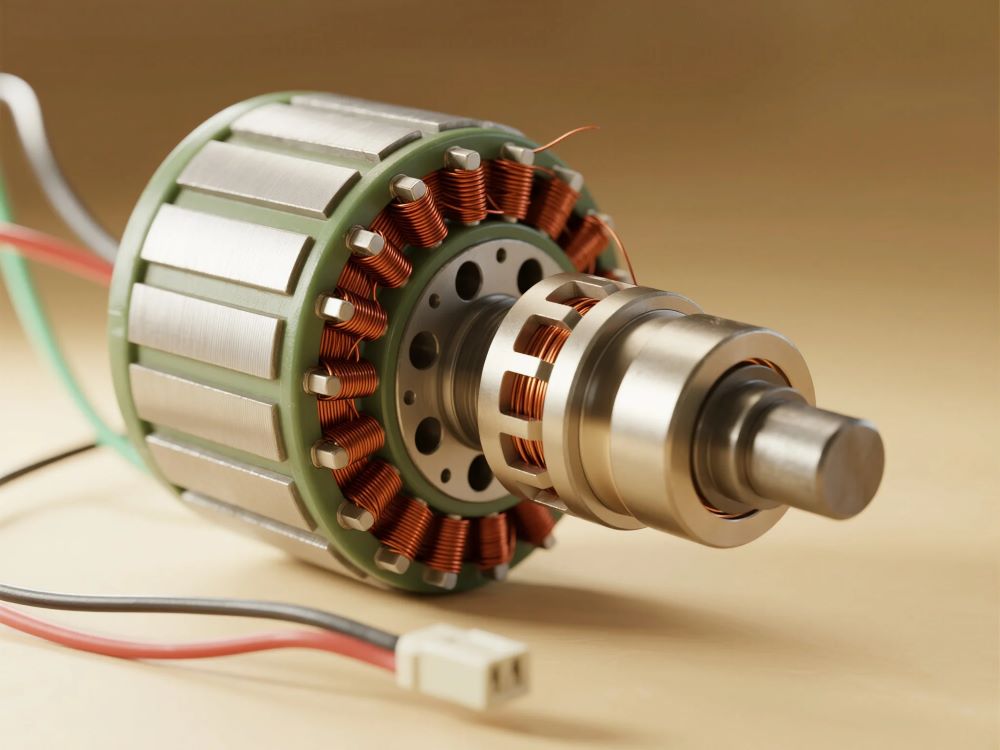
BLDC motors work on the principle of Lorentz force law, where a current-carrying conductor placed in a magnetic field experiences a force. The motor consists of a stationary part (ステーター) with windings and a rotating part (ローター) 永久磁石付き.
Stator Construction
The stator contains stacked steel laminations with windings placed in slots. Most BLDC motors have three-phase stator windings connected in star or delta formation. The windings are distributed to create a rotating magnetic field when properly energized.
Rotor Assembly
The rotor consists of permanent magnets mounted on the shaft. Neodymium (ネオジム鉄B) magnets are commonly used for their high magnetic energy density. The number of magnet poles determines the motor’s speed characteristics.
Electronic Commutation Process
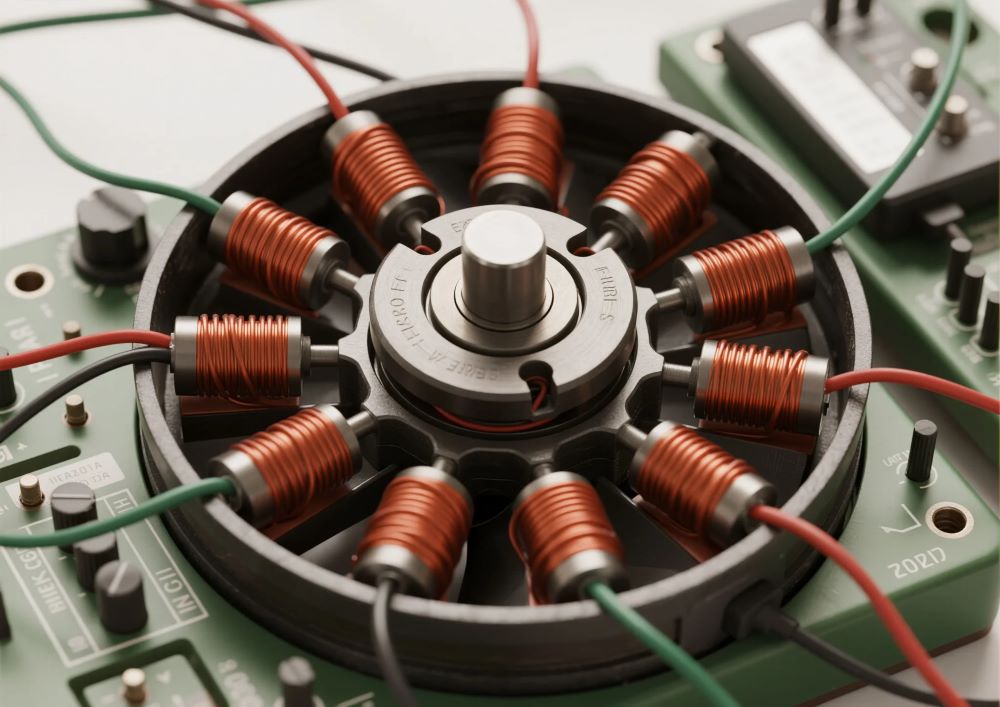
BLDC motors require electronic controllers to sequentially energize the stator windings. The controller uses position feedback from Hall effect sensors or sensorless techniques to determine the proper commutation sequence.
6 ステップ整流
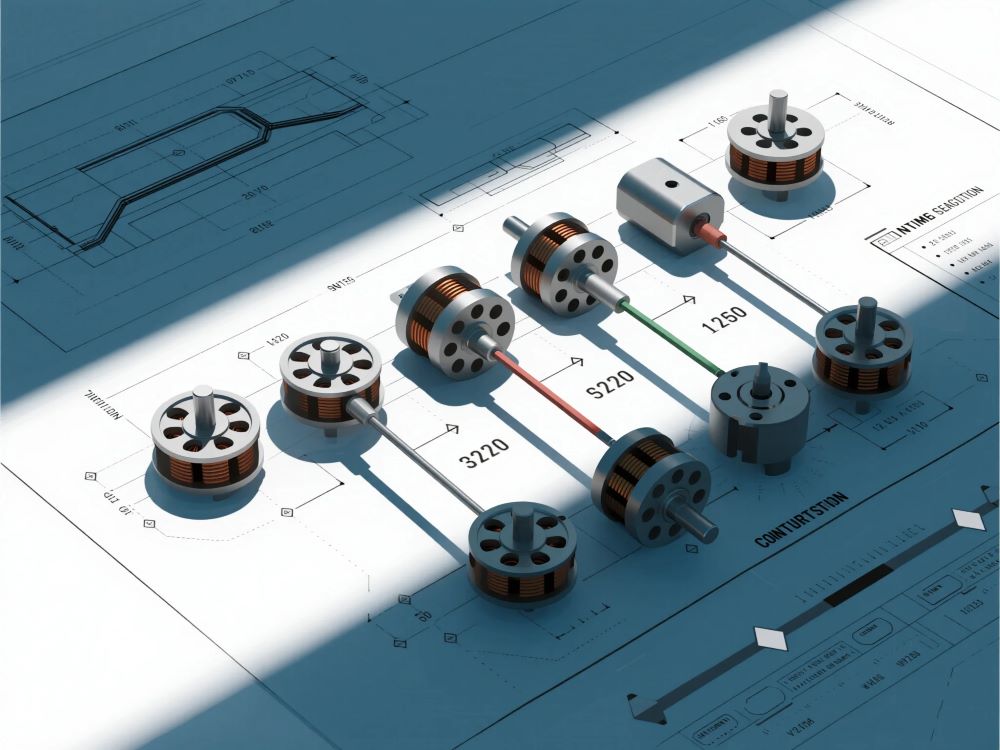
The most common commutation method involves six steps per electrical cycle. Each step energizes two phases while leaving the third floating, creating a rotating magnetic field that pulls the rotor magnets.
BLDC vs Brushed DC Motors: 主な違い
| 特徴 | ブラシレス DC モーター | ブラシ付き DC モーター |
|---|---|---|
| 転流方式 | 電子 (センサー + コントローラ) | 機械式 (ブラシ + 整流子) |
| メンテナンス | 基本的にメンテナンスフリー | Regular brush replacement needed |
| 効率 | 85-95% (より高い) | 75-80% (より低い) |
| 寿命 | 10,000+ 時間 | 1,000-3,000 時間 |
| 速度範囲 | 広い (まで 100,000 回転数) | Limited by brushes |
Control Methods and Drive Techniques
PWM速度制御
パルス幅変調 (PWM) is the most common speed control method. By varying the duty cycle of the applied voltage, the average voltage and consequently the speed can be precisely controlled.
センサーレス制御
Advanced BLDC controllers can operate without position sensors by monitoring back-EMF signals from the unenergized winding. This reduces cost and improves reliability.
Practical Applications of BLDC Motors
ドローン & 無人航空機
High power-to-weight ratio for aerial vehicles
電気自動車
Traction motors for EVs and hybrid systems
HVAC システム
Energy-efficient blowers and compressors
産業用ロボット
Precise motion control for automation
Advantages of BLDC Motor Technology
- 高効率: No brush friction losses and reduced I²R losses
- 長寿命: No mechanical wear except bearings
Excellent Speed Control: Precise RPM regulation across wide range
- メンテナンスの手間がかからない: No brush replacement required
- 高電力密度: More power in smaller package
Ready to Implement BLDC Technology in Your Project?
コンタクト グリーンスキー engineering team for technical consultation or browse our BLDC motor selection