
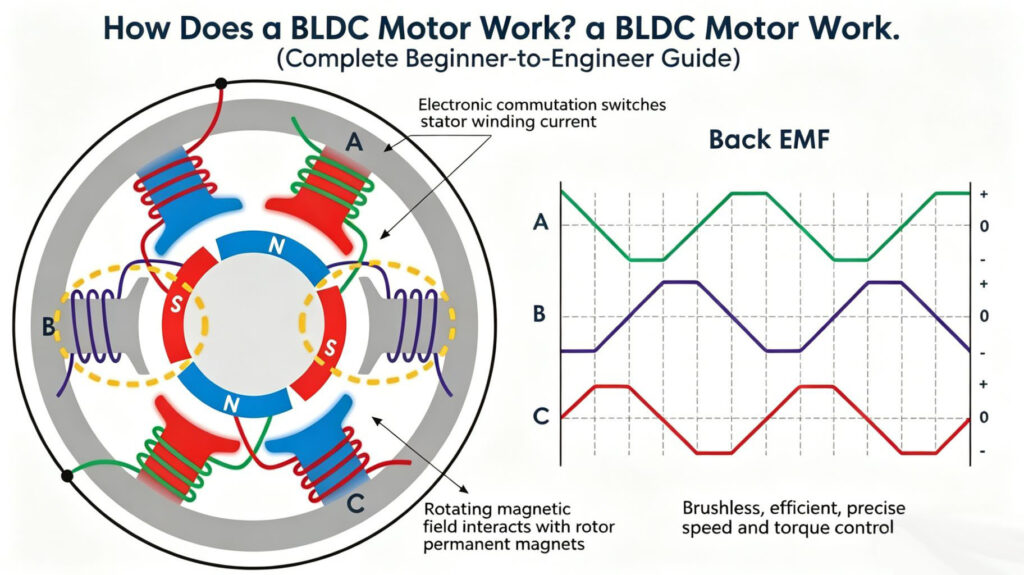
Come funziona un motore BLDC? (Guida completa da principiante a ingegnere)
Frammento in primo piano:
Un motore BLDC funziona utilizzando la commutazione elettronica per commutare la corrente attraverso gli avvolgimenti dello statore, creando un campo magnetico rotante che interagisce con i magneti permanenti nel rotore. Questo elimina i pennelli, migliora l'efficienza, e consente un controllo preciso della velocità e della coppia. Rispetto ai motori tradizionali, I motori BLDC offrono una maggiore efficienza, migliori prestazioni termiche, e una maggiore durata, rendendoli ideali per l'automazione industriale, veicoli elettrici, e sistemi HVAC.
Comprensione come funziona un motore BLDC è essenziale per gli ingegneri, Progettisti OEM, e team di approvvigionamento che selezionano soluzioni di motori ad alte prestazioni. A differenza dei motori spazzolati, I motori BLDC si basano su elettronica di controllo avanzata e principi elettromagnetici per ottenere prestazioni superiori. Questo articolo fornisce un'analisi a livello tecnico del funzionamento del motore BLDC, compresi i principi di funzionamento, strategie di controllo, fattori di efficienza, e come selezionare la soluzione giusta per le applicazioni industriali.
Cos'è un motore BLDC e Come funziona?
Un BLDC (CC senza spazzole) il motore è un motore elettrico che funziona senza spazzole, utilizzando la commutazione elettronica anziché il contatto meccanico.
Funziona generando un campo magnetico rotante nello statore, che causa il rotore (con magneti permanenti) da seguire e ruotare.
Un controller commuta continuamente la corrente negli avvolgimenti dello statore per mantenere un movimento fluido ed efficiente.
Componenti chiave
- Rotore con magneti permanenti
- Avvolgimenti statorici (3-fase)
- Controllore elettronico (ESC)
- Sensori di posizione (Sensori Hall o sistema sensorless)
I motori BLDC sono ampiamente utilizzati in applicazioni che richiedono elevata efficienza e controllo preciso, come la robotica, Veicoli elettrici, e automazione industriale.
👉 Esplora: Soluzioni per motori BLDC
Principio di funzionamento del motore BLDC (Passo dopo passo)
1. Lo statore genera un campo magnetico rotante
Lo statore è costituito da più bobine. Quando la corrente scorre attraverso queste bobine, crea poli magnetici.
Eccitando diverse bobine in sequenza, viene prodotto un campo magnetico rotante.
2. Il rotore segue il campo magnetico
Il rotore è costituito da magneti permanenti. Questi magneti si allineano naturalmente con il campo magnetico dello statore, facendo girare il rotore mentre il campo ruota.
3. Il controller commuta la corrente (Commutazione elettronica)
Al posto dei pennelli, un controller utilizza sensori (come i sensori Hall) o algoritmi sensorless per rilevare la posizione del rotore.
Quindi commuta la corrente tra gli avvolgimenti dello statore al momento giusto per mantenere il motore in rotazione continua.
Diagramma semplice (Concettuale):
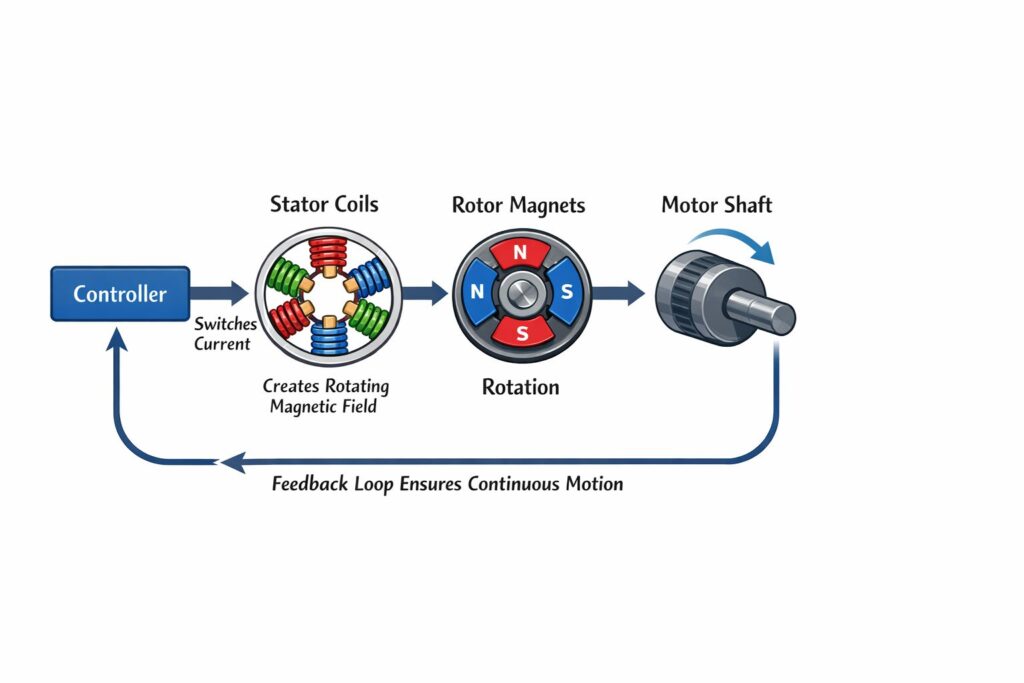
Spiegazione della struttura del motore BLDC
Statore
Lo statore è la parte stazionaria contenente gli avvolgimenti in rame. È responsabile della generazione del campo elettromagnetico che aziona il motore.
Rotore
Il rotore contiene magneti permanenti e ruota all'interno o attorno allo statore a seconda del design del motore (rotore interno o rotore esterno).
Controllore
Il controller è il “cervello” del sistema. Gestisce la commutazione della corrente, controllo di velocità, e ottimizzazione dell’efficienza.
Spiegazione visiva passo dopo passo
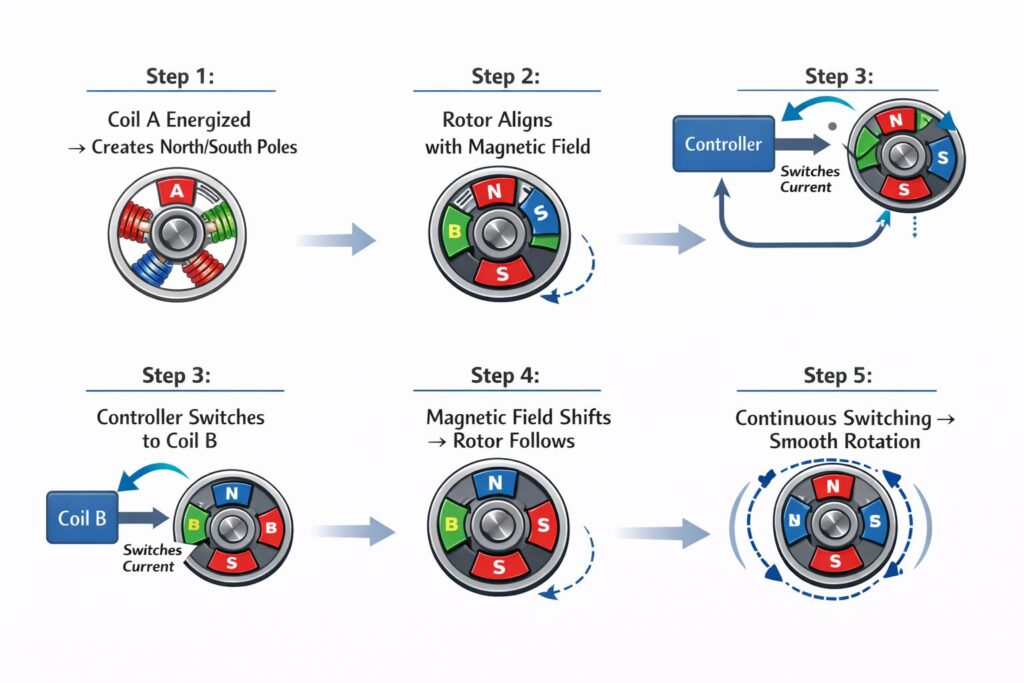
Fare un passo 2: Il rotore si allinea con il campo magnetico
Fare un passo 3: Il controller passa alla bobina B
Fare un passo 4: Il campo magnetico si sposta → il rotore segue
Fare un passo 5: Commutazione continua → rotazione fluida
Questa interazione elettromagnetica passo-passo sostituisce la commutazione meccanica presente nei motori tradizionali, con conseguente maggiore efficienza e minore usura.
Perché i motori BLDC sono più efficienti dei motori con spazzole
L’efficienza è uno dei motivi principali per cui i motori BLDC sono ampiamente adottati.
Ragioni di ingegneria
- Nessuna perdita per attrito della spazzola
- Perdite elettriche ridotte
- Controllo della corrente ottimizzato
I motori BLDC raggiungono in genere efficienze superiori all'85-90%, riducendo sensibilmente i consumi energetici negli impianti industriali.
Generazione di coppia e interazione del campo magnetico
La coppia in un motore BLDC è generata dall'interazione tra il campo magnetico dello statore e i magneti del rotore.
Fattori chiave
- Intensità del campo magnetico
- Magnitudo attuale
- Allineamento della posizione del rotore
Il controllo preciso di questi fattori consente ai motori BLDC di fornire un'elevata densità di coppia e un funzionamento regolare.
Sistemi di controllo nei motori BLDC
I sistemi di controllo sono fondamentali per le prestazioni dei motori BLDC.
Tipi di controllo
- Trapezoidale (sei passi) controllo
- Controllo orientato al campo (Foc)
Funzioni del controllore
- Commutazione di corrente tra fasi
- Regolazione della velocità
- Controllo della coppia
Metodi di controllo avanzati come FOC forniscono efficienza e prestazioni superiori.
Prestazioni termiche e gestione del calore
La gestione termica è essenziale per l'affidabilità.
Vantaggi del BLDC
- Minore generazione di calore grazie all'elevata efficienza
- Calore concentrato nello statore per un raffreddamento più semplice
I metodi di raffreddamento includono il raffreddamento ad aria e il raffreddamento a liquido per applicazioni ad alta potenza come i sistemi a 48 V e 72 V.
Affidabilità e durata dei motori BLDC
I motori BLDC offrono una durata di vita più lunga grazie alla ridotta usura meccanica.
- Nessuna spazzola → nessun componente soggetto ad usura
- Calore inferiore → minore degrado dell'isolamento
- Funzionamento stabile sotto carichi variabili
Ciò li rende ideali per applicazioni industriali a servizio continuo.
Motore BLDC vs motore con spazzole vs motore AC
| Parametro | Motore BLDC | Motore spazzolato | Motore a corrente alternata |
|---|---|---|---|
| Efficienza | Alto | Moderare | Moderare |
| Manutenzione | Basso | Alto | Basso |
| Controllo | Avanzato | Semplice | Moderare |
| Applicazioni | EV, robotica | Dispositivi a basso costo | Sistemi industriali |
I motori BLDC forniscono il miglior equilibrio tra prestazioni ed efficienza per le applicazioni moderne.
Come scegliere un motore BLDC per la tua applicazione
La scelta del motore BLDC giusto richiede un'analisi attenta.
Criteri di selezione chiave
- Voltaggio: 24v / 48v / 72Sistemi V
- Energia: Dalla gamma watt a kW
- Velocità & Coppia: In base ai requisiti di carico
- Raffreddamento: Raffreddamento ad aria o liquido
- Compatibilità del controller: Controller ESC o FOC
Esempi di applicazione
- Veicoli elettrici → Motore BLDC 48V/72V
- Robotica → motore BLDC di precisione
- HVAC → motore BLDC ad alta efficienza energetica
👉 Richiedi una soluzione OEM: Sviluppo di motori personalizzati
Applicazioni industriali dei motori BLDC
- Veicoli elettrici ed e-bike
- Automazione industriale
- Sistemi HVAC
- Pompe e compressori
👉 Esplora i motori EV: Soluzioni per motori per veicoli elettrici
Costo vs prestazioni: Ne vale la pena BLDC?
| Fattore | Motore BLDC | Motore tradizionale |
|---|---|---|
| Costo iniziale | Più alto | Inferiore |
| Efficienza | Più alto | Inferiore |
| Durata | Più a lungo | Più corto |
| Costo totale | Basso a lungo termine | Più alto |
Per la maggior parte delle applicazioni industriali, I motori BLDC forniscono un migliore ROI a lungo termine.
Tendenze future nella tecnologia dei motori BLDC
I motori BLDC sono all'avanguardia nella moderna tecnologia dei motori.
- Integrazione con sistemi di controllo intelligenti
- Crescita della mobilità elettrica
- Progressi nel controllo sensorless
Queste tendenze stanno determinando un’adozione diffusa in tutti i settori.
Vantaggi principali dei motori BLDC
- Alta efficienza: Le ridotte perdite di energia migliorano le prestazioni complessive del sistema
- Lunga durata: L'assenza di spazzole significa meno usura e funzionamento più lungo
- Bassa manutenzione: Manutenzione minima richiesta
- Elevata densità di coppia: Più potenza in dimensioni compatte
- Funzionamento a basso rumore: Ideale per applicazioni di precisione e silenziose
Applicazioni comuni dei motori BLDC
- Veicoli elettrici: Alta efficienza e controllo della coppia
- Tifosi & Sistemi HVAC: Funzionamento silenzioso e a risparmio energetico
- Robotica: Controllo preciso della velocità e della posizione
- Automazione industriale: Prestazioni affidabili e di lunga durata
Questi vantaggi rendono i motori BLDC un componente chiave nei sistemi ad alta efficienza energetica e ad alte prestazioni in tutti i settori.
Domande frequenti: Come funziona un motore BLDC
1. In che modo un motore BLDC genera coppia?
La coppia è generata dall'interazione tra il campo magnetico dello statore e i magneti permanenti del rotore, controllato elettronicamente.
2. Perché i motori BLDC sono più efficienti?
Eliminano l'attrito delle spazzole e utilizzano un controllo di corrente ottimizzato, riducendo le perdite di energia.
3. Quali sono i principali vantaggi dei motori BLDC?
Alta efficienza, bassa manutenzione, lunga durata, e controllo preciso.
4. Dove vengono utilizzati i motori BLDC?
Sono utilizzati nei veicoli elettrici, robotica, Sistemi HVAC, e automazione industriale.
5. Cosa controlla un motore BLDC?
Un motore BLDC è controllato da un controller elettronico che commuta la corrente negli avvolgimenti dello statore in base alla posizione del rotore.
6. Un motore BLDC necessita di un controller?
SÌ. Un controller è essenziale per commutare la corrente e mantenere la rotazione, poiché i motori BLDC non possono funzionare direttamente da un'alimentazione CC.
Conclusione: Perché i motori BLDC dominano le applicazioni moderne
Comprensione come funziona un motore BLDC fornisce una base per la selezione di soluzioni di motori ad alte prestazioni. Con la loro efficienza superiore, affidabilità, e capacità di controllo, I motori BLDC stanno diventando lo standard nelle moderne applicazioni industriali e OEM.
Hai bisogno di aiuto per selezionare il motore BLDC giusto?
✔ Richiedi la scheda tecnica
✔ Ottieni una soluzione per motori OEM
✔ Contatta i nostri ingegneri oggi stesso
Ottieni un preventivo gratuito
Riferimenti
- Transazioni IEEE sull'elettronica industriale
- Manuale di progettazione del motore elettrico
- Standard di efficienza IEC