
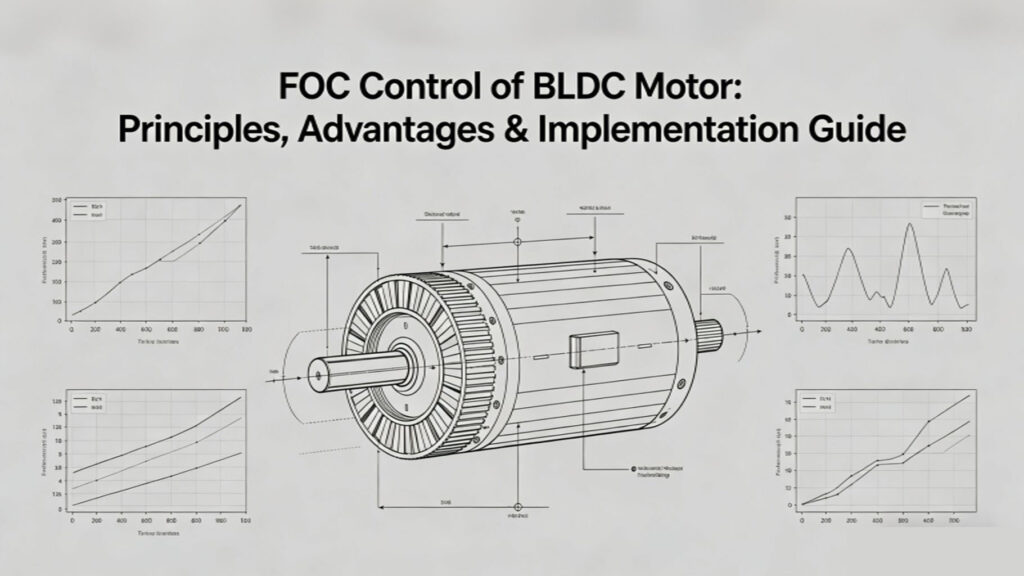
Controllo FOC del motore BLDC: Principi, Vantaggi & Guida all'implementazione
Frammento in primo piano:
Controllo orientato al campo (Foc) è un metodo di controllo avanzato per motori BLDC che consente un controllo preciso di coppia e velocità disaccoppiando le correnti dello statore in componenti ortogonali. Rispetto al tradizionale controllo trapezoidale, Il FOC migliora significativamente l'efficienza, riduce l'ondulazione della coppia, e migliora le prestazioni dinamiche. È ampiamente utilizzato nei veicoli elettrici, robotica, e sistemi industriali ad alte prestazioni. Per ingegneri e OEM, FOC è la soluzione preferita in caso di prestazioni, operazione liscia, e l’efficienza energetica sono fondamentali.
Man mano che i sistemi industriali si evolvono verso una maggiore efficienza e precisione, Controllo FOC del motore BLDC è diventato uno standard nei sistemi avanzati di azionamento del motore. A differenza delle strategie di controllo convenzionali, Il FOC sfrutta trasformazioni matematiche e feedback in tempo reale per ottenere prestazioni elettromagnetiche ottimali. Questo articolo fornisce un'analisi completa a livello tecnico dei principi FOC, vantaggi, sfide di implementazione, e come selezionare la soluzione giusta per la tua applicazione.
Cos'è il controllo FOC del motore BLDC?
Controllo orientato al campo (Foc), noto anche come controllo vettoriale, è una tecnica che trasforma motore trifase correnti in un sistema di riferimento rotante allineato con il campo magnetico del rotore. Ciò consente il controllo indipendente della coppia e del flusso, simile ad un motore DC.
Concetto fondamentale
- Trasformare le correnti dello statore nell'asse D (flusso) e asse q (coppia) componenti
- Controllare la coppia direttamente tramite la corrente dell'asse q
- Mantiene il flusso ottimale tramite la corrente dell'asse D
Questo disaccoppiamento consente un controllo preciso della coppia e un'elevata efficienza in un'ampia gamma di velocità.
Perché il controllo FOC viene utilizzato nei moderni motori BLDC
Tradizionale Controllo BLDC metodi, come sei passi (trapezoidale) commutazione, sono semplici ma introducono ondulazioni di coppia e inefficienze. Il FOC affronta queste limitazioni.
Driver di ingegneria
- Maggiore efficienza in condizioni di carico variabili
- Emissione di coppia più fluida → vibrazioni ridotte
- Migliori prestazioni a bassa velocità
- Caratteristiche di rumore acustico migliorate
In applicazioni come veicoli elettrici e robotica, questi vantaggi si traducono direttamente in migliori prestazioni del sistema ed esperienza utente.
FOC vs controllo trapezoidale: Differenze chiave
| Parametro | Controllo FOC | Controllo trapezoidale |
|---|---|---|
| Ondulazione della coppia | Molto basso | Alto |
| Efficienza | Alto | Moderare |
| Controllare la complessità | Alto | Basso |
| Rumore | Basso | Più alto |
| Applicazioni | EV, robotica, HVAC | Tifosi, unità di base |
Il FOC offre prestazioni superiori ma richiede hardware e software più avanzati.
Principi matematici alla base del FOC
Il FOC si basa sulle trasformazioni delle coordinate per semplificare il controllo del motore.
Trasformazioni di Clarke e Park
- Trasformata di Clarke: Converte le correnti trifase in un telaio stazionario 2D
- Trasformazione del parco: Si converte in un telaio rotante allineato al rotore
Trasformazioni inverse
- Utilizzato per generare segnali PWM per la commutazione dell'inverter
Queste trasformazioni consentono il controllo disaccoppiato di coppia e flusso, migliorare la stabilità e l’efficienza del sistema.
Efficienza e prestazioni termiche nei sistemi FOC
Il controllo FOC migliora significativamente l'efficienza e il comportamento termico.
Miglioramenti dell'efficienza
- Vettore di corrente ottimizzato → perdite di rame ridotte
- Distorsione armonica ridotta al minimo
Benefici termici
- Minore generazione di calore
- Migliore distribuzione termica
Per sistemi ad alta potenza come i motori BLDC da 48 V e 72 V, Il FOC aiuta a prolungare la durata dei componenti e a ridurre i requisiti di raffreddamento.
Densità di coppia e prestazioni dinamiche
Il FOC consente il massimo utilizzo della coppia allineando la corrente con il campo magnetico del rotore.
- Coppia per ampere più elevata
- Risposta dinamica veloce
- Funzionamento stabile a basse velocità
Questo è fondamentale per applicazioni come gli AGV, servosistemi, e veicoli elettrici.
Architettura del sistema di controllo per FOC
L'implementazione del FOC richiede una combinazione di componenti hardware e software.
Componenti chiave
- Microcontrollore o DSP
- Invertitore (MOSFET/IGBT)
- Sensori di corrente
- Sensori di posizione (Sala, codificatore) o algoritmi sensorless
Struttura del circuito di controllo
- Anello di controllo della corrente (veloce)
- Anello di controllo della velocità (anello esterno)
I controller moderni integrano queste funzioni in sistemi compatti, moduli ad alte prestazioni.
👉 Esplora: Soluzioni per motori BLDC
Considerazioni sull'affidabilità e sulla durata
I sistemi FOC migliorano l'affidabilità del motore riducendo lo stress sui componenti.
- Minore stress termico → maggiore durata dell'isolamento
- Vibrazioni meccaniche ridotte
- Stabilità del sistema migliorata
Tuttavia, l'affidabilità del sistema dipende fortemente dalla progettazione del controller e dalla qualità del software.
Come scegliere il motore BLDC con controllo FOC per la tua applicazione
La scelta del giusto sistema FOC richiede una valutazione dettagliata dei requisiti di sistema.
Fattori chiave di selezione
- Voltaggio: 24v / 48v / 72Piattaforme V
- Scala di potenza: Dai piccoli azionamenti ai sistemi di livello kW
- Velocità & Coppia: Esigenze dinamiche e di stato stazionario
- Raffreddamento: Raffreddamento ad aria o liquido
- Compatibilità del controller: Driver supportati da FOC
Raccomandazioni sull'applicazione
- Veicoli elettrici → Motore FOC BLDC
- Robotica → Controllo FOC per la precisione
- HVAC → sistemi FOC ad alta efficienza energetica
👉 Ottieni la soluzione OEM: Sviluppo di motori personalizzati
Applicazioni industriali di motori BLDC controllati da FOC
- Veicoli elettrici (motori del mozzo, motori di trazione)
- Robotica e automazione
- Sistemi HVAC e compressori
- Pompe e ventilatori industriali
👉 Motori elettrici: Soluzioni per motori per veicoli elettrici
Costo vs prestazioni: Ne vale la pena??
| Fattore | Controllo FOC | Controllo di base |
|---|---|---|
| Costo iniziale | Più alto | Inferiore |
| Efficienza | Più alto | Inferiore |
| Prestazione | Superiore | Moderare |
| Costo totale | Basso a lungo termine | Più alto |
Per la maggior parte delle applicazioni industriali, Il FOC offre un migliore valore a lungo termine nonostante un investimento iniziale più elevato.
Tendenze future: FOC nei sistemi motori intelligenti
Il FOC sta diventando lo standard per il controllo intelligente dei motori.
- Integrazione con sistemi IoT e AI
- Adozione nella mobilità elettrica
- Progressi nel controllo sensorless
Come industria 4.0 si evolve, Il FOC svolgerà un ruolo centrale nei sistemi a motore.
Domande frequenti: Controllo FOC del motore BLDC
1. Cos'è il controllo FOC nei motori BLDC?
FOC è un metodo di controllo che consente il controllo indipendente della coppia e del flusso utilizzando trasformazioni di coordinate, migliorando l’efficienza e le prestazioni.
2. Perché il FOC è migliore del controllo trapezoidale?
Il FOC fornisce una coppia più fluida, maggiore efficienza, e rumore più basso, rendendolo ideale per applicazioni ad alte prestazioni.
3. Il FOC richiede sensori?
FOC può utilizzare sensori come encoder o operare in modalità sensorless utilizzando algoritmi avanzati.
4. Il FOC è adatto a tutti i motori BLDC?
Il FOC è adatto alla maggior parte dei motori BLDC, soprattutto nelle applicazioni che richiedono precisione ed efficienza.
5. Quali sono gli svantaggi del FOC?
Maggiore complessità, costo, e lo sforzo di sviluppo rispetto ai metodi di controllo di base.
Conclusione: Perché il FOC è il futuro del controllo motori BLDC
IL Controllo FOC del motore BLDC rappresenta un progresso significativo nella tecnologia di controllo del motore. Abilitando precise, efficiente, e funzionamento affidabile, Il FOC sta diventando lo standard nelle moderne applicazioni industriali e OEM.
Per ingegneri e team di procurement, investire in sistemi controllati da FOC garantisce prestazioni migliori, minor consumo di energia, e affidabilità a lungo termine.
Hai bisogno di aiuto per implementare soluzioni FOC?
✔ Richiedi la scheda tecnica
✔ Ottieni un motore OEM + soluzione di controllo
✔ Contatta i nostri ingegneri oggi stesso
Ottieni un preventivo gratuito
Riferimenti
- Transazioni IEEE sull'elettronica industriale
- Libri di testo sulla teoria del controllo motorio
- Standard di efficienza IEC