
What’s the Difference Between a Gearbox and a Gear Motor?
Trả lời nhanh
MỘT hộp số is a standalone mechanical transmission device that reduces speed and multiplies torque from an external motor, trong khi một động cơ bánh răng integrates an electric motor and gearbox into a single factory-matched unit. The core difference is hội nhập: a gearbox requires separate motor selection, shaft alignment, and coupling installation, whereas a gear motor arrives pre-assembled, tested, and optimized for compact, reliable operation. According to the IEA Electric Motor Systems Platform, motor-driven systems account for 53% tiêu thụ điện toàn cầu, making the choice between these two configurations critical for energy efficiency, maintenance cost, và tổng chi phí sở hữu.
What Is a Gearbox?
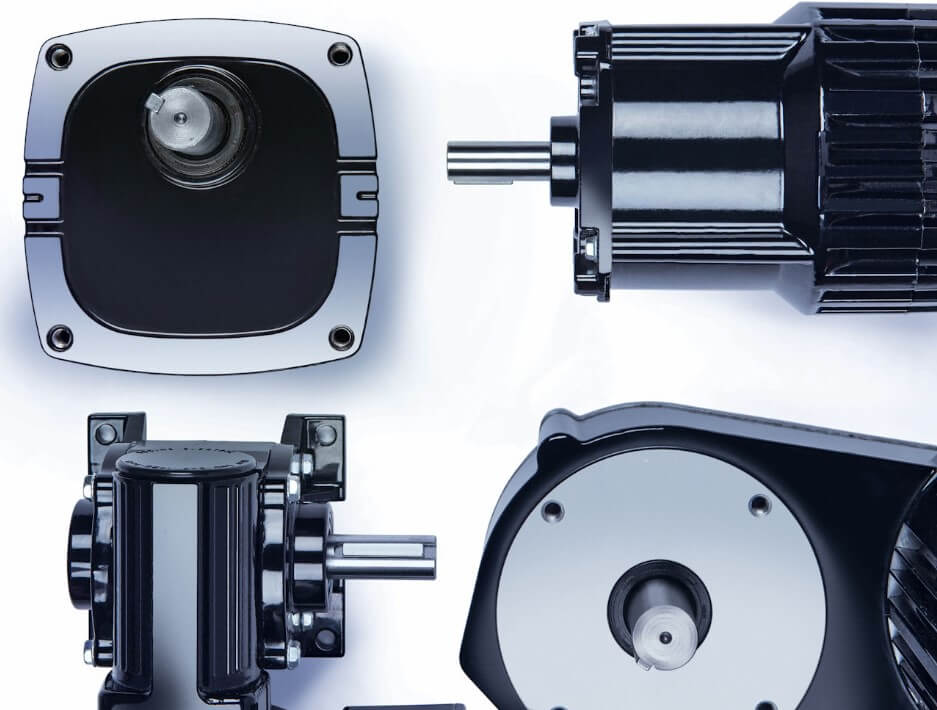
A gearbox—also called a hộp giảm tốc hoặc speed reducer—is a mechanical device consisting of gear sets housed within an enclosure. It does không generate power; instead, it modifies the speed, mô-men xoắn, and direction of rotational motion transmitted from an external power source (động cơ điện, động cơ, or turbine) to a driven load. Các IEC 60034-1 standard classifies gearboxes as mechanical transmission components, trong khi KHÔNG CÓ MG 1 provides dimensional and performance guidelines for motors paired with gearboxes in the North American market.
Core Functions of a Gearbox
- Speed reduction: Lowers the input rotational speed to match load requirements
- Torque multiplication: Increases output torque proportional to the gear ratio and efficiency
- Direction change: Redirects rotational axis (ví dụ., bevel gears for 90° turns)
- Load matching: Matches motor output characteristics to the driven equipment’s demand curve
- Inertia matching: Reduces reflected load inertia to improve motor control stability
Gearbox Types by Transmission Architecture
| Kiểu | Gear Configuration | Hiệu quả điển hình | Tỷ lệ tối đa (Single Stage) | Tốt nhất cho |
|---|---|---|---|---|
| Spur Gearbox | Parallel shafts, straight teeth | 95–98% | ~10:1 | Low-speed, low-noise applications |
| Hộp số xoắn ốc | Parallel shafts, angled teeth | 96–98% | ~15:1 | High-load, quiet industrial drives |
| Hộp số vát | Intersecting shafts (90°) | 94–97% | ~6:1 | Direction change, Hệ thống băng tải |
| Hộp số giun | Worm wheel + Đinh ốc | 60–90% | ~60:1 | High reduction, self-locking needs |
| Hộp số hành tinh | Mặt trời + planet + ring gears | 95–97% | ~10:1 | Mật độ mô-men xoắn cao, người máy |
Efficiency data sourced from Thông số kỹ thuật SIMOGEAR của Siemens and IEEE research on planetary gear optimization (DOI: 10.1109/TMECH.2019.2946403).
Động cơ bánh răng là gì?
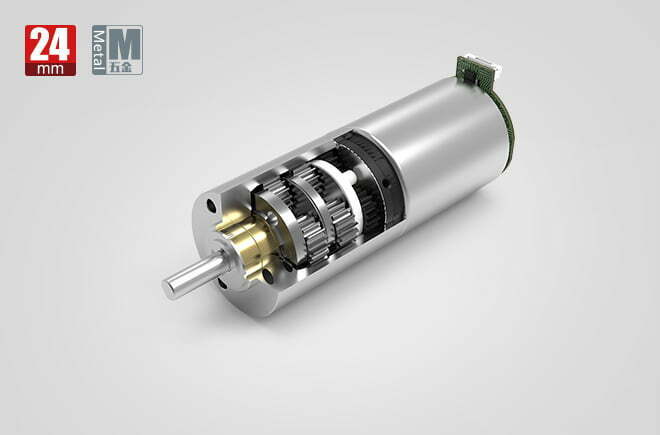
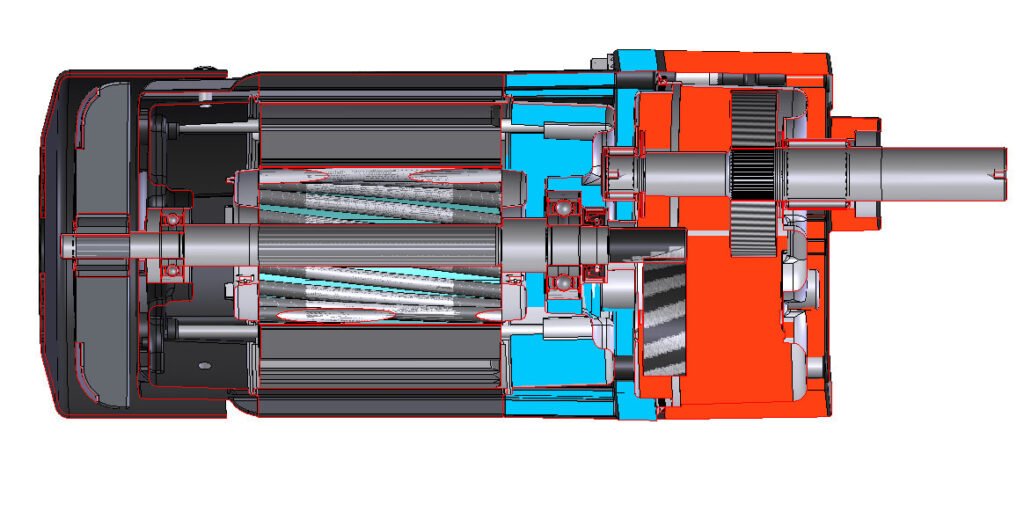
A gear motor (hoặc gearmotor) is an integrated drive unit that combines an electric motor and a gearbox into a single, factory-matched assembly. The motor’s rotor shaft typically serves as the input pinion for the first gear stage, eliminating the need for external couplings, alignment procedures, and separate mounting hardware. Gear motors are classified under IEC 60034-1 as complete motor systems and must comply with efficiency requirements defined in IEC 60034-30-1 và DOE 10 Phần CFR 431 regulation.
Types of Gear Motors
| Loại động cơ | Gearbox Options | Typical Power Range | Efficiency Class | Ứng dụng phổ biến |
|---|---|---|---|---|
| Động cơ bánh răng cảm ứng AC | Helical, góc xiên, sâu | 0.09–55 kW | IE2–IE4 | Băng tải, máy trộn, máy bơm |
| Brushed DC Gear Motor | thúc đẩy, hành tinh | 1–1500 W | 70–85% | Automotive seats, cần gạt nước |
| Động cơ bánh răng BLDC | hành tinh, xoắn ốc | 20–750 W | 85–92% | Người máy, Agvs, thuộc về y học |
| Servo Gear Motor | hành tinh, góc xiên | 0.1–30 kW | IE4–IE5 | CNC, đóng gói, độ chính xác |
Benefits of Integrated Gear Motors
- Factory-matched optimization: Motor and gearbox are engineered together, ensuring the pinion, tỉ số truyền, and thermal characteristics are perfectly aligned—eliminating the guesswork of separate sizing.
- Compact footprint: By using the motor shaft as the input pinion, the overall length is significantly reduced compared to a separate motor + hộp số + coupling configuration.
- Reduced alignment failures: No external coupling means no misalignment-induced bearing failures, which account for approximately 30% of premature gearbox failures per SKF bearing life analysis.
- Simplified maintenance: Fewer mechanical interfaces mean fewer wear points and simplified lubrication management.
- Higher system efficiency: Eliminating coupling losses (typically 1–3% per coupling) and optimizing the motor-gear interface improves overall system efficiency by 2–5%.

How a Gearbox Works — Step-by-Step
- Power input: An external motor delivers rotational energy to the gearbox input shaft via a coupling or direct connection.
- First gear mesh: The input shaft drives the first gear stage (bánh răng nhỏ), which meshes with a larger gear to achieve initial speed reduction and torque increase.
- Subsequent stages: For multi-stage gearboxes, the output of each stage becomes the input of the next, progressively reducing speed and multiplying torque.
- Bearing support: Bearings at each shaft position maintain gear alignment and support radial/axial loads. mỗi SKF bearing rating life, L10 life is calculated as L10 = (C/P)^p, where C is the dynamic load rating, P is the equivalent load, and p = 3 cho vòng bi hoặc 10/3 cho vòng bi lăn.
- Bôi trơn: Oil bath or grease lubrication reduces friction between meshing gears and dissipates heat. Các IEC 60034-1 standard specifies operating temperature limits based on insulation class.
- Power output: The final stage delivers reduced speed and multiplied torque to the driven load via the output shaft.
How a Gear Motor Works — Step-by-Step
- Electrical input: Power is supplied to the motor winding (AC, DC, hoặc BLDC), generating a magnetic field that interacts with the rotor.
- Rotor rotation: The electromagnetic field produces torque on the rotor, which rotates at a speed determined by supply frequency (AC) or voltage (DC).
- Integrated pinion drive: The rotor shaft extends directly into the gearbox housing, where the machined pinion gear engages the first reduction stage—no coupling required.
- Multi-stage reduction: Gear stages progressively reduce speed and multiply torque. Ví dụ, Một maxon GPX 32 planetary gearhead achieves a 138:1 ratio across 3 stages with 75% efficiency and 5 N·m continuous torque.
- Quản lý nhiệt: The motor and gearbox share a common housing, allowing heat from both components to dissipate through the same structure. mỗi IEC 60034-1, Class F insulation permits winding temperatures up to 155°C.
- Output delivery: The output shaft delivers the final torque and speed to the application, with the entire unit pre-tested and certified as a single assembly.
Gearbox vs. động cơ bánh răng: Bảng so sánh tính năng
| Tính năng | hộp số (Standalone) | động cơ bánh răng (Tích hợp) |
|---|---|---|
| Nguồn điện | External motor required | Motor included in unit |
| Integration Level | Mechanical component only | động cơ + gearbox combined |
| Độ phức tạp cài đặt | High—requires shaft alignment, khớp nối, gắn | Low—plug-and-play, pre-assembled |
| Footprint | Larger overall assembly | Compact, space-saving |
| Motor Selection Flexibility | High—any compatible motor can be paired | Limited to factory-installed motor |
| Coupling Losses | 1–3% per coupling interface | None—direct pinion integration |
| Hiệu quả hệ thống | Thấp hơn (sự lệch lạc + coupling losses) | Cao hơn (2–5% improvement typical) |
| Misalignment Risk | High—common failure mode | Minimal—factory-aligned |
| BẢO TRÌ | Motor and gearbox serviced separately | Fewer interfaces, simplified schedule |
| Failure Replacement | Individual component replacement | Entire unit may need replacement |
| Chi phí ban đầu | Thấp hơn (hộp số + separate motor) | Cao hơn (integrated unit) |
| Long-term TCO | Cao hơn (cài đặt + BẢO TRÌ + downtime) | Often lower (reduced labor + downtime) |
| Best Power Range | >1 HP (large industrial) | <1 HP to ~50 kW (compact/mid) |
| Standard Compliance | iso 6336 (gear rating), AGMA 925 | IEC 60034-30-1, KHÔNG CÓ MG 1, DOE 10 CFR 431 |
Dữ liệu kỹ thuật: Hiệu quả, Giới hạn nhiệt độ, và công thức mô men xoắn
IEC 60034-30-1 Efficiency Classes for Gear Motor Motors
| Lớp IEC | Tương đương NEMA | Sự miêu tả | Loss Reduction vs. IE1 | Ứng dụng điển hình |
|---|---|---|---|---|
| IE1 | Hiệu suất tiêu chuẩn | Đường cơ sở (phased out in most markets) | — | Legacy equipment |
| IE2 | Hiệu quả cao | Mandatory minimum in some regions | ~10% less loss | công nghiệp tổng hợp |
| IE3 | Hiệu quả cao cấp | Current US minimum (DOE 10 CFR 431) | ~20% less loss | New installations (post-2026) |
| IE4 | Siêu cao cấp | Required June 2027 for mid-range motors | ~30% less loss | Energy-critical, VFD applications |
| IE5 | Siêu cao cấp (chưa được NEMA xác định) | Future standard under development | ~40% less loss | Cutting-edge efficiency |
Nguồn: IEC 60034-30-1:2014 Và DOE Small Electric Motors Program. Ghi chú: DOE 2026 final rule mandates IE3 minimum for all 1–500 HP three-phase motors effective December 1, 2026; IE4 required for mid-range motors from June 1, 2027.
IEC 60034-1 Giới hạn nhiệt độ lớp cách nhiệt
| Lớp cách nhiệt | Max Temperature Rise | Hot Spot Allowance | Nhiệt độ cuộn dây tối đa | Typical Gear Motor Example |
|---|---|---|---|---|
| Lớp A | 60° C. | 5° C. | 105° C. | Chi phí thấp, light-duty |
| Lớp E | 75° C. | 5° C. | 120° C. | Standard consumer |
| Lớp b | 80° C. | 10° C. | 130° C. | Industrial standard |
| Lớp F | 100° C. | 15° C. | 155° C. | maxon GPX 32 (operating range −40 to +100°C) |
| Lớp H | 125° C. | 15° C. | 180° C. | Nhiệt độ cao, nhiệm vụ nặng nề |
Nguồn: IEC 60034-1 Máy điện quay - Đánh giá và tính năng. Nhiệt độ môi trường xung quanh: 40° C., độ cao: ≤1000 m.
Core Engineering Formulas
1. Tỷ số truyền
i = N_motor / N_output = T_output / (T_motor × η_gear)
Ở đâu: i = tỷ số truyền, N = speed (vòng/phút), T = torque (N·m), η_gear = gearbox mechanical efficiency.
2. Mô-men xoắn đầu ra
T_output = T_motor × i × η_gear
Ví dụ: MỘT 0.5 N·m motor with a 50:1 planetary gearbox at 95% efficiency produces T_output = 0.5 × 50 × 0.95 = 23.75 N·m.
3. Gearbox Mechanical Efficiency
η_gear = (T_output × N_output) / (T_input × N_input)
mỗi Siemens SIMOGEAR data: 2-stage helical gearboxes achieve ≥96%; 3-stage achieve ≥94%; worm gearboxes range 60–90% depending on ratio.
4. Hiệu quả hệ thống (động cơ + hộp số)
η_system = η_motor × η_gear × (1 – L_coupling)
For a gear motor (no coupling): η_system = η_motor × η_gear. For a separate gearbox + động cơ + khớp nối: η_system = η_motor × η_gear × 0.98 (giả định 2% coupling loss).
5. SKF Bearing L10 Life
L10h = (10⁶ / 60N) × (C / P)^p
Ở đâu: L10h = rated life in hours (90% độ tin cậy), C = xếp hạng tải động cơ bản (kN), P = equivalent dynamic bearing load (kN), n = tốc độ quay (vòng/phút), p = 3 for ball bearings, 10/3 cho vòng bi lăn. Nguồn: SKF Bearing Rating Life.
6. KHÔNG CÓ MG 1 Yếu tố dịch vụ
SF = P_allowable / P_rated
KHÔNG CÓ MG 1 defines a service factor (tiêu biểu 1.15 for general-purpose motors) that allows intermittent overload operation. IEC motors do not use service factors (equivalent SF = 1.0), so a larger frame size may be needed for the same application.
Manufacturer Datasheet Comparison: Standalone Gearbox vs. Integrated Gear Motor
| Tham số | maxon GPX 32 (Standalone Gearbox) | Siemens SIMOGEAR (Integrated Gear Motor) |
|---|---|---|
| Tỷ số truyền | 138:1 (3-sân khấu hành tinh) | 3.57–500 (1–3 stage, multiple types) |
| Max Continuous Torque | 5 N·m | Lên đến 19,500 N·m |
| Hiệu quả cơ học | 75% | ≥96% (2-sân khấu), ≥94% (3-sân khấu) |
| Phản ứng dữ dội | 0.9° (trung bình) | Thấp (helical gear design) |
| Input Speed | Lên đến 8,000 vòng/phút | Motor-dependent (1,400–3,600 rpm typical) |
| Phạm vi nhiệt độ | −40 to +100°C | −20 to +60°C (môi trường xung quanh) |
| Nguồn điện | External motor required | IE2/IE3/IE4 motor integrated |
| Lớp bảo vệ | Not rated (open) | IP55 |
Nguồn: maxon GPX 32 datasheet; Siemens SIMOGEAR servo geared motors.
Best Applications for Gearboxes
| Ứng dụng | Why a Standalone Gearbox? | Typical Power Range |
|---|---|---|
| Wind Turbine Drivetrains | Custom gearbox design for extreme torque (MW-class); motor selection flexibility for different generator types | 100 kW – 10 MW |
| Khai thác mỏ & Heavy Material Handling | Custom-built gearboxes for shock loads; ability to pair with oversized motors for extreme duty | 50–500 kW |
| Large Industrial Mixers | Flexible motor-gearbox pairing for varying batch sizes; easier motor replacement without gearbox removal | 15–200 kW |
| Động cơ đẩy biển | Custom gear ratios for propeller matching; separate motor allows maintenance without gearbox disassembly | 100–10,000 kW |
| Retrofit & Upgrade Projects | Keep existing motor, replace only gearbox—or vice versa—reducing capital expenditure | Any |
Best Applications for Gear Motors
| Ứng dụng | Why an Integrated Gear Motor? | Typical Power Range |
|---|---|---|
| Hệ thống băng tải | Compact, pre-aligned unit reduces installation time on production lines; IP55 rated for dust environments | 0.09–7.5 kW |
| Người máy & Agvs | Mật độ mô-men xoắn cao, precise backlash control, integrated encoder options; BLDC planetary gear motors deliver 80–200 N·m in compact footprints | 20–750 W |
| Máy móc đóng gói | Hoạt động yên tĩnh, high cycle durability, easy replacement during maintenance windows | 0.18–5.5 kW |
| Food & Beverage Processing | Stainless steel or coated housings, IP65 washdown ratings, food-grade lubrication options | 0.12–15 kW |
| Automotive Seat Actuators | 12V DC gear motors provide 4–19 N·m torque in a palm-sized package; learn more in our power seat guide | 5–50 W |
Step-by-Step Selection Guide: Gearbox vs. động cơ bánh răng
- Define your load requirements: Determine the required output torque (N·m), tốc độ sản xuất (vòng/phút), chu kỳ nhiệm vụ (S1–S8 per IEC 60034-1), and peak/overload conditions.
- Calculate the gear ratio: i = N_motor / N_output. Select a motor with a nominal speed close to standard supply frequencies (1,400 rpm at 50 Hz 4-pole; 1,800 rpm at 60 Hz 4-pole). Refer to our 6-pole motor RPM guide for pole-speed relationships.
- Verify torque capacity: T_output = T_motor × i × η_gear. Apply a safety factor of 1.3–1.5 for variable loads, or use NEMA MG 1 yếu tố dịch vụ (1.15) for NEMA-rated motors.
- Evaluate power range:
- Vì ≤50 kW with standard ratios: Một động cơ bánh răng is typically more cost-effective and reliable.
- Vì >50 kW or custom ratios: a standalone gearbox + motor offers better flexibility and serviceability.
- Assess environmental conditions: Check ambient temperature (IEC 60034-1: −20 to +60°C standard), độ ẩm, bụi, and washdown requirements. Gear motors offer IP55–IP65 integrated protection; standalone gearboxes may require additional sealing.
- Calculate total cost of ownership (TCO):TCO = Purchase cost + Installation cost + Energy cost + Maintenance cost + Downtime costPer DOE analysis, energy costs represent 90–95% of TCO over a 20-year motor life. Each efficiency class improvement (ví dụ., IE3 → IE4) reduces losses by approximately 10–15%.
- Xác nhận tuổi thọ vòng bi: Using the SKF L10 formula, verify that the selected bearings will achieve the required service life (typically 20,000–40,000 hours for industrial gear motors). If L10h < mục tiêu, upgrade bearing size or type.
- Check compliance: Verify that the motor meets IEC 60034-30-1 efficiency requirements for your region and DOE 10 Phần CFR 431 for the US market. Đối với Bắc Mỹ, ensure NEMA MG 1 frame size compatibility.
Những lỗi kỹ thuật phổ biến
| # | Sai lầm | Kết quả | Cách tiếp cận đúng |
|---|---|---|---|
| 1 | Using a separate gearbox + motor without proper shaft alignment | Vòng bi bị hỏng sớm, rung động, coupling wear (accounts for ~30% of failures per SKF) | Use laser alignment tools; consider a gear motor to eliminate coupling entirely |
| 2 | Oversizing the motor “for safety” without recalculating gear ratio | Motor operates below optimal efficiency point; energy waste of 5–15% | Size motor to actual load + reasonable service factor (1.15 KHÔNG CÓ / 1.0–1.3 IEC) |
| 3 | Selecting a worm gearbox for continuous high-duty applications | Low efficiency (60–90%) generates excessive heat; energy waste of 10–35% | Use helical or planetary gearboxes for continuous duty; dự trữ bánh răng sâu cho các ứng dụng không liên tục hoặc tự khóa |
| 4 | Ignoring thermal limits when integrating motor and gearbox | Combined heat exceeds IEC 60034-1 lớp cách nhiệt; winding failure | Verify thermal model: T_winding = T_ambient + ΔT_motor + ΔT_gear × coupling factor |
| 5 | Replacing only the motor on a gear motor unit with a non-matched motor | Pinion mismatch, incorrect gear mesh, accelerated gear wear | Replace the entire gear motor assembly or contact the manufacturer for a compatible replacement motor |
| 6 | Not accounting for efficiency losses in TCO calculations | Underestimating operating costs by 10–20% over the product lifecycle | Use system efficiency: η_system = η_motor × η_gear × (1 – L_coupling); reference IEEE research on gear efficiency optimization |
Bảng khắc phục sự cố: Vấn đề → Nguyên nhân → Giải pháp
| Vấn đề | Nguyên nhân có thể xảy ra | Giải pháp |
|---|---|---|
| Excessive vibration and noise | Misalignment between motor and gearbox (standalone); gear tooth wear; bearing damage | Realign shaft with laser tool; inspect gear teeth for pitting; thay thế vòng bi (verify SKF L10 life) |
| Gearbox overheating (>90°C oil temp) | Insufficient lubrication; overloaded gear stage; thông gió bị chặn | Check oil level and viscosity; verify load against rated torque; clean cooling fins or add forced cooling |
| Oil leakage at input/output shafts | Worn shaft seals; over-pressurization from high-speed operation; incorrect seal installation | Replace lip seals and O-rings; verify breather valve function; reduce input speed if above rated maximum |
| Output shaft not rotating | Broken gear tooth; mang bị tịch thu; hỏng động cơ (động cơ bánh răng); sheared coupling (standalone) | Disassemble and inspect gear train; replace damaged components; verify motor continuity and winding resistance |
| Reduced output torque | Worn gear teeth increasing backlash; motor degradation (mài mòn bàn chải, insulation breakdown) | Đo phản ứng dữ dội (compare to manufacturer spec, ví dụ., maxon GPX 32: 0.9°); test motor torque constant Kt |
| Intermittent operation / stalling | Insufficient motor power for peak load; thermal protection tripping; voltage drop | Verify motor power vs. peak torque requirement; check thermal overload settings; measure supply voltage under load |
| Audible gear whine at specific speeds | Gear resonance; incorrect backlash; insufficient lubrication film | Operate outside resonance frequency band; adjust backlash to specification; use higher-viscosity lubricant |
| Bearing failure (recurring) | Inadequate bearing load rating for application; sự ô nhiễm; over-greasing | Recalculate L10 life with actual load spectrum; upgrade to sealed bearings; follow relubrication intervals per SKF guidelines |
Câu hỏi thường gặp
Is a gearbox the same as a gear motor?
KHÔNG. A gearbox is a standalone mechanical transmission device that requires an external motor for power input. A gear motor integrates both the electric motor and gearbox into a single factory-matched unit. The key difference is hội nhập: a gearbox is one component, while a gear motor is a complete drive system. For a deeper comparison of gearbox types, see our guide on gear motor manufacturers and suppliers in China.
When should I choose a gearbox over a gear motor?
Choose a standalone gearbox when you need motor selection flexibility (ví dụ., pairing with a specific servo motor), for high-power applications above 50 kW, for custom gear ratios not available in integrated units, or for retrofit projects where you want to keep an existing motor. Đối với các ứng dụng dưới đây 50 kW requiring compact, đáng tin cậy, and easy-to-install drives, Một động cơ bánh răng is typically the better choice.
What efficiency standards apply to gear motors?
The motor portion of a gear motor must comply with IEC 60034-30-1 lớp hiệu quả (IE1–IE5) hoặc KHÔNG CÓ MG 1 mức độ hiệu quả. ở Mỹ, DOE 10 Phần CFR 431 mandates IE3 minimum for 1–500 HP three-phase motors as of December 2026, with IE4 required for mid-range motors from June 2027. The gearbox portion follows ISO 6336 for gear rating and AGMA 925 for surface durability.
How do I calculate the output torque of a gear motor?
Sử dụng công thức: T_output = T_motor × i × η_gear, where T_motor is the motor’s rated torque, tôi là tỷ số truyền, and η_gear is the gearbox mechanical efficiency. Ví dụ, Một 0.5 N·m motor with a 50:1 planetary gearbox at 95% efficiency produces 23.75 N·m output torque. Always apply a safety factor of 1.3–1.5 for variable loads. For DC motor torque calculations, xem của chúng tôi DC motor weight capacity guide.
Can I replace the motor on a gear motor without replacing the gearbox?
Generally no. In most gear motors, the motor shaft is machined as the input pinion for the first gear stage, making the motor and gearbox an inseparable matched pair. Replacing the motor with a non-matched unit will cause gear mesh problems and accelerated wear. Contact the manufacturer for a compatible replacement motor, or replace the entire gear motor assembly.
What is the typical lifespan of a gear motor vs. a standalone gearbox?
Both can achieve 20,000–40,000 hours of operation under proper loading and maintenance. Gear motors often have longer actual service life because the factory-aligned design eliminates coupling-related failures (which account for ~30% of premature failures in standalone configurations per SKF bearing analysis). Tuy nhiên, if either component fails in a gear motor, the entire unit typically needs replacement, whereas standalone gearboxes allow individual component replacement. For brushless motor lifespan factors, see our article on BLDC motor disadvantages.
Tại sao chọn sức mạnh Greensky?
Understanding the difference between a gearbox and a gear motor is only the first step—selecting the right manufacturing partner is equally critical. năng lượng bầu trời xanh has been designing and manufacturing DC motors, hộp số, and integrated gear motor solutions since 2011, serving OEM customers in over 50 Quốc gia.
What Sets Us Apart
- Tích hợp dọc: We manufacture both the motor and gearbox in-house—brushed DC motors, động cơ BLDC, Và precision gearboxes—ensuring factory-matched optimization without third-party compatibility risks.
- Engineering-driven approach: R của chúng tôi&D team of 8 PhD-level engineers reinvests 10% of annual revenue into development. We provide custom gear motor solutions tailored to your specific torque, tốc độ, and mounting requirements—including BLDC planetary gear motors with up to 200 N·m torque.
- 100% kiểm tra cá nhân: Every gear motor undergoes complete performance testing—torque, hiệu quả, tiếng ồn, and temperature—before shipment, ensuring compliance with IEC 60034 và NEMA MG 1 tiêu chuẩn.
- Global compliance: iso 9001, CE, and energy efficiency certifications. Our motors meet DOE 10 Phần CFR 431 requirements for the US market and IEC 60034-30-1 Các lớp hiệu quả IE3/IE4.
- Regional support: Through our partnership with United Motion Inc., we provide local engineering support, sample testing, and after-sales service in North America and Europe.
- Scale and experience: Production capacity of 30,000+ units per month, with proven expertise across automotive, người máy, Tự động trong công nghiệp, and consumer goods sectors.
Whether you need a standalone gearbox, a fully integrated gear motor, or a DC right-angle gear motor for a specific application, our engineering team is ready to help you select or customize the optimal solution. Liên hệ với chúng tôi for a free technical consultation.
Tài liệu tham khảo
- IEC 60034-1:2022, Máy điện quay - Phần 1: Đánh giá và hiệu suất. Ủy ban kỹ thuật điện quốc tế. https://webstore.iec.ch/publication/60746
- IEC 60034-30-1:2014, Máy điện quay - Phần 30-1: Cấp hiệu suất của động cơ AC vận hành bằng dây chuyền. Ủy ban kỹ thuật điện quốc tế. https://webstore.iec.ch/publication/60746
- KHÔNG CÓ MG 1-2024, Động cơ và máy phát điện. Hiệp hội các nhà sản xuất điện quốc gia. https://www.nema.org/standards/view/motors-and-generators
- CHÚNG TA. Sở năng lượng, Tiêu chuẩn tiết kiệm năng lượng cho động cơ điện: 2026 Amendment, 10 Phần CFR 431. https://www.energy.gov/cmei/buildings/small-electric-motors
- IEA Electric Motor Systems Platform (EMSA), Electric motor systems account for 53% tiêu thụ điện toàn cầu. https://www.iea-4e.org/emsa/
- SKF, Bearing rating life — L10 calculation per ISO 281. https://www.skf.com/africa/en/products/bearings-units-housings/principles/bearing-selection-process/bearing-size/size-selection-based-on-rating-life/bearing-rating-life/index.html
- Siemens SIMOGEAR Gear Motor Products, Technical specifications: 0.09–55 kW, torque up to 19,500 Nm, efficiency ≥96%. https://simotech.com/products/servo-geared-motors/
- Matsuki H, Nagano K, Fujimoto Y. “Bilateral Drive Gear — A Highly Backdrivable Reduction Gearbox for Robotic Actuators,” IEEE/ASME Transactions on Mechatronics, 2019;24(6):2661-2673. DOI: 10.1109/TMECH.2019.2946403
- Wu YC, Chen GC, Yan HS. “Optimization design of a DC commutator motor with an integrated planetary gear train,” IEEE Transactions on Magnetics, 2011;47(10):4461-4464. DOI: 10.1109/TMAG.2011.2157666
- Kobuse D, Fujimoto Y. “Efficiency optimization of high-reduction-ratio planetary gears for very high power density actuators,” 2016 IEEE 25th International Symposium on Industrial Electronics (ISIE), 2016:1240-1245. DOI: 10.1109/isie.2016.7745072