
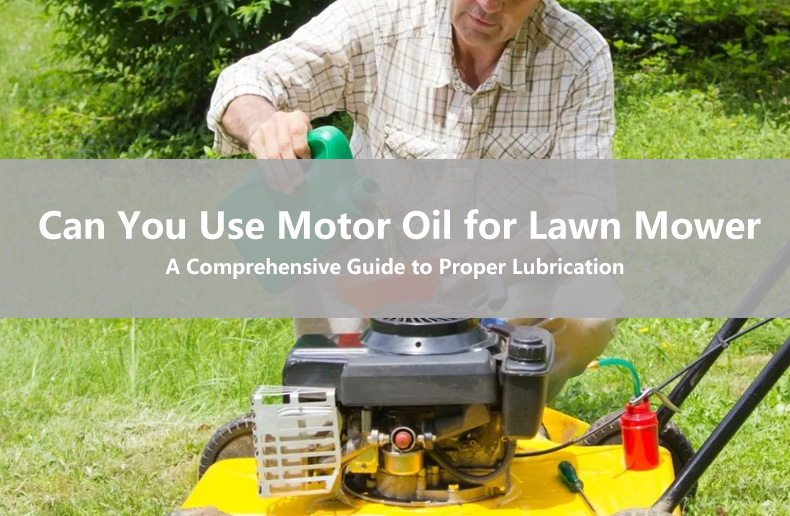
คุณสามารถใช้น้ำมันเครื่องกับเครื่องตัดหญ้าได้? คู่มือที่ครอบคลุมเกี่ยวกับการหล่อลื่นที่เหมาะสม
The question “can you use motor oil for lawn mower” is one of the most common maintenance dilemmas faced by homeowners and landscaping professionals alike. When your เครื่องตัดหญ้า needs an oil change and you have automotive motor oil readily available in your garage, the temptation to use it can be strong. อย่างไรก็ตาม, the answer isn’t as straightforward as a simple yes or no. This comprehensive guide examines the technical differences between automotive motor oil and lawn mower น้ำมัน, explores the potential risks and benefits, and provides clear guidelines for making the right lubrication choice for your outdoor power equipment.
As a leading manufacturer of brushless DC motors for various applications including lawn and garden equipment, Greensky Power understands the critical importance of proper lubrication for small engine performance and longevity. While our expertise lies in electric motor technology, we recognize that many of our customers and partners work with combustion engine equipment, making this knowledge essential for comprehensive equipment maintenance.
ฉัน. Understanding the Fundamental Differences: Automotive vs. Small Engine Oils
Engine Design and Operating Conditions
Automotive engines and lawn mower engines operate under fundamentally different conditions that necessitate specialized lubrication formulations. Car engines are designed for sustained high-speed operation over long distances, with sophisticated cooling systems and precise temperature regulation. ในทางตรงกันข้าม, lawn mower engines typically feature simpler air-cooled designs that operate at consistent speeds for shorter durations but under more demanding thermal conditions .
Key Operational Differences:
- Temperature Profiles: Lawn mower engines often run hotter due to air-cooled designs and lack of sophisticated cooling systems
- ลักษณะโหลด: Mower engines experience variable loads when cutting different grass types and densities
- Operating Cycles: Frequent starts and stops during typical mowing sessions
- Environmental Exposure: Higher exposure to dust, debris, and moisture
Viscosity Requirements and Formulation Differences
The viscosity characteristics of automotive and small engine oils represent one of the most significant technical distinctions. Automotive oils like 10W-30 or 10W-40 are multi-grade formulations designed to perform across a wide temperature range, while lawn mower oils often utilize single-grade formulations like SAE 30 optimized for specific operating conditions .
Viscosity Comparison:
- Automotive Oils: Multi-grade formulations (เช่น., 5W-30, 10W-40) with viscosity index improvers
- Lawn Mower Oils: Often single-grade (SAE 30) or specific multi-grade formulations
- Temperature Adaptation: Automotive oils adapt to cold starts and hot operation; small engine oils prioritize high-temperature stability
Additive Packages and Specialized Formulations
The additive packages in motor oils are specifically engineered for their intended applications. Automotive oils contain detergents, dispersants, and friction modifiers optimized for water-cooled engines with catalytic converters and emission control systems. Lawn mower oils feature additives designed to combat the unique challenges of air-cooled small engines, including enhanced protection against high-temperature breakdown, rust prevention during seasonal storage, and resistance to fuel dilution from frequent starts.
ครั้งที่สอง. Interactive Selection Tool: Lawn Mower Oil Compatibility Checker
Use this step-by-step tool to determine if your available motor oil is suitable for your lawn mower and identify the optimal lubrication solution.
ขั้นตอน 1: Identify Your Lawn Mower Engine Type
Engine Configuration
- [ ] Four-Stroke Engine: Separate oil and fuel systems (most common in modern mowers)
- [ ] Two-Stroke Engine: Requires oil-fuel mixture (typically older or specialized equipment)
- [ ] Uncertain: Check for oil dipstick (present = four-stroke; absent = likely two-stroke)
Manufacturer Specifications
- ผู้ผลิต: ________ (เช่น., การท่องเที่ยว, ฮอนด้า, Briggs & Stratton, จอห์น เดียร์)
- Model Number: ________
- Manufacturer’s Recommended Oil: ________ (from owner’s manual)
ขั้นตอน 2: Evaluate Your Available Motor Oil
Oil Type Assessment
- Oil Classification: [Conventional] [Synthetic Blend] [Full Synthetic]
- Viscosity Grade: ________ (เช่น., SAE 30, 10W-30, 5W-30, 10W-40)
- API Service Classification: ________ (เช่น., SJ, สล, SM, SN, SP)
- Intended Application: [ยานยนต์] [Small Engine] [Multi-Purpose]
Temperature Considerations
- Current Ambient Temperature: ________ °F/°C
- Typical Operating Temperature Range: ________ to ________ °F/°C
- Seasonal Variation: [Consistent Warm] [Seasonal Changes] [Cold Climate]
ขั้นตอน 3: Compatibility Analysis
Four-Stroke Engine Compatibility Matrix
Based on your inputs, the tool provides compatibility guidance:
| Your Oil Type | Recommended? | Conditions | Risk Level |
|---|---|---|---|
| SAE 30 (Small Engine) | ✅ Highly Recommended | All temperatures above 40°F (4องศาเซลเซียส) | ต่ำ |
| 10W-30 (ยานยนต์) | ⚠️ Conditionally Acceptable | Emergency use only; not for prolonged use | ปานกลาง |
| 5W-30 (ยานยนต์) | ⚠️ Limited Compatibility | Cold weather only; switch to SAE 30 in warm conditions | Medium-High |
| 10W-40 (ยานยนต์) | ❌ Not Recommended | Too thick for most small engines | สูง |
| Synthetic Small Engine Oil | ✅ Excellent Choice | All temperatures; superior protection | ต่ำ |
Two-Stroke Engine Warning
- ❌ Automotive Oil NEVER Compatible: Two-stroke engines require specialized oil mixed with gasoline at specific ratios
- ✅ Only Use: TC-W3 or JASO FD/FC certified two-stroke oils
- ⚠️ Critical: Using automotive oil will cause immediate engine damage
ขั้นตอน 4: Decision Guidance and Recommendations
Compatibility Outcome:
- [ ] Safe to Use: Your automotive oil matches manufacturer specifications
- [ ] Conditional Use: Acceptable for emergency/temporary use with limitations
- [ ] Not Recommended: Significant risk of engine damage
Immediate Action Plan:
- For Safe/Compatible Oils: Proceed with oil change following standard procedures
- For Conditional Oils: Use only if necessary, then replace with proper oil at earliest opportunity
- For Incompatible Oils: Obtain correct oil before operating equipment
Optimal Oil Selection:
- Primary Recommendation: ________ (based on engine type and conditions)
- Alternative Options: ________
- Purchase Sources: Local hardware stores, automotive shops, online retailers
ที่สาม. Technical Analysis: What Happens When You Use Automotive Oil in Lawn Mowers
Potential Risks and Engine Damage Mechanisms
Using automotive motor oil in lawn mower engines can lead to several specific failure modes and performance issues that stem from formulation incompatibilities.
Sludge Formation and Deposit Accumulation
Automotive oils contain detergent packages designed for the different combustion characteristics and temperature profiles of car engines. When used in small air-cooled engines, these additives may not properly manage combustion byproducts, leading to accelerated sludge formation. This sludge can clog oil passages, restrict lubrication flow to critical components, and cause premature wear .
Viscosity-Related Issues
The viscosity characteristics optimized for automotive applications may not provide adequate protection in small engines. Automotive oils designed for water-cooled engines operating within narrow temperature ranges may become too thin at the higher operating temperatures typical of air-cooled mower engines, reducing lubricating film strength and increasing metal-to-metal contact .
Additive Incompatibilities
Friction modifiers and other additives in automotive oils may interact differently with small engine components. Some automotive additives can actually increase wear in the simpler bearing designs found in lawn mower engines, while others may not provide adequate protection against the specific wear patterns encountered in small engine operation .
Performance Impacts and Efficiency Reduction
Even when automotive oil doesn’t cause immediate catastrophic failure, it can significantly reduce engine performance and efficiency over time.
Starting Difficulties
Multi-grade automotive oils may not provide optimal cold-weather starting characteristics for small engines. The viscosity index improvers that allow these oils to perform across wide temperature ranges can sometimes hinder proper lubrication during initial startup, increasing wear during the critical first moments of operation .
Increased Fuel Consumption
Improper lubrication increases internal friction within the engine, requiring more energy to maintain operating speeds. This manifests as increased fuel consumption and reduced cutting power, particularly noticeable when mowing thick or wet grass .
Accelerated Component Wear
The most significant long-term consequence of using incompatible oil is accelerated wear of critical components. Piston rings, cylinder walls, ตลับลูกปืน, and valve train components all experience increased wear rates when lubricated with oil not formulated for their specific operating conditions .
IV. Manufacturer Recommendations and Industry Standards
Original Equipment Manufacturer (OEM) Specifications
Leading lawn mower manufacturers provide specific oil recommendations based on extensive testing and engineering analysis of their equipment.
Toro Recommendations:
Toro explicitly recommends SAE 30 or SAE 10W-30 oil meeting API SJ or higher specifications for their TimeMaster series mowers. The company emphasizes that their proprietary SAE 30 oil has passed thousands of hours of testing in hundreds of engines, highlighting the importance of using oils specifically formulated for small engine applications .
Briggs & Stratton Guidelines:
As one of the world’s largest small engine manufacturers, Briggs & Stratton provides clear viscosity recommendations based on operating temperatures:
- SAE 30: Recommended for temperatures above 40°F (4องศาเซลเซียส)
- SAE 10W-30: Suitable for varying temperatures and seasonal use
- SAE 5W-30: Best for cold weather operation below freezing
Honda Engine Requirements:
Honda small engines, known for their reliability and performance, typically specify SAE 10W-30 oil for their GX series engines. The company emphasizes using oils that meet or exceed API service classification SJ for optimal protection and performance.
American Petroleum Institute (API) Classifications
Understanding API service classifications helps identify oils suitable for small engine use:
- API SJ, สล, SM, SN, SP: Progressive classifications indicating improved performance
- Small Engine Specific: Some oils carry additional designations for small engine compatibility
- Critical Consideration: Always use oil meeting or exceeding the manufacturer’s specified API classification
วี. Optimal Oil Selection Guidelines for Different Conditions
Temperature-Based Selection Matrix
| Temperature Range | Recommended Oil Grade | Alternative Options | หมายเหตุ |
|---|---|---|---|
| Below 0°F (-18องศาเซลเซียส) | SAE 5W-30 Synthetic | SAE 0W-30 Synthetic | Essential for cold weather starting |
| 0°F to 40°F (-18°C to 4°C) | SAE 10W-30 | SAE 5W-30 | Good all-season performance |
| 40°F to 100°F (4°C to 38°C) | SAE 30 | SAE 10W-30 | Optimal for warm weather operation |
| Above 100°F (38องศาเซลเซียส) | SAE 30 High-Temperature | SAE 40 for extreme heat | Enhanced thermal stability needed |
Engine Type and Application Considerations
Residential Push Mowers:
- การใช้งานทั่วไป: 20-50 hours annually, moderate loads
- Recommended: SAE 30 conventional or synthetic blend
- Change Interval: Every 25 hours or seasonally
Commercial Riding Mowers:
- การใช้งานทั่วไป: 100-300+ hours annually, ภาระหนัก
- Recommended: Synthetic SAE 10W-30 or 15W-40
- Change Interval: Every 50-100 hours depending on usage
Zero-Turn Mowers:
- การใช้งานทั่วไป: High-performance applications, varied loads
- Recommended: Full synthetic small engine oil
- Change Interval: Follow manufacturer specifications closely
Oil Type Comparison: Conventional vs. Synthetic
Conventional Oils:
- ข้อดี: Cost-effective, widely available, suitable for standard applications
- Limitations: Reduced high-temperature stability, shorter change intervals
- ดีที่สุดสำหรับ: Light to moderate use, standard operating conditions
Synthetic Blends:
- ข้อดี: Improved temperature performance, better wear protection
- Limitations: Higher cost than conventional oils
- ดีที่สุดสำหรับ: Mixed seasonal use, moderate to heavy workloads
Full Synthetic Oils:
- ข้อดี: Superior thermal stability, extended drain intervals, excellent wear protection
- Limitations: Highest cost, potential overkill for light applications
- ดีที่สุดสำหรับ: Commercial use, extreme temperatures, maximum protection
วี. Proper Oil Change Procedures and Maintenance Schedule
Step-by-Step Oil Change Guide
Preparation:
- Run engine for 5-10 minutes to warm oil (improves drainage)
- Position mower on level surface with oil fill area accessible
- Gather necessary tools: drain pan, funnel, rags, new oil filter (ถ้ามี)
Draining Old Oil:
- Locate and clean drain plug area
- Place drain pan beneath plug
- Remove drain plug and allow oil to drain completely
- Replace drain plug and tighten to manufacturer specification
Refilling with New Oil:
- Consult owner’s manual for correct oil capacity
- Add approximately ¾ of recommended amount
- Check dipstick and add oil gradually until reaching “Full” mark
- Replace fill cap securely
Post-Change Procedures:
- Start engine and run for 2-3 นาที
- Check for leaks around drain plug and filter
- Recheck oil level and adjust if necessary
- Properly dispose of used oil at recycling facility
Maintenance Schedule Recommendations
Frequency Guidelines:
- Minimum: Change oil at least once per mowing season
- มาตรฐาน: Every 25-50 hours of operation for residential use
- Commercial: Every 50-100 hours depending on conditions
- พื้นที่จัดเก็บ: Change oil before seasonal storage to prevent acid formation
Condition-Based Indicators:
- Visual Inspection: Dark, dirty oil indicates need for change
- Performance Issues: Hard starting, reduced power, excessive smoke
- Operating Conditions: Heavy use, dusty environments, extreme temperatures
ปกเกล้าเจ้าอยู่หัว. Special Considerations and Expert Recommendations
Emergency Situations: When Automotive Oil Might Be Acceptable
While generally not recommended, there are limited circumstances where automotive oil might serve as a temporary solution:
Acceptable Temporary Use:
- Only for four-stroke engines (never for two-stroke)
- When the automotive oil viscosity matches manufacturer specifications
- For emergency operation only, with immediate proper oil change afterward
- When no small engine specific oil is available and operation is necessary
Critical Restrictions:
- Maximum of 2-3 hours of operation before proper oil change
- Avoid heavy loads or extended operation
- Monitor engine temperature and performance closely
- Change to proper oil at earliest opportunity
Storage and Seasonal Preparation
End-of-Season Storage:
- Change oil before storage to remove contaminants and acids
- Add fuel stabilizer to prevent fuel system issues
- Run engine briefly to circulate treated fuel through system
- Store in clean, dry location
Spring Start-Up Preparation:
- Check oil level and condition
- Replace if oil appears contaminated or has been stored over 6 เดือน
- Verify proper viscosity for expected operating temperatures
- Perform complete maintenance check before first use
Troubleshooting Common Oil-Related Issues
Excessive Oil Consumption:
- Possible Causes: Worn piston rings, valve guides, or gaskets
- Diagnosis: Check for blue smoke from exhaust, oil leaks
- สารละลาย: Engine repair or overhaul
Oil Contamination:
- Fuel Dilution: Oil smells like gasoline, thin consistency
- Coolant Contamination: Milky appearance, possible head gasket failure
- Dirt/Debris: Gritty feel, indicates inadequate air filtration
Performance Degradation:
- Hard Starting: Incorrect viscosity for temperature conditions
- ความร้อนสูงเกินไป: Inadequate lubrication or wrong oil type
- Reduced Power: Increased internal friction from improper lubrication
8. Greensky Power’s Perspective on Equipment Maintenance
While Greensky Power specializes in brushless DC motor technology for electric lawn and garden equipment, we recognize the importance of proper maintenance for all types of outdoor power equipment. Our experience with precision-engineered motor systems reinforces the critical role that proper lubrication plays in any mechanical system’s longevity and performance.
Key Maintenance Principles:
- Follow Manufacturer Specifications: Always adhere to OEM recommendations for fluids and maintenance intervals
- Use Quality Products: Invest in appropriate lubricants and maintenance products
- Regular Inspection: Proactive maintenance prevents costly repairs
- Proper Storage: Protect equipment during off-season periods
- Professional Service: Complex issues should be addressed by qualified technicians
Transition to Electric Alternatives:
For those considering equipment upgrades, modern battery-powered lawn equipment with มอเตอร์ DC แบบไร้แปรงถ่าน offers several advantages:
- Eliminates oil changes and fuel mixing
- Reduced maintenance requirements
- Lower operating costs over equipment lifetime
- Environmental benefits through reduced emissions
บทสรุป: Making the Right Choice for Your Lawn Mower
The question “can you use motor oil for lawn mower” has a nuanced answer that depends on specific circumstances. While automotive oil can sometimes serve as a temporary solution for four-stroke engines in emergencies, it is generally not recommended for regular use. The formulation differences between automotive and small engine oils are significant and can impact engine performance, อายุยืนยาว, และความน่าเชื่อถือ.
Key Takeaways:
- Primary Recommendation: Always use oil specifically formulated for small engines
- Viscosity Matters: Match oil viscosity to operating temperatures and manufacturer specifications
- Engine Type Critical: Never use automotive oil in two-stroke engines
- Quality Counts: Invest in quality oils appropriate for your equipment and usage patterns
- การบำรุงรักษาตามปกติ: Follow recommended change intervals and procedures
By selecting the proper oil and maintaining a regular service schedule, you can ensure your lawn mower operates reliably for years, providing consistent performance and reducing the likelihood of costly repairs. When in doubt, consult your owner’s manual or contact the equipment manufacturer for specific recommendations tailored to your machine.
For those seeking to eliminate oil-related maintenance entirely, Greensky Power’s brushless DC motor solutions for electric lawn equipment offer a modern alternative that combines reliability, ประสิทธิภาพ, และข้อกำหนดการบำรุงรักษาที่ลดลง.
อ้างอิง:
- Car Objective. “Can You Put Car Motor Oil in a Lawn Mower: Essential Guide.” https://carobjective.com/can-you-put-car-motor-oil-in-a-lawn-mower-essential-guide/
- DIY Repair Clinic. “What Type of Oil Should You Use in a Lawn Mower Engine for Best Performance?” https://diy.repairclinic.com/what-type-of-oil-should-you-use-in-a-lawn-mower-engine-for-best-performance/
- Tasting Britain. “Can I use 10W30 oil in my Toro lawn mower?” https://tastingbritain.co.uk/can-i-use-10w30-oil-in-my-toro-lawn-mower/
- Lawn Chick. “Wondering What Motor Oil to Use in My Lawn Mower?” https://lawnchick.com/wondering-what-motor-oil-to-use-in-my-lawn-mower/
- Tooling Ideas. “What Oil Goes in a Lawn Mower?” https://toolingideas.com/what-oil-goes-in-a-lawn-mower/
- My Gardening Stories. “Can You Use Car Motor Oil in Lawn Mower: Key Insights for Optimal Engine Performance.” https://mygardeningstories.com/can-you-use-car-motor-oil-in-lawn-mower-key-insights-for-optimal-engine-performance/
- Best Software. “Can I Use Motor Oil For Lawn Mower?” https://bestsowftware.com/can-i-use-motor-oil-for-lawn-mower/
- The Pool and Lawn. “Is Car Oil and Lawn Mower Oil the Same: Understanding the Differences.” https://thepoolandlawn.com/is-car-oil-and-lawn-mower-oil-the-same-understanding-the-differences/
- Tooling Ideas. “Lawn Mower Oil vs. Car Oil: Are They Really That Different?” https://toolingideas.com/lawn-mower-oil-vs-car-oil-are-they-really-that-different/
- Tool Territory. “Difference between Lawn mower oil and Car oil?” https://toolsterritory.com/difference-between-lawn-mower-oil-and-car-oil/