
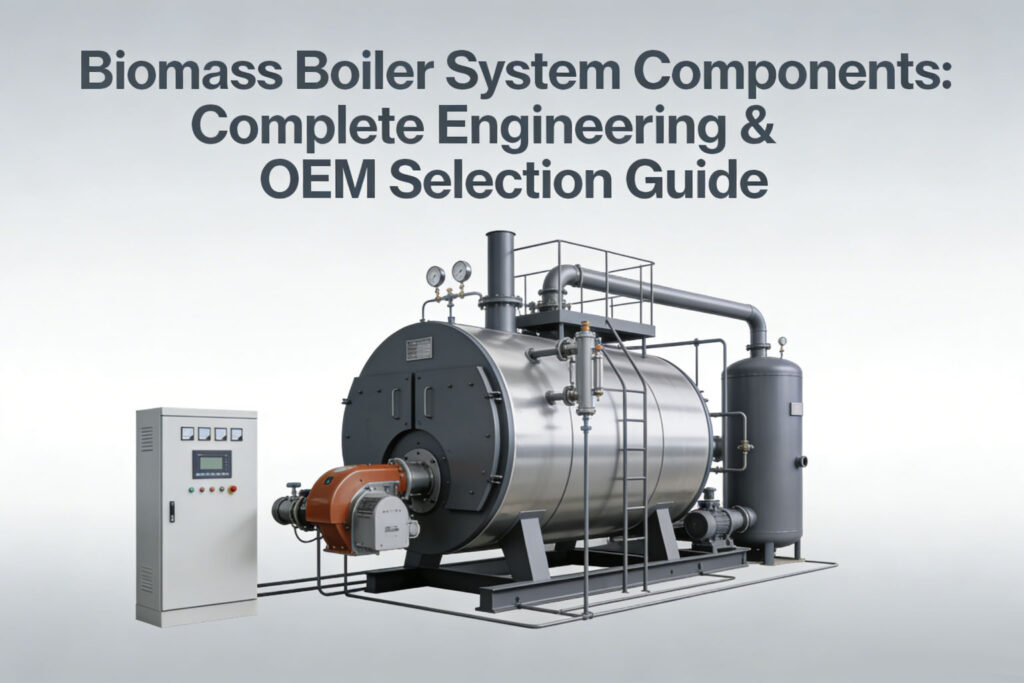
Komponenter i biomassapannsystem: Komplett teknik & OEM valguide
Utvalt utdrag:
Biomass boiler system components include fuel feeding systems, combustion chambers, heat exchangers, flue gas systems, and motor-driven subsystems such as fans, pumps, and conveyors. These components work together to convert biomass fuel into usable heat efficiently and reliably. For industrial applications, proper integration of high-efficiency motors, advanced control systems, and robust thermal design is critical to ensure stable operation, optimized energy consumption, and long system lifespan. Selecting the right components directly impacts overall boiler performance, emissions, och underhållskostnader.
What Are Biomass Boiler System Components?
Biomass boiler system components refer to all mechanical, thermal, and electrical subsystems required to convert biomass fuel into heat energy. These systems are highly integrated and rely on coordinated operation between combustion processes and motor-driven equipment.
Main System Categories
- Fuel handling and feeding systems
- Combustion and heat generation systems
- Heat transfer and distribution systems
- Flue gas and emission control systems
- Electrical and motor-driven subsystems
Each subsystem must be carefully engineered to ensure efficiency, pålitlighet, and compliance with environmental standards.
Explore motor integration solutions: Biomassa pannmotorlösningar
Why Biomass Boiler Components Design Matters
The design and selection of biomass boiler system components directly influence operational efficiency, fuel consumption, and system lifespan.
Engineering Importance
- Optimized airflow improves combustion efficiency
- Accurate fuel feeding ensures stable heat output
- Efficient heat exchangers reduce energy loss
- Reliable motors ensure continuous operation
System-Level Insight
In industrial biomass boilers, poor component matching can lead to incomplete combustion, excessive emissions, and higher maintenance costs.
Key Biomass Boiler System Components Explained
1. Fuel Feeding System
Includes conveyors, augers, and hoppers driven by geared motors. Responsible for consistent fuel supply.
2. Combustion Chamber
The core area where biomass fuel is burned under controlled conditions.
3. Heat Exchanger
Transfers heat from combustion gases to water or steam systems.
4. Flue Gas System
Handles exhaust gases and includes induced draft fans powered by motors.
5. Motor-Driven Subsystems
- Fläktmotorer (combustion air control)
- Pump motors (heat circulation)
- Conveyor motors (fuel transport)
Efficiency of Biomass Boiler Components
Efficiency depends on the performance of individual components and their integration.
Key Efficiency Factors
- Fuel quality and moisture content
- Airflow control via fan motors
- Heat exchanger effectiveness
- Motoreffektivitet (BLDC vs AC)
Ingenjörsinsikt
High-efficiency motors (up to 90–95%) reduce electrical losses, improving overall system performance and lowering operating costs.
Torque Density and Mechanical Performance
Different components require varying torque characteristics.
High Torque Components
- Fuel augers
- Transportörsystem
High-Speed Components
- Combustion fans
- Induced draft fans
BLDC motors offer higher torque density, enabling compact and efficient designs.
Thermal Performance and Heat Management
Thermal management ensures safe and efficient operation of biomass boiler systems.
Termiska utmaningar
- High combustion temperatures
- Heat transfer losses
- Motor overheating risks
Lösningar
- Efficient insulation
- Heat-resistant materials
- Proper motor cooling systems
Control Systems in Biomass Boiler Components
Modern biomass boilers rely on advanced control systems for automation and efficiency.
Control Functions
- Fuel feeding regulation
- Airflow control via fan motors
- Temperature monitoring
- Emission control
Teknologier
- PLC systems
- Variable Frequency Drives (VFD)
- BLDC controllers
Anpassad integration: Custom Motor Solutions
Biomass Boiler Components vs Gas Boiler vs Coal Boiler Systems
| Parameter | Biomass System | Gas Boiler | Coal Boiler |
|---|---|---|---|
| Component Complexity | Hög | Måttlig | Hög |
| Motor Usage | Extensive | Måttlig | Begränsad |
| Effektivitet | 80–92% | 85–95 % | 70–85% |
| Underhåll | Måttlig | Låg | Hög |
| Miljöpåverkan | Låg | Måttlig | Hög |
Teknisk tolkning
Biomass systems require more complex components and motor integration but provide better sustainability and cost advantages.
Advantages and Disadvantages of Biomass Boiler Components
Fördelar
- Renewable energy integration
- High system efficiency
- Scalable industrial applications
Disadvantages
- Higher system complexity
- Initial investment cost
- Maintenance requirements
How to Choose Biomass Boiler System Components
For OEMs and procurement teams, selecting the right components is critical for performance and reliability.
Spänningsområde
- 24V–72V: styrsystem
- 220V–380V: industrimotorer
Power Range
- 0.5kW–5kW: feeding systems
- 5kW–50kW: fans and pumps
Fart / Vridmoment
Match motor characteristics with application requirements.
Kylningsmetod
- Luftkylning
- Forced ventilation
Controllerkompatibilitet
Ensure compatibility with PLC and VFD systems.
Applikationsöverväganden
- Fuel type
- Operating environment
- Arbetscykel
CTA: Request datasheet or contact our engineers for OEM solutions tailored to your biomass boiler system.
Applications of Biomass Boiler Systems
Industriella applikationer
- Fabriker
- Food processing
HVAC Systems
- District heating
- Commercial buildings
Agricultural Applications
- Drying systems
- Greenhouses
Motor Integration
Multiple motors operate simultaneously to ensure stable system performance.
Future Trends in Biomass Boiler Components
The industry is evolving toward smarter, more efficient systems.
Nyckeltrender
- High-efficiency motor adoption (BLDC)
- IoT-based monitoring systems
- Integrated motor-drive units
- Low-emission combustion technologies
FAQ: Komponenter i biomassapannsystem
1. What are the main components of a biomass boiler?
They include fuel feeding systems, combustion chambers, heat exchangers, flue gas systems, and motor-driven components such as fans and pumps.
2. Why are motors important in biomass systems?
Motors control airflow, fuel feeding, and heat distribution, directly affecting efficiency and system stability.
3. What type of motor is best for biomass boilers?
BLDC motors are preferred for efficiency, while AC motors are used for cost-effective applications.
4. How do components affect efficiency?
Efficient components reduce energy loss, improve combustion, and lower operating costs.
5. How long do biomass boiler systems last?
With proper maintenance, systems can operate for 15–25 years depending on component quality.
Slutsats: Optimizing Biomass Boiler Systems with the Right Components
Biomass boiler system components must be carefully selected and integrated to achieve optimal performance, effektivitet, och tillförlitlighet. Motors play a critical role in ensuring stable operation across all subsystems.
For OEMs and industrial buyers, choosing high-quality components and motor solutions is essential for long-term success.
Nästa steg: Contact our engineers to develop a customized solution or request technical datasheets for your project.
Referenser
- IEA Bioenergy Reports
- IEEE Industrial Systems Papers
- Renewable Energy Journals
- Industrial Heating White Papers