

What Is a DC Motor? Soorten, Werkingsprincipe & Engineering Formulas (2026 Gids)
Snel antwoord
A DC motor is an electromechanical machine that converts direct-current (gelijkstroom) electrical energy into rotational mechanical energy through the magnetic-field interaction described by the Lorentz force (F = B·I·L). Every DC motor contains an internal commutation mechanism that periodically reverses armature current—mechanical brushes and a segmented commutator in geborsteld soorten, or an electronic controller in borstelloos (BLDC) types—so developed torque always acts in one direction.
The two dominant architectures are brushed DC (goedkoop, simple voltage control, requires brush service) and brushless DC (85–95% efficient, onderhoudsvrij, needs an electronic driver). Governed by IEC 60034 En GEEN MG 1, DC motors remain the default choice wherever high starting torque, wide speed control, and reversible rotation matter—from automotive actuators to precision robotics.
What Is a DC Motor?
A DC-motor (direct-current motor) is a rotating electrical machine that transforms DC electrical power into mechanical power at the shaft. The energy conversion is electromagnetic: a current-carrying conductor placed in a magnetic field experiences a force, and the collective force on many armature conductors produces a net torque that spins the rotor. Because the input is DC, the motor can run directly from batteries, rectifiers, or regulated DC supplies—no inverter is required for basic operation.
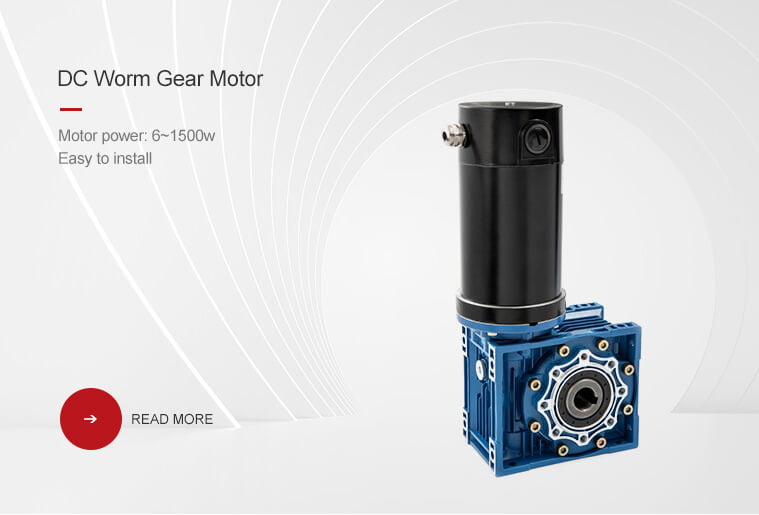
Core Components
| Onderdeel | Functie | Notes for brushed vs BLDC |
|---|---|---|
| Stator (veld) | Provides the stationary magnetic field | PMDC uses permanent magnets; larger machines use wound poles (series/shunt/compound). In BLDC the field is on the rotor. |
| Rotor / Armature | Carries the current-carrying windings that develop torque | Brushed: windings on rotor + commutator. BLDC: windings on stator, magnets on rotor. |
| Commutator | Mechanical current-reversal switch on the shaft | Present only in brushed motors; absent in BLDC (replaced by electronics). |
| Borstels | Transfer current from fixed supply to rotating commutator | Carbon blocks in brushed; eliminated in BLDC (Hall/sensorless feedback instead). |
| Lagers & schacht | Support rotation, transmit mechanical output | Ball or sleeve; rated by SKF L10 life in precision designs. |
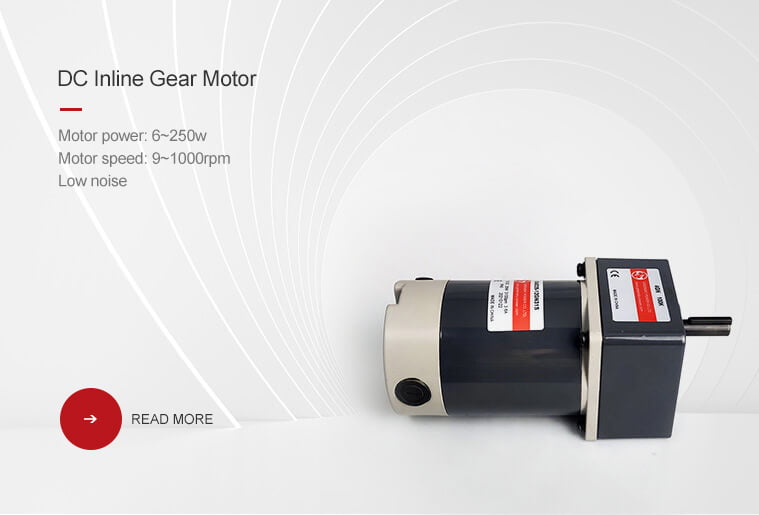
Why DC Motors Still Matter
Despite the rise of AC variable-frequency drives, DC motors keep three engineering advantages that AC induction motors cannot match without extra electronics:
- Hoog startkoppel—a brushed series motor can deliver 400–500% of rated torque at standstill.
- Eenvoudig, linear speed control—output speed is roughly proportional to applied armature voltage.
- Reversibility—swap polarity and the motor runs backward with no extra hardware.
These traits explain why a modern car still carries 30–80 small DC motors (ramen, mirrors, zitplaatsen, ruitenwissers, pompen) and why EVs recovered 15–25% of braking energy through regenerative DC/BLDC operation.
How Does a DC Motor Work?
The rotation emerges from four sequential physical steps. Understanding them clarifies every formula in the engineering section below.
Stap 1 — Lorentz Force (F = B·I·L)
When current I flows through a conductor of active length L inside a magnetic flux density B, the conductor feels a force F = B·I·L (newtons). Direction is set by Fleming’s Left-Hand Rule: index finger = field, middle finger = current, thumb = motion. Many conductors arranged around the armature produce a net driving torque.
Stap 2 — The Commutation Cycle
If current in a coil never reversed, the torque would flip every half-turn and the rotor would just oscillate. De commutator—a segmented copper cylinder—plus stationary brushes reverse each coil’s current exactly as it crosses the magnetic neutral axis. This keeps torque unidirectional. In een BLDC-motor the same job is done electronically by an ESC using Hall sensors or back-EMF zero-crossing detection, so no brushes wear out.
Stap 3 — Back-EMF and Self-Regulation
As the armature spins, its conductors cut the stator field and induce a voltage that opposes the supply—the back electromotive force (EB). At high speed, EB rises, net armature voltage drops, current falls, and acceleration self-limits. At low speed, EB is small, current surges, and high torque is available to accelerate the load. This negative-feedback loop is why a PMDC motor naturally stabilizes at a safe no-load speed instead of running away—unless it is a series machine (see Common Mistakes).
Stap 4 — Energy Conversion and Losses
Input electrical power Pin = V·IA becomes mechanical output Puit = T·ω minus losses: copper loss IA²RA, ijzer (core) verlies, brush contact loss, friction and windage. Efficiency η = Puit / Pin typically reaches 75–85% for brushed and 85–95% (tot 98% for premium BLDC) ontwerpen.
Types of DC Motors
DC motors split first into geborsteld (mechanical commutation) En borstelloos (elektronische commutatie). Within brushed machines, the field winding connection defines the torque–speed behavior.
| Type | Field connection | Start koppel | Snelheidsregeling | Typisch gebruik |
|---|---|---|---|---|
| PMDC (permanent-magnet) | Permanente magneten | Goed | Goed (<10%) | Appliances, automobiel, small servo |
| Series | Field in series with armature | Zeer hoog (400–500%) | Arm (varies with load) | Tractie, takels, starters |
| Shunt | Field in parallel with armature | Gematigd | Uitstekend (<5%) | Lathes, transportbanden, constant-speed loads |
| Compound | Series + shunt combined | Hoog | Goed | Brekers, presses, mixers |
| BLDC | Elektronisch (rotor magnets) | Hoog | Uitstekend (closed-loop) | EV's, drones, robotica, HVAC |
Brushed Sub-Types in Detail
- PMDC—compact, efficient at small sizes, gemakkelijk te controleren; cannot handle very high power because magnet flux is fixed.
- Series—torque rises as speed falls, ideal for heavy acceleration; must never run unloaded (speed can climb toward destructive values).
- Shunt—nearly constant speed across load; lower starting torque than series.
- Compound—balances strong start with stable speed for shock-loaded machinery.
Borstelloze gelijkstroom (BLDC)
In a BLDC motor the permanent magnets sit on the rotor and the windings on the stator. An electronic controller energizes phases in sequence to create a rotating field the rotor follows. Elimination of brushes removes sparking, dragen, and acoustic noise, enabling speeds beyond 100,000 RPM and maintenance-free life—at the cost of a dedicated driver and higher unit price.
Brushed vs Brushless DC Motor: Feature Comparison
This is the single most-searched decision point for buyers. The table contrasts the two architectures on the parameters engineers actually specify.
| Parameter | Geborsteld gelijkstroom | Borstelloze gelijkstroom (BLDC) |
|---|---|---|
| Commutatie | Mechanisch (commutator + carbon brushes) | Elektronische regelaar (ESC) |
| Efficiëntie | 75–85% | 85–95% (premium up to 98%) |
| Onderhoud | Brush replacement every ~2,000 h (IEEE 43-2013) | Alleen lagers |
| Speed range | Limited by brush wear (typisch <10,000 RPM) | Very wide, tot 100,000+ RPM |
| Acoustic / electrical noise | Hoger (borstelbogen) | Lager |
| Control complexity | Eenvoudig (apply voltage) | Requires dedicated driver / feedback |
| Unit cost | Lager (simpler build) | Hoger (controleur + magneten) |
| Levensverwachting | Brush-limited (1,000–5,000 h typical) | Bearing-limited (10,000–20,000+ h) |
Vuistregel: choose brushed for low-cost, met tussenpozen, or cost-sensitive duties under a few hundred watts; choose BLDC for continuous, hoge efficiëntie, hoge snelheid, or maintenance-free duties. When total cost of ownership dominates—as in a 20-year industrial lifecycle—BLDC’s energy savings usually outweigh its higher purchase price by 10:1.
DC Motor Engineering Data & Formules
The following equations let you size, predict, and troubleshoot a DC motor without vendor datasheets. They apply to both brushed and BLDC; for BLDC, IA is the phase current and commutation is electronic.
Key Formulas
| Hoeveelheid | Formule | Meaning |
|---|---|---|
| Koppel | T = kT · IA | Koppel (N·m) is proportional to armature current. |
| Terug-EMF | EB = kE · ω | Induced voltage opposes supply; grows with speed. |
| Armature voltage | V = EB + IA · RA | Terminal voltage = back-EMF + resistive drop. |
| Speed–torque | ω = (V / kE) - (RA / (kE·kT)) · T | Linear curve; no-load speed = V/kE. |
| Starting current | Ibegin = V / RA | At standstill EB=0; limited only by RA. |
| Mechanical power | Puit = T · ω | Shaft output (W); T in N·m, ω in rad/s. |
| Efficiëntie | η = Puit / (V · IA) | Includes copper, ijzer, friction losses. |
SI unit note: in consistent units kT and kE are numerically equal (N·m/A = V·s/rad). This equality is a direct consequence of energy conservation and is why motor datasheets quote a single Kv/KT pair.
Worked Example — 24 V PMDC Gearmotor
Given: V = 24 V, RA = 1.2 Ω, kT = kE = 0.08 (N·m/A, V·s/rad), load torque T = 0.30 N·m.
- Armature current: IA = T / kT = 0.30 / 0.08 = 3.75 A.
- Terug-EMF: EB = V − IA·RA = 24 − 3.75·1.2 = 19.5 V.
- Snelheid: ω = EB / kE = 19.5 / 0.08 = 243.75 rad/s ≈ 2,328 RPM.
- Input power: Pin = 24 · 3.75 = 90 W; copper loss = IA²RA = 16.9 W.
This shows why a stalled (T large) motor draws near V/RA = 20 A and can overheat in seconds—starting current must be limited by driver or resistor.
Efficiëntieklassen (IEC 60034-30-1)
| IE class | Relative efficiency | Typical DC/BLDC relevance |
|---|---|---|
| IE1 | Standaard | Legacy brushed, non-regulated |
| IE2 | Hoog | Improved brushed / basic BLDC |
| IE3 | Premie | Most BLDC servo & PMDC |
| IE4 | Super-premium | Premium BLDC, magnet-optimized |
| IE5 | Ultra-premium | Axial-flux / slotless BLDC |
Isolatietemperatuurlimieten (IEC 60034-1)
| Klas | Max winding temp | Hot-spot allowance | Use |
|---|---|---|---|
| B | 130 ° C | +10 ° C | General-purpose, lower duty |
| F | 155 ° C | +10 ° C | Most industrial DC/BLDC |
| H | 180 ° C | +10 ° C | Tractie, high-ambient, enclosed |
Design to Class F insulation with Class B rise (so the winding runs ~40 °C below its limit) to double insulation life. Ambient should not exceed 40 °C per IEC 60034-1; above that, de-rate the continuous current.
Best Applications for DC Motors
Match the architecture to the duty. The table maps common applications to the recommended DC type.
| Sollicitatie | Recommended type | Why |
|---|---|---|
| Actuatoren voor auto's (ramen, zitplaatsen, mirrors) | PMDC / small BLDC | Lage kosten, battery-powered, reversible |
| Engine starter, lieren, takels | Series brushed | Very high starting torque |
| CNC, transportbanden, constant-speed drives | Shunt / BLDC servo | Stable speed, closed-loop accuracy |
| EV / e-bike traction | BLDC / PMSM | 85–95% efficiëntie, regen braking |
| Drones, elektrisch gereedschap, HVAC | BLDC | Hoge snelheid, light, onderhoudsvrij |
| Medical pumps, robotica, lab instruments | Slotless BLDC / coreless | Zero cogging, low inertia, nauwkeurig |
| Battery tools (economie) | Brushed | Lowest unit cost |
Market context: the global electric DC motor market was Amerikaanse Dollar 49.8 miljard binnen 2026 and is forecast at Amerikaanse Dollar 100.1 miljard door 2033 (CAGR 10.5%, Grand View Research). Brushless types already hold 66.6% of revenue, led by Asia Pacific (41.8% share, China the largest).
DC Motor Selection Guide (Stap voor stap)
Use this checklist to go from requirement to part number without over-specifying.
- Define the load. Record continuous torque Tcont, peak torque Tpeak, snelheidsbereik, and duty cycle (on/off ratio).
- Choose architecture. Brushed if <200 W and cost-critical; BLDC if efficiency, leven, or speed dominate.
- Compute required current. I = T / kT; verify the driver can sustain Icont and briefly supply Ipeak.
- Check back-EMF vs supply. At top speed EB = kE·ω must stay below V with margin for RA·I drop; otherwise raise V or lower kE.
- Thermal check. Copper loss I²RA plus iron loss must keep winding below the Class limit at ambient +40 ° C. De-rate for enclosed or high-ambient use.
- Verify starting current. Ibegin = V/RA must be within driver/contact limits; add current limiting if not.
- Add gearing if needed. A gearmotor trades speed for torque and lets a smaller motor meet the load—see our gearbox vs gear-motor guide.
- Confirm mounting & normen. Specify IEC B5/B14 or NEMA C-face flange and quote to GEEN MG 1 / IEC 60034.
Common DC Motor Mistakes
| Fout | Gevolg | Fix |
|---|---|---|
| Een uitvoeren series motor unloaded | Speed runs away toward destructive values | Always couple load; use shunt/compound or BLDC for variable load |
| Sizing only on peak torque | Thermal overload, burnt windings | Size on RMS/continuous current over the duty cycle |
| Ignoring start current V/RA | Tripped drivers, welded contacts | Current-limiting driver or starting resistor |
| Overlooking brush service | Sparking, commutator erosion | Inspect every ~2,000 h (IEEE 43-2013); consider BLDC |
| Wrong flange / schacht | Mechanical mismatch at install | Confirm IEC B5/B14 vs NEMA C-face early |
| Skipping gear reduction | Oversized, costly motor | Use a gearmotor to hit torque at lower power |
DC Motor Troubleshooting Table
| Probleem | Waarschijnlijke oorzaak | Oplossing |
|---|---|---|
| Motor will not start | No supply, open brush/commutator, seized bearing | Check V at terminals; clean commutator; free or replace bearing |
| Excessive sparking at brushes | Worn brushes, mis-seated commutator, anker reactie | Replace brushes; resurface commutator; add interpoles if large |
| Oververhitting / burnt smell | Overbelasten, high start current, poor ventilation | Verminder de belasting; current-limit; improve cooling; check ambient >40 ° C |
| Low speed / weak torque | Low supply, high brush drop, weak field | Verify V; inspect brushes; check field circuit (shunt/compound) |
| Runs only one direction | Open phase (BLDC) or reversed wiring | Check phase connections; swap two leads for reverse |
| BLDC stutters / no sync | Hall sensor fault or mis-timed commutation | Test Hall signals; re-align rotor sensor; use sensorless startup |
| Noisy operation | Slijtage van lagers, unbalanced rotor, loose mount | Replace bearing; balance rotor; torque flange bolts to spec |
| Excessive current draw | Mechanical bind, shorted winding, wrong voltage | Free load; megger test (IEEE 43); confirm nameplate V |
Veelgestelde vragen
What is the main difference between a DC and AC motor?
A DC motor runs on direct current and uses commutation (mechanical or electronic) to keep torque unidirectional, giving simple speed control and high starting torque. An AC induction motor runs on alternating current and needs a variable-frequency drive for comparable control—see our AC vs DC comparison.
Why do brushed DC motors need commutation while BLDC do not?
Brushed motors reverse armature current mechanically with a commutator and carbon brushes, which wear and spark. BLDC motors put the magnets on the rotor and switch stator current electronically, removing brushes entirely and extending life.
What does back-EMF do in a DC motor?
Terug-EMF (EB = kE·ω) is a voltage induced by rotation that opposes the supply. It self-limits speed and current: high speed → high EB → low current; low speed → low EB → high torque. It is the basis of natural speed regulation.
Are brushless DC motors more efficient than brushed?
Ja. Brushed motors typically reach 75–85% efficiency; BLDC motors reach 85–95% (premium designs up to 98%) because there are no brush friction or commutation losses. Over a 20-year lifecycle, BLDC energy savings usually outweigh its higher purchase price.
Can a DC motor run on AC power?
Only a universal motor (a series-wound brushed design) runs on both AC and DC. Standard PMDC, shunt, or BLDC motors require DC; BLDC needs a DC supply plus an electronic controller.
How hot can a DC motor get?
Winding temperature is limited by insulation class per IEC 60034-1: Class B = 130 ° C, F = 155 ° C, H = 180 ° C. Run Class F insulation at a Class B rise (~40 °C margin) to maximize life, and de-rate above 40 °C ambient.
Why Choose Greensky for Custom DC & BLDC-motoroplossingen?
Greensky is a China-based B2B motor manufacturer supplying brushed PMDC, series/shunt, and brushless DC motors plus integrated gear-motors to OEMs worldwide. Every unit is built to IEC 60034 En GEEN MG 1 dimensions and efficiency classes, with IEC B5/B14 or NEMA C-face flanges and optional encoders, remmen, and tachometers.
- Full DC portfolio—PMDC, wound-field, and BLDC from 5 W to several kW, with slotless/coreless options for low-inertia servo use.
- Technische ondersteuning—we run the kT/kE, back-EMF, and thermal checks above so your unit is sized on continuous duty, niet alleen het maximale koppel.
- Flexibele MOQ & maatwerk—shaft, flens, kronkelend, and voltage tailored to your assembly; matched motor flanges and reducers available.
- Naleving—IE3/IE4 efficiency, Class F insulation, and full test data per IEEE 112 on request.
Whether you need a cost-optimized brushed actuator or a maintenance-free BLDC drive, our team delivers prototypes in weeks and production at scale. Request a quote with your torque, snelheid, and duty-cycle requirements.
Gerelateerde lectuur
- AC vs DC Motor: Which Should You Specify?
- Nadelen van borstelloze gelijkstroommotoren (and When They Still Win)
- Why Do Brushed Motors Spark? Oorzaken & Fixes
- What Is a Motor Flange? IEC vs NEMA Mounting
- Gearbox vs Gear-Motor: Selectiegids
- Bovenkant 12 Coreless Motor Manufacturers in the World
- Alles wat u moet weten over wormwielen
- Why Robotic Arms Need Speed Reducers
Referenties
- IEC 60034-1: Roterende elektrische machines - Beoordeling en prestaties (wikkelingstemperatuurlimieten, ambient). https://webstore.iec.ch/publication/56936
- IEC 60034-30-1: Efficiency classes (IE1–IE5) for low-voltage motors. https://webstore.iec.ch/publication/63493
- GEEN MG 1: Motors and Generators — dimensions, prestatie, testen. https://www.nema.org/standards/view/mg-1
- IEEE Std 112: Standard Test Procedure for Polyphase Induction & DC-motoren. https://standards.ieee.org/ieee/112/590/
- IEEE Std 43-2013: Recommended Practice for Insulation Resistance of Rotating Machinery (brush/commutator service). https://standards.ieee.org/ieee/43/732/
- ONS. DOE: Determining Energy Efficiency for Electric Motors (OEM procurement). https://www.energy.gov/eere/amo/articles/determining-energy-efficiency-electric-motors
- Maxon-motor: DC Motor Fundamentals & torque constant application notes. https://www.maxongroup.com/maxon/view/content/design-in
- Faulhaber: Coreless / DC Micromotor Technology white paper. https://www.faulhaber.com/en/technologies/dc-micromotors/
- SKF: Leven dragen (L10) and motor mounting guidance. https://www.skf.com/group/products/bearings-units-housings
- Grand View Research: Electric DC Motor Market Size & Forecast (2026–2033). https://www.grandviewresearch.com/industry-analysis/electric-dc-motor-market