

Cara Memilih Motor: Panduan komprehensif untuk memilih motor yang sesuai untuk aplikasi anda
Selecting the ideal electric motor is a critical decision that impacts the performance, kecekapan, cost, and longevity of your application. Whether you’re designing an e-bike, an industrial robot, a medical device, or a home appliance, the wrong choice can lead to premature failure, energy waste, and increased total cost of ownership. With a vast array of motor types available—including Brushless DC (BLDC), DC berus, Stepper, and AC motors—navigating the selection process can be daunting.
This definitive guide, drawing on Kuasa Greensky‘s extensive experience as a leading motor manufacturer, will walk you through the essential steps and technical considerations for choosing the perfect motor. We will break down the decision-making process into a clear, actionable framework, supported by real-world case studies and comparisons of motor technologies.
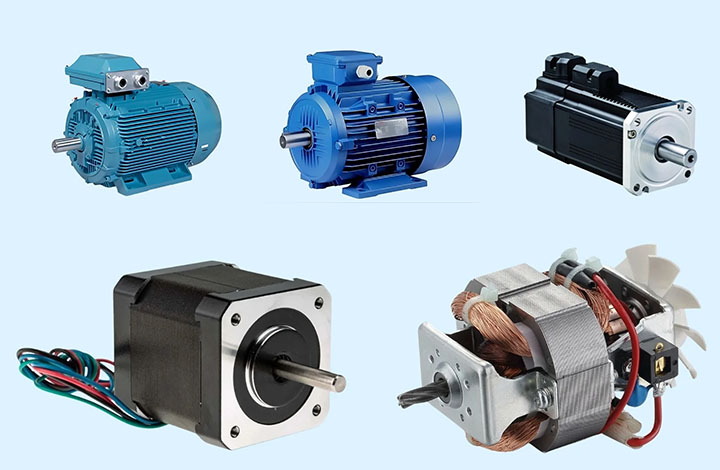
saya. The Fundamental Decision Framework: Key Parameters to Consider
Before comparing specific motor types, you must first define your application’s core requirements. Answering these questions will form the foundation of your selection process.
1. Electrical Specifications: Power Source & Drive
- voltan & semasa: What is your available power supply (cth., 12V DC, 24V DC, 48V DC, 110/220V AC)? This immediately narrows down your options. The available current will dictate the maximum power the motor can draw.
- AC vs. DC Power: Is your system primarily AC-powered (like wall outlets for home appliances) or DC-powered (like batteries for portable devices or vehicles)?
Selection of Motor Type
The choice of motor type is based on considerations such as AC/DC, mechanical characteristics, speed control and starting performance, maintenance requirements, dan kos.
① For general production machinery requiring good mechanical characteristics without special speed control needs (cth., low-power water pumps, ventilation fans, small machine tools), squirrel-cage motors should be preferred whenever possible.
② For equipment requiring better starting performance and smooth speed regulation within a limited range (cth., kren, angkat), wound-rotor motors can be used.
③ For improving the power factor of the grid, and for high-power applications not requiring speed control (cth., large water pumps, pemampat udara), synchronous motors can be employed.
④ DC motors should only be considered when specific requirements for speed control or high starting torque cannot be met by AC motors.
2. Performance Requirements: Tork, Kelajuan, and Power
- Tork (Nm or lb-in): This is the rotational force the motor must produce. You need to calculate:
- Starting Torque: The torque required to overcome static friction and start the load moving.
- Peak Torque: The maximum torque needed for acceleration or to handle sudden load changes.
- Tork Dinilai: The continuous torque the motor can deliver without overheating.
- Kelajuan (RPM): What is the desired operating speed? Is it constant or variable? Do you need high RPM (cth., for a drill) or low RPM with high torque (cth., for a winch)? The motor’s rated speed is selected based on the requirements of the production machinery. Namun begitu, for a given power, lower-speed motors are larger, lebih mahal, and less efficient. Oleh itu, unless there are specific installation size constraints, it is often more economical to select a high-speed motor paired with a gear reducer. Motors with 4 tiang (synchronous speed n₀ = 1500 rpm) are commonly used.
- Kuasa (W or HP): Power is the product of torque and speed (Power = Torque × Speed × constant). It represents the motor’s overall capability. Ensure your motor’s rated power exceeds your application’s peak demand.
3. Operational Environment
- Temperature & Humidity: Will the motor operate in extreme heat, cold, or a humid environment? This affects insulation class and sealing requirements (IP rating).
- Dust and Moisture: Does the motor need to be protected from contaminants? Look for motors with appropriate Ingress Protection (IP) ratings (cth., IP54 for dust and water splash resistance, IP67 for temporary immersion).
- Explosive Atmospheres: For applications in chemical plants or mining, motors may need hazardous location certifications (cth., ATEX, UL).
4. Kawalan & Feedback Needs
- Kawalan Kelajuan: Do you need precise control over speed? BLDC and AC motors with variable frequency drives (VFD) excel here.
- Position Control: Do you need accurate positioning (cth., in a 3D printer or CNC machine)? Stepper motors or servo motors (a subset of BLDC motors with high-resolution feedback) are necessary.
- Feedback Devices: Does the motor require built-in encoders, resolvers, or Hall effect sensors for closed-loop control? This adds complexity and cost but greatly improves accuracy and reliability.
5. Physical Constraints
- Saiz & Berat badan (Form Factor): What are the dimensional and weight limitations? Applications like drones and portable medical devices demand compact, lightweight motors.
- Mounting Configuration: How will the motor be installed? Common options include foot mounting, flange mounting, or face mounting.
Selection of Motor Construction Type
To ensure safe and reliable operation in different environments, the motor construction type should be selected according to the following principles:
① Protected Type: For locations with minimal dust and no corrosive gases.
② Enclosed Type: For dusty, damp, or corrosive atmospheres.
③ Explosion-Proof Type: For areas with explosive gases.
6. kos & Jangka hayat
- Initial Cost vs. Total Cost of Ownership (Tco): A cheaper motor may have a shorter lifespan and higher energy consumption, leading to a higher TCO. Consider efficiency, maintenance needs, and expected lifespan.
Ii. Comparing Motor Technologies: Strengths and Ideal Applications
Once you have defined your requirements, you can match them to the most suitable motor technology.
| Jenis Motor | Ciri-ciri Utama | Ideal Applications | Pros | Cons |
|---|---|---|---|---|
| DC tanpa berus (BLDC) Motor, | Electronically commutated, kecekapan tinggi, jangka hayat yang panjang, excellent speed control, requires a controller. | E-bikes, pesawat, HVAC blowers, pam industri, high-end appliances, peralatan perubatan., | Kecekapan tinggi (80-90%), high power density, penyelenggaraan yang rendah, operasi senyap. | Higher initial cost (motor + pengawal), more complex drive electronics. |
| Motor DC Berus, | Mechanically commutated with brushes, simple speed control, lower cost. | Automotive accessories (seats, windows), simple toys, low-cost pumps, tali pinggang penghantar., | Simple and inexpensive controller, tork permulaan yang tinggi, mudah dikawal. | Lower efficiency (70-80%), shorter lifespan (memakai berus), sparks, requires maintenance. |
| Motor Stepper, | Moves in discrete “steps,” excellent position control without feedback (gelung terbuka), high holding torque. | 3D pencetak, Mesin CNC, scanners, robotik, instrumen ketepatan., | Kedudukan yang tepat, high torque at low speeds, simple control for open-loop systems. | Can vibrate, lower efficiency, torque drops significantly at high speeds. |
| AC Induction Motor, | Rugged, boleh dipercayai, kos rendah, runs directly from AC mains power. | Industrial machinery, pemampat, pam, peminat, washing machines., | Very robust, penyelenggaraan yang rendah, low cost for high-power applications. | Difficult to control speed precisely without a VFD, lower efficiency at partial loads. |
Iii. Practical Selection Process: A Step-by-Step Walkthrough with Case Studies
Let’s apply this framework to real-world scenarios.
Case Study 1: Selecting a Motor for an E-Bike Mid-Drive System
- Requirements: Battery-powered (36V or 48V DC), high torque for hill climbing, variable speed control, high efficiency for long range, saiz padat, operasi senyap, and must withstand outdoor conditions.
- Analysis:
- Teknologi: A motor BLDC is the undisputed choice due to its high efficiency, excellent torque characteristics, and controllability. A brushed DC motor would be inefficient and wear out quickly.
- Key Specs: A 48V, 500W-750W motor is typical. It requires a high-torque design, often with an internal planetary gearbox (like Greensky’s e-bike motors) to multiply torque. A built-in torque sensor or Hall effect sensors are essential for smooth pedal assist.
- Environmental: An IP65 rating or higher is recommended to protect against water and dust.
- Kesimpulan: A 48V BLDC mid-drive motor with an integrated gearbox and torque sensor is the optimal solution.
Case Study 2: Selecting a Motor for an Industrial Conveyor Belt
- Requirements: AC mains power (220V AC), constant speed, moderate starting torque, rugged and reliable for 24/7 operation, penyelenggaraan yang rendah.
- Analysis:
- Teknologi: An AC induction motor is the traditional and most cost-effective workhorse for this application. If precise speed control is needed, it would be paired with a Variable Frequency Drive (VFD).
- Key Specs: Power rating depends on the load and speed of the conveyor. A totally enclosed fan cooled (TEFC) design is standard for industrial environments to keep out contaminants.
- Kesimpulan: A TEFC AC induction motor is the most reliable and economical choice. For variable speed requirements, add a VFD.
Case Study 3: Selecting a Motor for a Precision Laboratory Dispenser
- Requirements: Precise control of syringe plunger position (microliter accuracy), saiz padat, operasi senyap, can be battery-operated.
- Analysis:
- Teknologi: A motor stepper is ideal because it can move in precise, repeatable increments without needing a closed-loop feedback system, simplifying the design and reducing cost. A small Motor servo BLDC would be an alternative if absolute positional verification was critical.
- Key Specs: A NEMA 17 or smaller stepper motor provides ample torque. A gearbox may be added to increase resolution and torque further.
- Kesimpulan: A compact stepper motor offers the best balance of precision, cost, and simplicity for this application.
Iv. Partnering with Greensky Power for Your Motor Selection
At Greensky Power, we go beyond manufacturing. Our engineering team provides expert technical support to help you navigate this complex selection process.
- Application Engineering: Share your requirements with us, and we will recommend the most suitable motor and controller combination from our wide portfolio.
- Penyesuaian: We specialize in tailoring standard motor designs to meet specific size, prestasi, and environmental needs.
- Prototype Support: We work with you during the prototyping phase to ensure optimal integration and performance.
- Lifecycle Support: From initial selection to after-sales service, we are your partner for the long term.
Kesimpulan
Choosing the right motor is a systematic process that balances technical requirements with economic and operational constraints. By meticulously defining your needs for power, tork, kelajuan, kawalan, and environment, you can effectively narrow down the field of options. Remember, the cheapest motor upfront is rarely the most cost-effective over its lifetime. Investing in an efficient, reliable motor like a BLDC or high-quality AC induction motor from a trusted manufacturer like Greensky Power will pay dividends in performance, penjimatan tenaga, and reduced downtime.
Still unsure about the best motor for your project?
Contact Greensky Power’s technical team today for a free consultation. Let our expertise guide you to the perfect motion solution.
Submit Your Application Requirements| E-mel: [email protected]
Rujukan
- IEEE Industry Applications Magazine. “A Guide to Specifying Motors for Industrial Applications”. IEEEX, 2023.https://ieeexplore.ieee.org/document/9876544
- Motion Control Online. “Stepper vs. Servo: Understanding the Difference”. Motion Control Tips, 2024.https://www.motioncontroltips.com/stepper-vs-servo/
- U.S. Department of Energy. “Determining Electric Motor Load and Efficiency”. Energy.gov, 2020.https://www.energy.gov/energymanager/determining-electric-motor-load-and-efficiency