Cari

Jiaqi Zhu

Motor elektrik | Castings & CNC Machining | Engineering & OEM Manufacturing | U.S. Market Development

BLDC vs Brushed Motor for Turnstile

BLDC vs Brushed Motor for Turnstile: Which is Better? Complete Engineering Guide

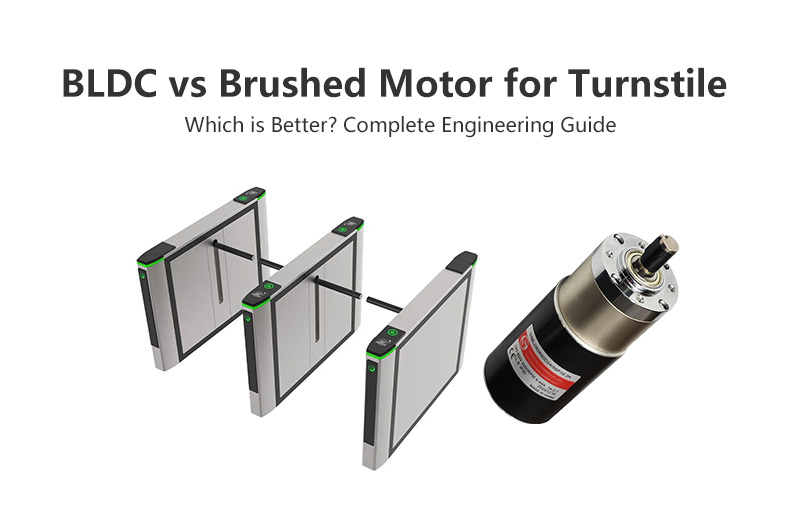
BLDC vs Brushed Motor for Turnstile: Which is Better? Complete Engineering Guide Featured Snippet: BLDC motors are generally better than brushed motors for turnstile systems due to their higher efficiency, jangka hayat yang lebih lama, penyelenggaraan yang lebih rendah, and smoother operation. While brushed motors offer lower initial cost and simpler control, they suffer from wear, lower efficiency, and higher […]

BLDC vs Brushed Motor for Turnstile: Which is Better? Complete Engineering Guide Baca Lagi »
Types of Turnstile Systems and Their Drive Mechanisms

Types of Turnstile Systems and Their Drive Mechanisms: Complete Engineering Guide

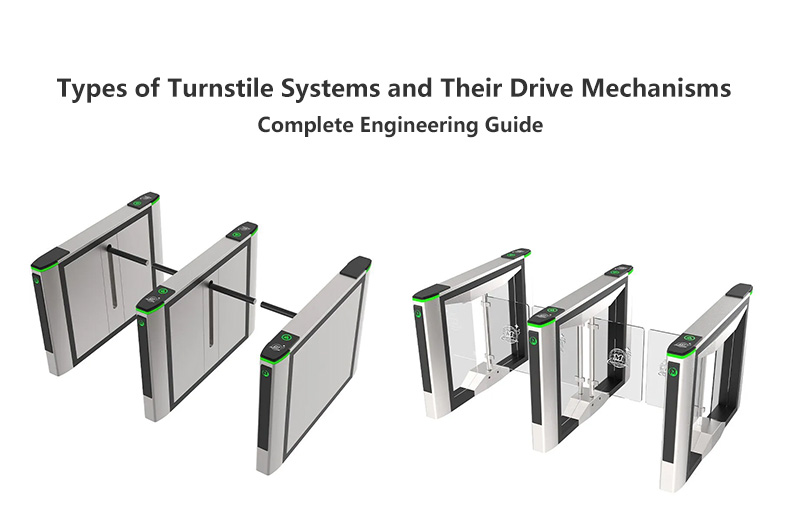
Types of Turnstile Systems and Their Drive Mechanisms: Complete Engineering Guide Featured Snippet: Turnstile systems use different mechanical designs and motor drive mechanisms depending on application requirements. The most common types include tripod turnstiles, flap barrier gates, swing gates, and full-height turnstiles. Their drive mechanisms typically rely on BLDC motors, motor servo, or stepper motors.

Types of Turnstile Systems and Their Drive Mechanisms: Complete Engineering Guide Baca Lagi »
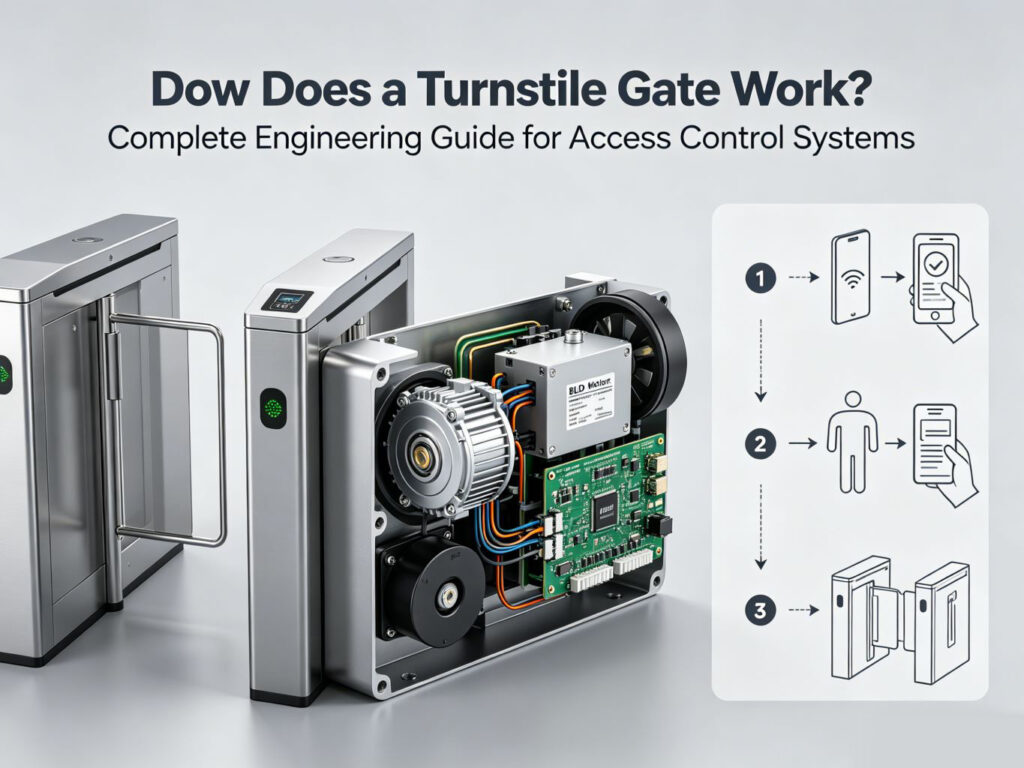
How Does a Turnstile Gate Work Complete Engineering Guide for Access Control Systems

How Does a Turnstile Gate Work? Complete Engineering Guide for Access Control Systems

How Does a Turnstile Gate Work? Complete Engineering Guide for Access Control Systems Featured Snippet: A turnstile gate works by combining a mechanical barrier system with an electronic control unit and a motor drive system. When a valid authentication signal (such as RFID, QR code, or biometric input) is received, the controller activates the motor,

How Does a Turnstile Gate Work? Complete Engineering Guide for Access Control Systems Baca Lagi »

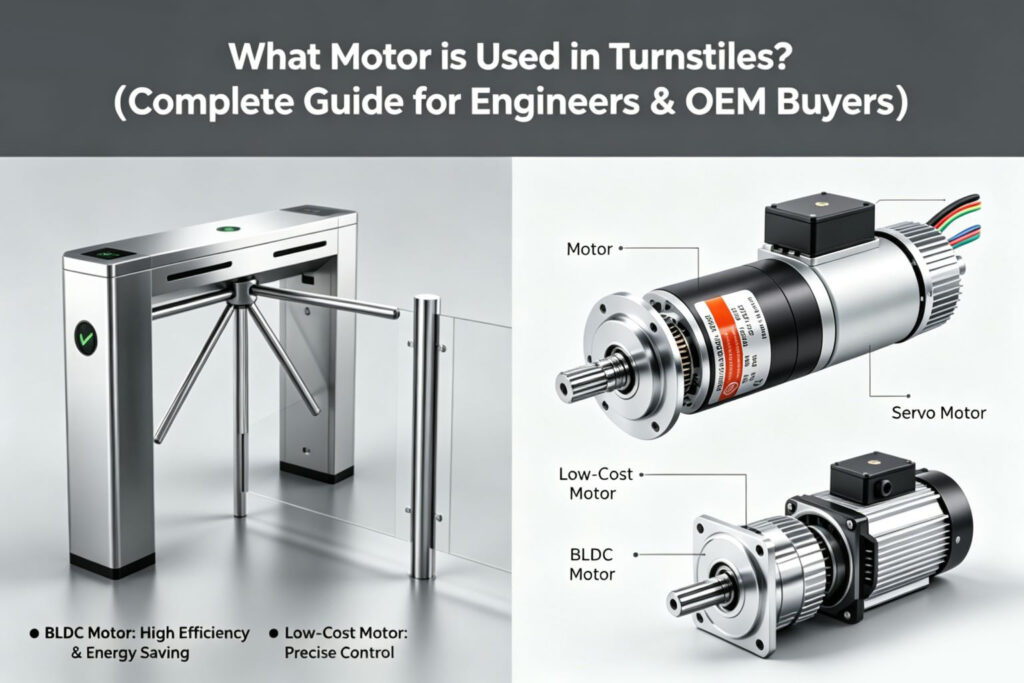
What Motor is Used in Turnstiles (Complete Guide for Engineers- OEM Buyers)

What Motor is Used in Turnstiles? (Complete Guide for Engineers & OEM Buyers)

What Motor is Used in Turnstiles? (Complete Guide for Engineers & OEM Buyers) Coretan Pilihan: Turnstiles typically use BLDC motors, motor servo, or stepper motors depending on the required performance, ketepatan, dan kos. Modern high-end turnstiles increasingly adopt BLDC motors due to their high efficiency, operasi lancar, bunyi rendah, dan jangka hayat yang panjang. Servo motors are

What Motor is Used in Turnstiles? (Complete Guide for Engineers & OEM Buyers) Baca Lagi »

How Does a BLDC Motor Work-1

How Does a BLDC Motor Work? (Simple Explanation + Diagram Guide)

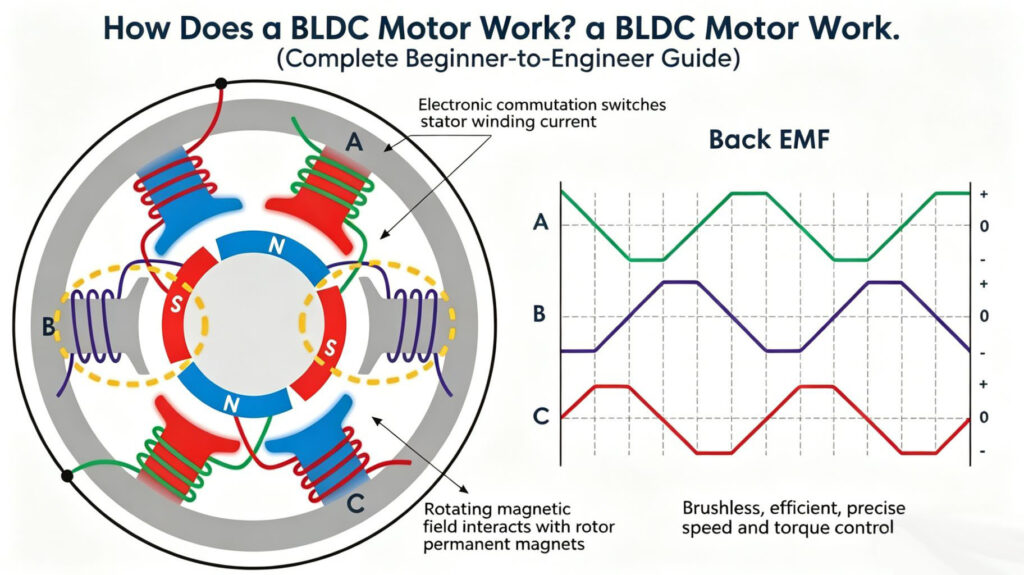
How Does a BLDC Motor Work? (Complete Beginner-to-Engineer Guide) Coretan Pilihan: A BLDC motor works by using electronic commutation to switch current through stator windings, creating a rotating magnetic field that interacts with permanent magnets in the rotor. This eliminates brushes, improves efficiency, and enables precise speed and torque control. Compared to traditional motors, BLDC

How Does a BLDC Motor Work? (Simple Explanation + Diagram Guide) Baca Lagi »

FOC Control of BLDC Motor Principles, Kelebihan & Implementation Guide

FOC Control of BLDC Motor: Principles, Kelebihan & Implementation Guide | Engineering Authority

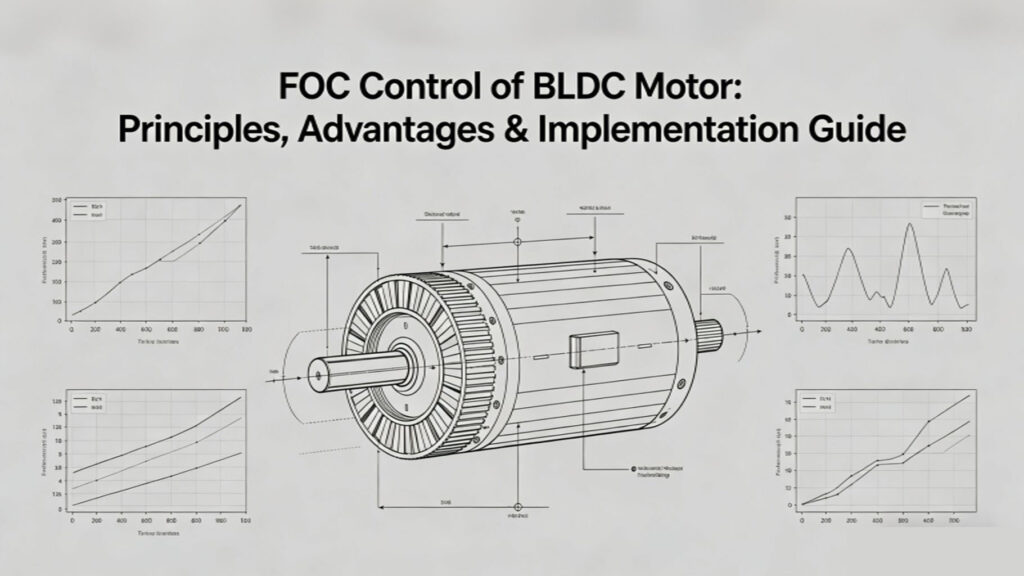
FOC Control of BLDC Motor: Principles, Kelebihan & Implementation Guide Featured Snippet: Kawalan Berorientasikan Medan (FOC) is an advanced control method for BLDC motors that enables precise torque and speed control by decoupling stator currents into orthogonal components. Compared to traditional trapezoidal control, FOC significantly improves efficiency, reduces torque ripple, and enhances dynamic performance. It is

FOC Control of BLDC Motor: Principles, Kelebihan & Implementation Guide | Engineering Authority Baca Lagi »

Stepper Motor vs BLDC Motor Differences, Kelebihan & Which to Choose

Stepper Motor vs BLDC Motor: Differences, Kelebihan & Which to Choose?

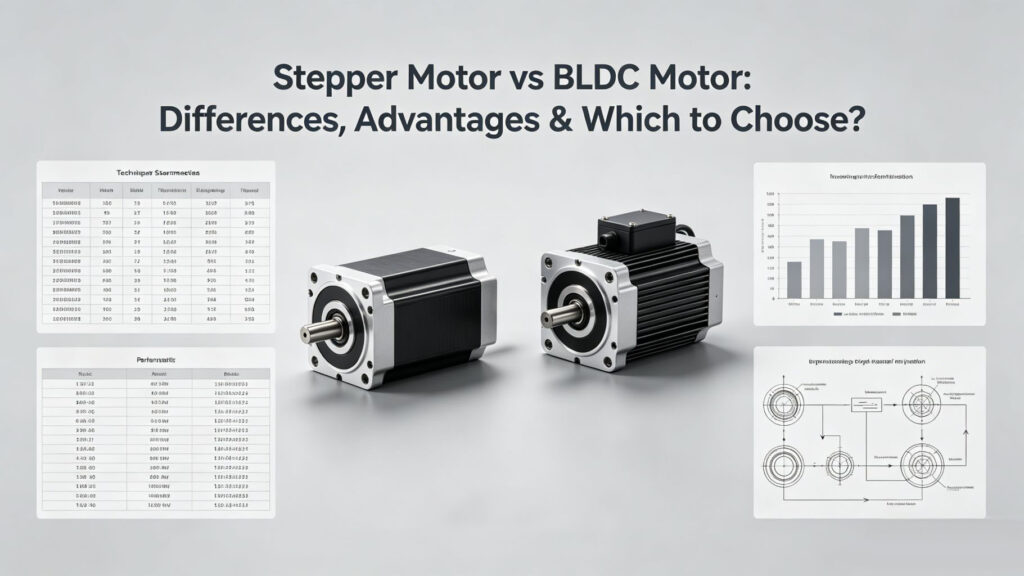
Stepper Motor vs BLDC Motor: Differences, Kelebihan & Which to Choose? Coretan Pilihan: Stepper motors are ideal for precise positioning and low-speed control without feedback systems, while BLDC motors offer higher efficiency, better torque density, and superior performance in dynamic and high-speed applications. The best choice depends on whether your application prioritizes accuracy, cost simplicity,

Stepper Motor vs BLDC Motor: Differences, Kelebihan & Which to Choose? Baca Lagi »

BLDC vs Brushed DC Motor Key Differences, Pros & Which to Choose

BLDC vs Brushed DC Motor: Perbezaan Utama, Pros & Which to Choose?

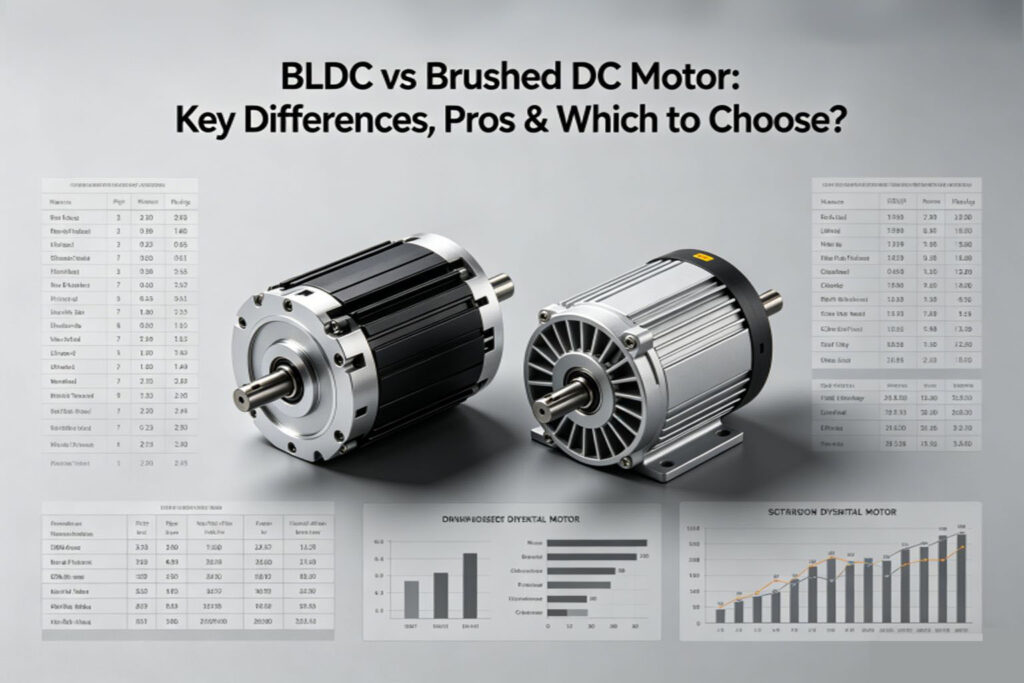
BLDC vs Brushed DC Motor: Perbezaan Utama, Pros & Which to Choose? Coretan Pilihan: BLDC motors are more efficient, longer-lasting, and better suited for precision and high-performance applications, while brushed DC motors are simpler, lower-cost, and ideal for basic or cost-sensitive systems. The choice depends on factors such as efficiency requirements, maintenance tolerance, control complexity,

BLDC vs Brushed DC Motor: Perbezaan Utama, Pros & Which to Choose? Baca Lagi »

BLDC Motor vs AC Motor Which Is Better for Your Application

BLDC Motor vs AC Motor: Which Is Better for Your Application?

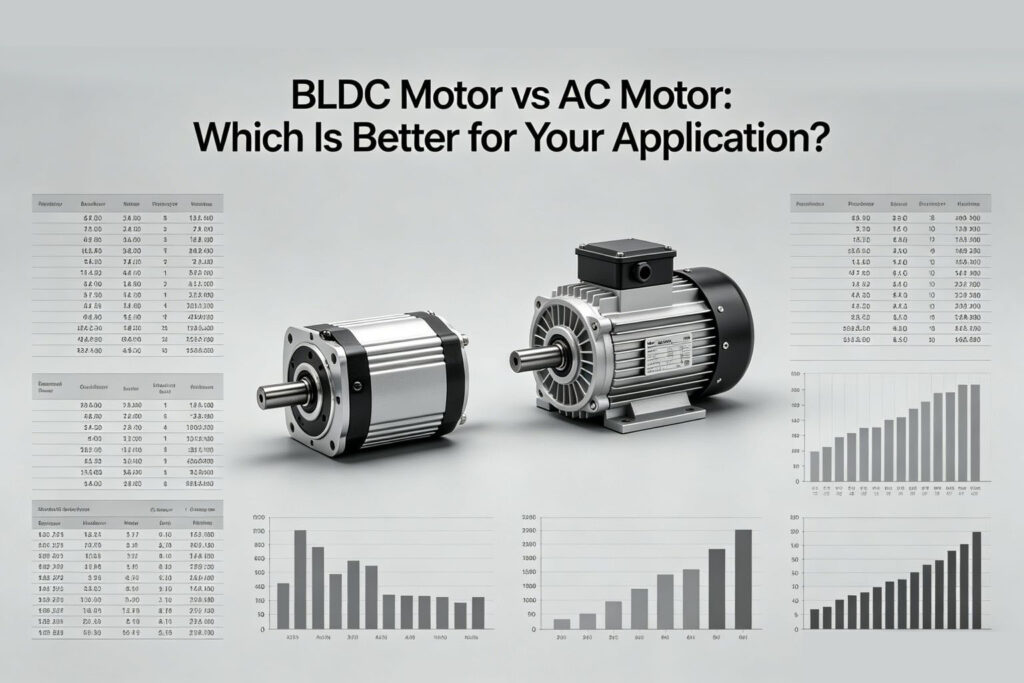
BLDC Motor vs AC Motor: Which Is Better for Your Application? Coretan Pilihan: BLDC motors are generally better for applications requiring high efficiency, kawalan yang tepat, and compact size, while AC motors are preferred for cost-sensitive, high-power, and rugged industrial environments. The best choice depends on factors such as torque requirements, control complexity, thermal conditions, dan

BLDC Motor vs AC Motor: Which Is Better for Your Application? Baca Lagi »

1.5kW BLDC Motor Torque Calculation Complete Engineering Guide

1.5kW BLDC Motor Torque Calculation: Complete Engineering Guide

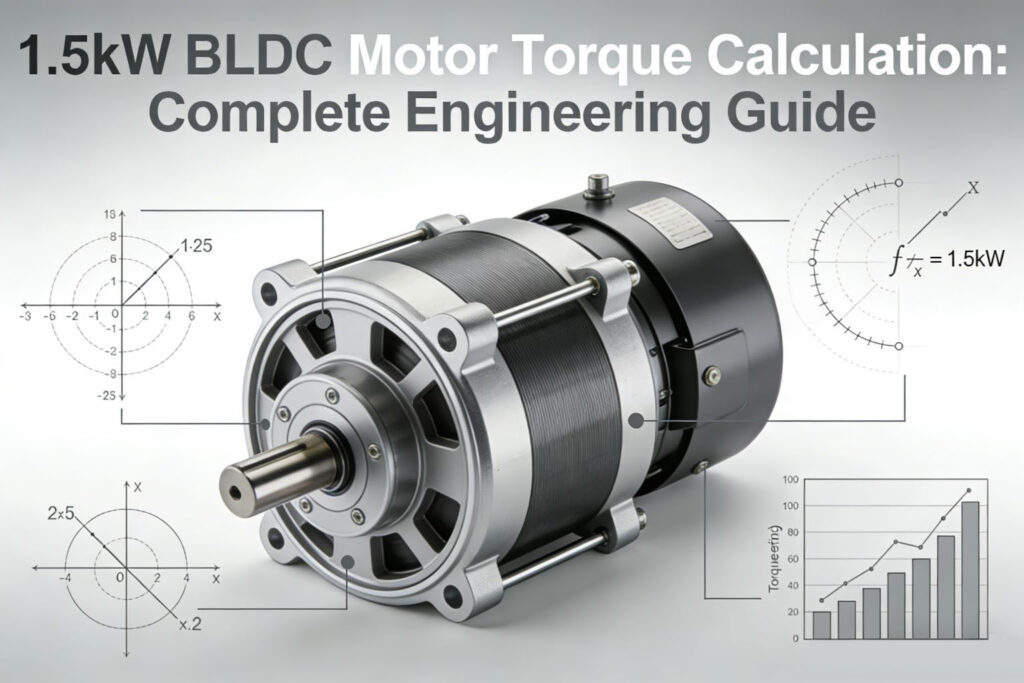
1.5kW BLDC Motor Torque Calculation: Complete Engineering Guide Featured Snippet: To calculate torque for a 1.5kW BLDC motor, use the formula: Tork (Nm) = (9550 × Power in kW) ÷ Speed (RPM). Sebagai contoh, a 1.5kW motor at 3000 RPM produces approximately 4.78 Nm of torque. Namun begitu, real-world torque depends on efficiency, controller strategy, thermal

1.5kW BLDC Motor Torque Calculation: Complete Engineering Guide Baca Lagi »
WeChat kuasa Greensky

Sila tinggalkan e -mel kerja anda.

Beritahu Kami Tentang keperluan Anda