
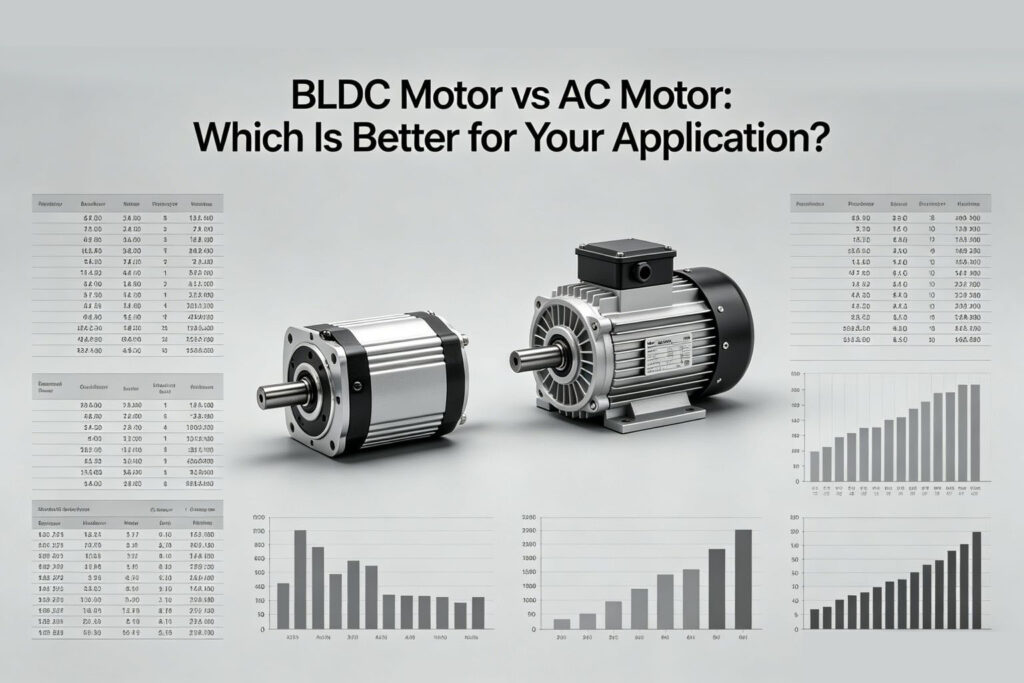
Motore BLDC e motore CA: Quale è meglio per la tua applicazione?
Frammento in primo piano:
Motori BLDC sono generalmente migliori per le applicazioni che richiedono un'elevata efficienza, controllo preciso, e dimensioni compatte, mentre i motori AC sono preferiti per quelli sensibili ai costi, ad alta potenza, e ambienti industriali difficili. La scelta migliore dipende da fattori quali i requisiti di coppia, complessità del controllo, condizioni termiche, e il costo del ciclo di vita. Per OEM e ingegneri, la scelta tra motori BLDC e CA richiede un'analisi orientata alle prestazioni piuttosto che un semplice confronto dei costi.
Nei moderni sistemi industriali, scegliendo tra a Motore BLDC e motore CA è una decisione ingegneristica critica che incide direttamente sull’efficienza, affidabilità, e il costo totale di proprietà. Che tu stia progettando veicoli elettrici, Sistemi HVAC, pompe, o apparecchiature di automazione, comprendere le differenze tra queste tecnologie di motori è essenziale per ottenere prestazioni e ROI ottimali.
Cos'è un motore BLDC?
Una corrente continua senza spazzole (BLDC) Il motore è un motore a commutazione elettronica che elimina le spazzole meccaniche utilizzando un controller per commutare la corrente negli avvolgimenti dello statore. Il rotore contiene tipicamente magneti permanenti, consentendo un'elevata densità di coppia ed efficienza.
Caratteristiche principali dei motori BLDC
- Commutazione elettronica tramite sensori Hall o controllo sensorless
- Alta efficienza (tipicamente 85-95%)
- Design compatto con elevato rapporto peso/potenza
- Manutenzione ridotta grazie all'assenza di spazzole
I motori BLDC sono ampiamente utilizzati in applicazioni in cui l'efficienza e il controllo preciso della velocità sono fondamentali, come la robotica, veicoli elettrici, e sistemi HVAC intelligenti.
👉 Esplora soluzioni industriali: Gamma di prodotti per motori BLDC
Cos'è un motore CA?
Motori a corrente alternata, compresi motori a induzione e motori sincroni, funzionare utilizzando corrente alternata fornita direttamente dalla rete. Il tipo più comune nelle applicazioni industriali è il motore a induzione, noto per la sua semplicità e robustezza.
Caratteristiche principali dei motori CA
- Costruzione semplice e robusta
- Costo iniziale inferiore rispetto ai motori BLDC
- Adatto per applicazioni industriali ad alta potenza
- Può funzionare direttamente dall'alimentazione CA senza componenti elettronici complessi
I motori CA dominano i settori industriali tradizionali come quello delle pompe, compressori, e macchinari pesanti grazie alla loro affidabilità e scalabilità.
Motore BLDC e motore CA: Differenze chiave spiegate
| Parametro | Motore BLDC | Motore a corrente alternata (Induzione) |
|---|---|---|
| Efficienza | 85–95% | 75–90% |
| Densità di coppia | Alto | Moderare |
| Controllo | Controllo elettronico avanzato | Semplice o basato su VFD |
| Costo iniziale | Più alto | Inferiore |
| Manutenzione | Basso | Da basso a moderato |
| Applicazioni | EV, robotica, HVAC | Pompe industriali, fan |
La differenza fondamentale sta nella commutazione: I motori BLDC si basano sulla commutazione elettronica, mentre i motori CA utilizzano l'induzione elettromagnetica. Ciò porta a differenze di efficienza, flessibilità di controllo, e complessità del sistema.
Perché i motori BLDC sono più efficienti
L’efficienza è uno dei fattori più importanti nella scelta dei motori moderni, soprattutto nelle applicazioni sensibili al consumo energetico.
Ragioni ingegneristiche per una maggiore efficienza
- Nessuna perdita per attrito della spazzola
- Ridotto riscaldamento del rotore grazie ai magneti permanenti
- Il controllo preciso della corrente riduce al minimo le perdite di rame
In applicazioni come veicoli elettrici o sistemi HVAC, un miglioramento dell’efficienza del 5–10% può ridurre significativamente il consumo di energia nel tempo. Questo è il motivo per cui i motori BLDC stanno sostituendo sempre più i tradizionali motori AC nei mercati ad regolamentazione energetica.
Confronto tra densità di coppia e prestazioni
La densità di coppia determina la quantità di coppia che un motore può fornire in relazione alle sue dimensioni. I motori BLDC superano i motori CA sotto questo aspetto grazie al loro design a magnete permanente.
Vantaggi del BLDC
- Coppia più elevata a velocità inferiori
- Migliore risposta dinamica
- Ingombro compatto
Caratteristiche del motore CA
- Funzionamento stabile a velocità costante
- Più adatto per carichi pesanti a servizio continuo
Per progetti OEM in cui lo spazio è limitato, come robot AGV o scooter elettrici, I motori BLDC offrono un chiaro vantaggio.
Considerazioni sulle prestazioni termiche e sul raffreddamento
La gestione termica influisce direttamente sulla durata e sull'affidabilità del motore. I motori BLDC in genere generano meno calore grazie alla maggiore efficienza, ma la loro elettronica richiede un'attenta progettazione del raffreddamento.
Raffreddamento BLDC
- Raffreddamento ad aria o raffreddamento a liquido in sistemi ad alta potenza
- È necessario considerare la dissipazione del calore del controller
Raffreddamento del motore CA
- Utilizza spesso il raffreddamento basato su ventola
- Più tollerante agli ambienti difficili
In ambienti industriali con temperature ambiente elevate, I motori CA possono ancora essere preferiti per la loro robustezza.
Sistemi di controllo: Motore BLDC e motore CA
La strategia di controllo è un importante elemento di differenziazione tra questi tipi di motori.
Controllo BLDC
- Richiede un regolatore elettronico di velocità (ESC)
- Supporta un controllo preciso della velocità e della coppia
- Abilita l'IoT e l'integrazione di sistemi intelligenti
Controllo motore CA
- Può funzionare direttamente con l'alimentazione CA
- Azionamenti a frequenza variabile (VFD) migliorare la flessibilità
Per la produzione e l’automazione intelligenti, I motori BLDC offrono capacità di controllo superiori.
Confronto tra affidabilità e durata della vita
Sia i motori BLDC che quelli AC offrono una lunga durata, ma le loro modalità di fallimento differiscono.
- BLDC: Maggiore durata grazie all'assenza di spazzole, ma sensibile ai guasti dell'elettronica
- Motore a corrente alternata: Estremamente robusto, meno componenti elettronici
Nelle applicazioni mission-critical, gli ingegneri spesso considerano la ridondanza e la qualità del controller quando scelgono i sistemi BLDC.
Motore BLDC e motore CA: come scegliere per la tua applicazione
La scelta del motore giusto richiede prestazioni bilanciate, costo, e requisiti di sistema.
Fattori chiave di selezione
- Voltaggio: 24v, 48v, 72V per BLDC; 220V/380 V per CA
- Energia: Da watt a centinaia di kW
- Velocità & Coppia: Corrispondenza ai requisiti di carico
- Raffreddamento: Raffreddamento ad aria o a liquido
- Compatibilità del controller: ESC contro VFD
Raccomandazioni specifiche per l'applicazione
- Veicoli elettrici → Motore BLDC
- Pompe industriali → Motore AC
- Robotica → Motore BLDC
- Macchinari pesanti → Motore CA
👉 Richiedi una soluzione personalizzata: Servizio di progettazione motori OEM
Applicazioni industriali di motori BLDC e CA
Settori diversi danno priorità a caratteristiche prestazionali diverse.
Applicazioni di motori BLDC
- Veicoli elettrici ed e-bike
- Robotica e automazione
- Sistemi HVAC
Applicazioni del motore CA
- Pompe e compressori
- Sistemi di trasporto
- Attrezzature industriali pesanti
👉 Esplora le soluzioni per veicoli elettrici: Soluzioni per motori per veicoli elettrici
Confronto dei costi: BLDC e motore CA
| Fattore di costo | Motore BLDC | Motore a corrente alternata |
|---|---|---|
| Costo iniziale | Più alto | Inferiore |
| Costo operativo | Inferiore (alta efficienza) | Più alto (perdita di energia) |
| Manutenzione | Basso | Basso |
| Costo totale di proprietà | Inferiore nel lungo termine | Maggiore nell'uso ad alta intensità energetica |
Per gli acquirenti B2B, il costo del ciclo di vita è spesso più importante del prezzo iniziale, soprattutto nelle applicazioni ad alta intensità energetica.
Tendenze future: Perché i motori BLDC stanno guadagnando quote di mercato
Il mercato automobilistico globale si sta spostando verso soluzioni efficienti dal punto di vista energetico a causa delle pressioni normative e di sostenibilità.
- Norme più severe sull’efficienza energetica (IE3, Norme IE4)
- Crescita dei veicoli elettrici
- Produzione intelligente e industria 4.0
Si prevede che i motori BLDC vedranno una rapida adozione sia nelle applicazioni industriali che di consumo.
Domande frequenti: Motore BLDC e motore CA
1. Quale motore è più efficiente, BLDC o CA?
I motori BLDC sono generalmente più efficienti grazie all’assenza di spazzole e alle ridotte perdite di energia. Possono raggiungere le efficienze di cui sopra 90%, rendendoli ideali per applicazioni sensibili al consumo energetico.
2. Perché i motori AC sono ancora ampiamente utilizzati?
I motori CA sono convenienti, robusto, e facile da usare. Sono adatti per applicazioni industriali pesanti dove l'efficienza è meno critica.
3. Il motore BLDC è migliore per i veicoli elettrici?
SÌ, I motori BLDC sono ampiamente utilizzati nei veicoli elettrici grazie alla loro elevata efficienza, dimensione compatta, e precise capacità di controllo.
4. Qual è la differenza di costo tra i motori BLDC e CA?
I motori BLDC hanno costi iniziali più elevati ma costi operativi inferiori, mentre i motori AC sono inizialmente più economici ma meno efficienti nel tempo.
5. I motori CA possono sostituire i motori BLDC?
In alcune applicazioni, SÌ. Tuttavia, per impianti performanti ed efficienti dal punto di vista energetico, I motori BLDC sono generalmente preferiti.
Conclusione: Quale motore dovresti scegliere?
La scelta tra a Motore BLDC e motore CA dipende in definitiva dai requisiti dell'applicazione. Se dai priorità all'efficienza, design compatto, e precisione di controllo, I motori BLDC sono l’opzione migliore. Per chi è attento ai costi, applicazioni industriali ad alta potenza, I motori CA rimangono una scelta affidabile.
Per OEM e acquirenti industriali, l'approccio migliore è valutare il costo totale del ciclo di vita, requisiti di prestazione, e complessità dell’integrazione del sistema.
Hai bisogno di aiuto per selezionare il motore giusto?
✔ Richiedi la scheda tecnica
✔ Ottieni supporto per la personalizzazione OEM
✔ Contatta i nostri ingegneri oggi stesso
Ottieni un preventivo gratuito
Riferimenti
- Transazioni IEEE sull'elettronica industriale
- Agenzia internazionale per l'energia (IEA) Rapporto sui sistemi motori
- Documentazione sugli standard di efficienza IEC