
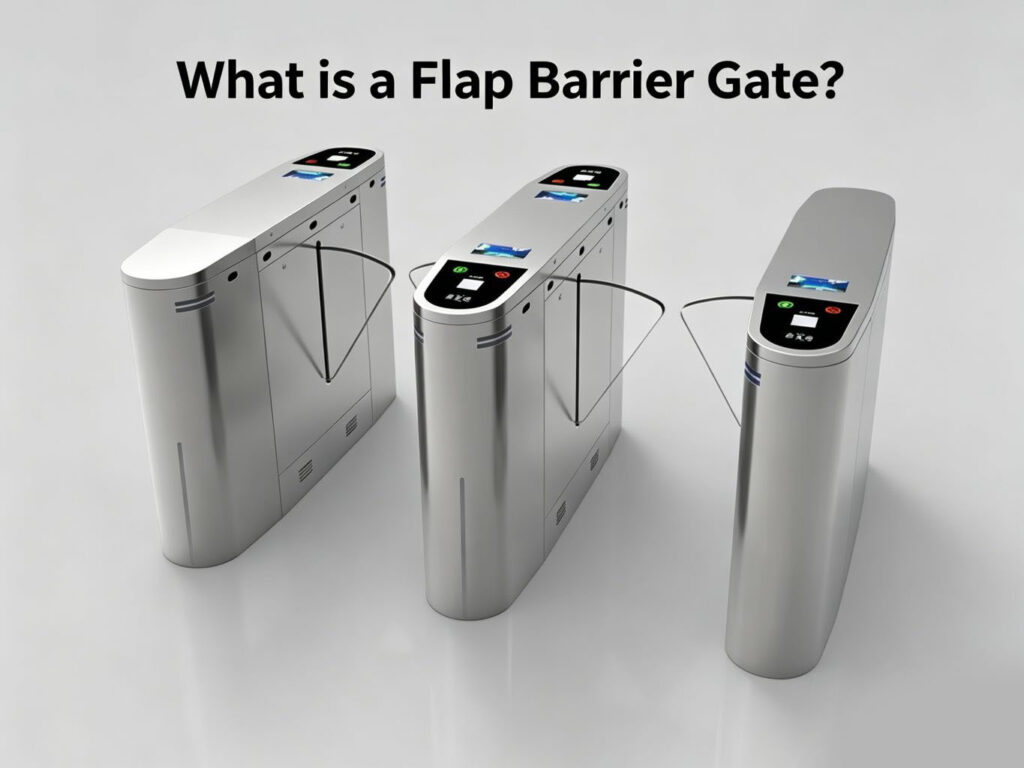
Qu'est-ce qu'une barrière à rabat?
A flap barrier gate is an automated pedestrian access control system designed to manage entry and exit in high-traffic environments such as office buildings, metro stations, aéroports, usines, stades, and commercial facilities. Unlike tripod turnstiles or swing gates, flap barriers use retractable flap panels that open and close rapidly through electronically controlled motor systems.
Modern flap barrier gates typically use BLDC motors with intelligent controllers because they provide fast response speed, positionnement précis, faible bruit de fonctionnement, et longue durée de vie. For OEM manufacturers and system integrators, flap barrier performance depends heavily on motor selection, controller architecture, gestion de la chaleur, and mechanical reliability.
This engineering guide explains how flap barrier gates work, compares flap barriers with alternative access systems, analyzes motor technologies, and provides OEM-focused purchasing guidance for industrial and commercial applications.
What Is a Flap Barrier Gate and How Does It Work?
A flap barrier gate is an intelligent access control device that regulates pedestrian movement through retractable acrylic or tempered glass flaps installed inside a gate cabinet. The system operates through a motor-driven mechanism connected to sensors, contrôleurs, and authentication devices such as RFID readers, QR scanners, facial recognition systems, or biometric terminals.
When access authorization is verified, le contrôleur active le moteur, retracting the flap panels to allow passage. After a predefined delay or after sensors confirm user passage, the flap panels automatically close to restore access restriction.
Compared with traditional mechanical barriers, flap barrier systems offer:
- Higher traffic throughput
- Faster opening speed
- Improved anti-tailgating performance
- Better aesthetics for commercial environments
- Enhanced intelligent control integration
The drive motor plays a critical role because rapid acceleration and deceleration cycles require precise torque control and stable thermal behavior.
Related industrial motor solutions:
Bldc motor for flap barrier
Why Flap Barrier Gates Are Widely Used in Modern Access Control Systems
Flap barrier gates have become increasingly popular because they combine security, vitesse, and user convenience within compact architectural designs. Modern smart buildings and transportation infrastructure demand access systems that balance pedestrian throughput with operational reliability.
Fast Throughput Efficiency
Flap barriers open and close much faster than swing gates or tripod turnstiles. This makes them highly suitable for metro stations, aéroports, and office lobbies where large numbers of users must pass efficiently.
Improved Security Control
The rapid-closing flap mechanism improves anti-tailgating performance. Many systems integrate infrared sensors and intelligent detection algorithms to prevent unauthorized access.
Compact Space Utilization
Compared with swing barriers, flap barriers require less operating clearance, making them ideal for compact entrances and dense pedestrian traffic areas.
Fonctionnement à faible bruit
BLDC-driven flap barrier systems provide smoother and quieter motion compared with traditional brushed motor systems, improving user experience in premium commercial buildings.
Flap Barrier Gate vs Swing Barrier Gate
| Paramètre | Flap Barrier Gate | Swing Barrier Gate |
|---|---|---|
| Opening Speed | Very Fast | Modéré |
| Traffic Throughput | Haut | Moyen |
| Accessibility | Modéré | Excellent |
| Espace requis | Compact | Larger Swing Radius |
| Anti-tailgating | Excellent | Bien |
| Mechanical Complexity | Plus haut | Modéré |
| Best Applications | Metro, Offices, Airports | ADA & Premium Access |
Flap barriers are generally preferred in high-throughput environments because of their rapid opening speed and compact footprint. Swing barriers, cependant, provide better accessibility for wheelchair users and large luggage passage.
Pour les acheteurs OEM, the selection often depends on balancing throughput efficiency, architectural space constraints, and accessibility requirements.
BLDC Motor vs Brushed Motor for Flap Barrier Systems
| Paramètre | Moteur BLDC | Moteur à courant continu brossé |
|---|---|---|
| Efficacité | 85–92% | 60–75% |
| Entretien | Faible | Frequent Brush Replacement |
| Performance thermique | Excellent | Modéré |
| Bruit | Faible | Plus haut |
| Fiabilité | Haut | Moyen |
| Complexité du contrôleur | Modéré | Simple |
| Industrial Lifespan | Long | Plus court |
BLDC motors have become the standard solution for premium flap barrier systems because they provide precise electronic control with significantly lower maintenance requirements.
In high-frequency environments such as subway stations, brushed motors often experience accelerated wear due to repeated start-stop cycles. BLDC motors eliminate mechanical commutation wear, improving long-term operational reliability.
Technical Structure of a Modern Flap Barrier Gate
Modern flap barrier systems combine mechanical, électrique, and software components into an integrated intelligent access platform.
Motor Drive System
Most premium flap barriers use 24V, 48V, or 72V BLDC motors with encoder feedback for accurate positioning and smooth motion control.
Système de contrôle
The controller manages:
- Motor commutation
- Acceleration and deceleration profiles
- Détection d'obstacles
- Emergency opening logic
- Sensor integration
Système de capteur
Infrared sensors monitor user movement to prevent tailgating and accidental flap closure.
Mechanical Transmission
Gearboxes and linkages transfer motor torque to the flap panels. Mechanical precision directly affects vibration, bruit, and positioning stability.
Emergency Safety System
Many flap barriers automatically retract during power failure or emergency evacuation scenarios to ensure safe pedestrian flow.
How to Choose a Flap Barrier Gate for Industrial Applications
Selecting the right flap barrier system requires balancing performance, fiabilité, installation environment, and long-term maintenance cost.
Plage de tension
Most commercial flap barriers operate at:
- 24V DC systems
- 48V BLDC systems
- 72V high-performance industrial systems
Higher voltage systems reduce operating current and improve thermal efficiency.
Plage de puissance
Typical flap barrier motors range from 40W to 300W depending on flap size, throughput requirements, et cycle de service.
Exigences de vitesse et de couple
High-speed flap operation requires stable low-speed torque and rapid acceleration response. Poor motor sizing may cause vibration, flap oscillation, or excessive heat generation.
Méthode de refroidissement
Continuous-duty systems require effective thermal management through:
- Aluminum motor housing
- Natural airflow optimization
- Efficient controller design
Compatibilité du contrôleur
OEM buyers should verify compatibility with:
- FOC control algorithms
- Encoder systems
- RFID systems
- Facial recognition terminals
- Cloud-based access management platforms
Application-Specific Requirements
Outdoor environments may require:
- IP-rated protection
- Corrosion-resistant materials
- Wide temperature operation
- Humidity resistance
Custom OEM solutions:
Custom BLDC motor
Efficacité, Performance thermique, and Reliability in Flap Barrier Motors
Motor efficiency directly affects the long-term stability of flap barrier systems. High thermal losses reduce bearing life, damage controller electronics, and increase maintenance frequency.
Considérations d'efficacité
BLDC motors reduce:
- Copper loss
- Frottement mécanique
- Switching inefficiency
This improves energy efficiency while reducing internal heat generation.
Gestion thermique
Frequent start-stop cycles generate thermal stress inside compact gate cabinets. Industrial-grade systems use optimized airflow paths and aluminum heat-dissipation structures to maintain stable operating temperatures.
Fiabilité et durée de vie
Motor lifespan depends on:
- Bearing quality
- Controller tuning
- Stabilité thermique
- Load profile
- Mechanical alignment
High-quality BLDC flap barrier motors can operate continuously for years with minimal maintenance under proper operating conditions.
Industrial Applications of Flap Barrier Gates
Flap barrier systems are used across various commercial and industrial sectors requiring intelligent pedestrian management.
Metro and Railway Systems
High-speed throughput and anti-tailgating performance make flap barriers ideal for public transportation infrastructure.
Commercial Office Buildings
Modern offices prioritize quiet operation, design compact, and seamless integration with smart access systems.
Factories and Industrial Facilities
Industrial environments require durable barrier systems with long maintenance intervals and stable continuous-duty operation.
Data Centers and Secure Facilities
High-security environments integrate flap barriers with biometric authentication and real-time monitoring systems.
Smart City Infrastructure
Flap barriers increasingly integrate with IoT platforms and AI-based security management systems for intelligent urban infrastructure.
Related industrial applications:
Electric vehicle motor
Future Trends in Flap Barrier Gate Technology
The global access control industry is rapidly evolving toward smarter, more energy-efficient, and highly integrated systems.
AI-Powered Access Management
Future flap barriers will increasingly use AI algorithms for:
- Traffic flow optimization
- Behavior detection
- Maintenance prédictive
- Security analytics
Integrated Smart Diagnostics
Modern systems increasingly include:
- Capteurs de température
- Motor current analysis
- Remote monitoring
- Cloud diagnostics
Compact High-Torque Motors
Architectural demand for slimmer gate systems is driving development of compact BLDC motors with higher torque density.
Energy-Efficient Infrastructure
Global energy efficiency standards continue pushing OEMs toward high-efficiency motor systems with lower standby power consumption.
FAQ: What Is a Flap Barrier Gate?
What is a flap barrier gate used for?
Flap barrier gates are used for pedestrian access control in office buildings, metro stations, aéroports, usines, and commercial facilities. They improve traffic management, security, and anti-tailgating performance.
Why are BLDC motors used in flap barrier systems?
BLDC motors provide high efficiency, peu d'entretien, precise motion control, et fonctionnement silencieux. These advantages are essential for high-frequency commercial access control systems.
What is the difference between a flap barrier and a swing barrier?
Flap barriers use retractable flaps for fast access control, while swing barriers use rotating arms or panels. Flap barriers generally offer faster throughput and better anti-tailgating performance.
How long does a flap barrier motor last?
Industrial-grade BLDC motors can operate for many years under proper thermal and load conditions. Lifespan depends on duty cycle, protection environnementale, and controller quality.
How do I choose the best flap barrier gate for industrial applications?
Engineers should evaluate motor type, torque performance, gestion de la chaleur, compatibilité du contrôleur, security features, and maintenance requirements based on the specific application environment.
Conclusion
Flap barrier gates have become one of the most important intelligent access control solutions in modern commercial and industrial infrastructure. Their ability to combine high throughput, design compact, intelligent control, and strong security performance makes them highly suitable for smart buildings, transportation hubs, usines, and secure facilities.
For OEM manufacturers and procurement engineers, selecting the right flap barrier system requires careful evaluation of motor technology, controller architecture, performances thermiques, fiabilité, and lifecycle maintenance cost. BLDC motor systems continue to dominate the industry because they provide the best balance between efficiency, contrôle de précision, operational lifespan, et peu d'entretien.
Greensky Power provides customized BLDC motor solutions for flap barrier gates, swing barriers, tourniquets, and intelligent access control systems worldwide.
✔ Demander une fiche technique
✔ Obtenez une solution de moteur OEM
✔ Contact our engineers for technical consultation
Références
1. https://ieeexplore.ieee.org/
2. https://www.sciencedirect.com/topics/engineering/brushless-dc-motor
3. https://www.nidec.com/en/technology/motor/basic/
4. https://www.motioncontroltips.com/
5. https://www.controleng.com/
6. https://www.automationworld.com/
7. https://www.engineeringtoolbox.com/
8. https://www.mdpi.com/topics/Brushless_DC_Motor