
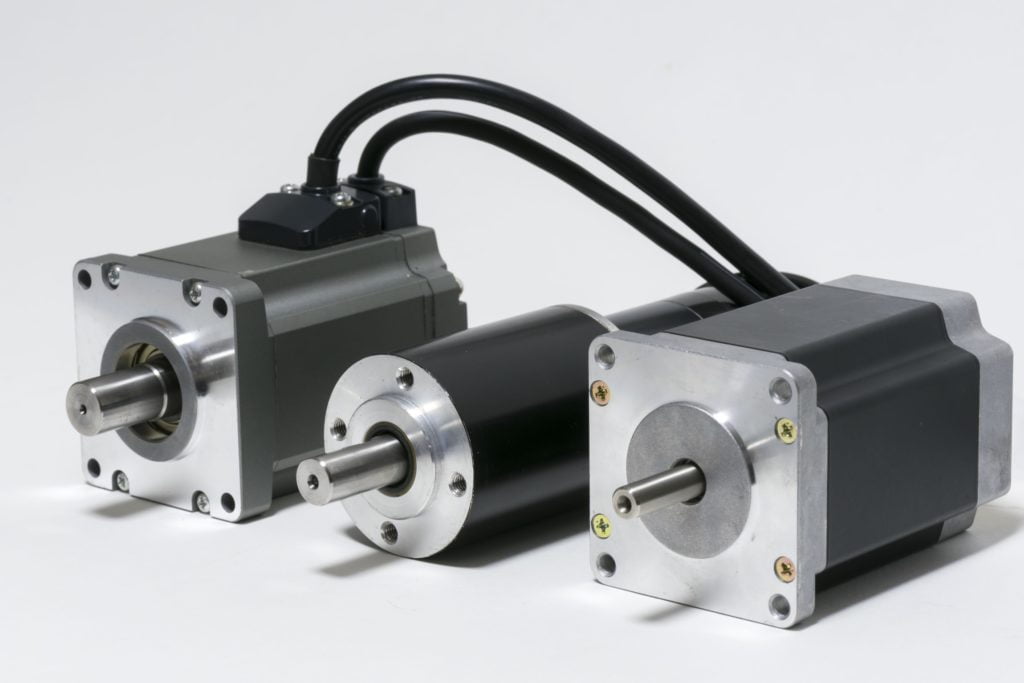
Servomoteur vs moteur pas à pas: Couple, Vitesse, Précision & Coût – Comment choisir le bon
Si vous concevez un système de contrôle de mouvement, que ce soit pour un routeur CNC, une imprimante 3D, un bras robotique, ou une ligne d'emballage à grande vitesse : la décision entre un servomoteur et un moteur pas à pas est au cœur de votre nomenclature.. Les deux types de moteurs offrent un positionnement précis, mais ils y parviennent grâce à des architectures fondamentalement différentes. On se déplace par pas angulaires discrets sans vérification de position; l'autre s'auto-corrige en permanence par rapport à un encodeur.
La vraie question n'est pas de savoir quel moteur est “mieux,” mais lequel correspond à ta vitesse, couple, précision, et les exigences budgétaires. Ce guide décompose la comparaison selon huit dimensions : architecture de contrôle, comportement en couple, vitesse, précision, efficacité, bruit, coût du système, et adaptation aux applications — avec des données tirées de tests de châssis NEMA réels et de configurations de variateurs industriels.
1. Différence architecturale: Étapes en boucle ouverte vs mouvement continu en boucle fermée
La différence la plus fondamentale entre ces deux types de moteurs réside dans la manière dont ils vérifient la position..
1.1 Comment fonctionne un moteur pas à pas
UN moteur pas à pas divise une rotation complète de 360° en segments angulaires égaux - généralement 200 pas par tour (1.8° par pas) pour une norme NEMA 17 ou NEMA 23 pas à pas hybride. Chaque fois que le pilote excite une phase de bobine en séquence, le rotor avance exactement d'un pas. Parce que l'angle de marche est fixé mécaniquement, le contrôleur peut calculer la position en comptant simplement les impulsions — aucun capteur externe n'est nécessaire. C'est ce qu'on appelle le contrôle en boucle ouverte: on dit au moteur où aller, mais il ne signale jamais s'il est réellement arrivé.
Micropas - diviser chaque étape complète en 16, 32, ou jusqu'à 256 sous-étapes : améliore la fluidité des mouvements et augmente la résolution efficace. Un moteur de 200 pas avec 256 × offres de micropas 51,200 positions théoriques par tour. Cependant, le micropas ne garantit pas une précision absolue: à faible couple, la position de maintien entre les positions de détente à pas complet devient incertaine. La tolérance d'angle de pas de ± 5 % (±0,09°) reste le plancher de précision pratique.
Types de moteurs pas à pas:
| Taper | Angle de pas | Couple | Plage de vitesse | Coût typique |
|---|---|---|---|---|
| Aimant permanent (MP) | 7.5°–15° | Moyen | Faible à moyen | Le plus bas |
| Réticence variable (VR) | 5°–15° | Faible | Haut | Moyen |
| Hybride (IL N'Y A PAS 17/23/34) | 0.9°–1,8° | Haut | Moyen à élevé | Plus haut |
1.2 Comment fonctionne un servomoteur
Un servomoteur - généralement un moteur à courant continu sans balais (BLDC) ou moteur synchrone à aimant permanent (PMSM) — fonctionne à l'intérieur d'une boucle de contrôle fermée. Un encodeur monté sur l'arbre signale en permanence la position réelle au variateur.. Le variateur compare la position commandée à la position réelle, calcule l'erreur, et ajuste le courant du moteur via un PID (proportionnelle-intégrale-dérivée) boucle de contrôle pour ramener l'erreur vers zéro - des dizaines de milliers de fois par seconde.
Cette architecture signifie que les servomoteurs vérifient la position à chaque cycle de contrôle. Ils ne le font pas “supposer” ils ont atteint l'objectif; ils le mesurent. Si une force externe pousse l'arbre hors de sa position, le variateur détecte la perturbation et compense immédiatement. La résolution du codeur détermine la résolution de positionnement du système: un codeur absolu 17 bits fournit 131,072 positions discrètes par tour (≈0,0027°).
Sous-types clés de servomoteurs:
- Servomoteurs CA (synchrone/induction): Dominant dans l'automatisation industrielle — Centres d'usinage CNC, bras robotiques, lignes de conditionnement. Fonctionne entre 200 et 480 VCA avec des vitesses nominales de 3 000 à 6 000 tr/min.
- Servomoteurs CC (brossé/sans balai): Commun dans les petits systèmes et les applications alimentées par batterie. Servomoteurs CC sans balais offrent une efficacité supérieure et une durée de vie plus longue que les variantes brossées.
1.3 Comparaison des contrôles en un coup d'œil
| Attribut | Moteur pas à pas (Boucle ouverte) | Servomoteur (Boucle fermée) |
|---|---|---|
| Commentaires sur le poste | Aucun (suppose le nombre de pas = position) | Encodeur — mesure continue en temps réel |
| Vérification du poste | Non : les pas perdus ne sont pas détectés | Oui — erreur détectée et corrigée par cycle |
| Complexité du contrôle | Faible — impulsions de pas/direction | Élevé – Réglage PID requis (actuel, vitesse, boucles de position) |
| Nombre de pôles | 50–100+ pôles (optimisé pour un pas discret) | 4–8 pôles (optimisé pour une rotation continue) |
| Caractère de mouvement | Incrémental – étapes discrètes par impulsion | Continu : rotation fluide sur toute la plage de vitesse |
| Electronique de commande | Générateur d'impulsions simple + pilote pas à pas | Servo variateur complexe avec FOC et PID multi-boucles |
2. Comportement du couple: Pourquoi les Steppers frappent un mur à grande vitesse
Le couple est l'endroit où les différences architecturales se traduisent par des limites de performances strictes - et où de nombreux concepteurs de mouvements débutants sont surpris.
2.1 Courbes couple-vitesse: L’effondrement du Stepper
Un moteur pas à pas produit un couple maximal à vitesse nulle (couple de maintien), puis le couple diminue approximativement linéairement à mesure que la vitesse augmente. La physique derrière tout ça: chaque enroulement de bobine a une inductance qui limite la rapidité avec laquelle le courant peut augmenter entre les étapes. À mesure que le taux de pas augmente, le courant n'atteint jamais sa valeur nominale complète avant le prochain changement de phase - le couple effectif chute. De 1 000 à 1 500 tr/min, un NEMA typique 23 le moteur pas à pas ne produit que 20 à 30 % de son couple de maintien nominal. Par 3,000 RPM, la production peut tomber en dessous 0.1 N·m même pour les moteurs évalués à 1.5 N·m couple de maintien.
En revanche, un servomoteur maintient le couple nominal depuis une vitesse proche de zéro jusqu'à son régime nominal. (généralement 3 000 à 6 000 tr/min). Il peut également fournir un couple nominal de 2 à 3 fois sous forme de pic transitoire pour les accélérations de courte durée.. Ce profil couple-vitesse fondamentalement différent signifie que les moteurs pas à pas et les servos ne sont pas interchangeables dans les applications ayant des exigences de vitesse importantes..
2.2 Données de couple réel: IL N'Y A PAS 23 Comparaison des cadres
| Vitesse | IL N'Y A PAS 23 Pas à pas (1.5 N·m noté) | 400W AC Servo (1.27 N·m noté) |
|---|---|---|
| 0 RPM (holding) | 1.5 N·m | 0 N·m (nécessite un freinage actif) |
| 500 RPM | ≈1,2 N·m | 1.27 N·m continu |
| 1,500 RPM | ≈0,3 N·m (80% perte) | 1.27 N·m continu |
| 3,000 RPM | <0.1 N·m (proche de zéro) | 1.27 N·m continu, 3.8 N·m pic |
Données de NEMA 23 pas à pas hybride vs. 400Test sur banc d'asservissement W AC. Les valeurs réelles varient selon le fabricant et la tension du variateur.
2.3 Couple de maintien vs couple dynamique
| Type de couple | Moteur pas à pas | Servomoteur |
|---|---|---|
| Couple de maintien (0 RPM) | Couple nominal complet — aucun frein n'est nécessaire pour les charges verticales ou le serrage | Nécessite un courant actif ou un frein mécanique pour maintenir la position |
| Couple à basse vitesse (<500 RPM) | Excellent – proche du couple de maintien | Bon : couple continu nominal disponible |
| Couple à grande vitesse (>1,500 RPM) | Chute fortement - l'inductance limite le temps de montée du courant | Couple nominal complet maintenu sur toute la plage de vitesse |
| Couple de pointe/surcharge | Aucun — le dépassement de la limite de couple entraîne une perte de pas silencieuse | 2–Classé 3× pour les courtes durées (accélérations) |
Implication pratique: Si votre charge nécessite de maintenir une position contre la gravité (un axe Z vertical, une pince, une porte de convoyeur en pause), le couple de maintien inhérent au stepper est un réel avantage : il se verrouille gratuitement. Mais si votre application s'exécute en permanence au-dessus 1,000 RPM, l'effondrement du couple du moteur pas à pas le rend effectivement inutilisable quel que soit son couple de maintien.
3. Vitesse et accélération: Le point de croisement
3.1 Plages de vitesse
| Paramètre de vitesse | Moteur pas à pas | Servomoteur |
|---|---|---|
| Plage de vitesse utilisable | 0–1 000 tr/min (couple significatif) | 0–6 000+ tr/min (maintien du couple total) |
| Plage de fonctionnement optimale | <500 RPM | Gamme complète |
| Crossover pratique | 500–1 000 tr/min – au-dessus, le servo est le choix évident | |
| Capacité d'accélération | Limité — pas discret + inertie élevée du rotor | Rotor à inertie élevée et faible; pleine vitesse en millisecondes |
La différence d’accélération a de réelles conséquences. Un moteur pas à pas commandé pour accélérer de manière trop agressive perdra simplement des pas — le rotor ne peut pas suivre la rotation du champ magnétique. Le système n'a aucun moyen de détecter cette panne. Un servomoteur, par contre, surveille le retour de l'encodeur en temps réel; si l’accélération commandée dépasse la capacité du système, le lecteur peut être défectueux, réduire le profil, ou signaler une erreur plutôt que de perdre silencieusement votre position. Cela fait des servos le choix le plus sûr dans les applications où des changements de charge inattendus sont possibles.
3.2 Correspondance d'inertie
Le rapport d'inertie charge/rotor est une considération critique souvent négligée dans les comparaisons pas à pas/servo.. Les moteurs pas à pas ont une inertie de rotor plus élevée en raison de leur construction à nombre élevé de pôles, ce qui les rend plus tolérants aux désadaptations d'inertie modérées - ratios allant jusqu'à 10:1 sont généralement acceptables. Servomoteurs, avec leur inertie de rotor inférieure, nécessitent souvent une correspondance plus étroite (3:1 pour 5:1 pour systèmes hautes performances, bien que les lecteurs de réglage automatique modernes puissent gérer jusqu'à 10:1–20:1 avec bande passante réduite). Lorsque le décalage d'inertie est grave, un boîte de vitesses devient nécessaire - ajoutant du coût et de la complexité mécanique à l'une ou l'autre solution.
4. Précision de positionnement: Le piège ±0,005° vs ±0,02°
Les chiffres de précision dans les fiches techniques des moteurs sont souvent mal compris. La précision par pas d'un moteur pas à pas de ±0,005° semble meilleure que celle d'un servo de ±0,02° – mais ces chiffres décrivent des choses fondamentalement différentes.
4.1 Précision en une seule étape vs précision cumulative
| Métrique de précision | Moteur pas à pas | Servomoteur |
|---|---|---|
| Précision en une seule étape | ±0,005° (±5% du pas de 1,8°) | ±0,02° (dépendant du codeur) |
| Erreur cumulative | Illimité : chaque étape perdue ajoute une erreur, non détecté | Bounded - l'encodeur corrige chaque cycle |
| Erreur sous charge | Augmentations; pas de mécanisme de compensation | Reste dans les spécifications; Le PID corrige les perturbations |
| Détection d'erreur | Aucun — la boucle ouverte suppose que la position est correcte | Continu — erreur = commandé − réel |
| 17-Erreur cumulative du codeur de bits | N / A | ≈±0,0028° (après correction PID) |
Le “piège”: La précision d'un pas à pas est vraiment bonne : ±0,005 ° correspond à environ 5% d'un pas complet. Mais si le moteur perd 4 pas lors d'un déplacement de 10 000 pas (peut-être à cause d'un pic de charge momentané), ceux 4 les étapes manquantes ajoutent 7,2° d'erreur de position. Le système ne sait jamais. Un servo avec une précision de ±0,02° par compte d'encodeur corrige cette erreur lors du prochain cycle PID - donc après le déplacement, l'erreur cumulée est limitée par la résolution de l'encodeur, pas par le nombre de perturbations survenues en cours de route.
Pour les applications où “assez proche” c'est vraiment bien - une imprimante 3D de bureau extrudant du PLA, un pick-and-place de base avec des tolérances généreuses - la précision du pas à pas est plus que suffisante. Pour les applications où une seule position manquée pourrait détruire une pièce : usinage d'une aube de turbine aérospatiale, Alignement des plaquettes semi-conductrices : la correction en boucle fermée du servo n'est pas négociable.
5. Efficacité et comportement thermique: Le “Toujours actif” Problème de moteur pas à pas
| Mesure d'efficacité | Moteur pas à pas | Servomoteur |
|---|---|---|
| Efficacité à basse vitesse | 70–80% | 80–90% |
| Efficacité à grande vitesse | 50–60% | 85–95% |
| Puissance de ralenti/maintien | Courant nominal complet — constant, quel que soit le mouvement | Proche de zéro — ne consomme que du courant proportionnel au couple de charge |
| Production de chaleur (Inactif) | Élevé : le courant de bobine constant génère une chaleur continue | Faible : consommation de courant minimale en cas de statique |
| Facteur de puissance | 0.5–0,7 | 0.8–0,9 |
| Récupération d'énergie | Pas disponible | Disponible avec des entraînements régénératifs (énergie de freinage renvoyée au bus DC) |
| Impact sur la durée de vie des composants | La chaleur continue dégrade l’isolation des enroulements et la graisse des roulements | Un fonctionnement plus froid prolonge l’isolation et la durée de vie des roulements |
Il s’agit peut-être du facteur de coûts le plus négligé dans les systèmes à long terme.. Un moteur pas à pas consomme du courant nominal même lorsqu'il maintient sa position - il doit, parce que le couple de maintien est généré par une excitation continue de la bobine. Dans un 24/7 environnement de production, cette consommation d'énergie constante se traduit par des coûts d'électricité et de chaleur qui doivent être gérés. Les servomoteurs consomment un courant proportionnel à la charge mécanique: assis inactif, ils consomment presque zéro énergie. Sur la durée de vie d’une machine de 5 à 10 ans, l'écart d'efficacité peut compenser une grande partie du coût initial plus élevé du servo, en particulier dans les applications à cycle de service élevé comme les systèmes de convoyage ou les lignes d'emballage en continu.
Pour les applications à service intermittent : un instrument de laboratoire qui exécute un cycle par heure, une imprimante 3D utilisée le week-end – la différence d’efficacité compte beaucoup moins, et la simplicité du stepper et son coût initial réduit gagnent facilement.
6. Bruit, Vibration, et fluidité des mouvements
| État de fonctionnement | Bruit du moteur pas à pas (db) | Bruit du servomoteur (db) |
|---|---|---|
| Faible vitesse (<100 RPM) | 50–60 | 40–50 |
| Vitesse moyenne (100–500 tr/min) | 60–70 | 50–60 |
| Grande vitesse (>500 RPM) | 70–80 | 60–70 |
| Accélération/Décélération | 65–75 | 55–65 |
| Position de maintien | 40–50 (sifflement dû au courant de la bobine) | 30–40 (presque silencieux) |
Les moteurs pas à pas produisent un son caractéristique “gémissement” — le son de chaque pas excitant les enroulements de bobine. À certaines vitesses, la résonance mécanique amplifie cela en vibrations qui peuvent visiblement secouer le support moteur. Micropas et pilotes avancés (comme la série Trinamic TMC avec StealthChop) peut réduire considérablement ce bruit – de nombreuses imprimantes 3D modernes sont désormais effectivement silencieuses – mais le risque fondamental de résonance demeure sur toute la plage de vitesse..
Les servomoteurs produisent plus de douceur, couple plus continu grâce à leur faible nombre de pôles et leur commutation sinusoïdale (Contrôle orienté champ). Le résultat est un fonctionnement plus silencieux et moins de vibrations mécaniques sur toute la plage de vitesse, ce qui est essentiel dans les dispositifs médicaux., équipement d'inspection optique, et toute application à proximité d'instruments sensibles.
7. Coût du système: La réalité 3–5×
Les comparaisons de prix pour les moteurs uniquement sont trompeuses. Un moteur pas à pas lui-même peut être 20 à 30 % moins cher qu'un servomoteur de taille de châssis similaire, mais le moteur n'est qu'un composant de l'axe de mouvement.. Ce qui compte c'est la nomenclature complète.
7.1 Comparaison des coûts de nomenclature à axe unique (2025–Tarif 2026)
| Type de système | Composants | Temps de mise en service | Nomenclature à axe unique |
|---|---|---|---|
| Stepper en boucle ouverte | IL N'Y A PAS 23 moteur + Pilote DM556 + générateur/indexeur d'impulsions | <1 heure | $80–180$ |
| Stepper en boucle fermée | IL N'Y A PAS 23 moteur + pilote en boucle fermée + 1,000 Encodeur PPR | 1–2 heures | $200–350$ |
| Servomoteur CA | 400W servomoteur + servomoteur + 17-codeur absolu à bits (intégré) | 2–4 heures (PID + Réglage du FOC) | $400–900$ |
Points clés à retenir:
- L'écart de coût au niveau du système entre le moteur pas à pas en boucle ouverte et le servo AC est de 3 à 5 fois., pas 20 à 30 %.
- Les steppers en boucle fermée comblent l'écart à environ 60% du coût du système d'asservissement tout en capturant 70 à 80 % de l'avantage en matière de précision.
- Le temps de mise en service est un coût réel: un robot servo à 6 axes peut nécessiter une journée complète de réglage PID; un système pas à pas à 6 axes peut fonctionner en quelques heures.
7.2 Facteurs de coûts à long terme
| Facteur de coût | Pas à pas | Servomoteur |
|---|---|---|
| Coût énergétique (24/7 opération) | Plus élevé – consommation de courant constante | Inférieur — courant proportionnel à la charge |
| Charge de refroidissement/CVC | Plus élevé — puissance calorifique continue | Inférieur – fonctionnement plus froid |
| Entretien | Inférieur : moins de composants, pas d'encodeur | Supérieur — encodeur, électronique plus complexe |
| Pièces de rechange | Inférieur – échange simple de pilote | Supérieur : paires moteur-entraînement appariées |
| Coût des temps d'arrêt | Inférieur – remplacement rapide | Plus élevé – système plus complexe à diagnostiquer |
| Évolutivité (ajout d'axes) | Petit coût supplémentaire : ajouter un pilote + moteur | Inférieur par axe à l'échelle - bus CC partagé, entraînements multi-axes |
Pour un projet à budget limité avec des profils de mouvement prévisibles et de faibles cycles d'utilisation, les 80 à 180 $ par axe du moteur pas à pas en boucle ouverte sont convaincants. Pour une machine de production en marche 24/7 avec charges variables, le coût initial plus élevé du servo est généralement récupéré grâce aux économies d'énergie, réduction des déchets, et un débit plus élevé au cours des 2 à 3 premières années. Quand vous avez besoin d'un solution de moteur personnalisée adapté à votre tension spécifique, couple, et exigences en matière de facteur de forme, L'équipe d'ingénierie de Greensky peut vous aider à évaluer les deux options par rapport à votre nomenclature cible..
8. Stepper en boucle fermée: L'hybride qui fait la différence
Entre la simplicité d'un moteur pas à pas en boucle ouverte et les performances d'un servo complet se trouve un juste milieu de plus en plus populaire.: le système pas à pas en boucle fermée. En ajoutant un encodeur incrémental (généralement 1 000 à 4 000 PPR) à un moteur pas à pas et en l'associant à un lecteur qui surveille les commentaires, Les moteurs pas à pas en boucle fermée corrigent les deux faiblesses critiques de la variante en boucle ouverte – perte de pas non détectée et consommation de courant constante – sans le coût et la complexité d'un servo..
8.1 Ce que gagnent les steppers en boucle fermée
| Fonctionnalité | Stepper en boucle ouverte | Stepper en boucle fermée | Servomoteur CA |
|---|---|---|---|
| Détection de perte de pas | Aucun | Oui — le variateur détecte un écart de position | Intégré à l'architecture |
| Réglementation actuelle | Courant nominal constant | Dynamique — réduit à faible charge | Proportionnel à la charge (le plus raffiné) |
| Précision de position sous charge | Dégrade; pas de correction | Corrigé dans la résolution de l'encodeur | Correction complète |
| Effondrement du couple à grande vitesse | Idem – physique inchangée | Idem – physique inchangée | Pas d'effondrement (architecture différente) |
| Rippage de couple | Présent - inhérent à un nombre élevé de pôles | Réduit mais pas éliminé | Minimal (Entraînement sinusoïdal FOC) |
| Nomenclature à axe unique | $80–180$ | $200–350$ | $400–900$ |
8.2 Ce que les moteurs pas à pas en boucle fermée ne peuvent pas réparer
L'encodeur corrige les erreurs de position et réduit le courant gaspillé, mais cela ne peut pas changer la physique sous-jacente du moteur. L’effondrement du couple par rapport à la vitesse – le couple s’effondre 1,500 RPM - est une conséquence de l'inductance élevée, architecture pas à pas à grand nombre de pôles, pas la stratégie de contrôle. Aucune quantité de rétroaction ne rétablit le couple à 3,000 RPM sur un stepper. De la même manière, l'ondulation du couple et la résonance restent inhérentes à l'excitation à phase discrète; un encodeur peut détecter l'erreur de position résultante mais ne peut pas la lisser complètement.
Pour les applications où la vitesse reste inférieure 1,000 RPM mais l'intégrité de la position compte - un routeur CNC de milieu de gamme coupant du bois dur, un choix à petit budget, une machine pas à pas existante en cours de modernisation — le moteur pas à pas en boucle fermée est souvent la meilleure proposition de valeur. La mise à niveau d'un axe en boucle ouverte existant peut coûter moins de $250 avec un 1,000 Encodeur PPR et boucle fermée commande de moteur.
9. Guide de sélection spécifique à l'application
Aucun type de moteur ne remporte toutes les applications. Vous trouverez ci-dessous une répartition testée sur le terrain par type de machine.
9.1 Machines CNC
| Cours CNC | Budget | Moteur recommandé | Raison |
|---|---|---|---|
| Routeur CNC de loisir/de bureau (MDF, bois tendre) | <$3,000 | IL N'Y A PAS 23 Stepper en boucle ouverte | Faibles forces de coupe, charges prévisibles |
| Routeur CNC milieu de gamme (bois dur, aluminium) | $5,000–15 000$ | IL N'Y A PAS 23/34 Stepper en boucle fermée | Demandes de couple plus élevées; perte de pas = pièce en ruine |
| Moulin/tour/Plasma CNC de production | >$25,000 | Servomoteur CA | Couple continu >2,000 RPM, charges de coupe variables |
9.2 3Imprimantes D
| 3Classe d'imprimante D | Moteur recommandé | Raison |
|---|---|---|
| FDM de bureau (Prusa, Laboratoire de Bambou, Voron) | IL N'Y A PAS 17 Stepper en boucle ouverte | Charges prévisibles, <300 mm/s, pilotes silencieux disponibles (TMC) |
| Imprimante 3D industrielle (HP MJF, Stratasys série F) | Servomoteur CA | Les vitesses d'impression approchent 1 MS, 24/7 cycle de service |
| Imprimante à résine (SLA/MSLA) | Pas à pas | Mouvement lent sur l'axe Z, plateforme de construction légère |
9.3 Robotique
| Type de robot | Moteur recommandé | Raison |
|---|---|---|
| ÉCHELLE / 6-Bras articulé d'axe | Servomoteur CA (chaque articulation) | Coordination multi-axes, charges variables, réponse dynamique élevée |
| Robot collaboratif (Cobot) | Servomoteur (avec détection de couple) | Contrôle des forces, limitation de couple de sécurité |
| Sélection et placement simples (chemin fixe) | Stepper ou Stepper en boucle fermée | Mouvement répétitif, charge prévisible, budget inférieur |
9.4 Automatisation industrielle générale
| Application | Moteur recommandé | Raison |
|---|---|---|
| Ligne d'emballage (remplissage/scellement/étiquette à grande vitesse) | Servomoteur | Démarrage/arrêt rapide, changements de produits fréquents, haut débit |
| Système de convoyeur (continu ou indexé) | Servomoteur | Mouvement continu, cycle de service élevé, l’efficacité énergétique est importante |
| Automatisation du laboratoire / Pompe à seringue | Pas à pas | Très faible vitesse, petites charges, perte de pas pratiquement impossible |
| Sélection et placement de PCB / CMS | Servomoteur (en fonction de la vitesse) ou Stepper en boucle fermée | Les contraintes de temps de cycle déterminent le choix |
| Cardan de caméra / Panoramique-inclinaison | Pas à pas | Faible vitesse, couple de maintien en position, fonctionnement silencieux avec les pilotes TMC |
| Machines textiles (tension, alimentation) | Pas à pas | Profils de mouvement cohérents, industrie sensible aux coûts |
10. Cadre décisionnel en six points
Lorsque vous évaluez un projet spécifique, répondre à ces six questions afin. Les réponses vous pousseront clairement vers un type de moteur — ou révéleront que votre application se situe à mi-chemin, là où un moteur pas à pas en boucle fermée ou un motoréducteur couplé à un moteur plus simple peut être la meilleure solution.
| # | Question | Si oui → Stepper | Si oui → Servo |
|---|---|---|---|
| 1 | La vitesse continue dépasse-t-elle 1,500 RPM? | Non : le couple pas à pas s'effondre | Oui - servo requis |
| 2 | La charge varie-t-elle de manière imprévisible pendant le mouvement? | Non : les charges prévisibles fonctionnent en boucle ouverte | Oui — le servo PID compense en temps réel |
| 3 | Est-il important de maintenir la position sans frein? | Oui - le stepper tient gratuitement | Non - le servo a besoin d'un courant actif ou d'un frein |
| 4 | Le budget de nomenclature par axe est-il inférieur à $200? | Oui – pas à pas en boucle ouverte | Non - envisagez un servo ou un moteur pas à pas en boucle fermée |
| 5 | Est une erreur de position accumulée (pas perdus) inacceptable? | Non - stepper en boucle fermée si le budget le permet | Oui, le servo est le choix sûr |
| 6 | Le bruit/vibration est-il une contrainte difficile (médical, optique)? | Peut-être – avec des pilotes silencieux haut de gamme | Oui – le servo est intrinsèquement plus fluide |
La règle du juste milieu: Si tu réponds “Oui” aux questions sur la vitesse ou la variabilité de la charge, vous avez besoin d'un servo - pas de variante pas à pas (en boucle ouverte ou en boucle fermée) peut compenser l'effondrement sous-jacent de la vitesse de couple ou l'ondulation du couple à nombre de pôles élevé. Si vos réponses se regroupent dans la colonne pas à pas mais que la perte de pas vous concerne, Les moteurs pas à pas en boucle fermée offrent une voie de mise à niveau rentable. Si le budget est la contrainte dominante et que votre profil de mouvement correspond au point idéal du stepper (faible vitesse, charge prévisible, service intermittent), ne faites pas trop d'ingénierie - le $80 l'axe pas à pas est la bonne décision d'ingénierie.
Pour les constructeurs OEM qui construisent à grande échelle, Fabrication de moteurs pas à pas de Greensky à Jinhua, La Chine et Production de moteurs BLDC les lignes proposent les deux types de moteurs avec des options de personnalisation — tension, enroulement, configuration de l'arbre, et intégré contrôleurs de moteur. Tous les moteurs passent 100% tests individuels par Normes de test certifiées ISO avant expédition.
11. Foire aux questions
Q: Un servomoteur est-il juste un moteur pas à pas avec un encodeur?
Non. Ils ont des architectures fondamentalement différentes. Un moteur pas à pas possède plus de 50 à 100 pôles magnétiques optimisés pour des pas angulaires discrets; un servomoteur a 4 à 8 pôles optimisés pour un fonctionnement continu, rotation douce. Ajout d'un encodeur à un stepper (créer un stepper en boucle fermée) détecte les erreurs de position mais ne modifie pas la physique couple-vitesse du moteur : l'effondrement du couple à grande vitesse et l'ondulation du couple demeurent. Le faible nombre de pôles d'un servo et le contrôle orienté champ permettent une production fluide de couple sur toute la plage de vitesse qu'aucune variante de moteur pas à pas ne peut égaler..
Q: A quelle vitesse dois-je passer du stepper au servo?
Le crossover pratique se situe autour de 500 à 1 000 tr/min. Ci-dessous 500 RPM, le couple pas à pas est proche de sa valeur de maintien nominale. Entre 500 et 1,000 RPM, le couple commence une forte baisse. Au-dessus de 1,000 RPM, le couple pas à pas tombe généralement en dessous 50% de noté – et continue de baisser. Si votre application nécessite un mouvement soutenu ci-dessus 1,000 RPM ou cycles d'accélération/décélération rapides, un servomoteur est le bon choix.
Q: Pourquoi la plupart des imprimantes 3D utilisent encore des moteurs pas à pas?
Coût, simplicité, et la nature de la demande. Et il n'y a PAS 17 un moteur pas à pas plus un pilote A4988 ou TMC2209 coûte entre 15 $ et 30 $ par axe. Un système d'asservissement équivalent coûte $200+ par axe. 3Les imprimantes D avancent lentement (généralement 50 à 300 mm/s), la charge est légère et prévisible (seulement contre-pression du filament), et les courants pas à pas correctement configurés rendent la perte de pas extrêmement rare. La simplicité de la boucle ouverte signifie aucun réglage PID, pas de câblage d'encodeur, et intégration simple du micrologiciel. Pour les imprimantes 3D, les servos sont excessifs - jusqu'à ce que vous atteigniez des machines industrielles fonctionnant à 1 m/s dans 24/7 production.
Q: Un moteur pas à pas peut-il fonctionner à grande vitesse?
Mécaniquement, oui - les steppers peuvent tourner au-dessus 3,000 RPM. Pratiquement, non - car le couple utile s'effondre bien avant cette vitesse. Au-dessus de 1,500 RPM, et il n'y a PAS 23 stepper évalué à 1.5 Le couple de maintien N·m peut être inférieur à 0.3 N·m de couple utile. Si votre charge nécessite un couple significatif à grande vitesse, le moteur pas à pas n'est pas le bon moteur, indépendamment de ce que disent ses spécifications de régime maximum à vide.
Q: Tous les servomoteurs nécessitent-ils des encodeurs?
Oui. Un encodeur est ce qui définit un système d'asservissement : il fournit le retour de position qui permet un contrôle en boucle fermée.. Sans encodeur, vous disposez d'une boucle ouverte contrôlée par un moteur BLDC ou AC standard, qui peut tourner à une vitesse commandée mais ne peut pas garantir la position. Les types d'encodeurs vont de l'incrémental de base (1,024 PPR) au haut de gamme absolu (17-peu / 131,072 positions par tour). La résolution du codeur détermine en grande partie la précision de positionnement du système.
Q: Puis-je moderniser une machine pas à pas existante avec un contrôle en boucle fermée?
Oui, et c'est de plus en plus courant. Ajout d'un 1,000 Le codeur incrémental PPR plus un entraînement pas à pas en boucle fermée coûte moins $250 par axe et fournit une détection de perte de pas, réduction dynamique du courant, et correction des erreurs de position. La mise à niveau ne modifie pas la courbe couple-vitesse du moteur : vous ne pouvez pas soudainement fonctionner à 3,000 RPM — mais cela élimine le risque d'erreurs de position non détectées, ce qui est précieux pour les routeurs CNC, postes d'inspection automatisés, et toute application où une étape manquée signifie une pièce mise au rebut. Il s’agit souvent de la voie de mise à niveau la plus rentable pour les machines existantes, à court d'une conversion complète du servo. Pour Moteurs pas à pas de fabrication chinoise déjà sur le terrain, cette mise à niveau est simple avec les kits de montage et d'encodeur standard NEMA.
12. Tendances de l'industrie: Où se dirige le contrôle de mouvement
Trois tendances remodèlent le paysage pas à pas contre servo en 2025-2026:
1. L'adoption du moteur pas à pas en boucle fermée s'accélère. L'intérêt des recherches pour les systèmes pas à pas en boucle fermée n'a cessé de croître, motivé par la combinaison d’une baisse des coûts des codeurs et d’une électronique d’entraînement améliorée. Au niveau de couple inférieur à 2 N·m, les moteurs pas à pas en boucle fermée se chevauchent désormais avec les servos d'entrée de gamme dans de nombreuses applications - et la frontière s'estompe encore davantage chaque année.
2. Les boucles de courant numériques comblent l’écart de douceur. Les entraînements pas à pas avancés mettent désormais en œuvre les concepts de contrôle orienté champ (territoire historiquement réservé aux servos), produisant des formes d'onde de courant sinusoïdales plus douces qui réduisent considérablement le bruit, vibration, et ondulation de couple. Un moteur pas à pas moderne doté d'un entraînement numérique en boucle de courant fonctionne beaucoup plus silencieusement et de manière plus fluide qu'un moteur équivalent d'il y a cinq ans..
3. Les coûts des servos continuent de baisser. Servomoteurs intégrés (moteur + conduire + codeur dans un seul boîtier) réduisent la complexité du câblage, temps de mise en service, et coût par axe. À mesure que ces solutions intégrées mûrissent, le coût supérieur du servo par rapport aux moteurs pas à pas en boucle fermée se réduit, en particulier dans les systèmes multi-axes où un bus CC partagé élimine les alimentations redondantes.
4. IIoT et maintenance prédictive. Les servomoteurs modernes diffusent du courant en temps réel, température, et données de vibration aux systèmes de surveillance au niveau de l'usine. Cela permet une maintenance basée sur l'état (remplacement des moteurs avant qu'ils ne tombent en panne plutôt qu'après), ce qui réduit les temps d'arrêt imprévus.. Les systèmes pas à pas commencent à adopter des capacités de données similaires, bien que l'écosystème soit moins mature. Pour les applications où la disponibilité est mesurée en dollars par minute, les capacités de diagnostic du servo fournissent une valeur opérationnelle au-delà des performances de mouvement pures.
Références
- Association pour l'avancement de l'automatisation (A3). “Systèmes d'asservissement vs. Moteurs pas à pas: Trouver la solution optimale pour l'automatisation de précision.” Automate.org, Peut 2025. https://www.automate.org/motion-control/blogs/servo-system-vs-stepper-motor-solutions-for-precision-automation
- Blyler, John. “Moteurs pas à pas ou servomoteurs: Pros, Inconvénients, & Comment choisir le bon.” Actualités du design, Octobre 2025. https://www.designnews.com/motors-actuators-conveyors/stepper-vs-servo-motors-pros-cons-how-to-choose-the-right-one
- Kohli, Vénus. “Moteurs pas à pas ou servomoteurs: Maîtriser la sélection de moteurs pour l’ingénierie de précision.” Wevolver, Septembre 2024. https://www.wevolver.com/article/stepper-vs-servo-motors-a-comprehensive-comparison-for-your-next-project
- Ingénierie iTrustBot. “Servomoteur vs moteur pas à pas: Précision, Couple, Comparaison des coûts.” Blog iTrustBot, Avril 2026. https://itrustbot.com/blogs/news/servo-motor-vs-stepper-motor
- Dietrich, Shawn. “Servomoteur vs moteur pas à pas: Comprendre les différences.” Articles techniques de Control.com, Décembre 2022. https://control.com/technical-articles/servo-motor-vs-stepper-motor-understanding-the-differences/
- Festo SA. “Servomoteur vs moteur pas à pas: Lequel convient le mieux à votre application?” Blog Festo, Mars 2024. https://www.festo.com/us/en/e/blog/in-practice/comparison-between-stepper-motors-and-servomotors-which-is-better-id_1902091
- Appareils de mouvement performants, Inc.. “Stepper en boucle fermée vs servo: Comment choisir la bonne approche de contrôle moteur.” PMD QuickBytes, Juin 2026. https://www.pmdcorp.com/quickbytes/closed-loop-stepper-vs-servo-how-to-choose-the-right-motor-control-approach
- Ingénierie des outils RF. “Moteur pas à pas ou servomoteur: Précision, Vitesse & Comparaison des coûts.” Comparer les outils RFTools, Juin 2026. https://rftools.io/compare/stepper-vs-servo-motor/
- Monde électrique. “Servomoteur ou moteur pas à pas: Différences clés & Guide de sélection.” Monde électrique, Juin 2026. https://electrical-world.com/posts/servo-vs-stepper-motor-which-is-best-for-your-build
- Ingénierie JLCPCB. “Servomoteur vs moteur pas à pas: Comparaison de 5 Différences clés.” Blog JLCPCB. https://jlcmc.com/blog/difference-between-stepper-motor-and-servo-motor