
Comment fonctionnent les moteurs électriques à courant continu sans balais? Guide technique complet 2026
A comprehensive explanation of BLDC motor operation principles, construction, méthodes de contrôle, and advantages over traditional brushed motors.
Understanding Brushless DC Motor Fundamentals
CC sans balais (BLDC) motors have revolutionized motion control applications with their high efficiency, fiabilité, et des capacités de contrôle précises. Contrairement aux moteurs brossés traditionnels, Les moteurs BLDC utilisent une commutation électronique au lieu de balais mécaniques, resulting in longer lifespan and better performance.
Basic Operating Principle
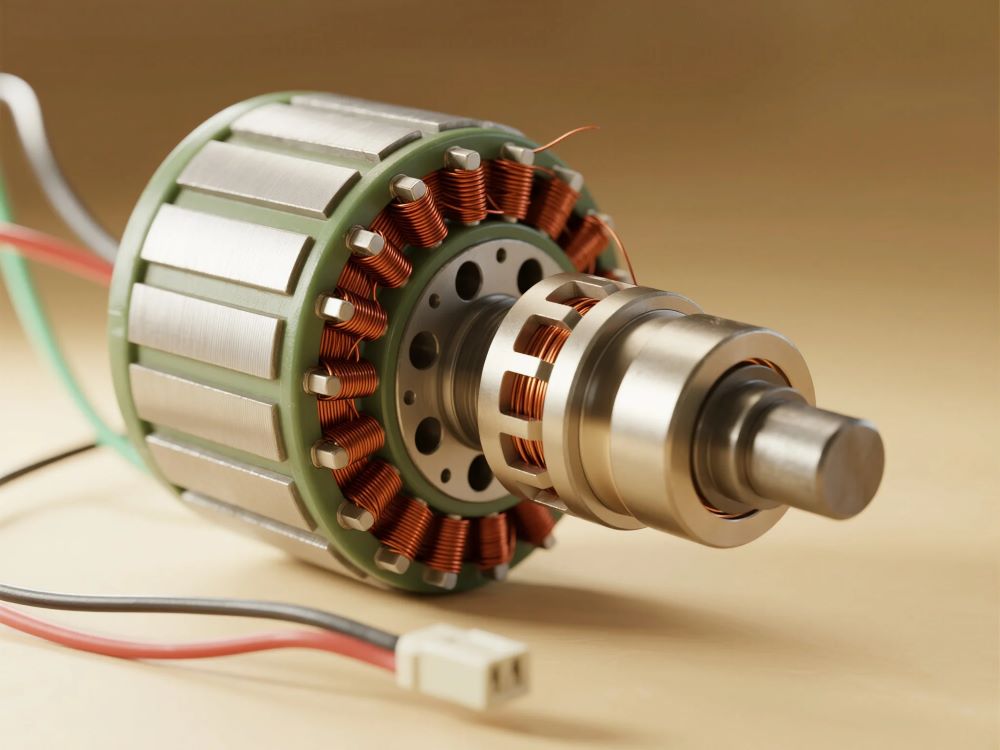
BLDC motors work on the principle of Lorentz force law, where a current-carrying conductor placed in a magnetic field experiences a force. The motor consists of a stationary part (stator) with windings and a rotating part (rotor) avec aimants permanents.
Stator Construction
The stator contains stacked steel laminations with windings placed in slots. Most BLDC motors have three-phase stator windings connected in star or delta formation. The windings are distributed to create a rotating magnetic field when properly energized.
Rotor Assembly
The rotor consists of permanent magnets mounted on the shaft. Neodymium (NdFeB) magnets are commonly used for their high magnetic energy density. The number of magnet poles determines the motor’s speed characteristics.
Electronic Commutation Process
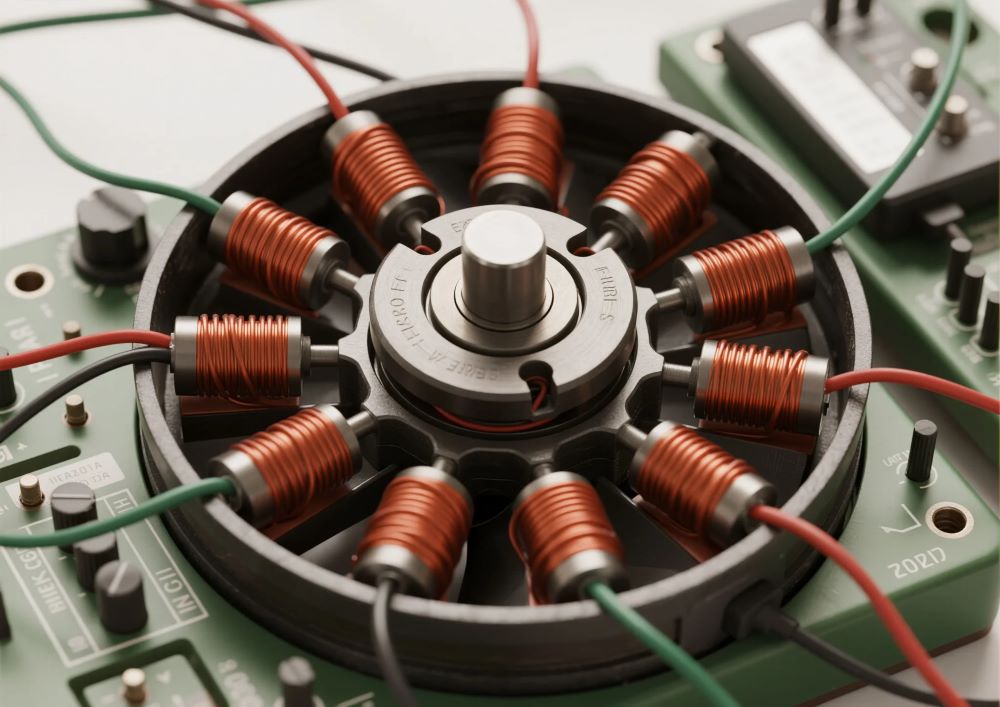
BLDC motors require electronic controllers to sequentially energize the stator windings. The controller uses position feedback from Hall effect sensors or sensorless techniques to determine the proper commutation sequence.
Commutation en six étapes
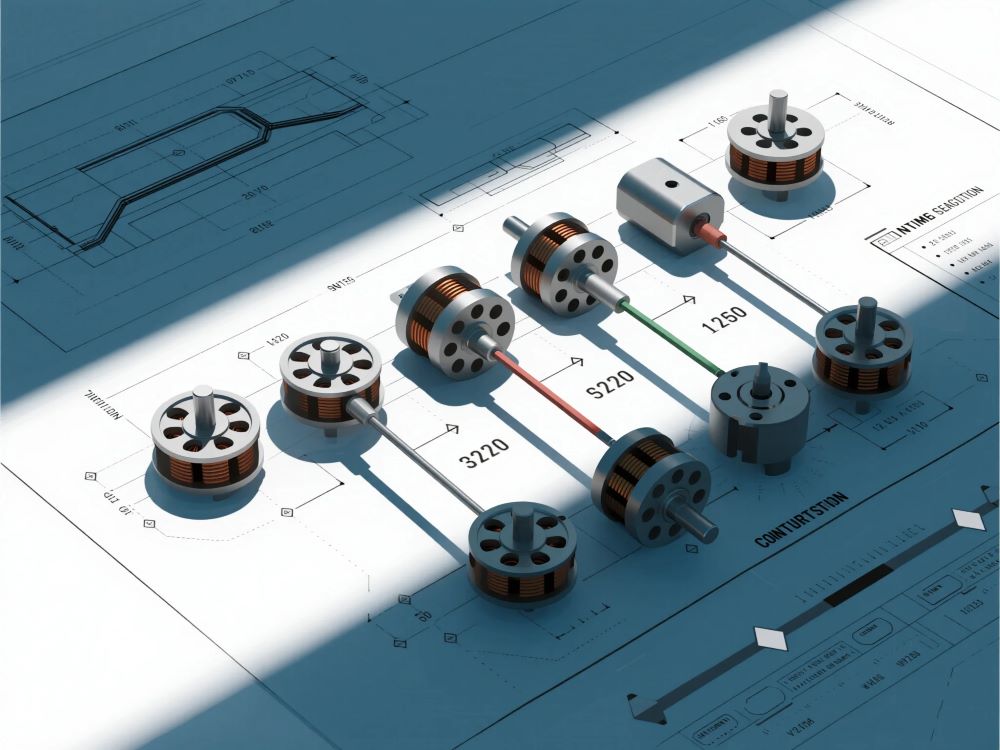
The most common commutation method involves six steps per electrical cycle. Each step energizes two phases while leaving the third floating, creating a rotating magnetic field that pulls the rotor magnets.
BLDC vs moteurs à courant continu à balais: Différences clés
| Fonctionnalité | Moteur CC sans balais | Moteur à courant continu brossé |
|---|---|---|
| Méthode de commutation | Électronique (capteurs + manette) | Mécanique (pinceaux + commutateur) |
| Entretien | Essentially maintenance-free | Regular brush replacement needed |
| Efficacité | 85-95% (plus haut) | 75-80% (lower) |
| Durée de vie | 10,000+ heures | 1,000-3,000 heures |
| Plage de vitesse | Large (jusqu'à 100,000 RPM) | Limited by brushes |
Control Methods and Drive Techniques
Contrôle de vitesse PWM
Modulation de largeur d'impulsion (MLI) is the most common speed control method. By varying the duty cycle of the applied voltage, the average voltage and consequently the speed can be precisely controlled.
Contrôle sans capteur
Advanced BLDC controllers can operate without position sensors by monitoring back-EMF signals from the unenergized winding. This reduces cost and improves reliability.
Practical Applications of BLDC Motors
Drones & drones
High power-to-weight ratio for aerial vehicles
Véhicules électriques
Traction motors for EVs and hybrid systems
Systèmes CVC
Energy-efficient blowers and compressors
Robotique industrielle
Precise motion control for automation
Advantages of BLDC Motor Technology
- Haute efficacité: No brush friction losses and reduced I²R losses
- Longue durée de vie: No mechanical wear except bearings
Excellent Speed Control: Precise RPM regulation across wide range
- Faible entretien: No brush replacement required
- Densité de puissance élevée: More power in smaller package
Ready to Implement BLDC Technology in Your Project?
Contact Greensky engineering team for technical consultation or browse our BLDC motor selection