
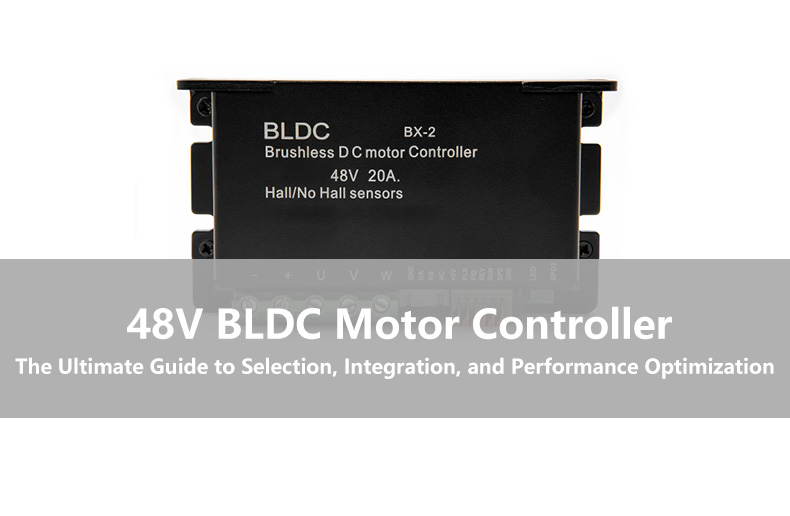
48V BLDC Motor Controller Guide: La guía definitiva para la selección, Integración, y optimización del rendimiento
The 48V BLDC motor controller represents the optimal balance point in modern power electronics, delivering enhanced efficiency, higher torque capabilities, and improved thermal performance compared to lower-voltage systems. As industries from electric mobility to industrial automation increasingly adopt 48V architectures, understanding how to select and integrate the right controller becomes critical for system designers and engineers. These intelligent devices serve as the brain of brushless DC motor systems, translating user commands into precise motor movements while providing essential protection and monitoring functions.
This comprehensive guide delves deep into the technical specifications, control methodologies, and practical implementation considerations for 48V BLDC motor controllers. Whether you’re designing an electric vehicle, solar tracking system, o equipos de automatización industrial, this resource provides the essential knowledge needed to maximize performance while ensuring reliability and safety. With insights from Greensky Power’s extensive experience in motor and controller manufacturing, we’ll explore how to navigate the complexities of 48V systems to achieve optimal results in your specific application.
yo. Why 48V? The Technical Advantages for BLDC Systems
The migration to 48V systems represents a significant evolution in power architecture across multiple industries. This voltage level offers distinct advantages that make it particularly suitable for demanding BLDC applications:
Power Delivery Efficiency
At 48V, systems can deliver the same power as lower-voltage alternatives while drawing significantly less current. According to Ohm’s Law (P = V×I), a 1kW system at 48V requires only approximately 20.8A, compared to 83.3A at 12V. This reduced current translates to:
- Smaller gauge wiring with reduced weight and cost
- Lower I²R power losses in cables and connections
- Reduced voltage drop over distance
- Improved overall system efficiency by 5-15%
Thermal Management Advantages
The reduced current flow generates less heat in motor windings, MOSFETs, and interconnects. This thermal advantage enables:
- Higher continuous power output without thermal derating
- More compact controller designs with smaller heat sinks
- Improved reliability and longer component lifespan
- Better performance in high ambient temperature environments
Application-Specific Benefits
- Electric Vehicles/E-bikes: Enables higher power levels while staying within safe voltage thresholds
- Automatización Industrial: Compatible with emerging 48V DC microgrid standards in factories
- Solar Applications: Ideal for direct connection to solar panel arrays (typically 30-45V open circuit)
- Telecom Equipment: Matches standard -48V backup power systems
II. Critical Technical Specifications for 48V BLDC Controllers
Cuando selecting a 48V BLDC motor controller, understanding these key parameters ensures compatibility and optimal performance:
Voltage and Current Ratings
- Rango de voltaje de funcionamiento: Typically 30-60V DC to accommodate voltage fluctuations and regenerative braking spikes
- Continuous Current Rating: Determines sustained torque capability (p.ej., 20A, 40A, 80A)
- Peak Current Capability: Short-duration overload capacity for acceleration and overcoming inertia (típicamente 150-200% of continuous rating)
- Undervoltage Cutoff: Protection against battery over-discharge (usually configurable around 40-42V)
Metodología de control
- trapezoidal (6-Paso) Control: Cost-effective solution with good performance for basic applications
- Control orientado al campo (FOC): Advanced algorithm providing smoother operation, mejor eficiencia, and superior low-speed torque
- Control sinusoidal: Compromise solution offering smoother operation than trapezoidal with lower computational requirements than FOC
Funciones de protección
- Overcurrent Protection: Hardware-based shutdown to prevent MOSFET failure during stalls or shorts
- Thermal Protection: Temperature monitoring with derating or shutdown at critical thresholds
- Overvoltage Protection: Essential for handling regenerative braking energy
- Short-Circuit Protection: Phase-to-phase and phase-to-ground fault detection
Interfaces de comunicación
- Basic Inputs: PWM, 0-5V analog, potentiometer for speed control
- Digital Interfaces: CAN bus, UART, RS485 for sophisticated system integration
- Programabilidad: Software-configurable parameters for customizing performance characteristics
III. Control Algorithm Comparison: FOC vs. Trapezoidal for 48V Applications
The choice of control algorithm significantly impacts performance, eficiencia, y costo:
Control orientado al campo (FOC) Ventajas
- Eficacia máxima: Maintains optimal torque per amp across speed range
- Operación suave: Eliminates torque ripple at all speeds
- Superior Low-Speed Performance: Excellent torque control down to zero RPM
- Respuesta dinámica: Fast adaptation to changing load conditions
Typical Applications for FOC:
- High-performance e-bikes and electric vehicles
- Precision industrial automation
- Medical equipment requiring smooth motion
- Applications where acoustic noise must be minimized
Trapezoidal Control Considerations
- Rentable: Simpler algorithm requires less processing power
- Proven Reliability: Mature technology with extensive implementation history
- Adequate for Many Applications: Suitable for pumps, aficionados, and basic motion control
Application Match:
- Choose FOC when: Performance, eficiencia, and smooth operation are priorities
- Choose Trapezoidal when: Cost sensitivity outweighs performance requirements
IV. Application-Specific Implementation Guidelines
Electric Bikes and Light Electric Vehicles
- Potencia nominal: 500W-1500W continuous with 2x peak capability
- Características clave: Water resistance (IP65 minimum), frenado regenerativo, pedal-assist sensor compatibility
- Integration Tips: Ensure compatibility with battery management system (BMS)
Automatización Industrial (Transportadores, Rotators)
- Potencia nominal: 1kW-5kW with robust overload capability
- Características clave: Network connectivity (CANOpen, EtherCAT), safety torque off (STO)
- Integration Tips: Implement proper EMI filtering for industrial environments
Solar Tracking Systems
- Potencia nominal: 100W-2000W depending on array size
- Características clave: Wide voltage input range, sleep mode for energy conservation
- Integration Tips: Maximum power point tracking (MPPT) controller coordination
Robotics and Precision Machinery
- Potencia nominal: 50W-2000W with emphasis on control precision
- Características clave: High-resolution encoder feedback, torque control mode
- Integration Tips: Consider backlash compensation in gear-driven systems
V. Protection Circuitry and System Safety
Robust protection is non-negotiable in 48V systems, where significant energy is available:
Essential Protection Circuits
- Active TVS Diodes: For handling voltage transients and regenerative braking spikes
- Desat Detection: Monitors MOSFET health to prevent catastrophic failure
- Galvanic Isolation: Separates low-voltage control circuits from power stage
- Isolated Gate Drivers: Ensures proper MOSFET switching while providing fault isolation
Thermal Management Strategies
- Temperature Monitoring: NTC thermistors on power devices and heat sinks
- Active Cooling: PWM-controlled fans for high-power applications
- Reducción térmica: Gradual power reduction as temperature approaches limits
- Proper Heat Sink Sizing: Based on worst-case operating conditions
VI. Installation and Commissioning Best Practices
Wiring Considerations
- Use appropriately sized cables based on current requirements and distance
- Implement twisted pair wiring for hall sensor and encoder connections
- Separate power and signal cables to minimize noise coupling
- Implement proper grounding and shielding techniques
Parameter Configuration
- Motor Identification: Auto-tuning routines for motor parameters
- Current Limits: Set according to motor and mechanical system capabilities
- Acceleration/Deceleration Ramps: Programmed to prevent mechanical stress
- Protection Thresholds: Calibrated for specific application requirements
Pruebas y Validación
- Step-by-Step Commissioning: Begin with low-power testing
- Load Testing: Verify performance across entire operating range
- Validación térmica: Monitor temperatures under worst-case conditions
- Safety Function Testing: Verify all protection circuits operate correctly
VII. Greensky Power’s 48V BLDC Controller Solutions
cieloverde Power offers comprehensive 48V BLDC motor controller solutions with these distinguishing features:
Product Highlights
- Wide Power Range: Controllers available from 500W to 10kW continuous power
- Algoritmos de control avanzados: FOC and trapezoidal options with smooth transition capability
- Robust Construction: Industrial-grade components with conformal coating
- Comprehensive Connectivity: CAN bus, UART, and analog interfaces standard
Capacidades de personalización
- Application-Specific Firmware: Tailored to unique operational requirements
- Mechanical Packaging: Custom enclosures for challenging environments
- Interface Options: Additional I/O and communication protocols as needed
- Herramientas de software: User-friendly configuration and monitoring applications
Conclusión
Selecting and implementing the right 48V BLDC motor controller requires careful consideration of technical especificaciones, control methodologies, and application requirements. The 48V architecture offers significant advantages in efficiency, Densidad de poder, and thermal performance that make it ideal for modern motion control applications. By understanding the principles outlined in this guide and leveraging Greensky Power’s technical expertise, engineers can develop high-performance systems that deliver reliability, eficiencia, y control preciso.
The migration to 48V systems represents more than just a voltage change—it enables new levels of performance and efficiency across multiple industries. With proper selection, integración, and commissioning, 48V BLDC motor controllers can provide years of trouble-free operation in even the most demanding applications.
Need assistance with your 48Controlador de motor V BLDC selección?
Contacta con el equipo técnico de Greensky Power for personalized recommendations and application engineering support.
Submit Your 48V Controller Requirements| Correo electrónico: [email protected]
Referencias
- Instrumentos de Texas. “Implementing a 48V BLDC Motor Drive Using FOC”. Informe de aplicación de TI, 2023.https://www.ti.com/lit/pdf/sprabr8
- STMicroelectronics. “48V Motor Control Systems for Industrial Applications”. ST Application Note, 2024.https://www.st.com/resource/en/application_note/48v-motor-control-systems-industrial-applications
- Electronic Design. “Why 48V is Becoming the New Standard for Motor Drives”. Electronic Design, 2023.https://www.electronicdesign.com/power-management/why-48v-becoming-new-standard-motor-drives
- Power Electronics News. “Design Considerations for 48V BLDC Motor Controllers”. Power Electronics News, 2024.https://www.powerelectronicsnews.com/design-considerations-48v-bldc-motor-controllers