
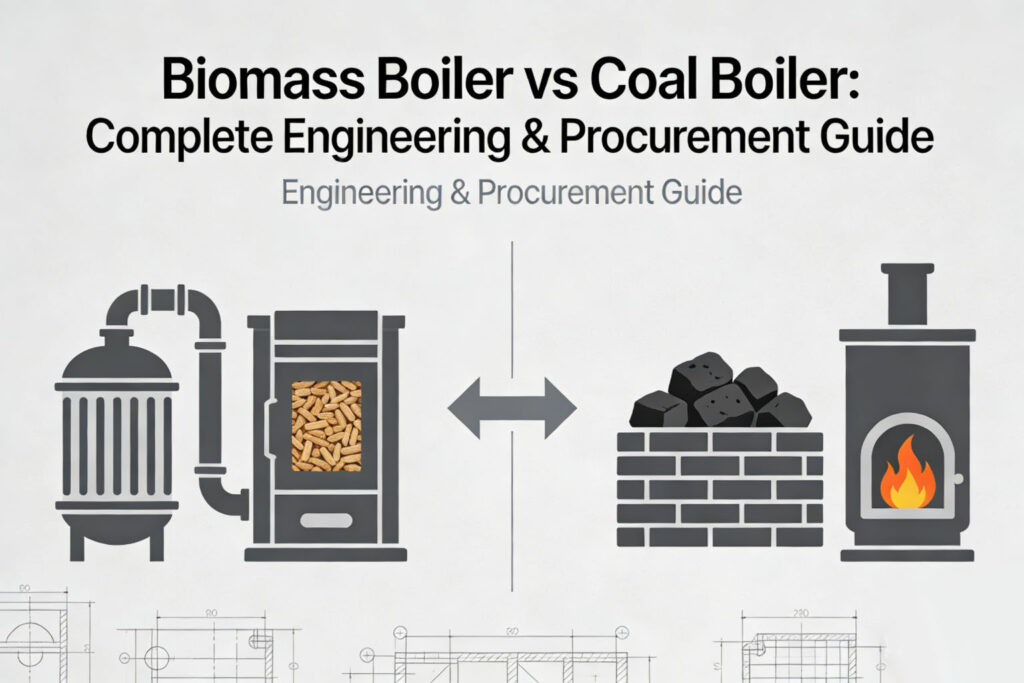
Biomass Boiler vs Coal Boiler: Komplettes Engineering & Beschaffungsleitfaden
Ausgewählter Ausschnitt:
The key difference between biomass boilers and coal boilers lies in fuel type, environmental impact, and operational efficiency. Biomass boilers use renewable organic materials and offer lower emissions with comparable efficiency (80–92 %), while coal boilers rely on fossil fuels with higher emissions but traditionally lower upfront cost. For industrial buyers, the decision depends on long-term fuel cost, Einhaltung gesetzlicher Vorschriften, Systemeffizienz, and integration with modern motor-driven control systems. Biomass boilers are increasingly preferred due to sustainability, Automatisierung, and lower lifecycle cost.
What is a Biomass Boiler vs Coal Boiler?
A biomass boiler is a heating system that burns organic materials such as wood pellets, Chips, or agricultural waste to generate heat. A coal boiler uses coal as its primary fuel source to produce steam or hot water for industrial processes.
Core System Differences
- Biomassekessel: renewable fuel, automated feeding, lower emissions
- Coal boiler: fossil fuel, manual or semi-automated feeding, higher emissions
Both systems rely heavily on motor-driven components such as fans, Pumps, and conveyors to ensure stable operation.
Why Compare Biomass Boiler vs Coal Boiler?
Für Ingenieure und Einkaufsmanager, choosing between biomass and coal boilers is a strategic decision impacting operational cost, Nachhaltigkeit, und Compliance.
Wichtige Entscheidungstreiber
- Fuel availability and cost
- Environmental regulations
- System efficiency and performance
- Wartungsanforderungen
Industry Trend
Many industries are transitioning from coal to biomass due to stricter emission standards and carbon reduction goals.
Effizienzvergleich: Biomass Boiler vs Coal Boiler
Efficiency plays a critical role in determining fuel consumption and operational cost.
Biomass Boiler Efficiency
- Typically 80–92%
- Optimized through controlled airflow and automated feeding
Coal Boiler Efficiency
- Typically 70–85%
- Higher heat loss due to incomplete combustion
Technische Einblicke
Advanced motor-driven fan systems in biomass boilers improve combustion efficiency by precisely controlling air supply.
Wärmeleistung und Wärmemanagement
Thermal performance determines how effectively heat is generated and transferred.
Biomass Boilers
- Stable combustion temperature
- Efficient heat exchangers
Coal Boilers
- Higher peak temperatures
- Greater heat loss and slagging issues
Technische Überlegungen
Richtiges Wärmemanagement, including motor cooling systems for fans and pumps, is essential for both systems.
Control Systems and Automation Differences
Control systems define how efficiently a boiler operates under varying conditions.
Biomass Boiler Control
- Automated fuel feeding
- PLC-based systems
- Variable speed motor control
Coal Boiler Control
- Limited automation
- Manual adjustments in many systems
Technische Einblicke
Modern biomass boilers use BLDC or VFD-controlled motors to optimize airflow and fuel delivery.
Entdecken Sie Motorlösungen: Biomass Boiler Motors Solutions
Vergleich von Zuverlässigkeit und Lebensdauer
System reliability directly impacts maintenance cost and operational downtime.
Biomass Boilers
- Long lifespan with proper maintenance (15–25 years)
- Lower mechanical wear due to automation
Coal Boilers
- Higher wear due to ash and slag
- Frequent maintenance required
Motor Impact
High-quality motors improve system reliability by ensuring consistent operation of fans, Pumps, und Förderbänder.
Biomass Boiler vs Coal Boiler: Kostenvergleich
| Parameter | Biomassekessel | Kohlekessel |
|---|---|---|
| Anfängliche Kosten | Hoch | Untere |
| Kraftstoffkosten | Niedrig | Moderate to High |
| Wartung | Mäßig | Hoch |
| Effizienz | 80–92 % | 70–85 % |
| Emissionen | Niedrig | Hoch |
| Automatisierung | Hoch | Niedrig |
Technische Interpretation
While coal boilers may have lower upfront cost, biomass boilers offer lower lifecycle cost due to fuel savings and reduced maintenance.
Vor- und Nachteile: Biomass vs Coal Boiler
Biomass Boiler Advantages
- Erneuerbare Energiequelle
- Lower emissions
- High automation
Biomass Boiler Disadvantages
- Höhere Anfangsinvestition
- Anforderungen an die Kraftstofflagerung
Coal Boiler Advantages
- Lower upfront cost
- Established technology
Coal Boiler Disadvantages
- High emissions
- Higher maintenance
How to Choose Between Biomass Boiler vs Coal Boiler
Choosing the right system depends on both thermal requirements and motor-driven subsystem performance.
Spannungsbereich
- 220V–380V for industrial motors
Leistungsbereich
- 5kW–50kW for fans and pumps
Geschwindigkeit / Drehmoment
Biomass systems require precise torque control for feeding systems, while coal systems rely more on bulk handling.
Kühlmethode
- Air-cooled motors for standard systems
- Verbesserte Kühlung für Umgebungen mit hohen Temperaturen
Controller-Kompatibilität
Biomass boilers benefit from advanced controllers (SPS, VFD), while coal boilers often use simpler systems.
Anwendungsüberlegungen
- Environmental regulations
- Fuel availability
- Operational cost targets
CTA: Fordern Sie ein Datenblatt an oder kontaktieren Sie unsere Ingenieure für maßgeschneiderte Motorlösungen.
Applications of Biomass and Coal Boilers
Industrielle Anwendungen
- Stromerzeugung
- Herstellung
HVAC-Systeme
- Fernwärme
- Gewerbebauten
Landwirtschaftliche Anwendungen
- Trocknungssysteme
- Gewächshäuser
Motor-driven systems ensure stable performance in all applications.
Zukünftige Trends: Biomass Replacing Coal Boilers
The global trend is shifting toward cleaner energy solutions.
Schlüsseltrends
- Transition from coal to biomass
- Integration mit erneuerbaren Energiesystemen
- Advanced motor-driven automation
Biomass boilers are expected to dominate future industrial heating systems.
FAQ: Biomass Boiler vs Coal Boiler
1. Was effizienter ist, biomass or coal boiler?
Biomass boilers typically offer higher efficiency due to better combustion control and lower heat loss.
2. Are biomass boilers more expensive?
They have higher upfront costs but lower operating costs over time.
3. Which boiler is better for the environment?
Biomass boilers produce significantly lower emissions and are considered carbon-neutral.
4. Can biomass replace coal in industrial systems?
Ja, many industries are transitioning to biomass due to regulatory and cost advantages.
5. What motors are used in these systems?
Both systems use fan motors, Pumpmotoren, and conveyor motors, but biomass systems require more advanced motor control.
Fazit: Which is Better – Biomass Boiler or Coal Boiler?
From an engineering and procurement perspective, biomass boilers offer superior efficiency, Nachhaltigkeit, and long-term cost benefits. While coal boilers remain relevant in some regions, the industry trend clearly favors biomass systems.
Für OEMs und industrielle Einkäufer, selecting the right motor-driven components is critical to maximizing system performance.
Nächster Schritt: Contact our engineering team to develop a customized motor solution or request detailed specifications.
Referenzen
- IEA-Bioenergieberichte
- IEEE Industrial Heating Papers
- Zeitschriften für erneuerbare Energien
- Industrial Boiler White Papers